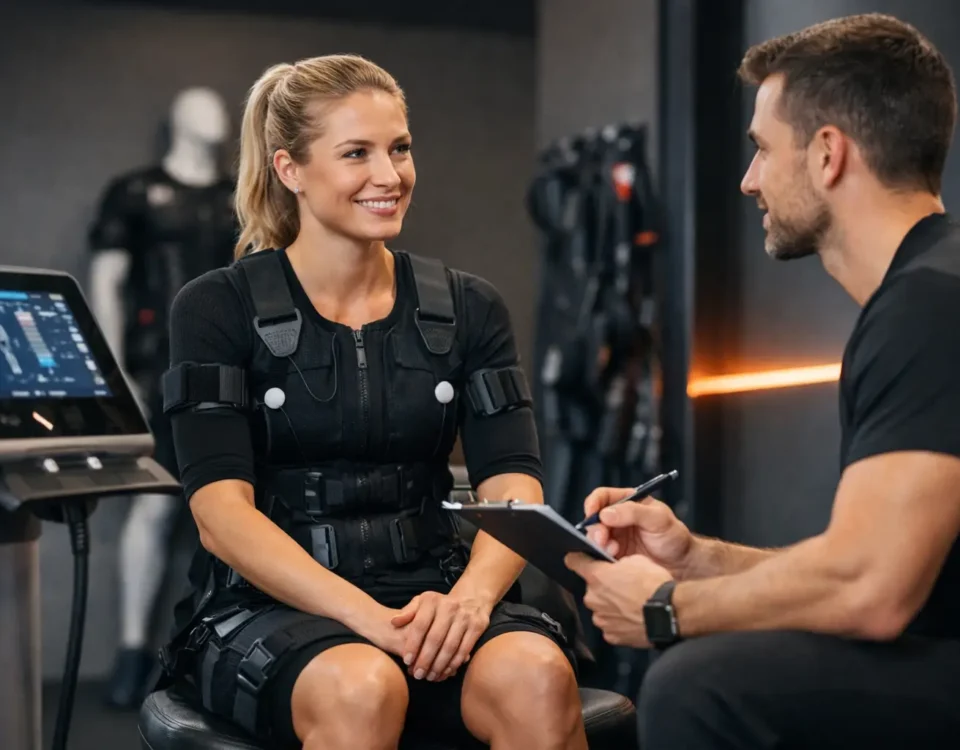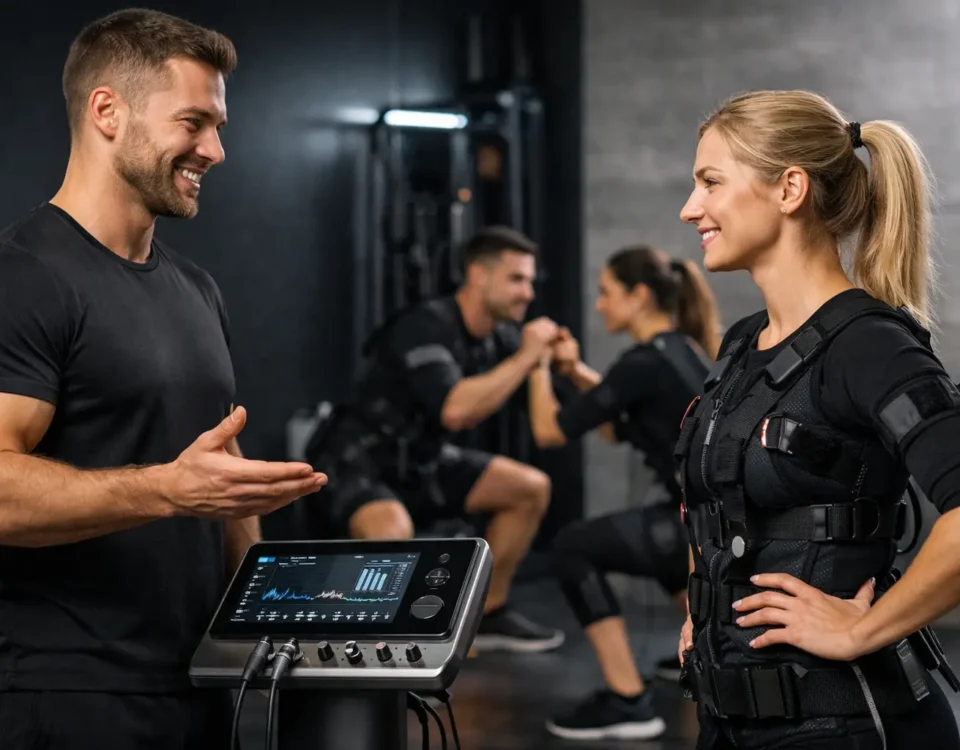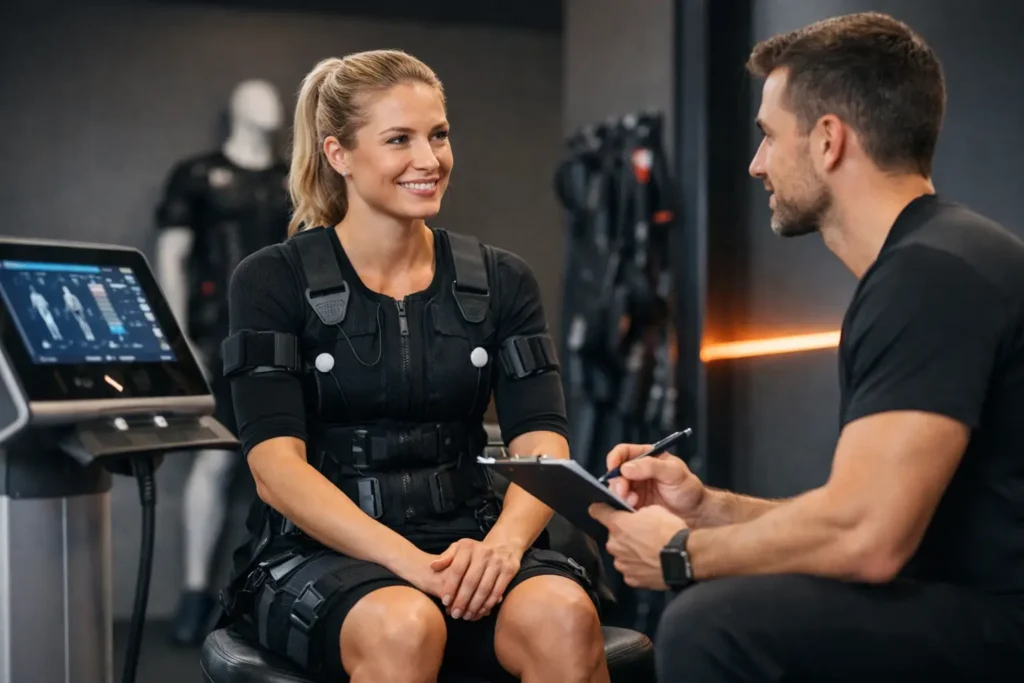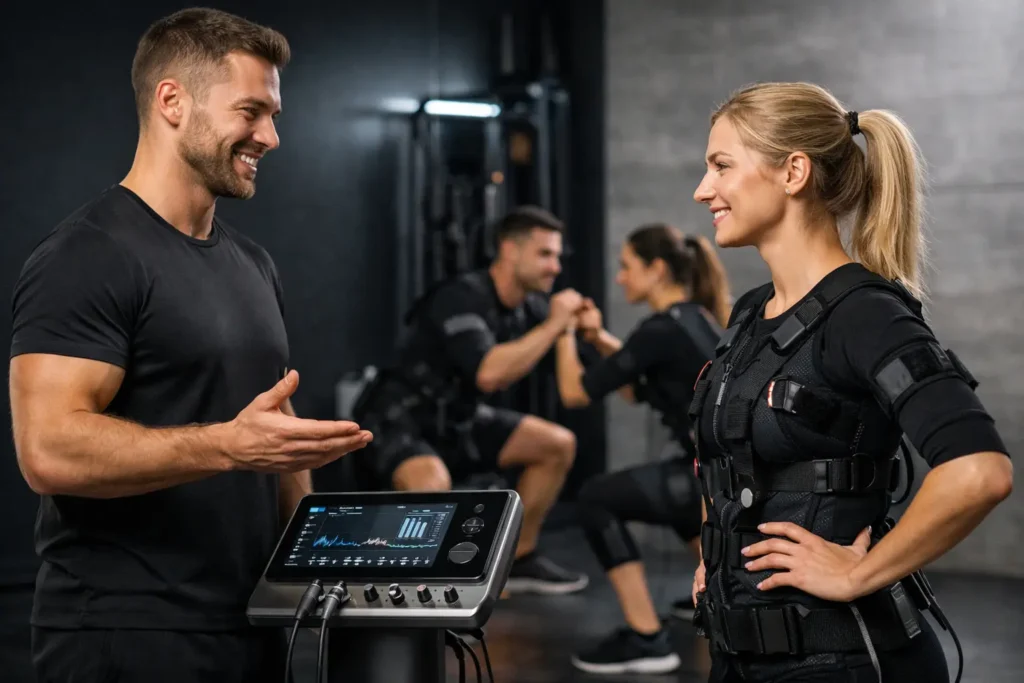

A successful EMS business is not defined by the device you buy. It is defined by how quickly you can turn appointments into recurring revenue while maintaining safe delivery, consistent service quality, and a clear position in your local market. For a personal trainer, gym owner, clinic manager, or wellness entrepreneur, the first decision is not simply which system to choose. It is which business model can realistically support your goals, space, budget, and client base.
EMS can create a compelling commercial offer because sessions are time-efficient, coach-led, and easy to package into structured memberships or premium training plans. But the opportunity only works when the operating model matches the market. A mobile operator needs flexibility and low overhead. A studio needs capacity and standardized workflows. A premium concept needs a refined experience that justifies its positioning.
Start Your EMS Business With the Right Model
Most new operators fall into one of three practical paths: mobile EMS, studio EMS, or premium dry wireless EMS. Each can be commercially viable, but they require different levels of investment, staffing, scheduling discipline, and client acquisition.
| Business model | Best suited for | Main commercial advantage | Key operating consideration | |—|—|—|—| | Mobile EMS | Personal trainers and solo operators | Lower fixed overhead and flexible locations | Travel time must be built into pricing and scheduling | | Studio EMS | Gyms, clinics, and dedicated EMS locations | Higher client capacity and repeatable operations | Requires stronger utilization and staff management | | Premium dry wireless EMS | Boutique wellness and VIP concepts | Elevated client experience and pricing potential | Brand presentation must match the premium offer |
Mobile EMS: a focused entry point
Mobile EMS is often the most practical route for trainers who already have a client network. Instead of taking on a lease, reception team, and full studio overhead from day one, the operator brings a professional service to private homes, offices, partner gyms, or selected training spaces.
The advantage is speed. You can validate demand, build testimonials, refine your packages, and create recurring appointments before committing to a larger location. The trade-off is logistics. Travel, setup, equipment transport, and gaps between sessions reduce the number of appointments available in a day. Mobile operators need to protect their margins by grouping clients geographically, setting minimum booking windows, and charging appropriately for the convenience they provide.
This model works best when the coach is also the salesperson and relationship manager. Clients are buying guided training, accountability, and convenience, not a standalone technology session.
Studio EMS: built for throughput
A studio model makes sense when demand is established or when EMS is being added to an existing gym, health club, performance center, or wellness facility. The commercial advantage is capacity. With the right equipment configuration, trained team, and booking process, multiple clients can be served in structured time blocks.
The main challenge is utilization. A studio with unused peak-hour slots still carries rent, staffing, utilities, and marketing costs. Before expanding, operators should model realistic occupancy rather than assuming every session block will be filled. Start with conservative projections, then identify how many active clients and weekly sessions are needed to cover fixed costs and produce an acceptable return.
A studio also benefits from standardized delivery. Clients should receive a consistent onboarding process, session format, safety screening process, follow-up communication, and rebooking experience, regardless of which coach leads the session. That consistency is what allows a business to scale beyond one trainer.
Premium dry wireless EMS: sell the experience, not just access
Premium dry wireless EMS is suited to boutique concepts, luxury wellness spaces, hospitality environments, executive clients, and founders building a high-touch service. The absence of a traditional wet setup can support a cleaner, more polished client journey and may fit locations where privacy, speed, and appearance matter as much as training.
This model should not be positioned as premium simply because the equipment is more advanced. The full experience must support the claim: appointment flow, consultation quality, coach presentation, interior environment, scheduling, and client communication all need to feel considered. A premium price is earned through a premium operation.
Build the Numbers Before You Commit
Equipment cost matters, but it is only one line in the operating plan. A better question is: what does one booked hour need to produce for the business to work?
Calculate expected monthly fixed costs first. Include equipment financing or rental, rent if applicable, insurance, payroll, software, cleaning, maintenance allowances, local marketing, and owner compensation. Then estimate the number of sessions that can realistically be delivered each week. Be honest about no-shows, coach availability, opening hours, and the time needed for consultations and client follow-up.
From there, determine the average revenue required per session. This will show whether your planned prices and membership structure are commercially credible. If the required session value feels too high for your market, you may need to reduce fixed costs, improve capacity, adjust the offer, or begin with a more flexible model.
Rental and rent-to-own options can be useful when preserving cash is more valuable than owning equipment immediately. They can reduce the upfront barrier and allow an operator to test the model with less capital tied up. Direct purchase may be more suitable for established facilities with stronger cash flow and a clear expansion plan. The right option depends on your balance sheet, launch timeline, and tolerance for risk.
Create an Offer Clients Can Understand
Clients rarely buy EMS because of technical specifications. They buy a result-oriented training service that fits their schedule and feels professionally managed. Your offer should therefore be simple enough to explain in one conversation.
Avoid building the business around single sessions alone. Individual appointments can be useful for trials, but recurring packages create better planning for both the client and the operator. A structured introductory plan, followed by a membership or multi-session package, gives clients continuity while improving revenue visibility.
Your sales conversation should explain who the service is for, what a typical appointment involves, how often clients can train within your approved protocols, and what coaching support they receive. Keep claims responsible. EMS is a training modality, not a substitute for medical care, and coaches should follow appropriate screening procedures, training standards, and equipment guidance.
The most effective positioning is usually specific. A trainer may focus on busy professionals seeking efficient coached sessions. A gym may offer EMS as a premium personal-training add-on. A wellness concept may build a private, appointment-only service around convenience and discretion. Broad messaging often sounds generic; a defined audience makes acquisition easier.
Operational Support Is Part of the Product
Many EMS businesses lose momentum after equipment delivery because the operator has not planned the first 30, 60, and 90 days. The launch phase needs more than installation. It needs staff education, a client onboarding process, sales scripts, scheduling rules, maintenance routines, and a plan for collecting early feedback.
Training matters because it protects service quality and operator confidence. Coaches need to understand proper setup, session supervision, client communication, hygiene routines, and when to decline or postpone a session based on established screening guidelines. A confident coach creates trust, and trust improves retention.
After-sales support matters for the same reason. Downtime, missing accessories, and unresolved technical questions can interrupt appointments and damage a new business when it is most vulnerable. Work with a supplier that can provide onboarding, warranty coverage, spare parts, and commercial guidance rather than treating the transaction as finished at delivery.
EMS Leader approaches equipment selection as a business-entry decision, supporting operators with model planning, training, and ongoing operational resources. That is particularly valuable for first-time owners who need clarity on how the commercial pieces fit together.
Measure What Actually Drives Growth
A growing EMS operation should review a small set of numbers every month: active clients, sessions delivered, average revenue per client, rebooking rate, membership retention, coach utilization, and lead-to-client conversion. These metrics reveal where the real constraint is.
For example, a business with plenty of inquiries but weak conversions may need a better consultation process or clearer package options. A studio with strong sales but poor retention may need to improve coaching consistency and follow-up. A fully booked owner-operator may be ready to add trained staff, extend hours, or move selected clients into small-group formats where appropriate.
Growth is not always about adding more equipment. Sometimes the best next move is tightening the schedule, reducing no-shows, improving retention, or raising the value of the client journey. Expansion should follow evidence, not excitement.
The strongest EMS business is usually built in stages: start with the model your market can support, prove demand with disciplined operations, and expand only when capacity and retention justify the next investment. That approach creates a business with room to grow without forcing it to grow before it is ready.