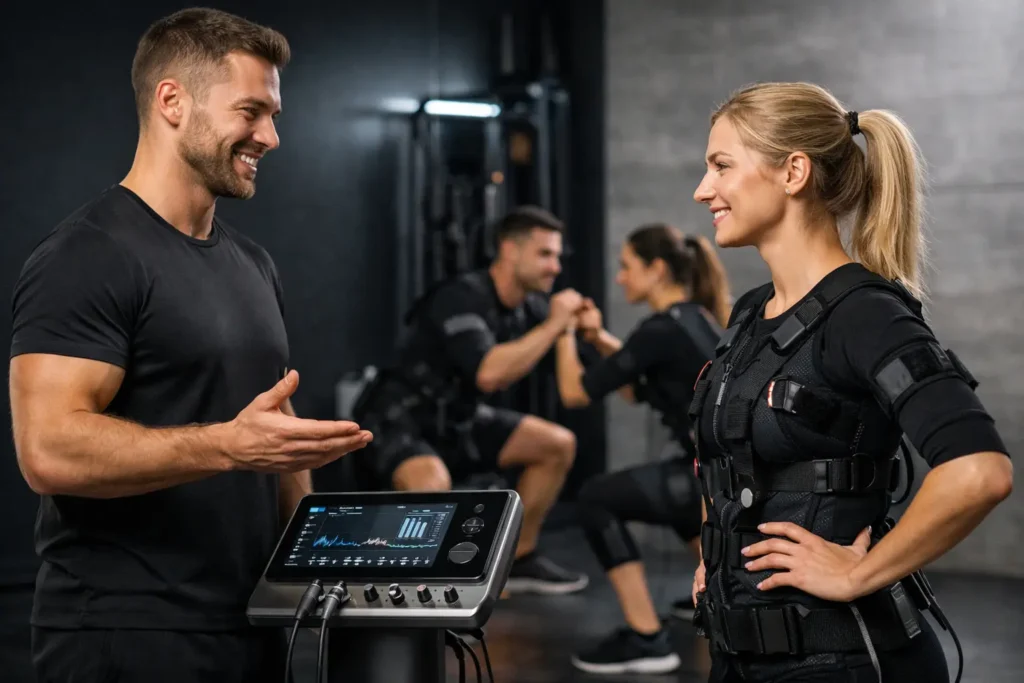

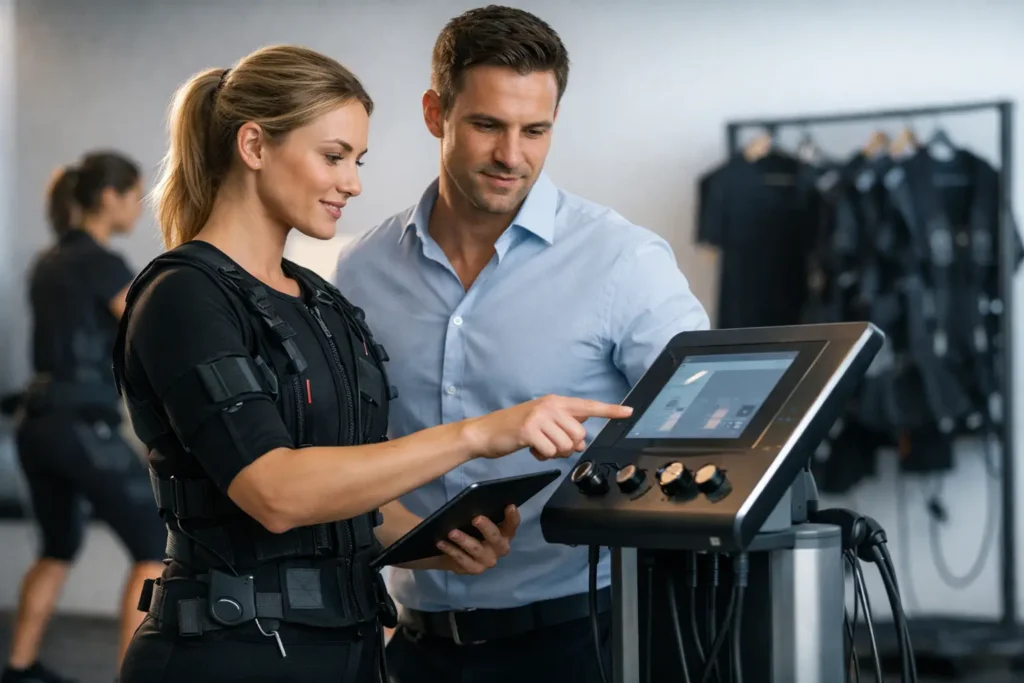
A commercial EMS purchase is not simply a question of which unit has the longest feature list. Whether you are comparing an EMS machine, EMS equipment, an EMS device, an EMS system, or newer EMS technology, the real decision is whether the setup fits the business you intend to run. Client volume, service positioning, staffing, available space, and financing all shape what will perform well commercially.
For a personal trainer adding a high-value service, a portable system may be the logical entry point. For a gym or clinic building recurring appointments, capacity and operational consistency matter more. For a boutique concept, the client experience and visual presentation can carry significant value. The right choice begins with the business model, then moves to the equipment.
Start With the Revenue Model, Not the Hardware
EMS businesses can look very different on paper. A one-to-one mobile operator has low overhead and can sell a personal, time-efficient service. A studio can schedule multiple clients and build predictable package revenue. A premium wellness concept may use EMS as part of a high-touch private training or longevity-oriented offering.
Each model calls for different priorities. Buying a high-capacity setup for a business that has not yet built demand can create unnecessary fixed costs. On the other hand, choosing a basic mobile configuration for a busy facility can limit session throughput just when the business is ready to grow.
Before selecting equipment, define four commercial variables: your target client, intended session format, realistic weekly capacity, and monthly operating costs. These answers create a more useful equipment brief than technical specifications alone.
Mobile EMS: Low Overhead and Fast Market Entry
Mobile EMS is designed for trainers and entrepreneurs who want to start with controlled investment and direct client relationships. The operator travels to clients, works from partner locations, or uses a small private training space. This model can be a practical route for professionals who already have a client base and want to introduce a differentiated service without committing to a full studio.
Portability, setup time, battery management, garment logistics, and transport protection become important considerations. The strongest mobile EMS business is usually built around disciplined scheduling and a clear service radius. Mobility creates flexibility, but travel time can reduce the number of daily appointments if routes are not planned carefully.
Studio EMS: Capacity and Repeatable Operations
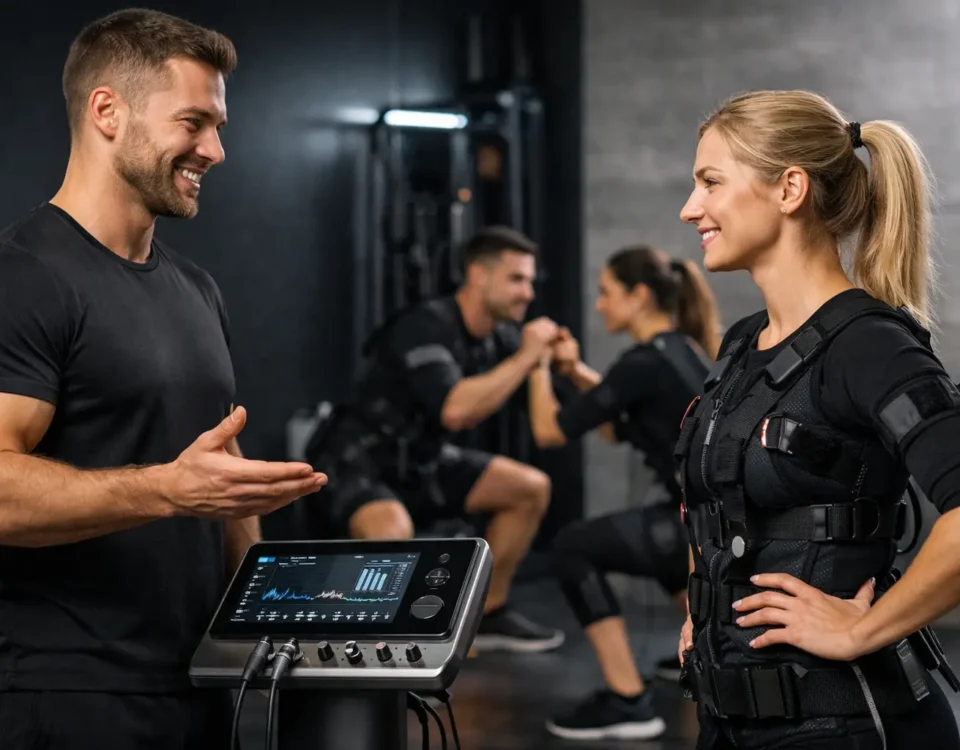
A studio model is built for appointment flow. The objective is not only to deliver quality sessions, but to make the service repeatable across trainers, time slots, and client packages. In this environment, operators should consider how many people can train at once, how quickly stations can be prepared, and how easily staff can manage the system during peak hours.
Studio EMS equipment should support a consistent customer experience. That includes reliable controls, straightforward program management, cleaning procedures, spare-part availability, and staff training. A system that appears advanced but slows down onboarding or daily operation may cost more than it contributes.
For gyms and clinics, EMS can also create a premium service layer alongside existing training. The key is to define the offer clearly. It should not become an underused device in a corner of the facility. It needs dedicated staff ownership, appointment rules, sales scripts, and a realistic client conversion process.
Premium Dry Wireless EMS: Experience Is Part of the Product
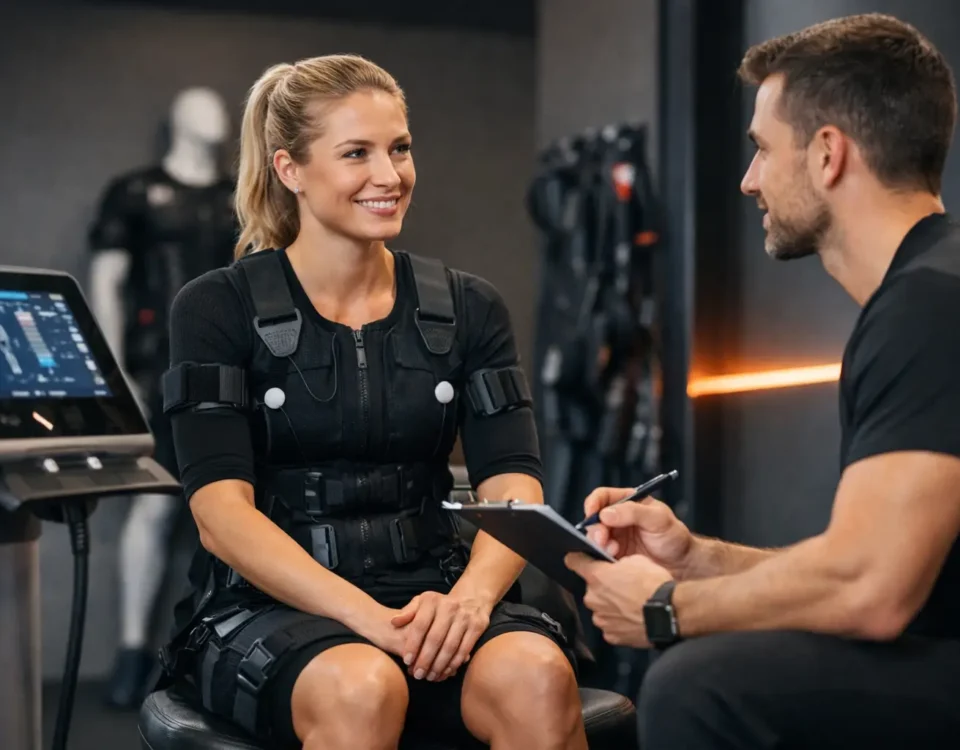
Premium dry wireless EMS concepts are suited to boutique studios, private clubs, luxury wellness spaces, and VIP training environments. Here, the equipment choice affects more than performance. It influences the atmosphere, session flow, privacy, and perceived value of the service.
Wireless operation can reduce cable management and create a cleaner training environment. Dry systems can also simplify certain operational routines, depending on the configuration and training protocol. However, premium positioning requires premium execution. The space, coach presentation, client consultation, and booking experience must support the higher-value offer.
An operator should not choose a premium system only because it looks impressive. It should be selected when the local market can support the positioning and when the business has a plan to sell the experience consistently.
What Commercial EMS Equipment Must Deliver
An EMS device may have many settings, but a professional operator needs more than settings. The equipment must work within a reliable commercial system that supports daily use, staff confidence, and client retention.
When evaluating an EMS system, focus on the practical questions that affect operations:
| Business consideration | Why it matters | | — | — | | Client capacity | Determines how many sessions can be delivered in each time block. | | Mobility | Affects transport, setup, and the viability of home or partner-location sessions. | | Ease of use | Reduces trainer onboarding time and helps maintain session consistency. | | Garment and accessory workflow | Influences hygiene routines, replacement planning, and turnaround time. | | Warranty and spare parts | Protects continuity when equipment needs service or replacement components. | | Training and setup support | Helps the operator launch with correct procedures and a clear service structure. |
The final two points are often underestimated. Hardware downtime, poor staff confidence, and unclear maintenance procedures can interrupt revenue more quickly than operators expect. Commercial buyers should evaluate after-sales support as part of the investment, not as an optional extra.
Match EMS Technology to Your Team’s Capabilities
The most technically capable system is not always the best commercial choice. If the business has one experienced trainer, a setup with a simpler operating workflow may create better consistency. If several coaches will deliver sessions, standardized protocols and structured training become essential.
Staff should understand equipment operation, client screening procedures, contraindication awareness, session planning, garment care, and documentation requirements. EMS is a professional service, not a self-service add-on. Clear operating standards protect the client experience and help the business maintain quality as it scales.
This is where a partner-led approach has practical value. At EMS Leader, equipment selection can be matched to the operator’s preferred model, whether that is mobile training, a scalable studio, or a premium wireless concept. Rental, rent-to-own, and direct purchase options can also help businesses align equipment access with their capital plan rather than forcing every operator into the same path.
Calculate Investment With a Conservative View
A good EMS business plan does not depend on optimistic assumptions. Build projections using conservative client acquisition estimates, realistic trainer availability, local rent, insurance, laundry or garment handling, marketing, and equipment support costs.
Then test the model. How many sessions or packages must be sold each month to cover operating expenses? How many hours can the team actually deliver without compromising service quality? What happens if the launch period takes longer than expected? These questions do not reduce ambition. They create a plan that can withstand normal business pressure.
Flexible financing can be useful when it preserves working capital for launch activities such as marketing, studio preparation, staff training, and client acquisition. Direct purchase may suit an established operator with capital available. Rental or rent-to-own can make more sense for a new venture that wants to validate demand while managing initial exposure. There is no universal best option. The right structure depends on cash flow, growth timing, and risk tolerance.
Avoid the Most Expensive Selection Mistakes
The first mistake is purchasing based only on initial cost. Lower entry cost can be attractive, but the total commercial impact includes reliability, training, accessories, service access, and the ability to keep delivering sessions.
The second is buying before defining the offer. Equipment cannot replace positioning. Decide whether your service is mobile personal training, multi-client studio sessions, or a premium private experience. Your marketing, pricing structure, and facility design should follow that choice.
The third is treating launch support as secondary. A successful opening requires more than a shipment. Operators benefit from setup guidance, team training, operational planning, and a clear route for technical support. These elements shorten the gap between receiving equipment and generating consistent bookings.
Build a System Clients Will Return To
Clients do not return because a machine is new. They return because the session feels professional, the coach is confident, the booking process is easy, and the service fits their goals and schedule. The EMS equipment supports that experience, but it does not replace it.
Choose a system that your team can operate well on day one and expand with when demand proves itself. The strongest EMS investment is the one that gives your business a clear starting point, dependable daily operations, and enough flexibility to grow without rebuilding the model from scratch.