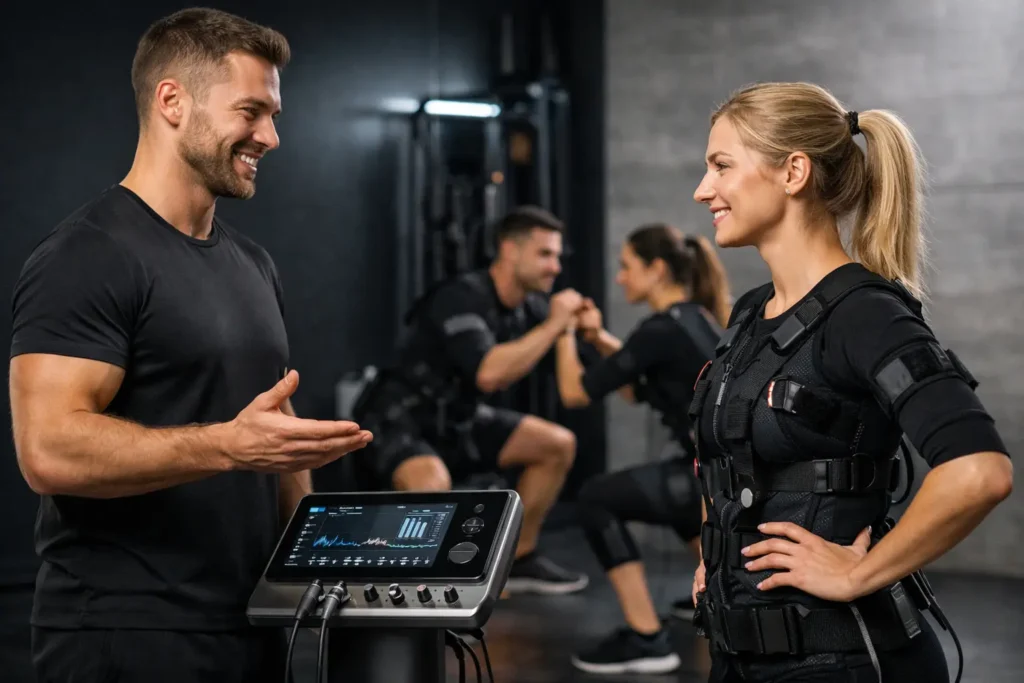

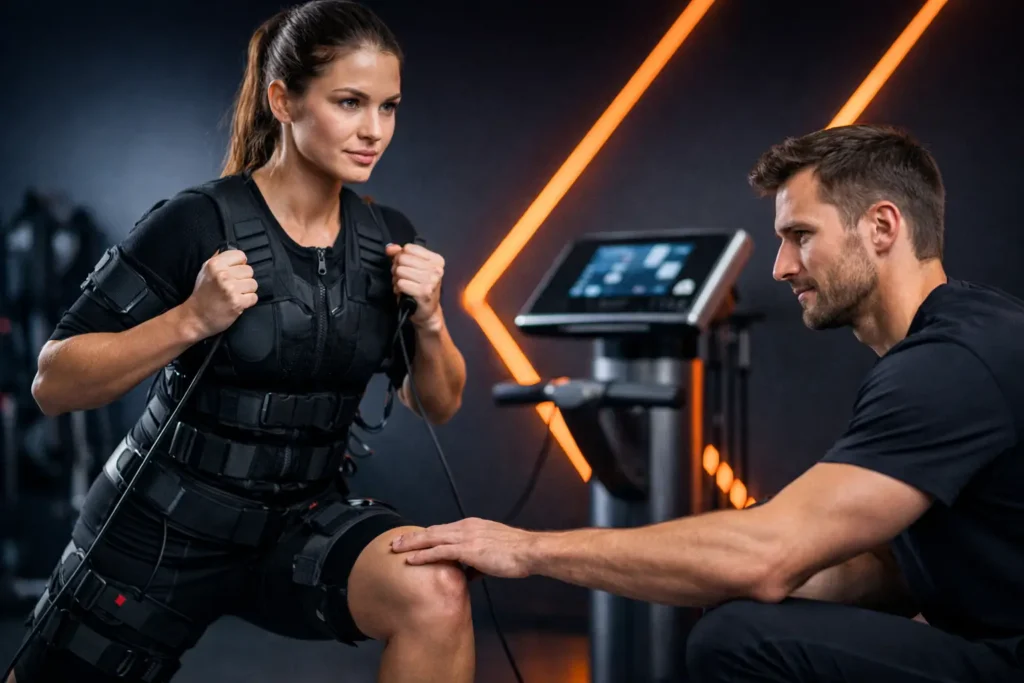
A 20-minute EMS session can be a high-value service, but only when clients understand what they are feeling and operators can explain it with confidence. Electrostimulation, muscle activation, EMS exercise, and body stimulation are often used interchangeably. For a commercial EMS business, however, the distinction matters. It shapes how you position the service, train coaches, set expectations, and select a system that fits your operating model.
EMS is not a replacement for good coaching, thoughtful programming, or a well-run client journey. It is a training modality that can help professionals offer guided, time-efficient sessions with a clear premium proposition. The opportunity is strongest when the technology, trainer skill, safety procedures, and business model work together.
What Electro stimulation Does During EMS Exercise
Electrostimulation uses controlled electrical impulses delivered through electrodes to stimulate muscle contraction. In an EMS exercise session, the client performs purposeful movements while the coach manages intensity, technique, timing, and progression. The client is not passive. Quality results depend on active participation, stable posture, appropriate range of motion, and a session design that matches the person’s experience level.
Muscle activation is the practical training outcome operators need to communicate. The electrical impulse can recruit muscles while the client performs squats, lunges, presses, hinges, core work, or mobility-focused movements. This creates a distinctive sensation and a concentrated training environment, particularly for clients who value short, supervised sessions.
Body stimulation is the broader commercial term clients may use when they are looking for EMS. It is useful in introductory marketing, but it should not replace a clear explanation of what the service includes. A professional operator explains that EMS training is coached exercise supported by electrical muscle stimulation, not an effortless shortcut or a guaranteed transformation.
Why the Experience Depends on Coaching
The system is only one part of the service. Two studios can use comparable equipment and deliver very different client experiences based on trainer education, onboarding discipline, and session control.
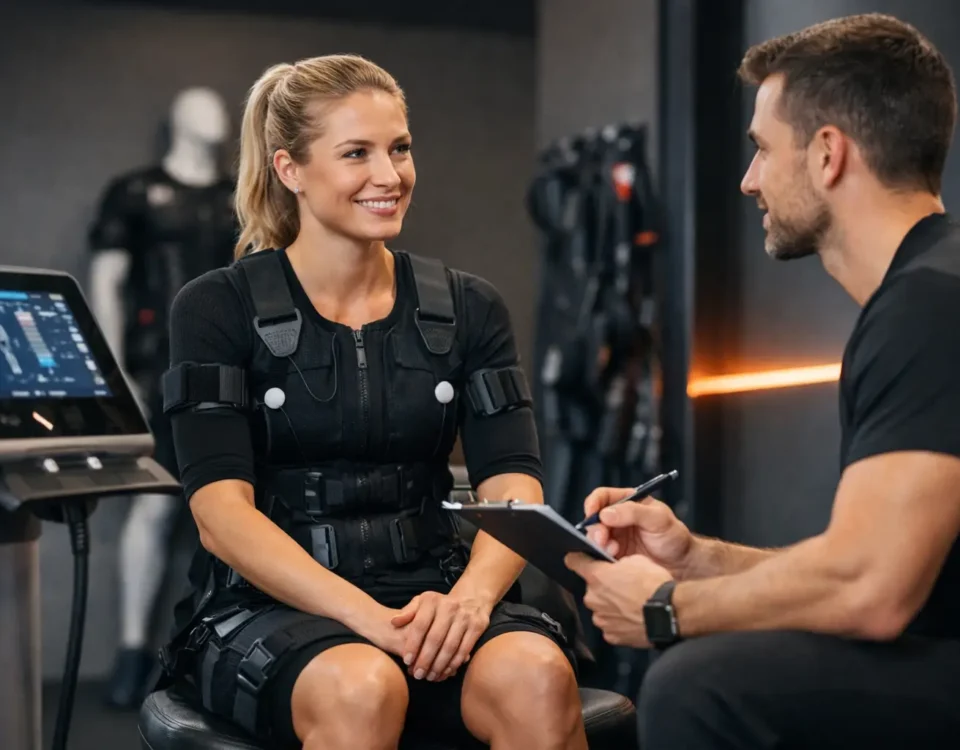
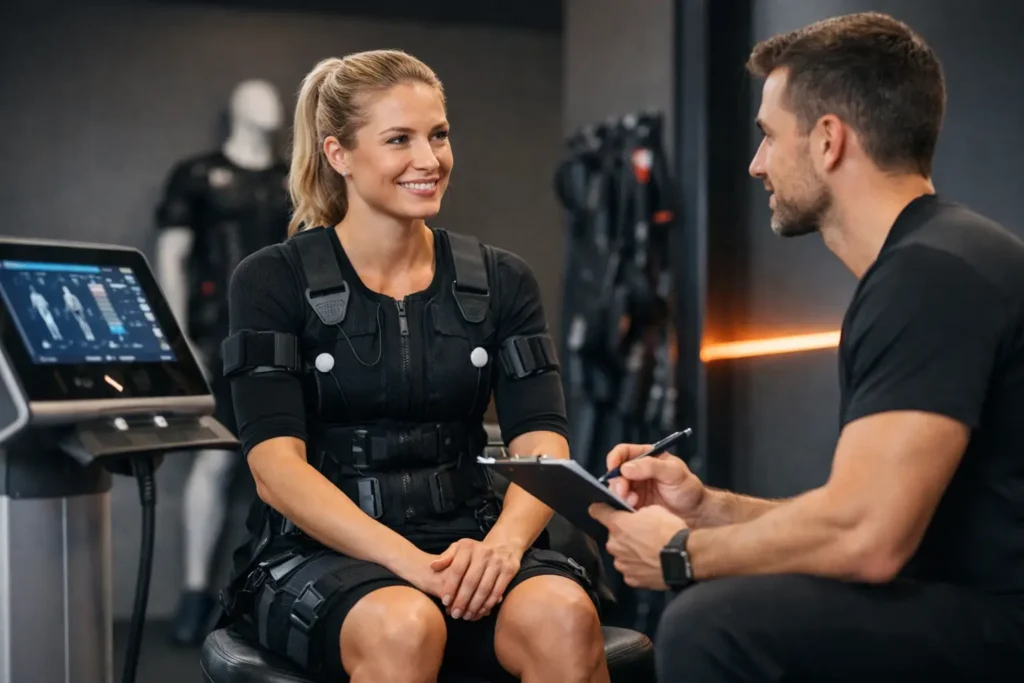
A skilled EMS coach starts with a consultation, screening, and clear orientation. The first session should establish comfort with the impulse, demonstrate correct movement patterns, and keep intensity appropriate to the client. Trying to make a first session feel extreme may create a memorable moment, but it is not a sound retention strategy. Clients return when they feel safe, supported, and able to recognize their progress over time.
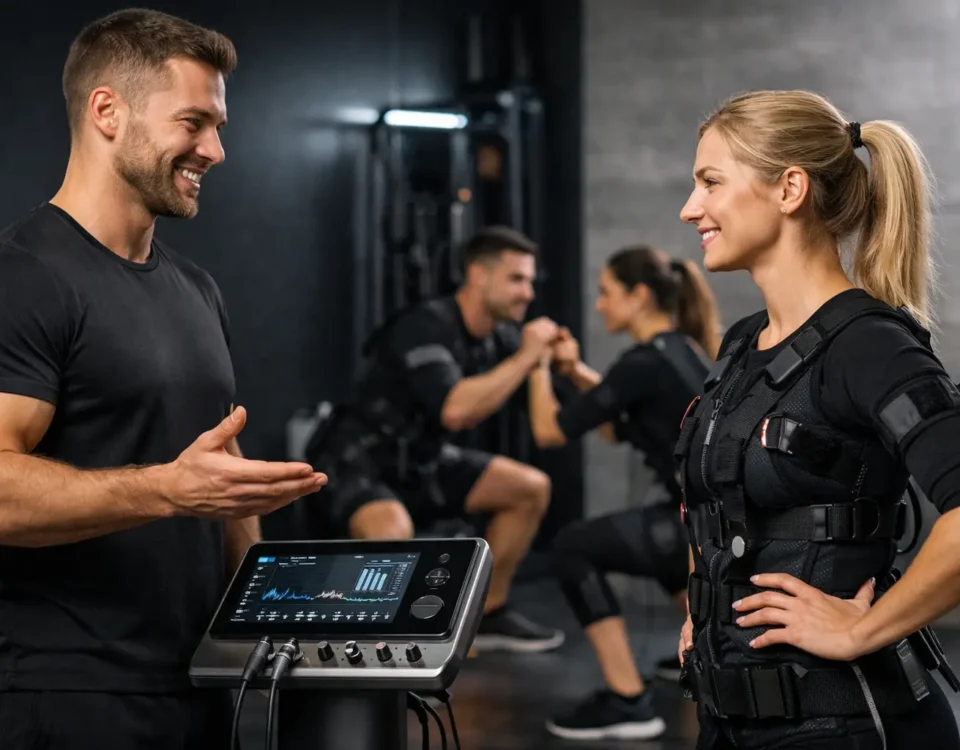
Coaches also need to manage more than intensity. Electrode contact, suit fit, hydration guidance, work-to-rest structure, and exercise selection all influence session quality. In a studio setting, these standards need to be repeatable across the team. In a mobile business, they need to remain consistent across different locations.
Position the service around value, not novelty
Many prospects are curious about the technology. Curiosity can bring them through the door, but it rarely sustains a recurring revenue model on its own. The enduring value is professional supervision, time efficiency, tailored progression, and a premium one-to-one or small-group experience.
That positioning also protects your brand. Avoid promising weight loss, rehabilitation outcomes, or dramatic physical changes. Instead, explain what your business provides: structured EMS training, qualified guidance, and a program built around the client’s goals and training capacity.
Choosing the Right EMS Business Model
The best equipment configuration depends less on what is technically possible and more on how you plan to sell, deliver, and scale sessions. Before selecting a system, define your client type, your available space, your expected appointment volume, and the amount of capital you want to commit at launch.
| Business model | Best fit | Commercial advantage | Operating priority | |—|—|—|—| | Mobile EMS | Personal trainers and solo operators | Lower overhead and flexible client access | Transport, setup speed, and one-to-one service | | Studio EMS | Gyms, clinics, and dedicated studios | Repeatable capacity and team-based delivery | Scheduling, staff training, and utilization | | Premium dry wireless EMS | Boutique wellness and VIP concepts | High-end client experience and design flexibility | Brand presentation and premium service standards |
Mobile EMS can be a practical entry point for trainers with an established client base. It allows the operator to test demand without taking on a full facility lease. The trade-off is logistical: travel time, equipment transport, setup, and fewer sessions per day can limit capacity. Pricing and route planning must account for that reality.
A studio EMS model supports stronger scheduling density and creates more opportunity for memberships, packages, and team delivery. It requires more operational discipline. Empty appointment slots, inconsistent coaches, and weak follow-up can quickly reduce the advantage of higher capacity. A studio needs a clear sales process, retention plan, and utilization targets from the beginning.
Premium dry wireless EMS is suited to operators building a refined boutique concept, especially where privacy, design, and convenience are central to the client experience. The higher-end presentation can support premium positioning, but it must be backed by service quality. A luxury environment cannot compensate for rushed onboarding or poorly trained staff.
Build a Client Journey That Supports Retention
A well-designed client journey begins before the first impulse. Your consultation should establish the client’s training background, expectations, availability, and relevant suitability factors. It should also explain the recommended frequency of sessions and the role of recovery. Clear expectations reduce cancellations and help clients understand why progression is measured over weeks, not judged by one intense appointment.
The first session should feel organized. Have the suit, accessories, hygiene process, and training area ready before the client arrives. Explain the controls in plain language. Ask for feedback throughout the session, not only at the end. Afterward, document settings, client response, movement choices, and any adjustments for the next appointment.
This data becomes commercially valuable as your client base grows. It enables a consistent experience when more than one coach serves the same member. It also gives your team a reason to contact clients who miss appointments, reach a program milestone, or are ready for a plan review.
For operators, retention is usually more valuable than chasing constant introductory sales. An impressive trial session has limited value if the client leaves without a clear next step. End each appointment with a specific recommendation: the next booking, a suitable training schedule, or a program option that matches the client’s goals and commitment level.
Safety and Operational Standards Protect the Business
EMS training should be delivered within a defined safety framework. Use manufacturer guidance, provide proper trainer education, apply client screening procedures, and maintain equipment according to its intended use. Clients should be advised to seek appropriate professional guidance when they have health concerns or are unsure whether EMS exercise is suitable for them.
From a business perspective, safety is not just a compliance item. It supports trust, reduces avoidable operational issues, and gives trainers a dependable process to follow. Document onboarding, cleaning protocols, maintenance checks, and staff training. If your team expands, these systems make quality easier to preserve.
Equipment support matters here as well. An interrupted system can mean canceled appointments and lost confidence. For that reason, assess warranty terms, spare-parts access, onboarding, and technical support alongside the hardware itself. EMS Leader approaches equipment selection as a business-entry decision, helping operators align their system, financing approach, training, and launch plan with the model they want to build.
Make the Technology Fit the Business Plan
The right EMS system is not automatically the one with the most features. It is the one your team can operate well, your clients can understand, and your business can monetize consistently. A solo trainer may prioritize portability and low initial commitment. A growing studio may prioritize multi-client capacity and operational support. A premium wellness concept may prioritize wireless convenience and presentation.
Start with the service you want to deliver, then choose the technology and support structure that make that service reliable. When electrostimulation is paired with educated coaching, disciplined operations, and a realistic commercial plan, EMS exercise becomes more than a trend. It becomes a focused service line with room to grow.