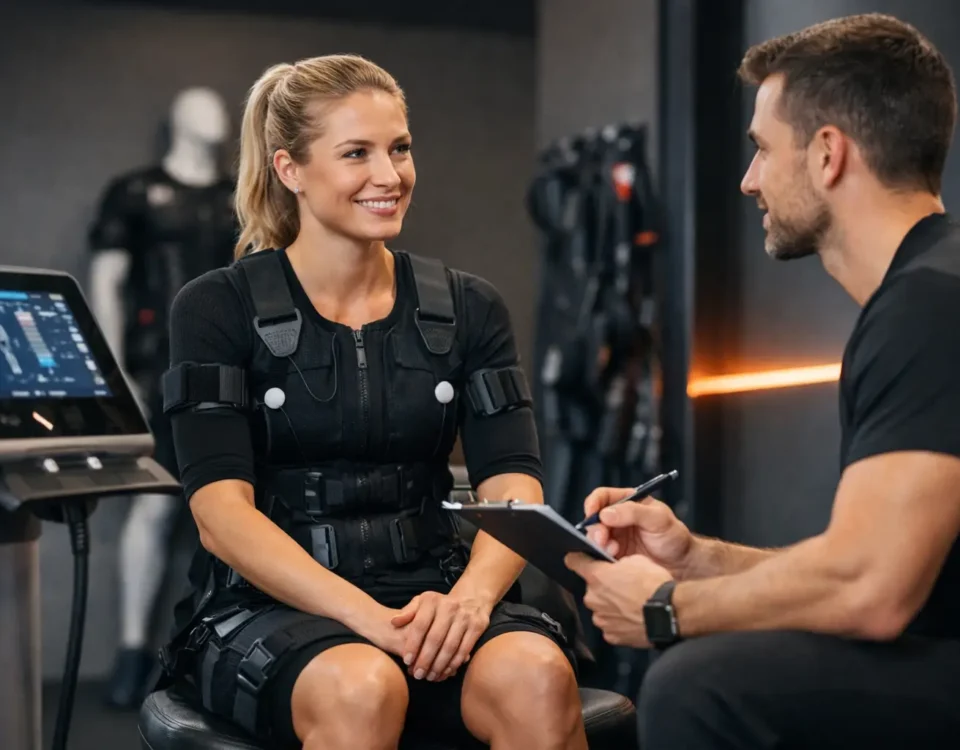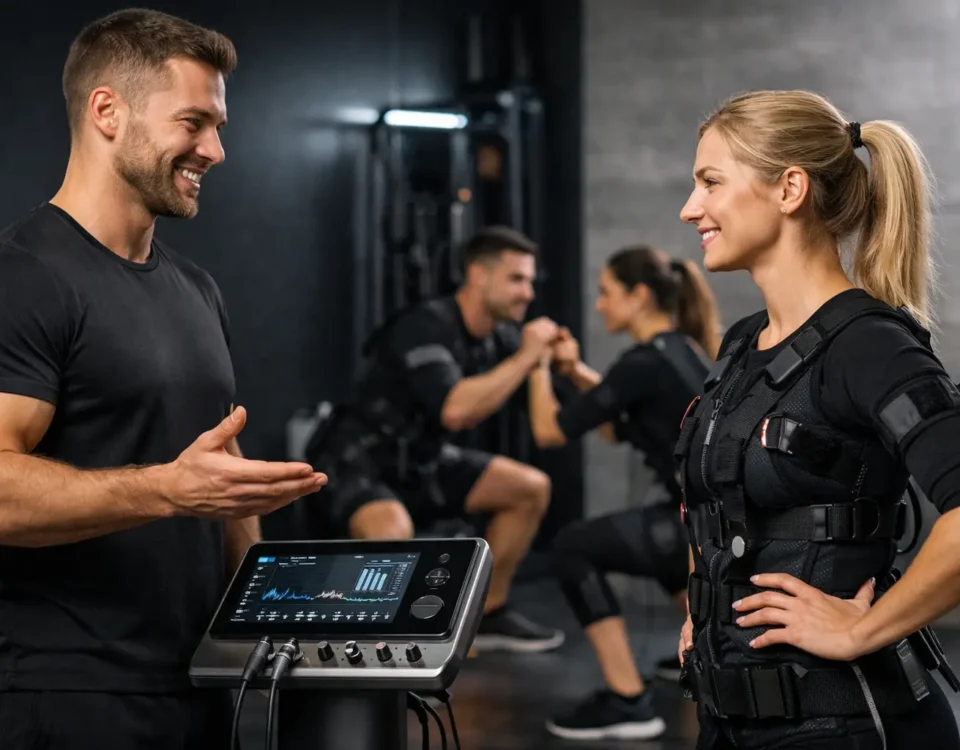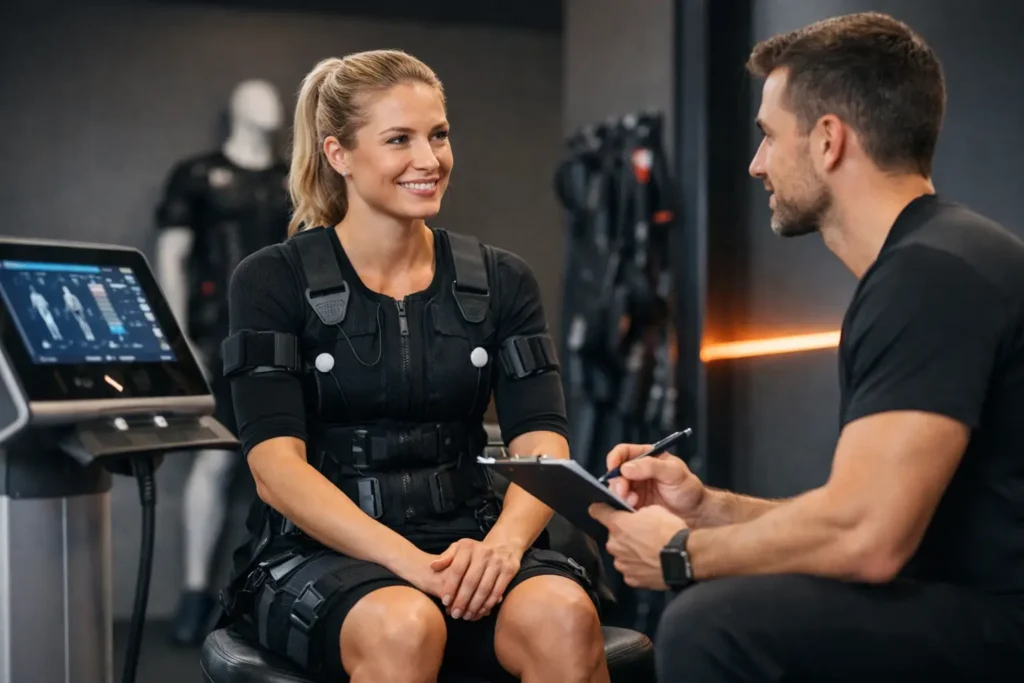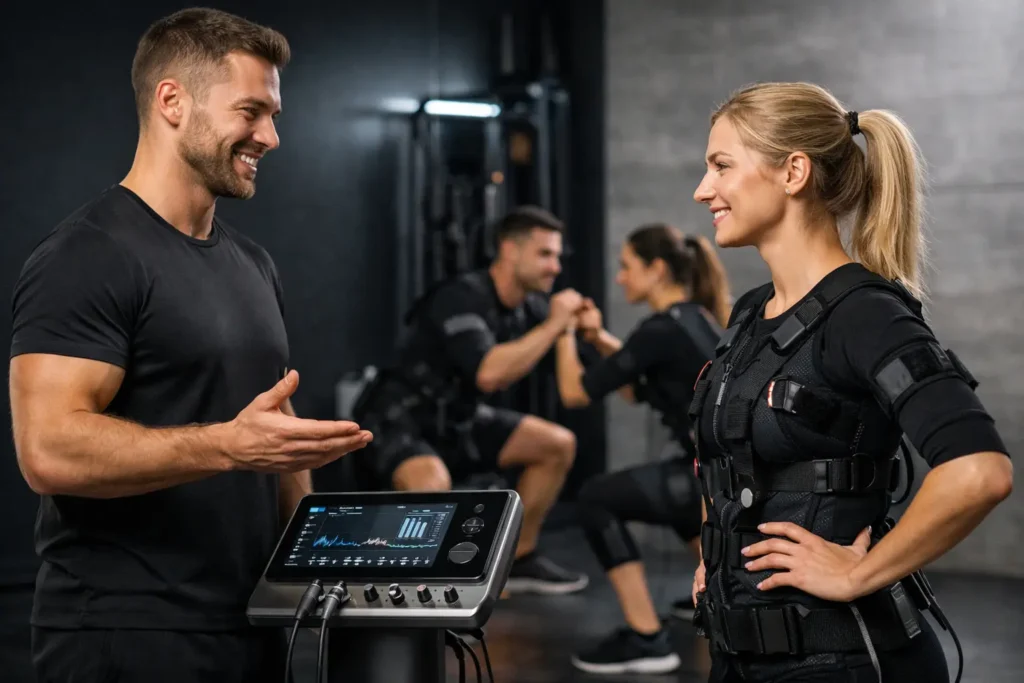

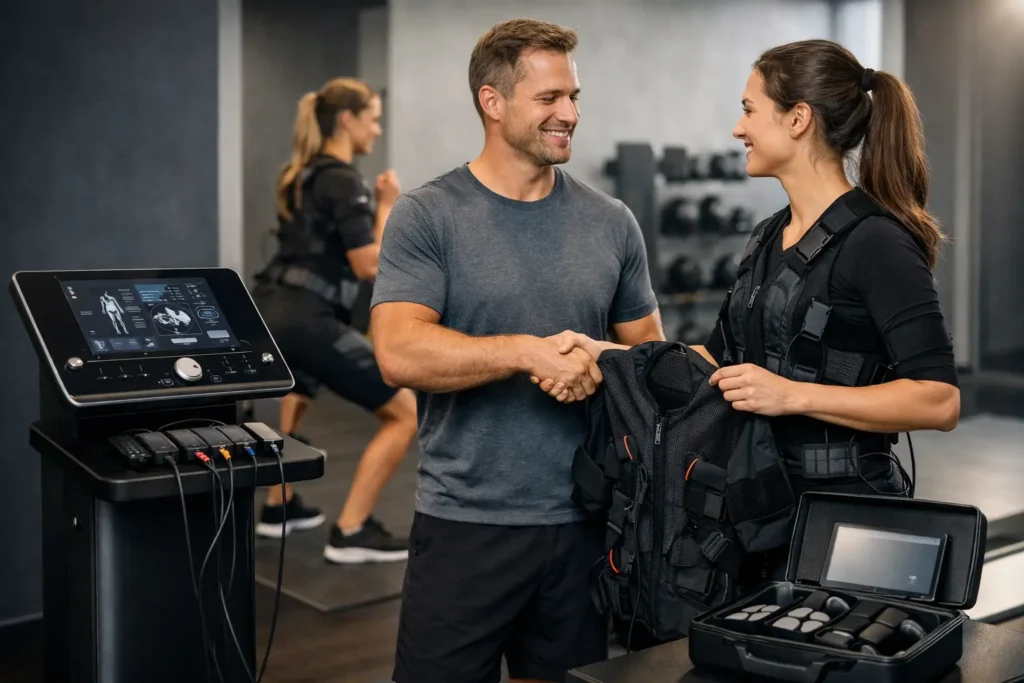
Adding EMS is not simply a question of putting another training device on the gym floor. It is a decision about service design, staff capacity, member positioning, and cash flow. The right EMS equipment for gym owners can create a focused, appointment-based revenue stream. The wrong setup can become an underused asset because it does not match the way the business actually sells and delivers training.
For most operators, the best starting point is not a device specification sheet. It is a commercial plan: Who will use the service, how many sessions can the team deliver each week, where will sessions take place, and how will EMS fit alongside the gym’s current offer?
Start With the Business Model, Not the Machine
EMS can work in several types of fitness businesses, but each calls for a different equipment setup. A personal trainer adding EMS to an existing client roster has different needs from a health club building a dedicated EMS room. A premium wellness concept may prioritize privacy, design, and a dry wireless experience over maximum session volume.
The first decision is whether EMS will be a mobile service, a studio service, or a premium add-on within a broader wellness model. That choice affects the number of stations, suit configuration, staffing requirements, accessories, and the level of capital commitment.
| Business model | Best fit | Main commercial advantage | Key operational consideration | |—|—|—|—| | Mobile EMS | Trainers and low-overhead operators | Brings the service to clients and minimizes fixed location costs | Requires travel planning and disciplined scheduling | | Studio EMS | Gyms, clinics, and dedicated EMS locations | Supports repeat appointments and multiple client sessions | Needs a clear booking process and trained staff coverage | | Premium dry wireless EMS | Boutique wellness and VIP concepts | Creates a high-end, convenient client experience | Must be supported by premium positioning and consistent service standards |
A gym owner should also decide whether EMS is intended to attract new clients, retain existing members, increase personal training revenue, or create a separate premium service. It can do more than one of these jobs, but the primary objective should shape the launch plan.
Match EMS Equipment for Gym Owners to Client Capacity
Capacity is where many equipment decisions become clear. A single-station setup can be commercially sensible when EMS is delivered by one coach through scheduled one-to-one sessions. It allows the business to test demand, build coaching confidence, and establish pricing without creating unnecessary overhead.
A multi-station setup makes more sense when the gym already has a reliable personal training base, a strong membership community, or a dedicated space for small-group appointments. The opportunity is higher throughput, but only if the operator can consistently fill appointment slots and provide a high-quality coached experience.
Do not base capacity on the gym’s total membership alone. A large member base does not automatically translate into EMS demand. Look instead at the number of members who already purchase personal training, wellness services, body composition consultations, or premium memberships. Those audiences are usually the most logical first prospects because they are already accustomed to guided, paid services.
The physical layout matters too. EMS sessions need a professional environment with enough room for safe movement, coach visibility, equipment storage, changing or preparation, and cleaning between appointments. A crowded corner of the main training floor may work for a pilot, but a dedicated zone often supports better client confidence and smoother scheduling as the service grows.
Plan for utilization before expanding
A second station is valuable when demand and coach availability justify it, not simply because extra capacity looks appealing. Before expanding, review weekly booked sessions, no-show rates, coach utilization, lead conversion, and the share of clients who continue after an introductory package.
This approach protects the investment. It also gives the gym a realistic view of whether its bottleneck is equipment capacity, marketing, staff availability, or the sales process.
Look Beyond the Purchase Price
Equipment cost matters, but the real investment includes everything needed to operate the service confidently. Gym owners should assess onboarding, staff training, warranty coverage, replacement parts, accessories, maintenance expectations, and technical support before selecting a supplier.
A lower initial price can become expensive if the business has limited training, slow access to support, or no clear route to replacement accessories. On the other hand, a more complete commercial package may reduce launch friction and help the team begin selling and delivering sessions sooner.
Financing structure is equally important. Direct purchase may suit an established operator with available capital and a clear rollout plan. Rental or rent-to-own can be more practical for a business testing a new category, protecting working capital, or wanting investment to track more closely with early revenue.
There is no universal best option. The right structure depends on the gym’s cash position, growth timeline, and tolerance for upfront risk. The key is to model the full monthly commitment against conservative utilization assumptions rather than optimistic launch-week projections.
Build a Service That Members Understand
Clients rarely buy equipment features. They buy a clear, professionally delivered experience that fits their goals and schedule. Your team should be able to explain what an EMS session involves, who it is designed for, how appointments are structured, and why coaching is central to the service.
Avoid presenting EMS as a replacement for every form of training. It is stronger as a defined offering within a broader fitness strategy. Some clients may use it alongside strength training, mobility work, personal training, or a wellness-focused routine. The right recommendation depends on the client, their preferences, and the gym’s service standards.
A simple offer is often easier to sell than a long menu. For example, a gym may begin with an assessment, an introductory EMS session, and structured session packages delivered by trained coaches. This gives prospects a clear starting point while giving staff a repeatable consultation process.
The client journey should also include screening, informed orientation, session preparation, and post-session follow-up. These steps protect quality and reinforce that EMS is a professional coached service, not an unattended self-service activity.
Staff Training Is a Revenue Requirement
The most advanced EMS system cannot compensate for an unprepared team. Staff need practical training on setup, client screening, electrode placement or suit preparation, intensity management, session coaching, hygiene procedures, and equipment care. They also need commercial training: how to introduce the service, handle common questions, and recommend the right package without overselling.
Gym owners should identify a small group of accountable EMS coaches before launch. Giving responsibility to everyone can mean that nobody fully owns results. A focused launch team can build competence, collect feedback, refine the session flow, and create early success stories based on service quality rather than exaggerated promises.
Training should not end after installation. New staff, changing client profiles, and evolving service routines create a need for ongoing refreshers. This is one reason a supplier relationship matters beyond the initial equipment transaction.
Create a Measurable Launch Plan
A successful EMS launch needs more than a social media announcement. Start with the people already most likely to book: active personal training clients, premium members, former coaching clients, and prospects who have requested individualized support. Invite them into a structured introduction rather than relying on broad, vague promotion.
Set a short list of operating metrics from day one. Track consultations booked, trial-to-package conversion, sessions delivered per coach, package continuation, average revenue per EMS client, and client acquisition source. These figures show whether the service is gaining traction and where the sales or delivery process needs adjustment.
It is also useful to separate marketing results from operational results. A full trial calendar is encouraging, but it does not prove the model works if clients do not continue. Likewise, strong coach availability means little if the team is not generating consultations. Measure both sides.
Questions to Ask Before You Commit
Before choosing a system, ask the supplier how the equipment will fit your intended model, not just what features it has. Clarify the training pathway, warranty terms, availability of spare parts, support response process, and the accessories required for daily operation.
Ask for help building a realistic ROI plan based on your expected client volume, session format, staffing, and financing route. A serious commercial partner should be able to discuss trade-offs openly. For example, a mobile setup may reduce overhead but limit daily appointments, while a dedicated studio can improve throughput but requires stronger local demand and scheduling discipline.
EMS Leader supports operators with equipment access, business model planning, training, and after-sales support, helping reduce the gap between buying a system and operating a service clients will return to.
The strongest EMS investment is the one your team can sell confidently, deliver consistently, and expand at the pace your market supports. Start with the model that fits your business now, then let real utilization guide the next move.