
A client may only see an EMS session. An operator sees the full operating model behind it: setup time, trainer workload, hygiene process, client positioning, capacity, and revenue per appointment. The choice among an EMS suit, dry EMS suit, wireless EMS system, EMS bodysuit, EMS vest, and broader EMS wear is therefore not simply a product decision. It determines how your business can be launched, sold, and scaled.
For fitness and wellness professionals, the right setup starts with a clear question: what kind of EMS business are you building? A mobile personal-training service, a high-capacity studio, or a premium boutique experience will each benefit from a different equipment approach.
Start With the Commercial Model, Not the Device
EMS equipment should support your business model rather than force you to adapt your business around it. Before comparing features, define your ideal client, service location, staffing level, and desired appointment volume.
A personal trainer entering the market with limited capital may need a portable system that can travel between homes, offices, gyms, and partner locations. A gym owner may need an EMS setup that integrates into an existing training floor and gives members a high-value personal-training upgrade. A wellness entrepreneur building a luxury concept may prioritize a clean, fast, distinctive dry wireless experience that supports premium positioning.
The equipment is only one part of the investment. Trainers need practical education, the business needs a client onboarding process, and the operator needs a plan for packages, scheduling, maintenance, and lead conversion. A lower entry cost can be attractive, but it is not automatically the lowest-cost choice if it creates friction in daily operations or limits the client experience you want to deliver.
EMS Suit, EMS Bodysuit, and EMS Vest: Know the Format
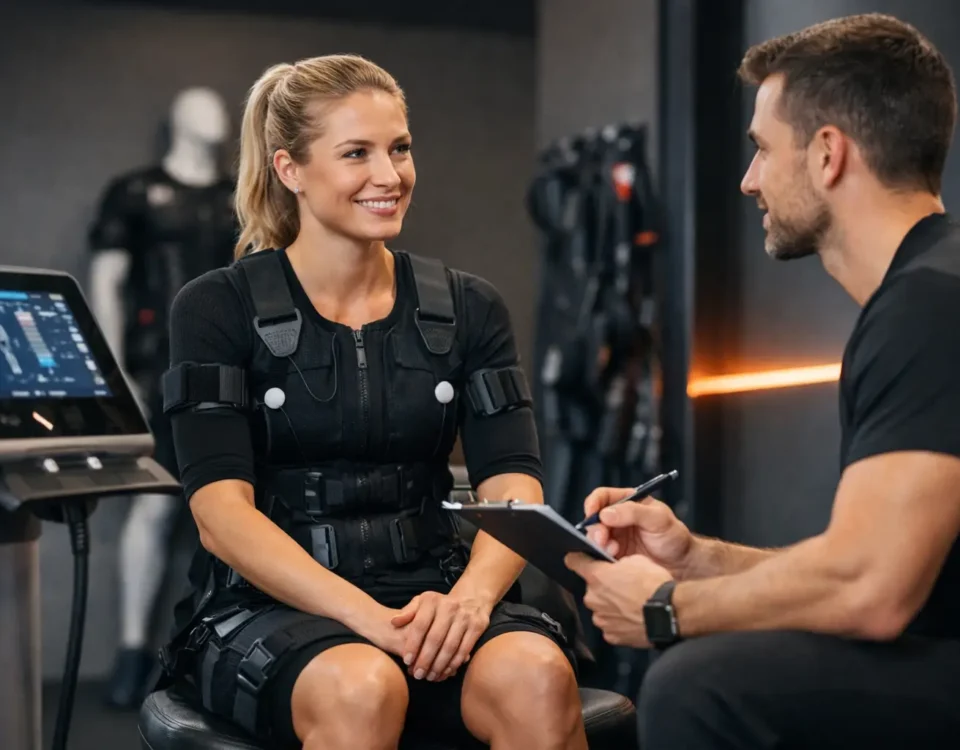
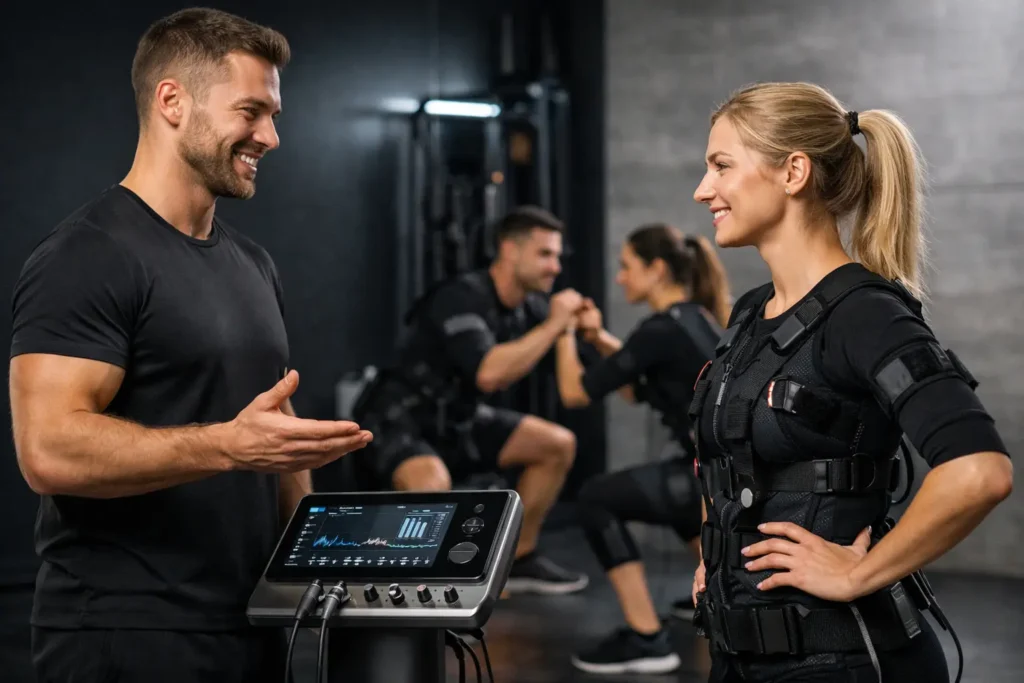
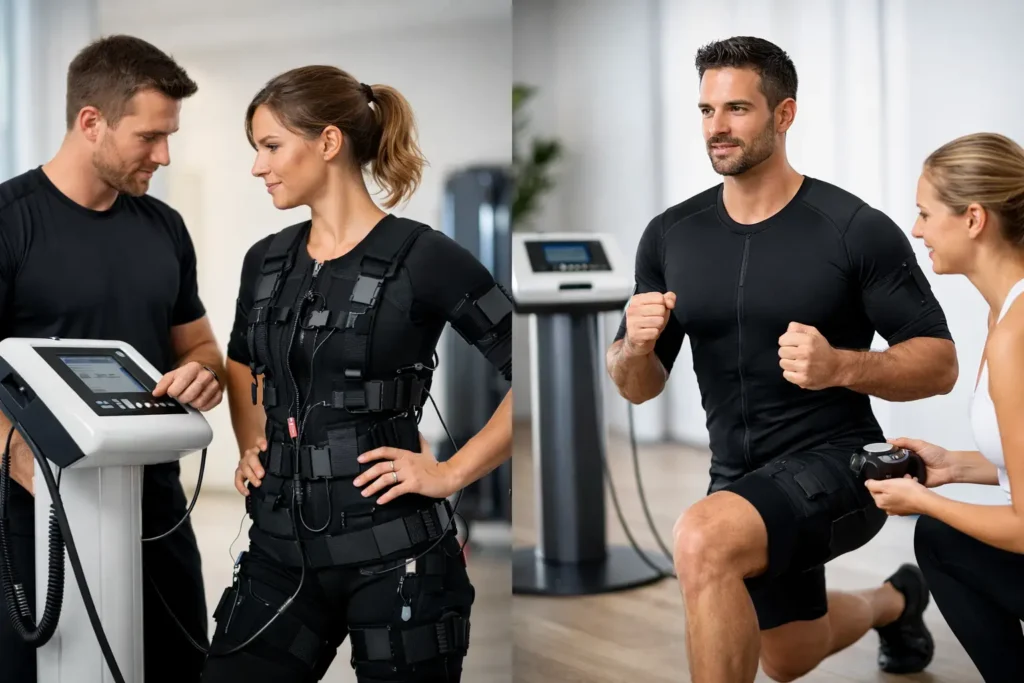
An EMS suit or EMS bodysuit generally refers to a garment that places electrode areas across major muscle groups. It is designed to be used with a compatible EMS control system and under trained supervision. The garment format can affect fit, preparation time, comfort, cleaning workflow, and how professional the session feels from the client’s perspective.
An EMS vest is more focused on the upper body and core. For some operators, it can be useful as part of a targeted training format or a more compact service concept. However, a vest does not create the same full-body proposition as an EMS bodysuit. If your commercial offer is built around full-body EMS training sessions, confirm that the equipment format supports the muscle coverage and coaching experience you intend to market.
EMS wear is the broader operational category. It includes the garments, underlayers, accessories, and replacement items that make sessions possible day after day. This is where many new operators underestimate the real business requirement. A strong launch plan includes enough EMS wear to protect appointment flow, accommodate different client sizes, and maintain a consistent hygiene standard between sessions.
Fit and inventory affect client retention
Poor fit can undermine an otherwise capable EMS system. Clients should feel supported, comfortable, and able to move safely through the planned session. Size availability also matters commercially. If a client cannot be accommodated promptly, you create a barrier at the moment they are ready to buy.
Build your initial garment inventory around your expected client profile, not only around the minimum equipment package. Consider how many sessions may occur in a peak period, how garments will be cleaned and dried, and what happens when an item needs replacement. Spare parts and accessory access are operational safeguards, not optional extras.
Dry EMS Suit and Wireless EMS: A Premium Operating Choice
A dry EMS suit uses dry-contact technology rather than requiring the traditional preparation associated with wet electrodes. In many cases, this can reduce setup complexity and support a cleaner, more premium client experience. The specific workflow still depends on the system, garment design, client preparation standards, and the service protocol established by the operator.
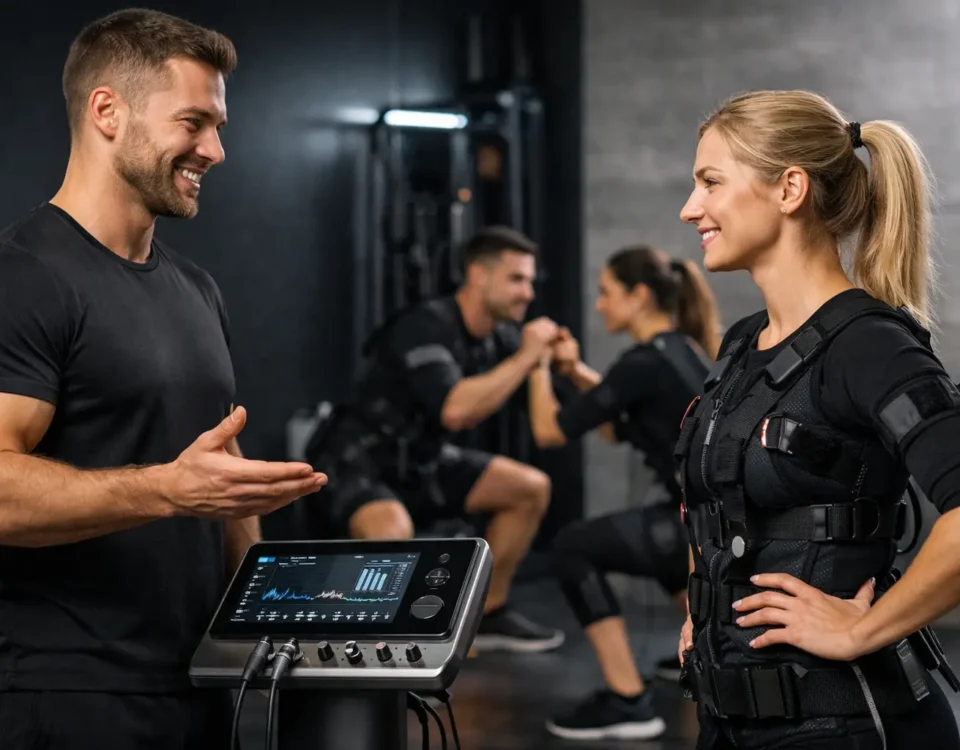
Wireless EMS removes the practical limitation of being physically connected to a central unit during training. For boutique studios, private training spaces, luxury wellness concepts, and high-end hospitality environments, this freedom can make the session feel more modern and more flexible. It can also give trainers greater room to coach movement without managing cables around the client.
That premium experience comes with a trade-off. Dry wireless EMS systems typically require a more deliberate investment decision, stronger brand positioning, and disciplined staff training. They work best when the operator has a clear audience willing to pay for convenience, privacy, design, and a differentiated session format. Buying premium equipment without a premium sales process can weaken the return on investment.
| Business priority | Suitable EMS direction | Practical consideration | |—|—|—| | Low-overhead mobile launch | Portable full-body EMS system | Prioritize transport, fast setup, and reliable garment rotation. | | Gym or clinic expansion | Studio-oriented EMS setup | Plan room use, staff scheduling, and integration with existing services. | | Boutique or VIP positioning | Dry EMS suit with wireless EMS | Support the investment with premium packages and a polished client journey. | | Focused upper-body format | EMS vest-based application | Define the offer clearly so clients understand its scope. |
Capacity Is More Than the Number of Devices
Operators often evaluate capacity by asking how many clients a system can train at once. That matters, but true capacity is the number of quality sessions your team can deliver, sell, and turn over consistently.
A one-to-one mobile model may have lower simultaneous capacity but can command attention through convenience and personalized coaching. It is often a practical entry route for an experienced trainer who already has a client base. The limiting factors are travel time, local geography, and how efficiently appointments can be grouped.
A studio model can create more predictable scheduling and stronger visibility. It may support multiple coaches, recurring memberships, and complementary services. It also requires more fixed-cost discipline. Rent, staffing, reception flow, and lead generation all become part of the EMS decision.
A premium dry wireless model can support stronger pricing power when the environment and service match the equipment. This is not a shortcut to profitability. It is a positioning tool that must be backed by professional consultation, confident coaching, consistent presentation, and a client journey that feels worth returning for.
Build the Service Before You Launch
The most successful EMS businesses do not start by posting that a new device has arrived. They start with a clear service structure. Define the initial consultation, screening process, session format, coaching standards, progress tracking approach, package options, and follow-up communication before the first paid appointment.
Trainer education is central to that structure. EMS sessions require trained operators who understand equipment use, appropriate protocols, client communication, garment fitting, and safety procedures. This protects the client experience and gives your team the confidence to explain the service without relying on vague claims.
Your sales conversation should also be commercial and realistic. Explain the time-efficient format, coaching value, and session experience in terms relevant to your audience. Avoid promising specific body changes or presenting EMS as medical treatment. A credible operator earns trust by setting clear expectations and delivering a consistent service.
Evaluate Support as Part of the Equipment Decision
An EMS system that is unavailable cannot generate appointments. Warranty coverage, access to spare parts, technical guidance, onboarding, and ongoing business support should influence your decision alongside garment design and device specifications.
This is particularly important for first-time operators. Equipment financing flexibility can lower the barrier to launch, but the right commercial partner should also help you compare the model against your market and operating capacity. EMS Leader supports this process through equipment access, training, setup guidance, and business-model planning for operators building mobile, studio, or premium EMS concepts.
Ask practical questions before you commit. How quickly can your team be trained? What is the replacement process for frequently used EMS wear? How will the system be maintained? Can the supplier support growth if you add trainers, locations, or additional units? The answers shape your ability to operate confidently after launch day.
The strongest first move is not choosing the most advanced-looking EMS suit. It is choosing the system and support model that matches how you will attract clients, deliver excellent sessions, and build repeatable revenue from the first month onward.