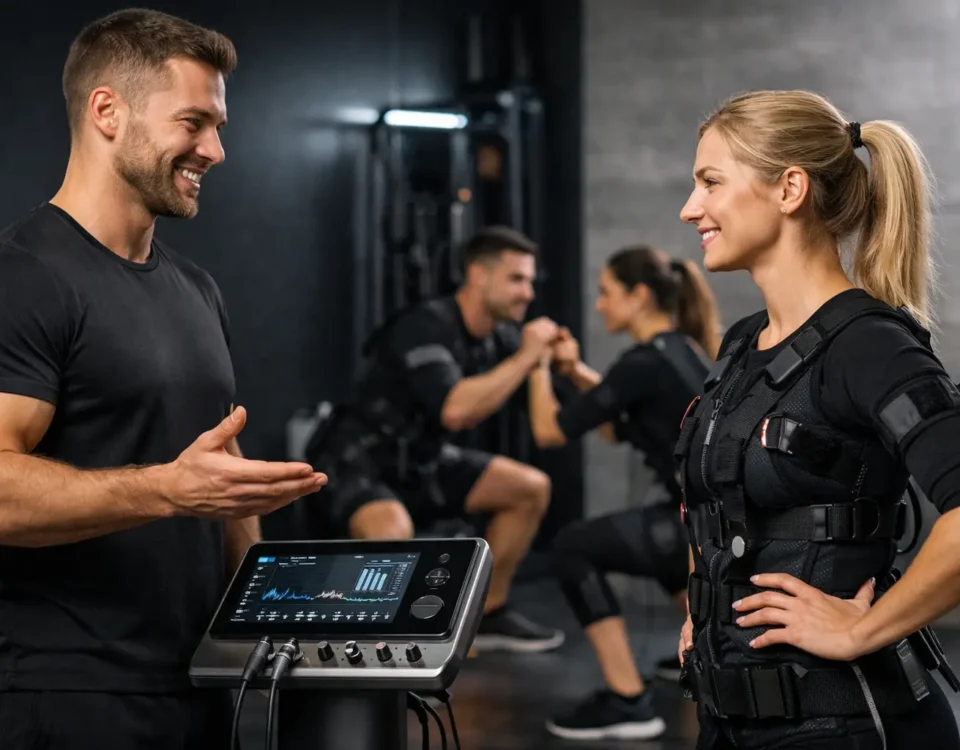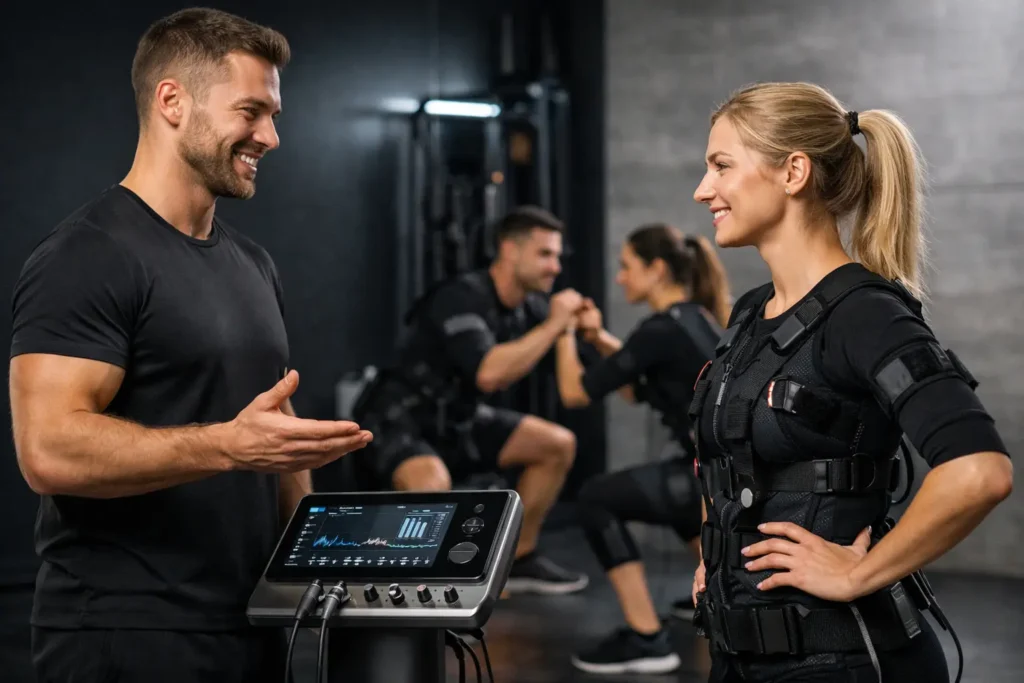


A single EMS unit can be the foundation of a focused solo service or the first station in a scalable studio. The real answer to how many clients per EMS unit depends less on the device alone and more on your session format, staffing model, operating hours, and the client experience you want to sell.
For an EMS operator, capacity is not just a technical question. It determines how quickly you can build recurring revenue, whether you need another unit, and how confidently you can accept new memberships or package clients. Plan it correctly from the start, and your equipment investment supports growth instead of becoming a bottleneck.
How Many Clients per EMS Unit? Start With Daily Appointments
Most EMS businesses work with short, appointment-based training sessions. A commonly used format is a 20-minute active EMS session, but the commercial slot should include more than training time. You need room for greeting the client, putting on or preparing the equipment, confirming settings, documenting the session where required, cleaning or resetting the station, and transitioning to the next appointment.
For practical planning, many operators schedule 30-minute slots. That gives one EMS unit a theoretical maximum of 16 appointment slots in an eight-hour day. In real operations, however, aiming for 100% utilization is rarely smart. Cancellations, late arrivals, consultations, equipment checks, and staff breaks are part of a sustainable schedule.
A more realistic early-stage target for one active EMS training station is often six to 12 completed sessions per day. A mature operation with strong systems, demand, experienced staff, and tightly managed booking can run more appointments, but capacity should never compromise supervision, client comfort, or training quality.
The key distinction is this: an EMS unit may be technically capable of supporting a certain number of users or channels, while your business may be operationally capable of serving a different number. Your staffing, protocol, and local requirements set the commercial limit.
Capacity Changes by EMS Business Model
The number of clients you can serve from one unit changes significantly between mobile, studio, and premium concepts. Each model has a different balance of investment, throughput, travel time, and pricing power.
| Business model | Typical use of one EMS unit | Main capacity factor | Commercial priority | |—|—|—|—| | Mobile EMS | One client at a time across multiple locations | Travel and setup time | Route efficiency and premium convenience | | Studio EMS | A fixed station with booked appointments | Coach availability and schedule discipline | Repeat sessions and utilization | | Multi-station studio | One unit within a larger operating floor | Staffing and synchronized bookings | Throughput and membership retention | | Premium dry wireless EMS | Private, high-service appointments | Experience design and turnaround | High-value positioning and client loyalty |
Mobile EMS: Fewer Sessions, Higher Value per Visit
A mobile EMS operator may own one unit but spend meaningful time traveling between homes, offices, hotels, or partner locations. In this model, the equipment is rarely the limiting factor. Travel distance, parking, setup, and route planning determine how many clients fit into the day.
A well-organized mobile operator may schedule several clients in the same neighborhood, building, or corporate site. This can create a productive day with fewer gaps. By contrast, appointments spread across a city can make even a full calendar inefficient.
For mobile EMS, do not build your business plan around the maximum number of sessions possible. Build it around profitable route density. Five efficiently located sessions can be more valuable than eight sessions that require excessive travel and reduce the quality of the client experience.
Studio EMS: Make the Unit Work More Hours
A fixed EMS studio gives you more control over utilization. Clients come to you, equipment remains installed, and the day can be organized around repeatable appointment blocks. One unit can serve a reliable base of recurring clients when sessions are scheduled consistently across morning, lunchtime, evening, and weekend demand.
For example, if a unit completes eight sessions per day over five days, it produces 40 weekly appointments. If your average active client visits once per week, that could support approximately 40 recurring clients before the schedule becomes tight. If most clients visit twice per week, the same unit supports closer to 20 recurring clients.
That is why total client count can be misleading. A studio with 60 registered clients may still have spare capacity if many attend once a week at varied times. Another studio with 25 clients may feel full if every client wants the same after-work appointments twice per week.
Premium Concepts: Capacity Is Part of the Product
In boutique wellness, luxury fitness, or VIP environments, the goal is not always to maximize appointments per unit. A premium dry wireless EMS concept may intentionally allow more time between clients for private consultation, recovery-oriented add-ons, equipment preparation, or a higher-touch service flow.
This model can serve fewer clients per day while producing a stronger revenue model per appointment. The decision should be deliberate. If your market values privacy, convenience, and service quality, a lower-volume operating model may be commercially stronger than a high-throughput schedule.
Calculate Your Real Client Capacity
Use a simple planning formula before deciding whether you need one unit, multiple units, or additional staff:
Weekly appointment capacity = available appointment slots per day × operating days × expected booking rate
Then use this calculation:
Potential recurring clients = weekly completed appointments ÷ average visits per client per week
Suppose one EMS station offers 10 appointment slots per day, five days per week. That creates 50 available weekly slots. At an 80% booking rate, the business completes about 40 sessions each week. If clients attend once weekly, the unit can support roughly 40 active recurring clients. If they attend twice weekly, capacity is closer to 20 active recurring clients.
This formula is more useful than asking for one universal number because it reflects the business you are actually building. It also lets you model growth without guessing.
Do Not Confuse Equipment Capacity With Coach Capacity
One of the most common expansion mistakes is adding EMS equipment before fixing the schedule or staffing constraint. A second unit only creates value when there is enough demand, trained supervision, and operational flow to use it properly.
Before adding another station, review whether your current unit is consistently booked at the times clients want. If it is only busy between 5:00 p.m. and 8:00 p.m. but quiet for the rest of the day, your first priority may be demand generation, off-peak offers, corporate partnerships, or better appointment management.
If your prime hours are consistently full, clients are waiting for preferred times, and trained staff can support additional sessions, another unit may create a clear expansion path. In a studio setting, multiple stations can also improve resilience. If one station needs service or maintenance, the business is not forced to stop operating entirely.
Your manufacturer training, equipment instructions, and applicable local rules should always guide how clients are supervised and how many sessions can be managed at once. Commercial growth should be built around safe, consistent delivery – not around pushing the maximum number of bodies through the schedule.
Build a Client Base Before You Chase Maximum Utilization
New EMS operators often focus on filling every possible time slot immediately. A better approach is to establish a stable core of recurring clients first. Recurring packages, clear appointment policies, follow-up communication, and a structured onboarding consultation make utilization more predictable than one-off bookings.
Track three figures every week: completed sessions per unit, cancellation rate, and peak-hour occupancy. These numbers quickly show whether you need more leads, a better retention system, longer operating hours, or an additional EMS station.
A unit with 30 weekly sessions from loyal recurring clients is usually in a better commercial position than a unit with 45 irregular appointments and high churn. Consistency supports staffing decisions, cash-flow planning, and confident expansion.
When Should You Add Another EMS Unit?
Consider expansion when the current unit is regularly close to practical capacity, not merely because it has a few busy days. Strong signs include repeated waitlists during peak periods, clients unable to secure preferred recurring times, and a trained coach team that is ready to support more appointments.
The right next step depends on your model. A mobile operator may add a second unit to serve another geographic area or bring on another trainer. A studio may add a station to increase concurrent capacity. A premium concept may add equipment to protect privacy and keep the experience exclusive as demand grows.
EMS Leader helps operators assess this decision in commercial terms: equipment access, financing structure, staffing needs, projected utilization, and the right model for the market. The goal is not to own more equipment than you can use. It is to build a capacity plan that matches demand and gives your business room to grow.
The strongest EMS businesses do not ask how many clients a unit can handle in theory. They know how many clients their schedule, team, and service model can serve well – then expand at the point where demand makes the next unit a strategic move.