
A new EMS business can lose momentum before its first client session if too much capital is tied up in equipment. Knowing how to finance EMS equipment means choosing a payment structure that supports your launch plan, protects working capital, and fits the number of clients you can realistically serve from month one.
For a personal trainer adding mobile EMS, the best route may look very different from a gym building a multi-client studio or a wellness concept positioning a premium wireless service. The right decision is not simply about finding the lowest monthly payment. It is about matching your investment to your sales model, capacity, operating costs, and growth timeline.
Start With the Business Model, Not the Equipment
Before reviewing finance options, define how the EMS service will produce revenue. Equipment is only one part of the investment. You also need to account for training, client acquisition, space or travel costs, staff time, consumables, insurance, and a cash reserve for the first months of operation.
A mobile EMS operator usually needs a lower-entry setup and the flexibility to train clients at home, in private facilities, or at partner locations. This model can keep overhead controlled, but revenue depends heavily on the operator’s personal availability and local travel time.
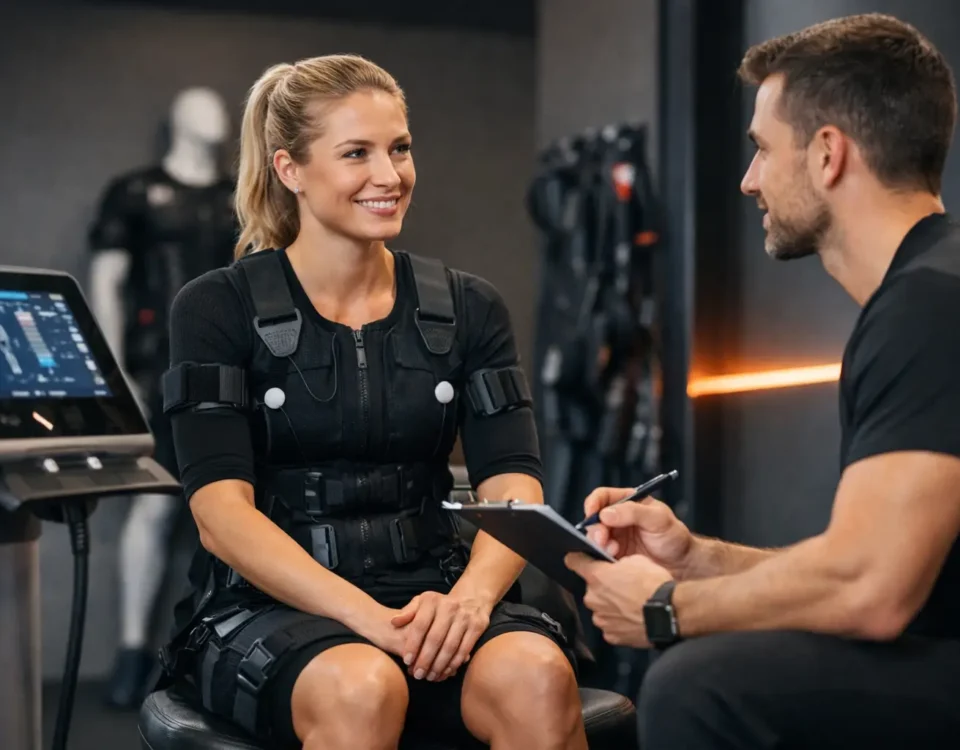
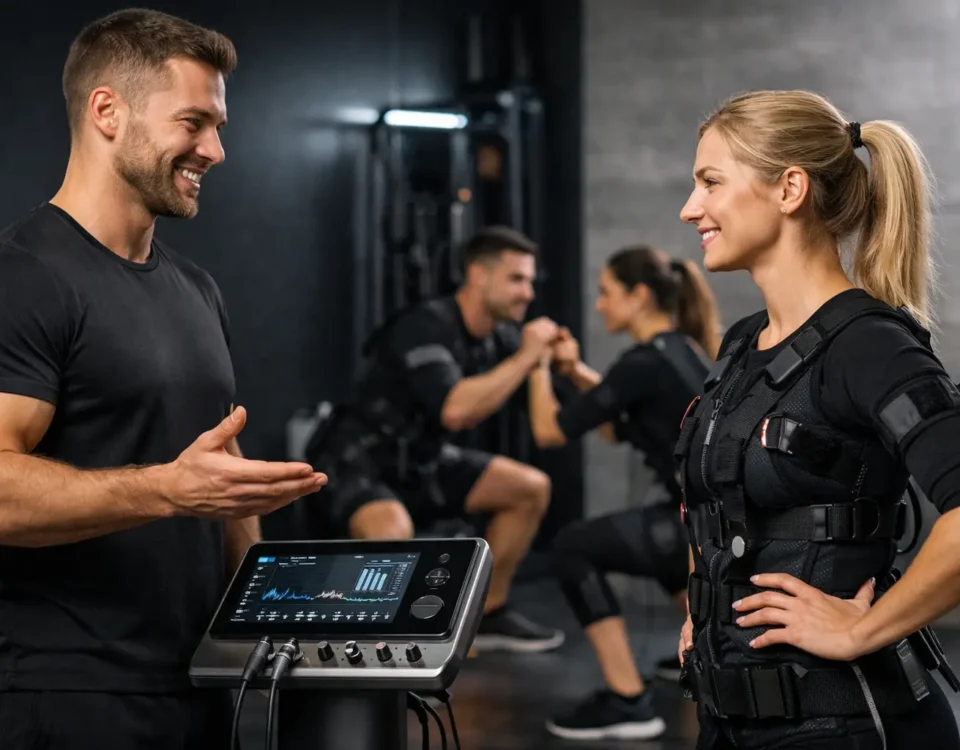
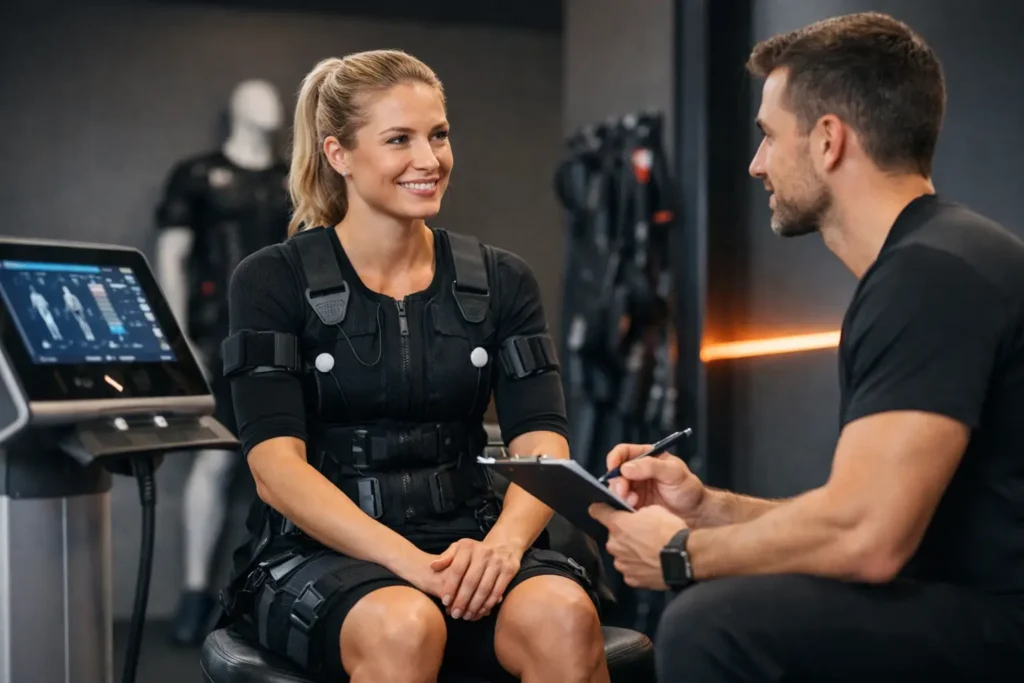
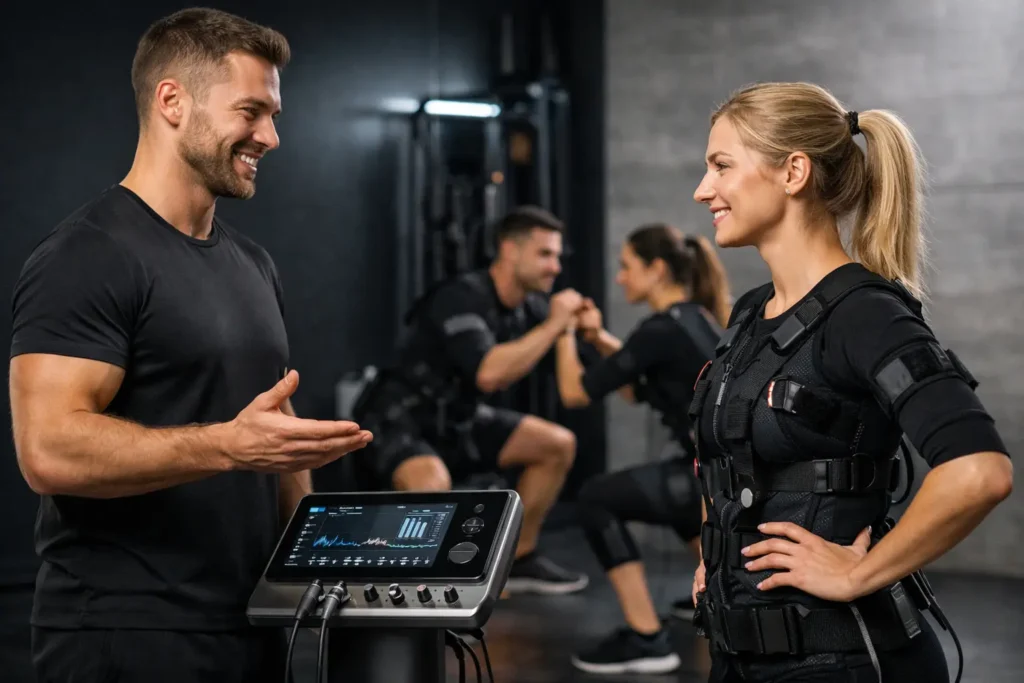
A studio model requires a higher initial commitment, yet it can create more client capacity and stronger scheduling efficiency. It may suit gym owners, clinic managers, and established trainers who already have a location, staff, and an audience to market to. Premium dry wireless EMS concepts typically require careful positioning. Their value comes from a polished, high-service experience, so the financing plan must leave room for branding, interior presentation, and client experience.
When you know the model, you can calculate the investment level that makes commercial sense rather than financing more equipment than your launch can support.
How to Finance EMS Equipment: Three Core Routes
Most professional operators evaluate rental, rent-to-own, and direct purchase. Each option has a valid place, depending on your available capital and business maturity.
| Financing route | Best fit | Main commercial advantage | Main consideration | |—|—|—|—| | Rental | New operators, market testing, mobile services | Lower initial capital requirement and greater flexibility | Monthly costs may be higher over a long operating period | | Rent-to-own | Operators building toward ownership | Spreads investment while creating a path to ownership | Terms, ownership timing, and included support should be clear | | Direct purchase | Established businesses with available capital | Full ownership and potentially lower long-term equipment cost | Higher upfront cash commitment |
Rental: Preserve Capital While You Validate Demand
Rental is often the most practical entry point for professionals who want to launch quickly without committing a large sum upfront. Instead of allocating most of your cash to hardware, you can retain funds for local marketing, launch events, staff onboarding, and operating expenses.
This option is particularly useful when you are testing a new market segment. A trainer may know that existing clients are interested in EMS, but still need to confirm how many will commit to recurring sessions. A gym may want to introduce EMS as a premium add-on before expanding capacity. Rental creates room to prove demand with real bookings before making a larger ownership decision.
The trade-off is that a rental solution should be evaluated as part of a wider operating plan. Review what is included in the agreement, how long the commitment lasts, what happens if your needs change, and whether training, warranty coverage, technical support, or spare parts are part of the structure. A low monthly figure is not automatically the strongest value if essential business support sits outside the agreement.
Rent-to-Own: Build Ownership Through Operations
Rent-to-own can suit an operator who wants to preserve cash at launch but has a clear plan to build a long-term EMS service. You make scheduled payments while working toward ownership, which can align the equipment investment more closely with revenue generated from client sessions.
This approach works well when you have already validated your offer or have a reliable audience ready to convert. For example, a gym with active personal training members may be able to forecast introductory EMS packages with more confidence than a business starting from zero.
Ask practical questions before signing. Confirm the total payment structure, the point at which ownership transfers, the process for upgrades or additional systems, and the coverage included throughout the term. Also consider whether the equipment will still match your client capacity once ownership is complete. Buying a system that is too limited can create a second investment earlier than expected.
Direct Purchase: Best When Capital Is Available and Demand Is Proven
Direct purchase gives your business immediate ownership and maximum control over the equipment. It can be the right choice for established operators with sufficient capital, a clear client pipeline, and a long-term plan for EMS as a core service line.
The advantage is straightforward: once the equipment is paid for, the business does not carry an ongoing rental commitment for that system. However, the real decision is not just whether you can afford to buy. It is whether buying will reduce the funds needed to launch and operate effectively.
If a direct purchase leaves little budget for client acquisition, staff training, or a basic cash buffer, it can slow the return on the equipment. A financed route may produce a stronger business outcome if it lets you open with enough resources to market, sell, and deliver a consistent service.
Build the Payment Plan Around Cash Flow
Finance decisions become clearer when you model cash flow instead of focusing only on equipment cost. Start with a conservative estimate of weekly client sessions. Use actual availability, not your ideal schedule. Then estimate your average revenue per session or package, account for cancellations, and subtract fixed monthly costs.
Your equipment payment should fit within a realistic operating forecast even during a slower month. Do not assume a full client schedule immediately after launch. Many operators build demand gradually through existing client relationships, trial sessions, referral activity, and partnerships with gyms or wellness facilities.
A useful approach is to separate your forecast into three stages. The launch stage covers the first months, when marketing and setup costs are higher. The stabilization stage begins when recurring clients and package renewals become more predictable. The growth stage starts when demand justifies adding staff, additional equipment, or a dedicated space.
Finance the first stage carefully. A payment that feels manageable after six months may feel restrictive in month two if bookings take longer to build than expected.
Compare the Full Support Package
Professional EMS equipment is not a standalone purchase. It affects your ability to train safely, deliver a consistent client experience, resolve technical issues, and maintain service continuity. For that reason, the finance option should be assessed alongside the support package.
Look for a provider that can help with system setup, operational onboarding, equipment training, warranty clarity, access to spare parts, and business guidance. These elements reduce friction at launch and can prevent avoidable downtime later. They also matter when you are introducing EMS to a team rather than operating alone.
EMS Leader approaches equipment access as a commercial system, combining flexible acquisition routes with setup support, training, and business model guidance. This is especially relevant for operators deciding between a low-overhead mobile service, a scalable studio format, or a premium wellness concept.
Questions to Ask Before You Commit
Before choosing a finance route, get direct answers to the commercial questions that affect your operation:
- What is included in the monthly or upfront payment beyond the EMS system itself?
- Is onboarding and practical training included for the people who will deliver sessions?
- What warranty, service process, and spare-parts access are available?
- Can the agreement support expansion if client demand grows?
- What happens if your business needs change during the agreement?
- Does the equipment configuration match your planned number of simultaneous clients?
These questions protect more than your budget. They protect your launch timeline and the client experience you are selling.
Avoid Financing More Than You Can Commercialize
The biggest finance mistake is treating equipment capacity as the same thing as business capacity. A multi-client setup may look attractive, but it only creates value when you have the space, staff, scheduling system, and marketing pipeline to keep it in use. Conversely, an undersized mobile setup can limit growth if demand rises quickly and your service model relies entirely on one trainer.
Choose the smallest investment that can deliver your intended service standard today, with a practical route to expand tomorrow. This keeps your monthly obligations proportional to demand and makes each new client more meaningful to your cash flow.
The best equipment finance plan is the one that lets you open with confidence, sell with discipline, and grow without putting unnecessary pressure on the business before it has had time to establish itself.