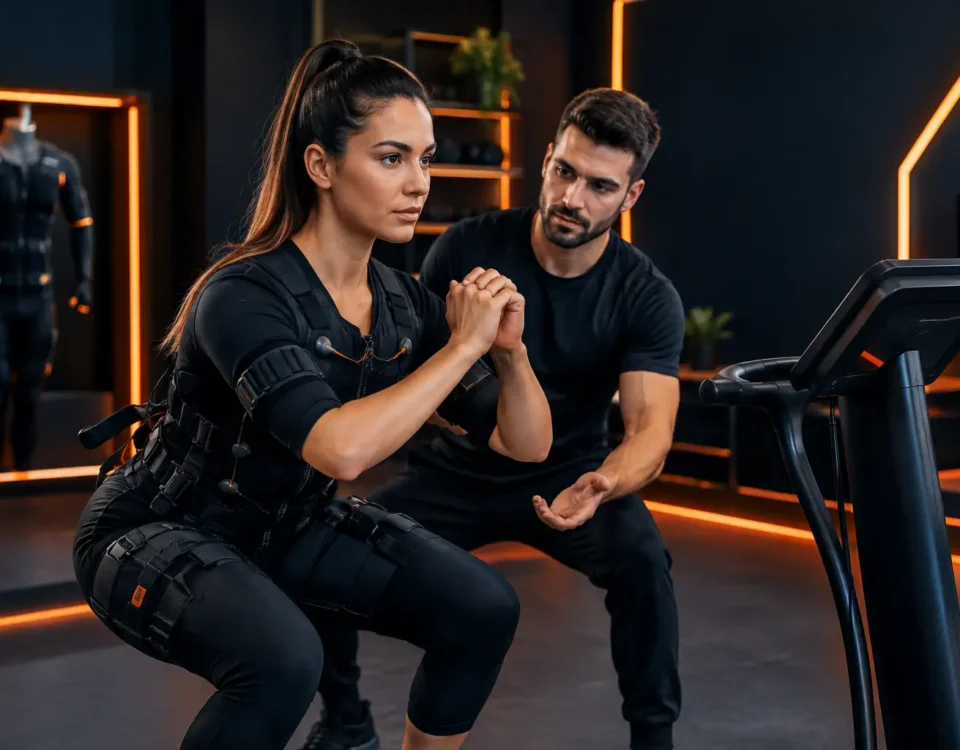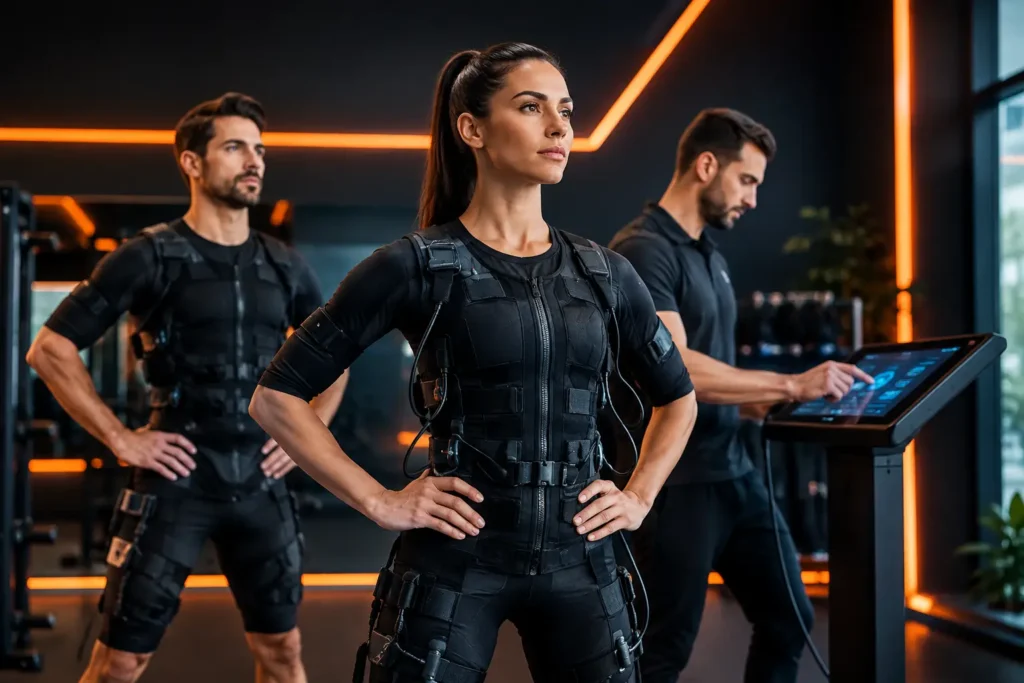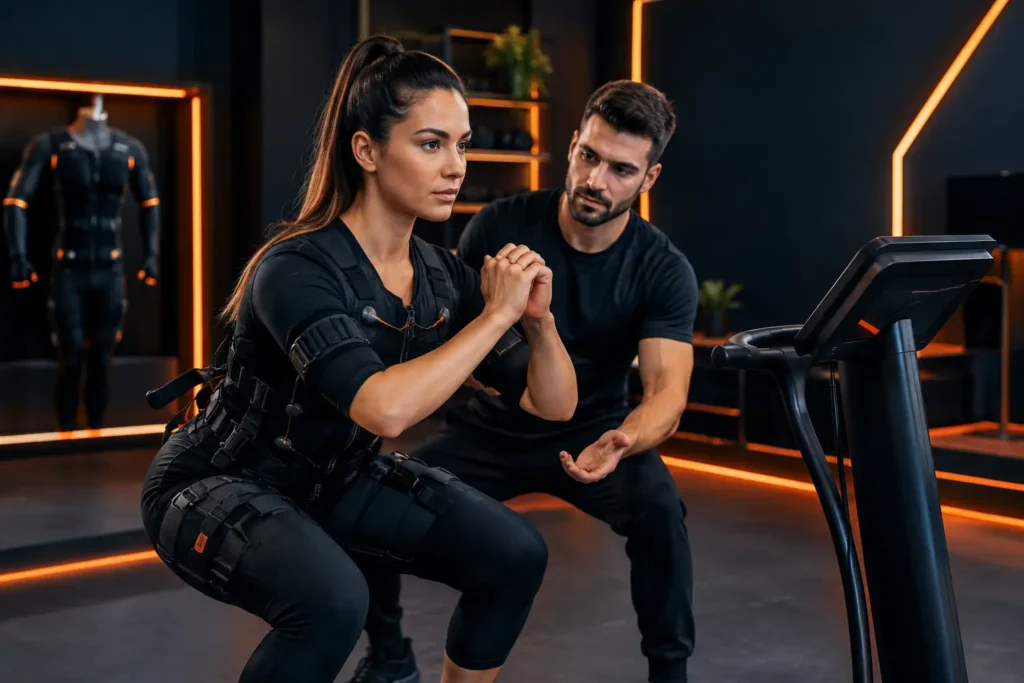


How to Start an EMS Business: Choosing the Right Model for Long-Term Success
If you’re researching how to start an EMS business, you’re not looking for theory. You’re looking for a business model that fits your budget, your market, and your growth plan—without wasting months on the wrong setup.
At EMS Leader, we’ve worked with trainers, studio owners, clinics, wellness operators, and investors across multiple markets. One thing is clear: successful EMS businesses are built around the right commercial model, not just the right equipment.
That usually comes down to one decision: are you building a lean mobile service, a scalable studio operation, or a premium concept with higher ticket value?
EMS continues to attract entrepreneurs because it sits at the intersection of fitness, wellness, personal training, body transformation, recovery, and performance. But the EMS system itself is only one part of the equation. The operators who launch successfully are the ones who make early decisions around positioning, delivery model, pricing, client experience, and long-term scalability.
How to Start an EMS Business With the Right Model
The fastest way to lose time and money is to choose equipment before choosing a business model. At EMS Leader, we always recommend starting with the commercial structure first and then building the technical setup around it.
A mobile EMS business is often the lowest-barrier entry point. It works well for personal trainers, solo operators, and first-time founders who want to launch with lower overhead and deliver one-to-one sessions at clients’ homes, offices, hotels, or partner facilities. The benefit is flexibility and lower fixed cost. The limitation is capacity, because your schedule depends on travel time and individual appointments.
A studio EMS model is designed for higher throughput and recurring revenue. This approach works well for gyms, EMS studios, rehabilitation centers, clinics, and multi-trainer operations that want to serve more clients in a dedicated location. It requires greater operational planning, stronger marketing, and a more structured client journey, but it also creates more opportunities for growth.
A premium wireless EMS concept sits in a different category. These businesses often target boutique wellness markets, longevity concepts, luxury fitness brands, recovery centers, and VIP clientele. In this model, the overall client experience becomes part of the product itself, creating stronger pricing potential while requiring a higher level of service and presentation.
There is no universal best model. The right choice depends on your investment level, market conditions, operational capacity, and business objectives.
Start With the Unit Economics
Before comparing devices, estimate your revenue model. This is where many future operators gain more clarity in one hour than they do in weeks of product research.
Ask a few practical questions. What will you charge per session or membership? How many sessions can you realistically deliver each day? Will you operate alone or build a team? How many active clients do you need to cover equipment, rent, salaries, marketing, financing, and operating costs?
For mobile operators, profitability often depends on premium one-to-one pricing. Overheads are lower, but daily capacity is limited. For studios, economics typically improve through client density, recurring memberships, and stronger retention. For premium concepts, profitability often comes from positioning and perceived value rather than pure volume.
This is also where financing becomes important. EMS Leader offers purchase, rental, and rent-to-own solutions because different operators have different launch requirements. Renting can reduce upfront investment and accelerate market entry. Direct ownership can improve long-term margins when supported by a clear commercial strategy.
Your Offer Has to Be Easy to Buy
Many EMS businesses struggle because they explain their service like a technology product instead of selling it like a commercial solution.
Clients do not buy impulses, frequencies, electrodes, or software features. They buy results. They buy time efficiency, body transformation, strength improvement, wellness, recovery, performance enhancement, and personal attention.
Your offer should be understandable in less than 30 seconds.
For a mobile operator, that may be private EMS training delivered at home. For a studio, it may be structured personal training supported by measurable progress and recurring memberships. For a premium concept, it could be a high-end wellness and body conditioning experience tailored to busy professionals and executives.
Keep your initial offer focused. A clear and specific proposition almost always converts better than a broad list of services.
What You Need Operationally Before Launch
If you want to know how to start an EMS business without unnecessary delays, think beyond the machine itself. Commercial readiness is often more important than equipment specifications.
You need access to training, onboarding, warranty support, replacement parts, operational guidance, and long-term technical assistance. Downtime costs money. Confusion during the first months of operation costs clients.
You also need a complete client journey from day one. That includes consultation, screening, onboarding, training delivery, payment systems, progress tracking, and retention processes.
Even excellent EMS equipment can underperform commercially if the surrounding business structure is weak.
This is one reason why many operators prefer working with EMS Leader rather than purchasing equipment alone. The goal is not simply to deliver hardware. The goal is to shorten launch time, reduce mistakes, and help operators build sustainable businesses that generate revenue quickly.
Pricing Strategy: Sell Outcomes, Protect Margins
Pricing should reflect your market position rather than simply copying local competitors.
If pricing is too low, you risk attracting the wrong client segment and damaging long-term profitability. If pricing is too high without clear positioning, conversions may suffer.
A strong pricing strategy starts with the business model itself.
Mobile EMS services often command convenience-based pricing. Studio businesses typically benefit from memberships and package structures that improve retention and create predictable revenue. Premium concepts require stronger branding, stronger consultation processes, and a more refined customer experience to support higher prices.
Do not build pricing around comfort. Build pricing around profitability, client lifetime value, operational capacity, and sustainable growth.
A business that looks busy but struggles to generate profit is not a successful business.
Marketing an EMS Business in the First 90 Days
The launch phase is not about mass awareness. It is about validating demand, generating leads, and converting your first loyal clients.
Start local and direct. Existing clients, personal networks, strategic partnerships, referral programs, local outreach, and targeted digital campaigns typically outperform large branding campaigns during the early stages.
If you already operate as a trainer, gym owner, wellness professional, or clinic manager, your current network should become your first acquisition channel.
Your marketing message should answer three simple questions: who the service is for, what outcome it delivers, and why the client should choose your solution.
Transformation-focused messaging, consultation-based sales processes, introductory programs, and measurable progress tracking can all contribute to stronger conversion rates.
Retention is equally important. EMS is not a one-session business model. Sustainable profitability comes from recurring memberships, repeat sessions, client satisfaction, and long-term relationships.
Common Mistakes When Starting an EMS Business
The most common mistake is selecting equipment based on features instead of business fit.
A more advanced system is not automatically a better commercial decision. The best solution is the one that matches your business model, market demand, client expectations, and operational capacity.
The second mistake is underestimating sales and marketing. Great technology alone does not create demand. Every business still requires lead generation, consultation, pricing strategy, and a structured sales process.
The third mistake is overlooking post-purchase support. Training, onboarding, technical assistance, spare parts availability, warranty service, and commercialization guidance can significantly impact how quickly a business becomes profitable.
Another common mistake is trying to serve every audience at once. Athletes, rehabilitation clients, busy professionals, weight-loss clients, and wellness-focused consumers all buy EMS for different reasons. Clear positioning almost always wins during the launch phase.
How to Choose a Launch Path You Can Actually Sustain
A successful EMS business is not built by purchasing equipment. It is built by choosing a model you can operate consistently, market effectively, and scale profitably.
If you want lower startup costs and maximum flexibility, a mobile EMS business may be the right choice. If you already have a location or team, a studio model may provide stronger scalability and recurring revenue. If your market supports premium positioning, a wireless dry EMS concept can create stronger margins through enhanced client experience.
At EMS Leader, we believe equipment is only one component of a successful EMS business. Our role is to help operators build sustainable businesses through a combination of equipment access, rental solutions, financing options, education, commercialization support, operational guidance, and long-term growth planning.
The businesses that succeed are not necessarily the first to enter the market. They are the ones that launch with a commercial structure that works on day one and continues to work as the business grows.
That is the EMS Leader philosophy: helping operators choose the right business model first, then providing the systems, support, and solutions needed to turn that model into a profitable and scalable business.