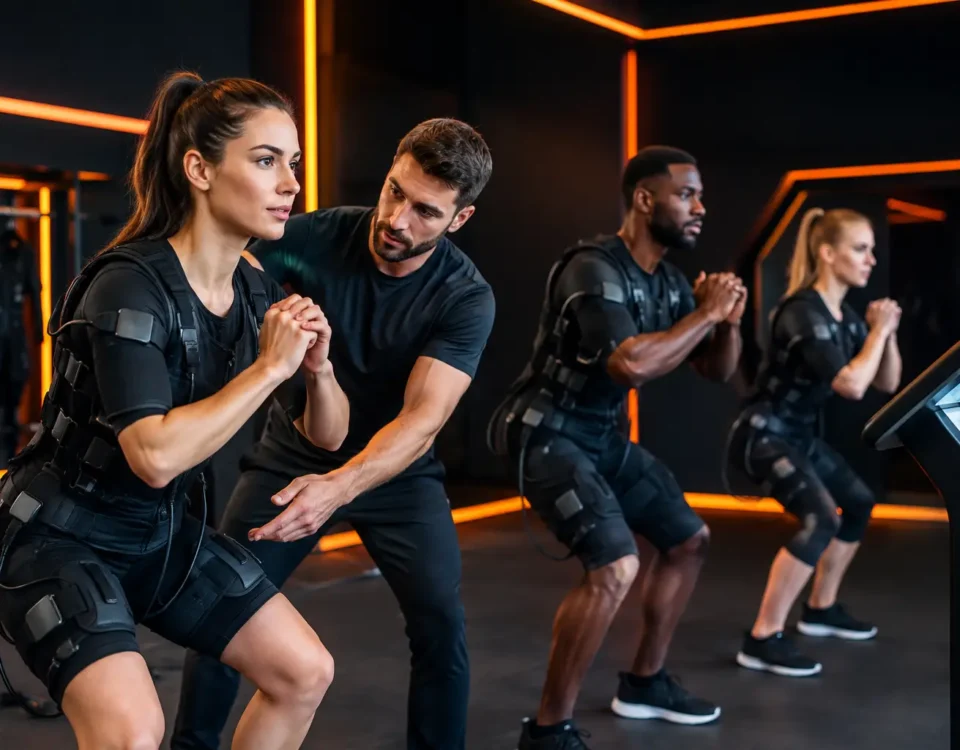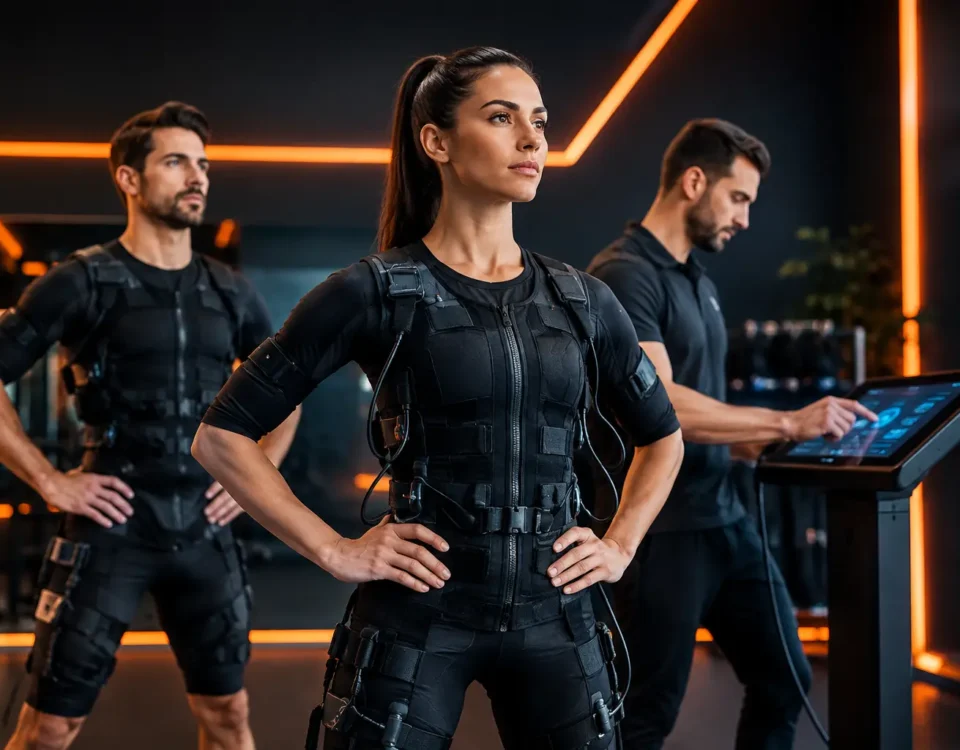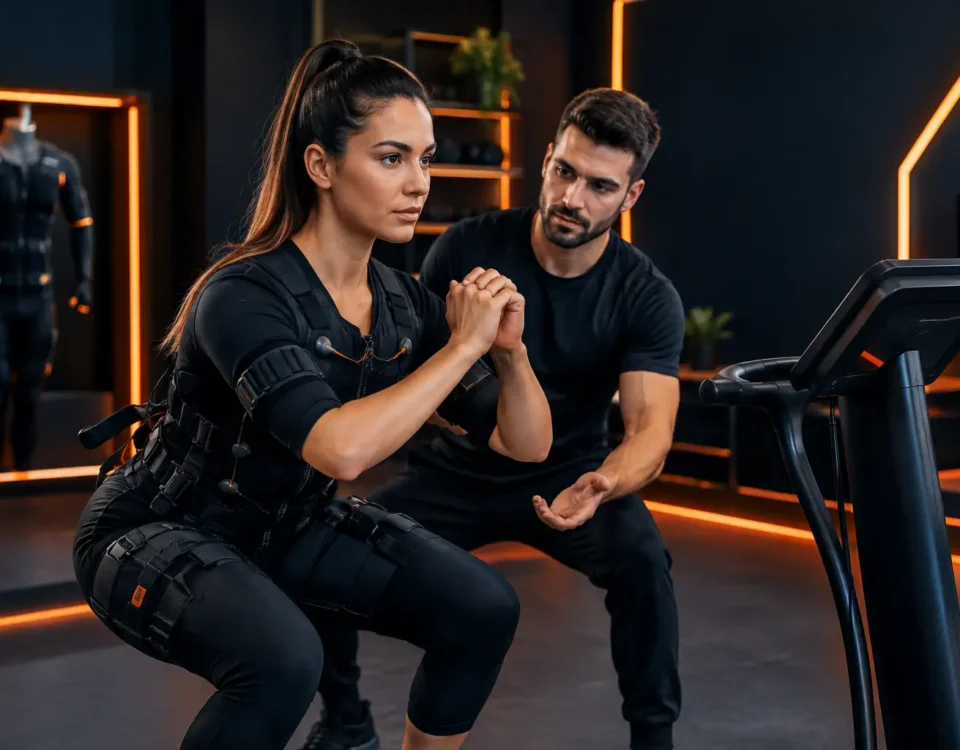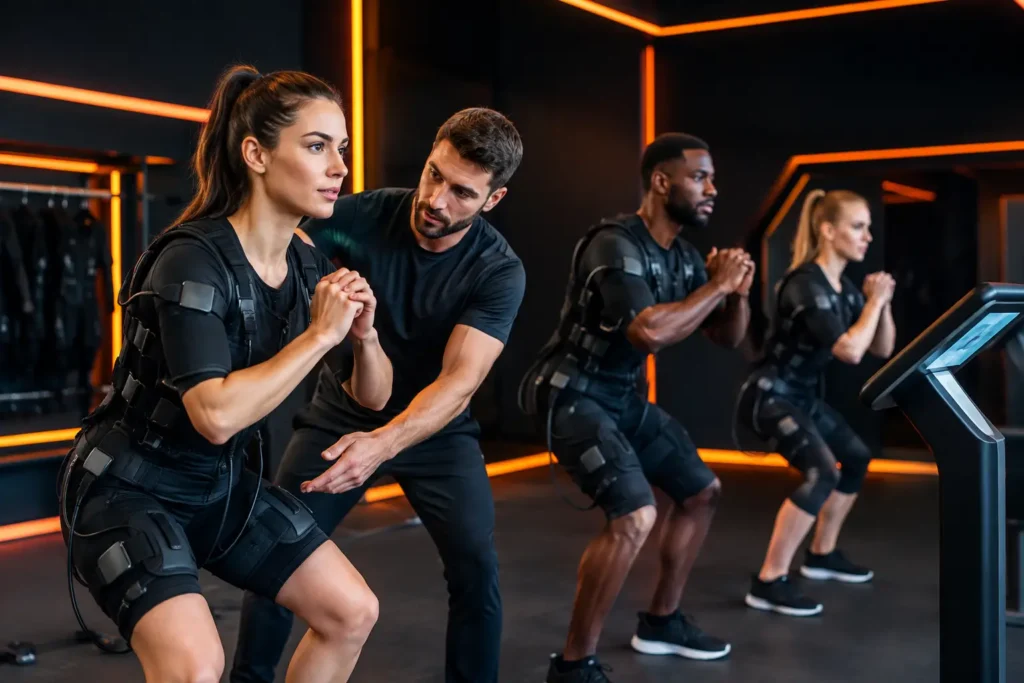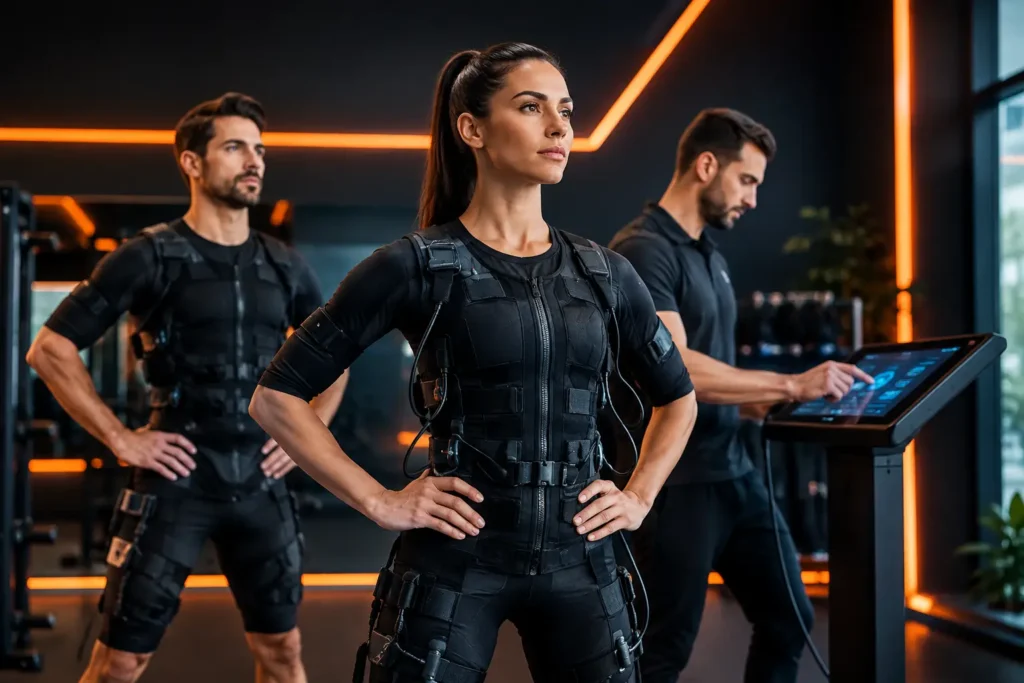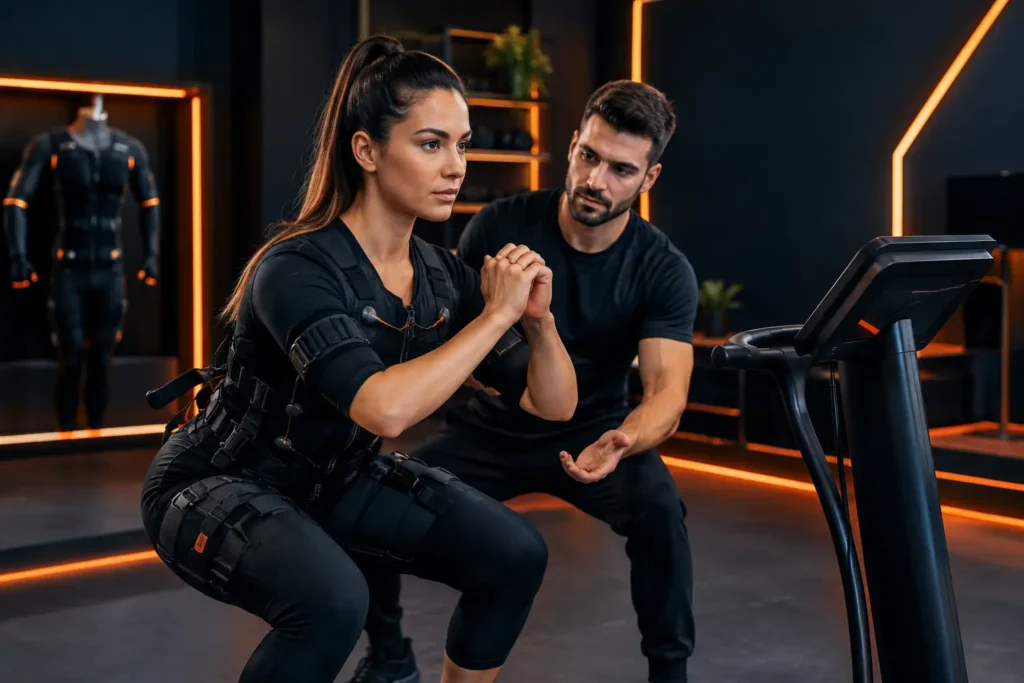

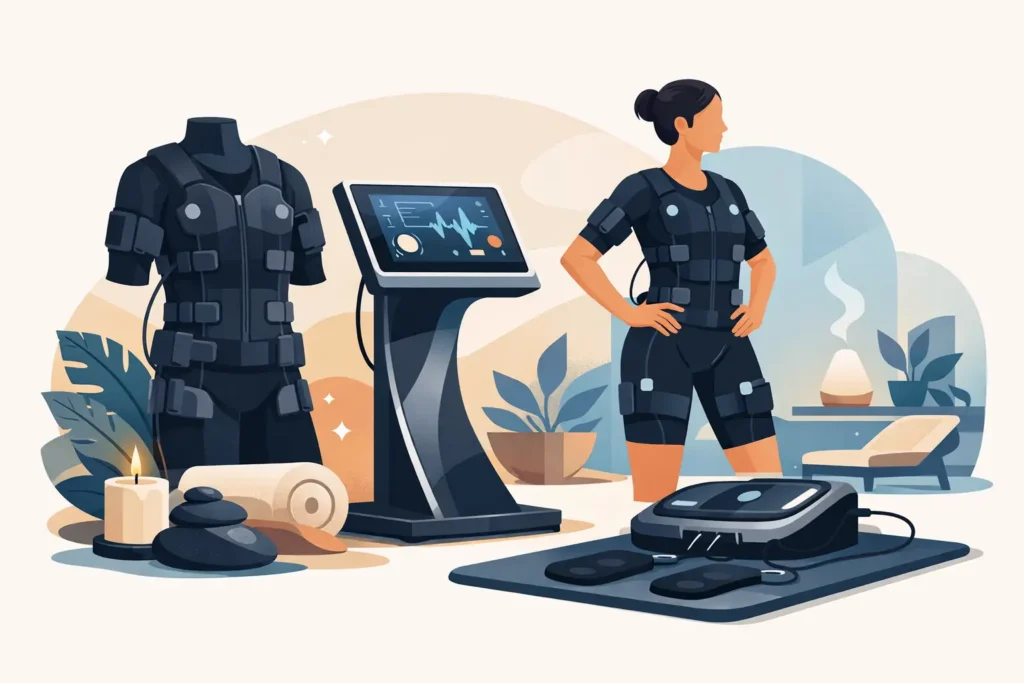
A premium client will notice the difference in the first five minutes. Not just the treatment itself, but the room flow, the fit and finish of the gear, the speed of setup, and whether the experience feels clinical, athletic, or genuinely high-end. That is why luxury wellness EMS equipment is not simply a hardware decision. It is a positioning decision that affects pricing power, client perception, staff efficiency, and how quickly a concept can scale.
For operators building a boutique wellness offer, the question is rarely, “Does EMS work?” The real question is whether the equipment supports a premium business model without creating operational drag. In luxury settings, a strong result is expected. The experience around that result is what justifies higher package prices and stronger retention.
What luxury wellness EMS equipment needs to deliver
In a standard fitness environment, buyers often focus on basic output, durability, and entry cost. In a luxury wellness environment, those factors still matter, but they are not enough. The equipment must also support a refined client journey.
That usually means wireless or dry wireless functionality, clean aesthetics, faster transitions between sessions, and a setup that does not make the client feel like they are preparing for a technical procedure. If your target client is a high-income professional, hotel guest, longevity member, or beauty and wellness consumer, friction matters. Cables, lengthy prep, wet garments, and a visibly complicated setup can weaken the premium feel even if the training result is solid.
The commercial impact is straightforward. When the experience feels elevated, operators can package EMS alongside recovery, body contouring, personal training, concierge wellness, or private memberships. That broadens revenue options beyond single-session pricing.
Why premium EMS concepts are growing
Luxury wellness has moved well beyond massages and facials. High-end consumers now expect performance, recovery, aesthetics, and convenience in one environment. EMS fits that shift because it can support training efficiency, muscle activation, body toning, and low-footprint service delivery.
For an operator, that creates a strong business case. A boutique studio can use EMS to differentiate from conventional gyms. A clinic can add a premium training or recovery layer. A wellness founder can create a private, appointment-led model with fewer square feet than a traditional fitness floor. The appeal is not only innovation. It is margin structure.
That said, premium positioning does not automatically come from premium pricing. The wrong system can still make the offer feel entry-level. If the equipment slows session turnover, requires too much manual prep, or lacks the visual standards expected in a luxury environment, the business model starts leaking value.
Choosing luxury wellness EMS equipment by business model
The right setup depends on how you plan to sell the service.
Boutique private studio
For a private EMS studio serving affluent clients, the strongest fit is usually a premium dry wireless system. It supports a cleaner presentation, faster session flow, and a more exclusive feel. This model works well when pricing is built around 1-to-1 coaching, semi-private sessions, or monthly memberships with a concierge tone.
The advantage is clear client positioning. The trade-off is a higher expectation around service quality, staff training, and interior presentation. Premium equipment helps, but it cannot carry a weak brand experience.
Wellness clinic or longevity center
In a clinic or recovery-led setting, EMS often performs best as part of a wider service menu. Here, equipment selection should balance premium presentation with operational consistency. The system must be easy for staff to use, simple to sanitize, and flexible enough to support different session goals.
Some clinic operators overbuy technical complexity they do not use. If your commercial offer is built around guided protocols, patient comfort, and repeatable delivery, ease of operation may matter more than feature depth.
Hospitality, residential, or VIP mobile service
For hotel, villa, or concierge wellness models, portability becomes critical. A luxury mobile EMS concept needs equipment that travels well, sets up quickly, and still looks premium on arrival. This is where many operators get caught between mobility and brand image.
Compact systems can reduce startup cost and expand reach, but not every mobile system fits a luxury audience. If your clients are paying for privacy and exclusivity, presentation standards remain high. Portability should never come at the expense of perceived quality.
The business metrics that matter most
When evaluating luxury wellness EMS equipment, operators should look beyond the unit price. The better question is how the equipment affects revenue per hour, staff utilization, package pricing, and payback period.
A more premium system can make sense if it reduces prep time, supports higher session rates, or improves retention through a better client experience. In many cases, the return does not come from the hardware alone. It comes from the commercial model the hardware allows you to build.
For example, if a dry wireless system lets you run smoother sessions and charge a stronger premium, the payback may be faster than a cheaper setup that limits your pricing. On the other hand, if your local market is still validating EMS demand, a lighter investment approach may be the smarter first move.
This is where a lot of buyers need honest guidance. There is no universal best system. There is only the system that fits your target client, launch strategy, and margin goals.
Luxury wellness EMS equipment and pricing power
Premium pricing works when the offer feels coherent. Equipment is part of that coherence. If your brand promise is elevated wellness, your operational reality has to support it.
Clients paying top-tier rates expect convenience, comfort, privacy, and confidence. They are not comparing you only to EMS studios. They are comparing you to premium personal training, private Pilates, longevity memberships, and high-end beauty services. Your EMS equipment should help you compete in that broader category.
That usually means shorter friction points, polished session delivery, and a treatment environment that feels curated rather than improvised. When those pieces align, pricing resistance drops because the service no longer looks like a commodity.
What to ask before you invest
Before choosing a system, it helps to pressure-test the business model.
Start with your target market. Are you selling to fitness-focused professionals, aesthetics-driven wellness clients, hotel guests, rehab and recovery customers, or a mixed audience? Then look at delivery. Will sessions be 1-to-1, paired, studio-based, mobile, or integrated into a broader membership model?
Next, consider staffing. Some systems are more forgiving for a new operator. Others require a tighter training process to maintain session quality. If your business depends on multiple coaches or therapists, standardization matters as much as performance.
Finally, review capital strategy. A premium concept does not always require a large upfront purchase. Rental and rent-to-own structures can be practical when preserving cash matters more than immediate ownership. That is especially relevant for first-location launches, market testing, or operators expanding into a new vertical.
Support matters more than most buyers expect
Luxury concepts depend on consistency. If a system goes down, accessories wear out, or staff are not fully confident in delivery, the client experience suffers fast. That is why after-sales support should be part of the buying decision, not an afterthought.
Training, onboarding, warranty coverage, spare parts access, and commercial guidance all influence performance at the business level. Serious operators do not just need equipment. They need a path to launch, optimize, and grow without losing momentum.
That is where a consultative supplier adds real value. EMS Leader, for example, approaches equipment selection around business model fit, launch speed, and revenue logic, not just product specs. For buyers entering premium wellness, that commercial clarity can reduce costly mistakes early.
When luxury wellness EMS equipment is the right move
If your offer depends on exclusivity, stronger package pricing, or a boutique client journey, investing in luxury wellness EMS equipment is often the right strategic move. It can support better positioning, cleaner operations, and more compelling service design.
If your market is highly price-sensitive, still unfamiliar with EMS, or centered on low-cost volume, a premium system may be more than you need at the start. In that case, proving demand first can be the better commercial choice.
The best operators do not buy based on hype. They buy based on fit. When the equipment, audience, and business model line up, premium EMS becomes more than a service add-on. It becomes a revenue engine with clear pricing power and room to grow.
The strongest investment is not the flashiest unit on the market. It is the setup that helps you deliver a premium experience consistently, sell it confidently, and build a business clients are willing to return to and pay more for.