
A refurbished EMS system can lower the entry cost of a new operation, but it should never be treated as a shortcut around planning. Whether you are comparing refurbished EMS equipment, selecting an EMS package, or preparing an EMS shop for the EMS Europe market, the commercial question is the same: will this setup help you deliver a reliable service, retain clients, and grow without creating avoidable operating costs?
For trainers, studio owners, clinic managers, and wellness entrepreneurs, the right answer depends less on finding the lowest purchase price and more on matching the equipment, support level, and financing structure to the business model.
When Refurbished EMS Makes Commercial Sense
Refurbished equipment can be a sensible option when capital preservation is the priority. A new operator may want to validate local demand before committing to a larger studio buildout. An established gym may need an additional unit for peak hours, staff training, or a secondary location. In both cases, a properly inspected system can provide a practical route to service capacity.
The key word is properly. Refurbished does not simply mean used equipment that has been cleaned and resold. For a business-facing investment, the system should have a documented technical inspection, tested components, functional control software, compatible accessories, and a clear warranty position. If the equipment has a history of intensive use, the condition of cables, electrodes, batteries, control units, and garments matters as much as the appearance of the unit.
A lower acquisition cost can disappear quickly if downtime interrupts appointments or if replacement parts are difficult to source. Before choosing a refurbished system, ask who will provide technical support, whether spare parts are available, what training is included, and how quickly service issues can be addressed. These details protect your schedule, your client experience, and your reputation.
The trade-off: lower entry cost versus long-term flexibility
Refurbished EMS can be especially effective for a focused, one-to-one mobile model with controlled usage and a limited initial client roster. It may be less suitable for a high-volume studio that plans to run multiple sessions every day, where equipment reliability and expanded capacity become more valuable than the lowest upfront investment.
There is no universal rule. A refurbished system with strong after-sales support may be a better commercial choice than a new system purchased without training, warranty clarity, or operational guidance. Conversely, a new system may make better sense if your concept depends on premium positioning, wireless convenience, or a multi-client service format from day one.
Choosing an EMS Package Around Your Business Model
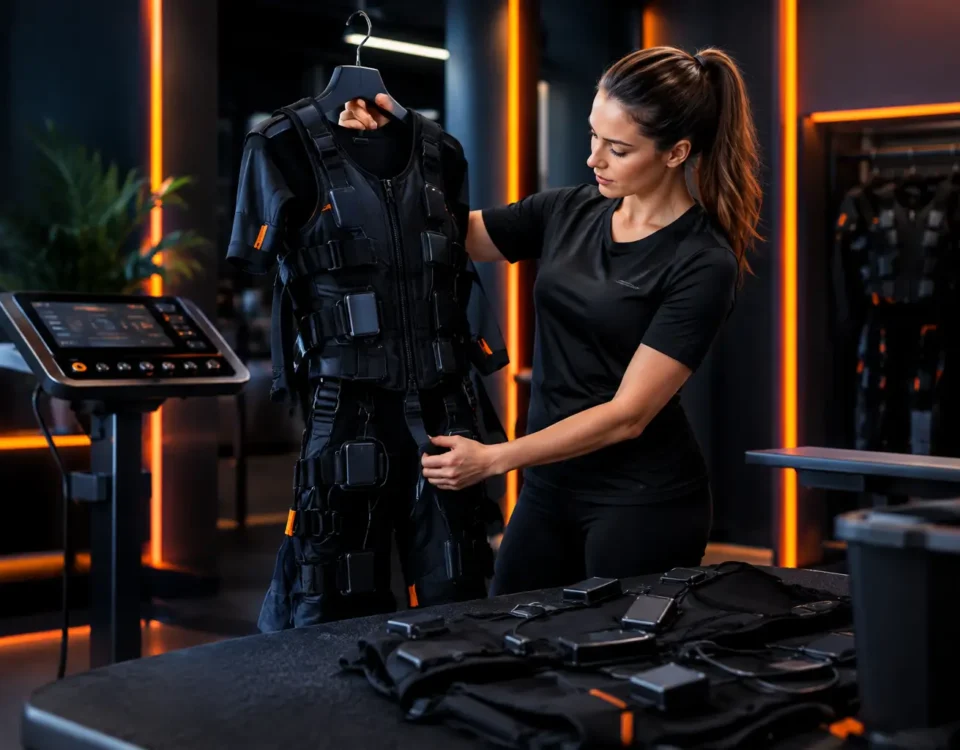
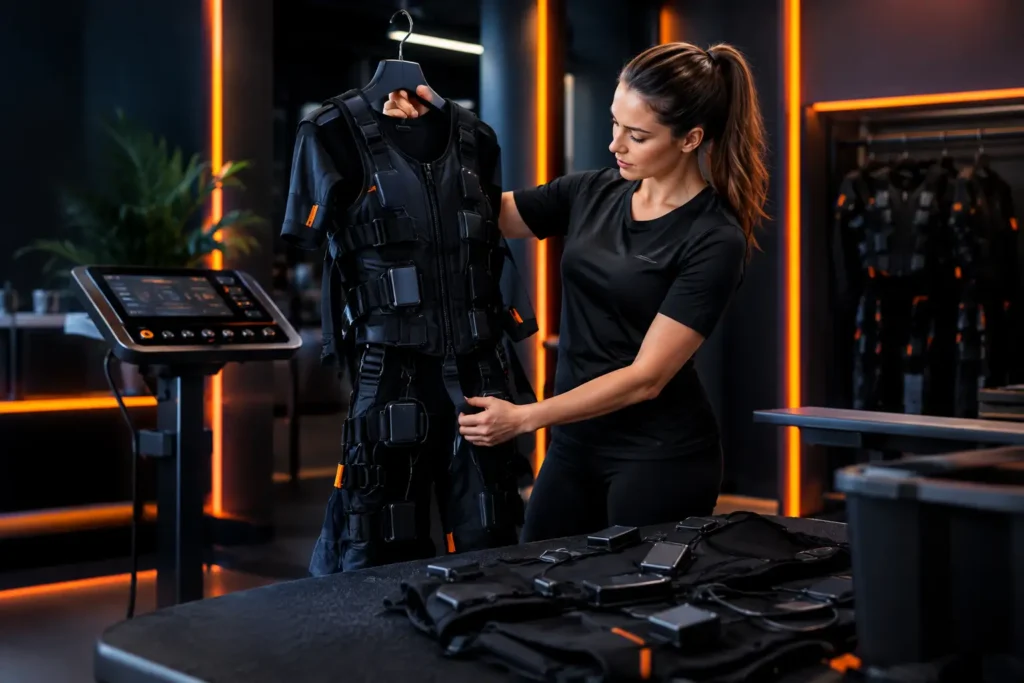
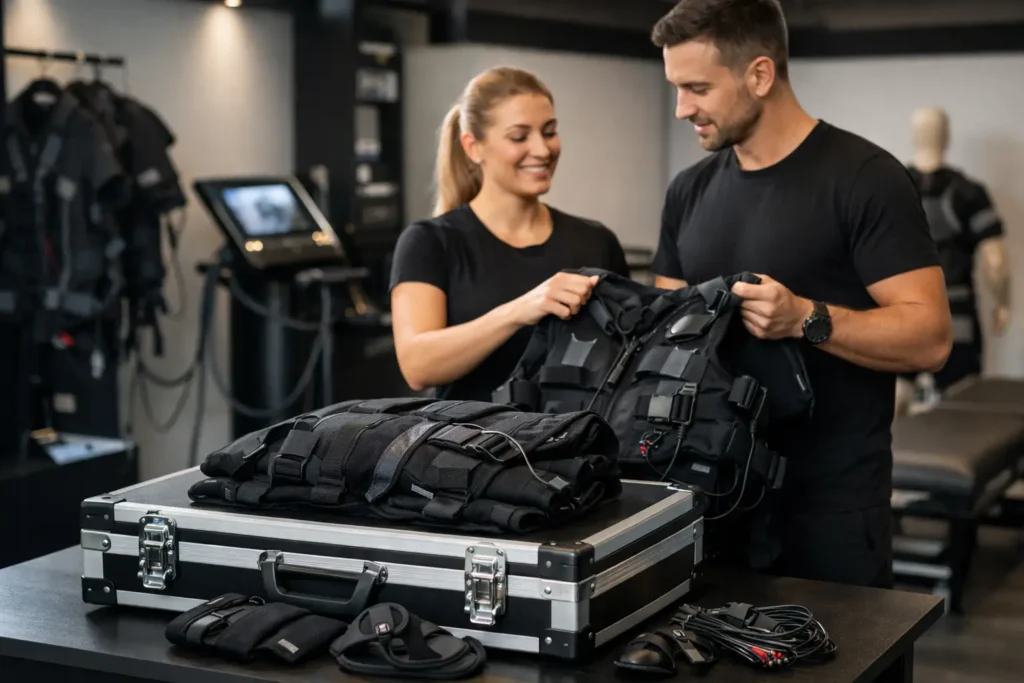
An EMS package should be evaluated as a business tool, not a box of equipment. The most useful package includes the practical elements needed to begin operating: the core EMS system, wearable components, accessories, onboarding, training, warranty coverage, and a realistic plan for maintenance and expansion.
The right configuration starts with how and where you intend to serve clients.
Mobile EMS: lean entry and direct client access
Mobile EMS suits personal trainers and independent operators who want to bring sessions to homes, offices, hotels, or partner locations. This model can keep fixed costs relatively low and allows the operator to build a client base before taking on studio rent.
For mobile work, portability, setup time, garment management, battery performance, and transport protection are essential considerations. Your EMS package should support a consistent service routine rather than add friction between appointments. A compact setup is valuable, but not if it limits session quality or makes sanitation procedures difficult to manage.
Studio EMS: capacity and repeatable operations
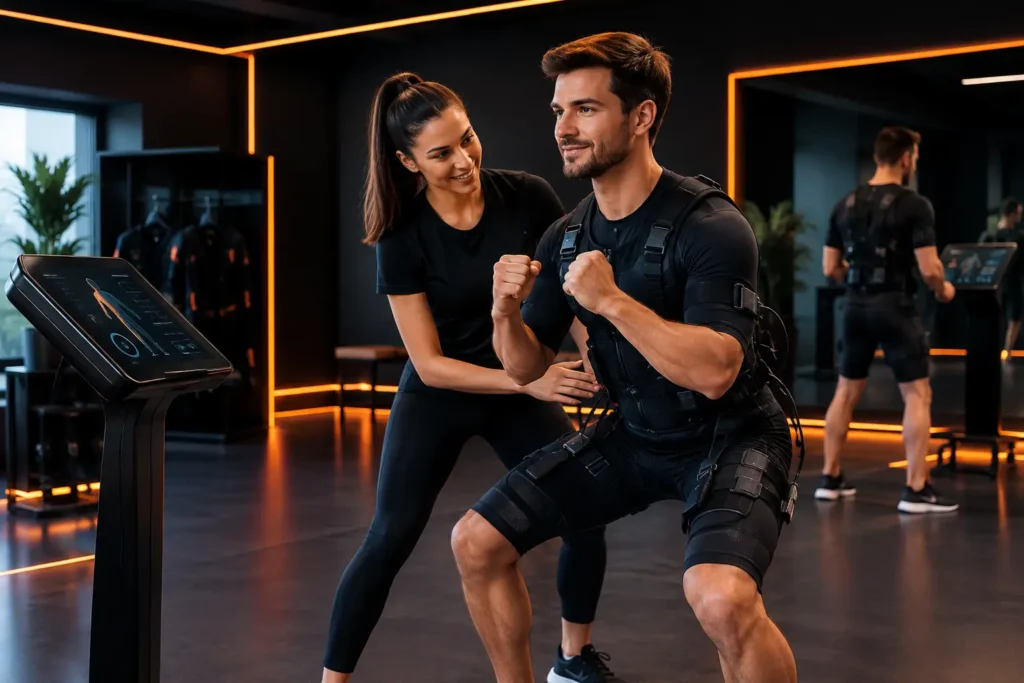
A studio model is built around a more structured schedule, stronger local visibility, and the potential to serve several clients across the day. It requires a clear layout, staff procedures, consultation flow, booking system, cleaning process, and client progression plan.
Here, the EMS package needs to support operational consistency. Consider how many simultaneous or back-to-back sessions you expect to deliver, how many garments you will need, and whether your staff can confidently operate the equipment after training. The cost of underestimating accessories is often felt in daily scheduling, not on the original invoice.
Premium dry wireless EMS: experience-led positioning
Premium dry wireless concepts are designed for boutique wellness spaces, VIP environments, and businesses where convenience and presentation are central to the offer. This model can support differentiated positioning, but it also demands a polished client journey and a service standard that justifies the investment.
Wireless equipment is not automatically the right choice for every operator. It works best when your target audience values speed, privacy, high-end surroundings, and an elevated training experience. If your market is price-sensitive or your main goal is efficient one-to-one training, a simpler configuration may produce a stronger return on the initial investment.
What an EMS Shop Needs Before Opening
An EMS shop succeeds through disciplined operations, not equipment alone. Before opening, define the service format you will sell, the staff who will deliver it, the appointment capacity you can realistically manage, and the client segments you want to attract.
A focused EMS shop may serve busy professionals seeking time-efficient guided training. Another may operate inside a gym and use EMS as a premium add-on. A wellness concept may combine EMS with recovery, beauty, or longevity services. Each direction changes the required space, staffing, sales conversation, and package selection.
Your launch plan should cover four operational areas:
- Client onboarding, including screening, consultations, consent procedures, and session expectations.
- Staff training, with clear standards for equipment use, session supervision, hygiene, and client communication.
- Capacity planning, based on appointment length, garment turnaround, staffing levels, and peak demand periods.
- Commercial planning, including membership options, session packages, retention activity, and local lead generation.
These are not administrative details. They determine whether the EMS service becomes a dependable revenue line or an underused piece of equipment in the corner of a facility.
Buying for the EMS Europe Market: Support Matters
The EMS Europe market is diverse. A successful offer in a dense city center may differ significantly from one in a resort location, a suburban clinic, or a gym network. Local purchasing power, competition, regulatory expectations, and customer preferences all influence the model that will work best.
That is why equipment selection should include a conversation about commercialization. A supplier should be able to help you compare investment levels, assess mobile versus studio potential, plan the opening process, and understand what you need to operate after delivery. Training and support are especially valuable for first-time EMS operators, but experienced studios also benefit when expanding capacity or introducing a premium service tier.
For operators across Europe, access to spare parts and responsive service can be more valuable than a small difference in purchase price. A delayed repair affects booked sessions, staff time, and client trust. Build this into your evaluation from the beginning.
Questions to Ask Before You Commit
Before selecting refurbished EMS equipment or a new EMS package, request clear answers. What condition standards are used for refurbished units? What warranty is included? Which accessories are supplied, and which will need regular replacement? Is operator training part of the offer? Can the system scale if demand grows? Who handles technical questions after installation?
Also examine the financing route. Direct purchase may suit operators with available capital and a defined expansion plan. Rental or rent-to-own structures can preserve cash flow during launch, allowing the business to invest in location setup, marketing, staffing, and client acquisition. The right option depends on your available capital, risk tolerance, and expected speed of growth.
EMS Leader approaches this decision as a business-model discussion, combining equipment access with onboarding, training, warranty support, and planning for mobile, studio, and premium concepts.
The best EMS investment is not necessarily the newest, the largest, or the least expensive. It is the system and support structure that lets you open with confidence, run sessions reliably, and make your next expansion decision from real client demand rather than assumptions.