
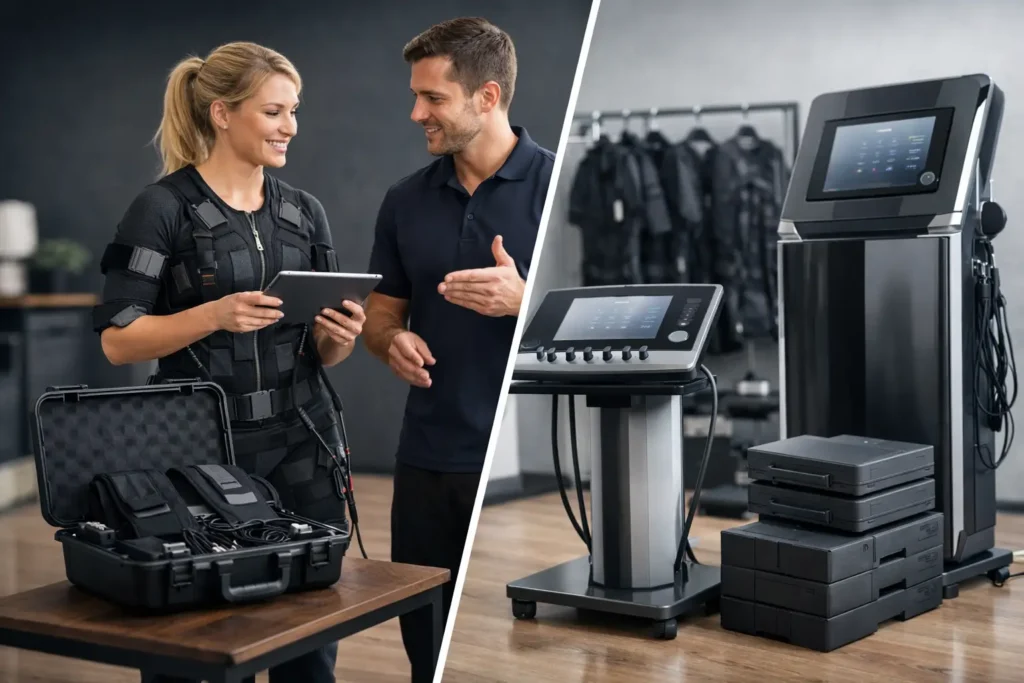
A new EMS service can look profitable on paper long before the first client books a session. The real question is how much capital you should commit before you have validated local demand, finalized your offer, and built a dependable sales pipeline. Renting EMS systems vs buying is therefore not simply an equipment decision. It is a business-model decision that affects your cash flow, launch timeline, risk exposure, and room to expand.
For a personal trainer testing a mobile EMS concept, a rental may create the faster path to market. For an established studio with reliable demand and a clear multi-year plan, ownership may deliver stronger long-term economics. The right choice depends on what your business needs now and what it is designed to become.
Start With Your Commercial Model, Not the Device
EMS equipment should match the way you plan to acquire clients, deliver sessions, and generate revenue. Buying a system before defining those fundamentals can tie up capital in a setup that does not fit your operating reality.
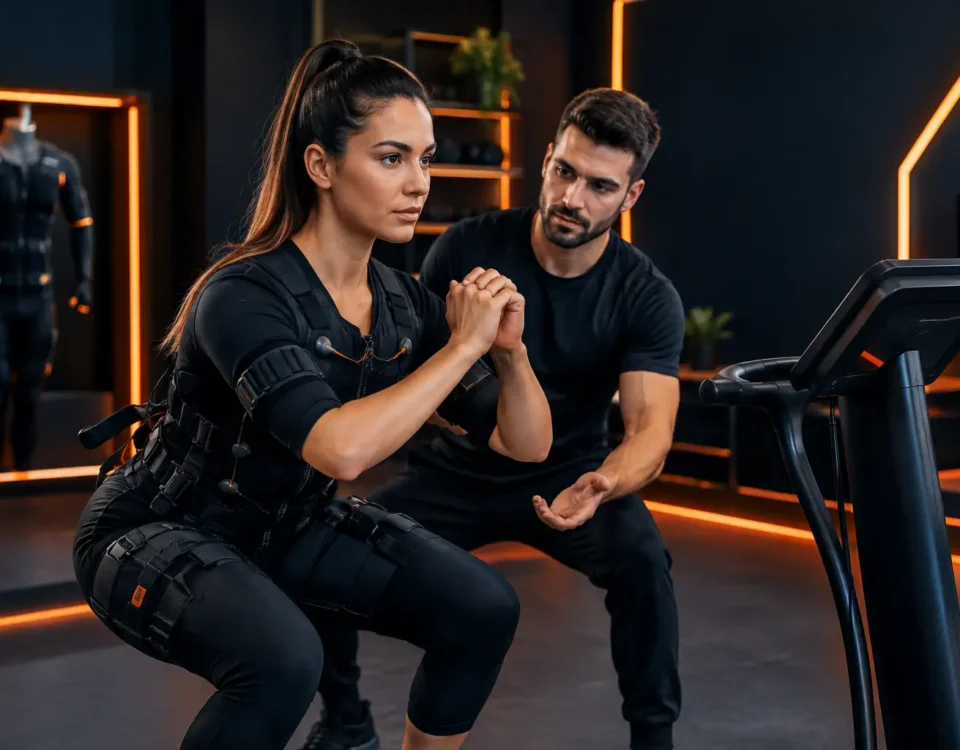
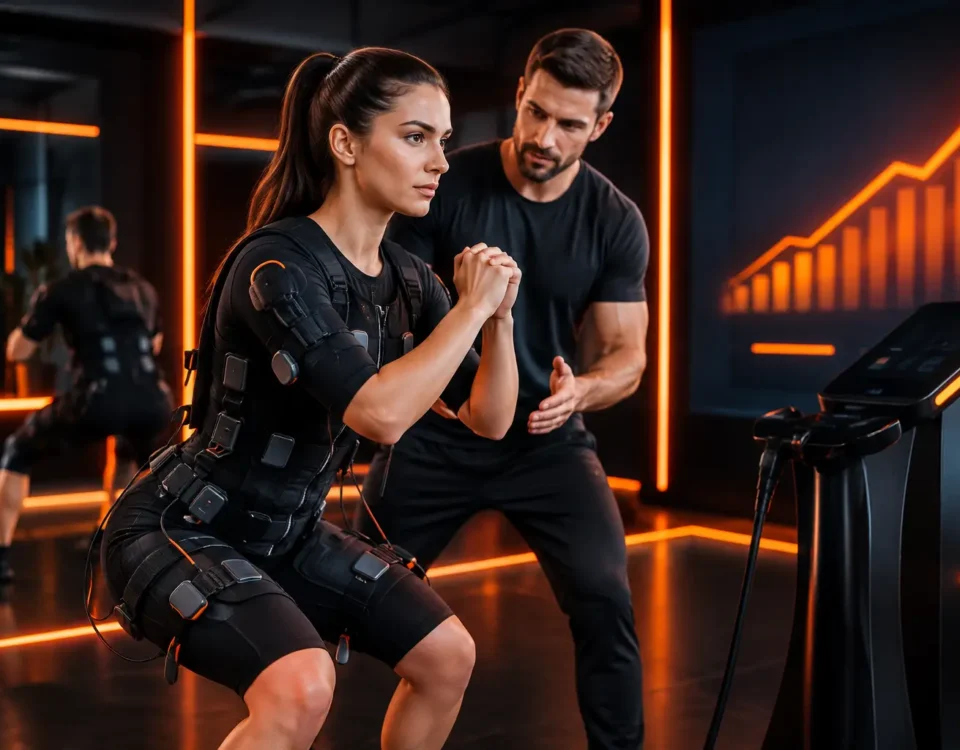
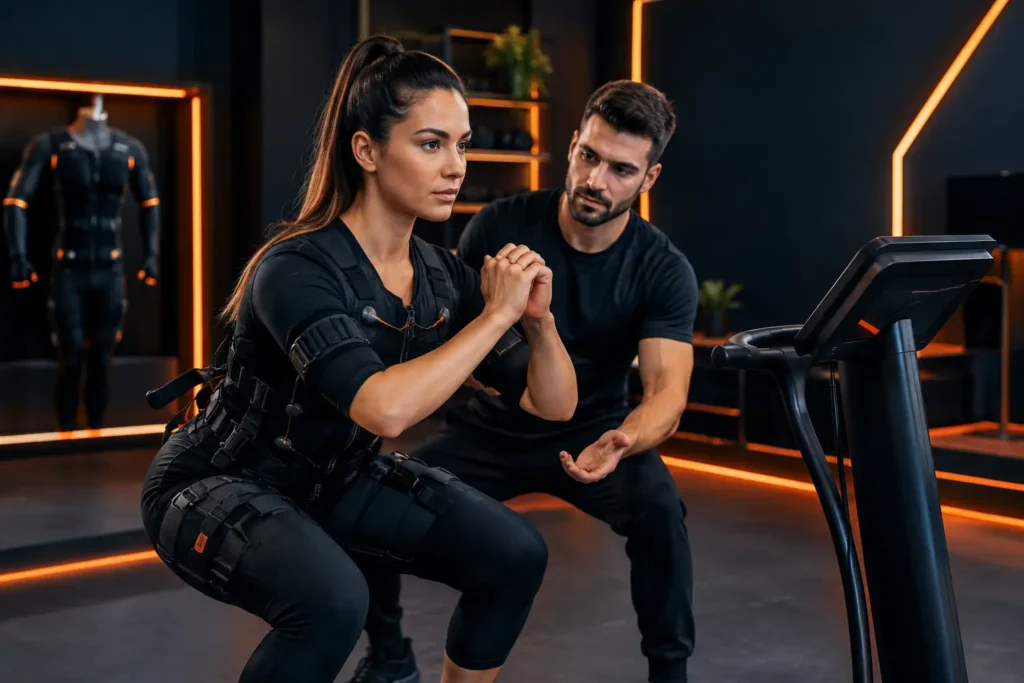
A mobile EMS operator usually needs portability, a manageable monthly commitment, and the ability to start with one-to-one appointments. This model can work well for trainers who serve clients at home, in private facilities, or through partner locations. The goal is to establish recurring bookings without taking on the cost structure of a permanent studio too early.
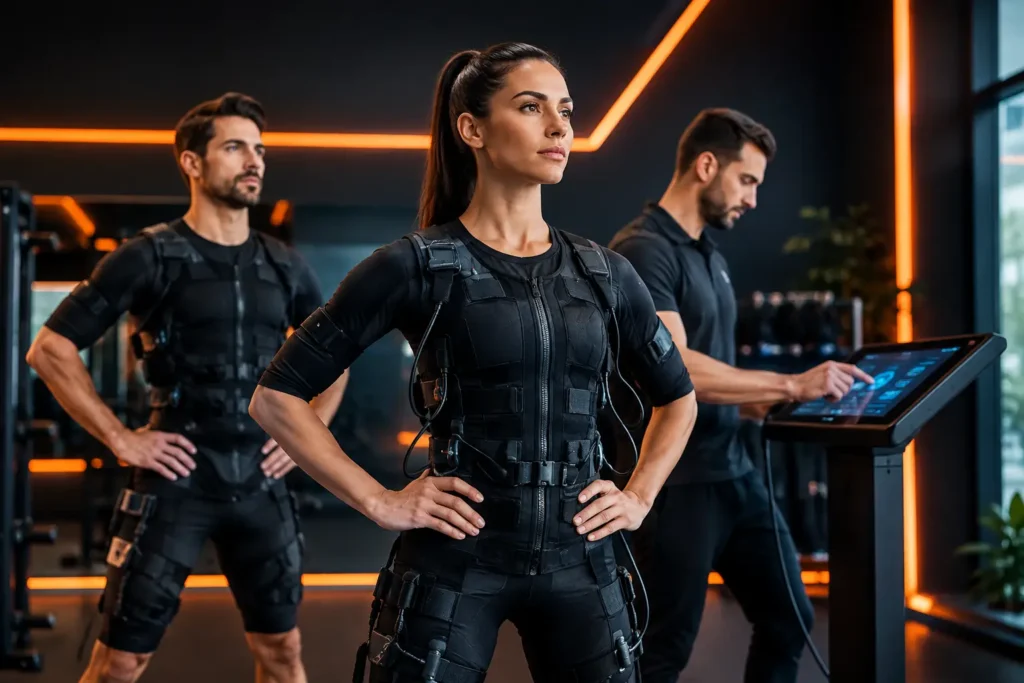
A studio operator has different priorities. Client throughput, staff training, scheduling, equipment availability, and the ability to add stations as demand grows matter more than initial mobility. If your location already has a stable membership base or a strong referral network, ownership can make sense because the equipment will be used consistently over a longer period.
Premium dry wireless EMS concepts require another level of planning. The experience, service environment, and client positioning must support a higher-value offer. In this case, the financing model should protect working capital for the full launch, including fit-out, marketing, staff readiness, and client acquisition, not just hardware.
Renting EMS Systems vs Buying: The Core Difference
Renting spreads equipment access across a predictable monthly cost. Buying requires a larger upfront commitment but gives you ownership of the asset. Neither model is automatically better. The decision comes down to the value of flexibility versus the value of long-term control.
| Decision factor | Renting EMS systems | Buying EMS systems | | — | — | — | | Upfront capital | Lower initial investment | Higher initial investment | | Launch speed | Often faster when setup and onboarding are included | Depends on procurement, setup, and internal readiness | | Flexibility | Easier to test a market or adapt the model | Best for a settled, long-term operating plan | | Monthly cash flow | Predictable recurring equipment expense | Lower ongoing equipment cost after purchase, aside from service and accessories | | Ownership | Provider retains ownership during the agreement | Business owns the equipment | | Expansion planning | Can support phased growth with lower initial exposure | Can be efficient when demand already justifies additional systems | | Support requirements | May be packaged with training, warranty coverage, and service | Must be confirmed separately in the purchase agreement |
The comparison should not stop at the monthly payment or purchase price. Calculate what each choice leaves available for the activities that generate clients: local marketing, sales consultations, staff training, rent, insurance, and a cash reserve for the first months of operation.
When Renting Is the Smarter Business Move
Rental is often the practical choice when speed and capital preservation are more valuable than immediate ownership. It allows an operator to begin selling EMS sessions while maintaining liquidity for the rest of the business.
This is especially useful when you are entering a new market. You may know that your audience is interested in time-efficient training or premium wellness services, but you still need proof that they will book, return, and refer. A rental period gives you a structured way to measure real demand before making a larger commitment.
Renting can also reduce friction for first-time EMS operators. The strongest rental offers are not equipment-only transactions. They combine the system with onboarding, operational training, warranty coverage, spare-parts access, and practical guidance on how to position the service. Those elements can prevent costly launch mistakes, particularly when your team is new to EMS delivery and sales.
For mobile operators, rental creates a controlled starting point. Rather than building a full facility around an unproven idea, you can develop a targeted client base, refine packages, and establish a weekly booking pattern. Once your calendar supports it, you can decide whether to add capacity, move into a studio, or transition into ownership.
Rental does have limits. Over an extended period, cumulative payments may exceed what a direct purchase would have required. You also need to understand the agreement: contract length, included support, maintenance responsibilities, upgrade options, return conditions, and whether a rent-to-own path is available. Flexibility is valuable only when the terms support your actual plan.
When Buying Makes More Financial Sense
Buying is usually strongest when the business has already moved beyond the validation stage. You have stable client demand, predictable utilization, and enough cash reserves to purchase equipment without starving other essential parts of the operation.
An established gym may be a good example. If the gym can introduce EMS sessions to existing members, has trained staff available, and can forecast consistent use, ownership may improve the return on the investment over time. The same applies to an EMS studio with proven recurring revenue and a clear plan to keep the equipment active throughout the week.
Ownership also gives operators more direct control over their asset base. You can plan your staffing, service menu, and capacity around equipment that is fully part of your business. For investors building a dedicated studio concept, this can align well with a long-term strategy and a defined depreciation plan.
Still, buying should not mean treating support as optional. Before you commit, confirm the warranty terms, service response process, training scope, availability of accessories and replacement components, and future system compatibility. A lower purchase cost can become expensive if downtime interrupts paid sessions or if your team lacks the confidence to use the system effectively.
Use the Payback Calculation That Reflects Reality
A credible decision needs more than a revenue estimate. Start with your planned average session price, then estimate how many paid sessions per week you can reasonably deliver in the first three, six, and 12 months. Use conservative assumptions, especially if you are opening in a new location or building a brand from zero.
Next, account for the expenses around the equipment. These may include coach compensation, rent or travel, client acquisition, software, insurance, cleaning, consumables, and payment processing. The equipment payment is only one part of the model.
Then compare the two paths under the same operating assumptions. Ask how many sessions are required each month to cover the rental payment. Ask how a purchase affects your available cash after the down payment or full investment. Finally, test what happens if bookings start slower than expected. The option that keeps your business operational under a conservative scenario is often the better choice.
A rent-to-own structure can be worth considering when you want to begin with lower initial exposure but expect to keep the system once demand is established. It can create a bridge between market testing and long-term ownership, provided the terms are transparent and fit your planned timeline.
Questions to Ask Before You Commit
Before signing any rental, rent-to-own, or purchase agreement, get clear answers on the commercial and operational details. You should know what training is included, how quickly technical support is available, what warranty coverage applies, and how replacement parts are handled. Also clarify whether the system is appropriate for your planned client capacity and service environment.
Ask your provider to help you map the equipment choice to your business model. A mobile trainer may need a different configuration and launch plan than a multi-coach studio or a premium wellness center. The best recommendation is the one that supports your client journey and sales model, not simply the largest system available.
EMS Leader approaches this decision as a business-entry plan rather than a one-time hardware sale. The objective is to match the investment level, equipment setup, training, and support structure to the operator’s route to revenue.
The right equipment model should give you enough confidence to sell, enough support to operate professionally, and enough financial breathing room to build demand. Choose the path that lets your EMS business start with discipline and grow on evidence, not pressure.