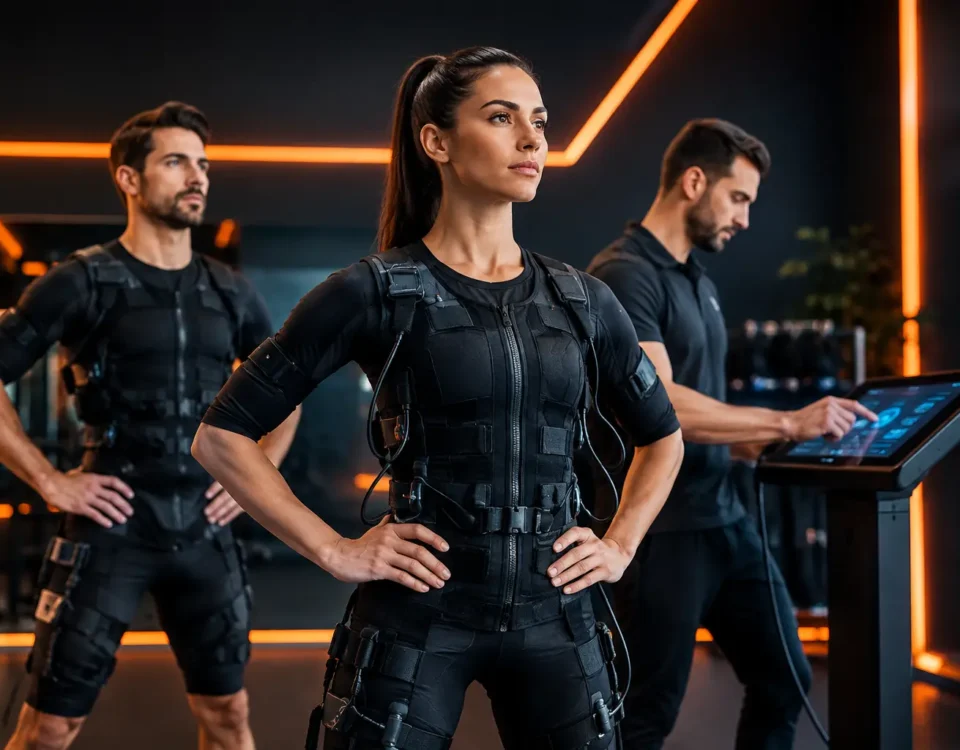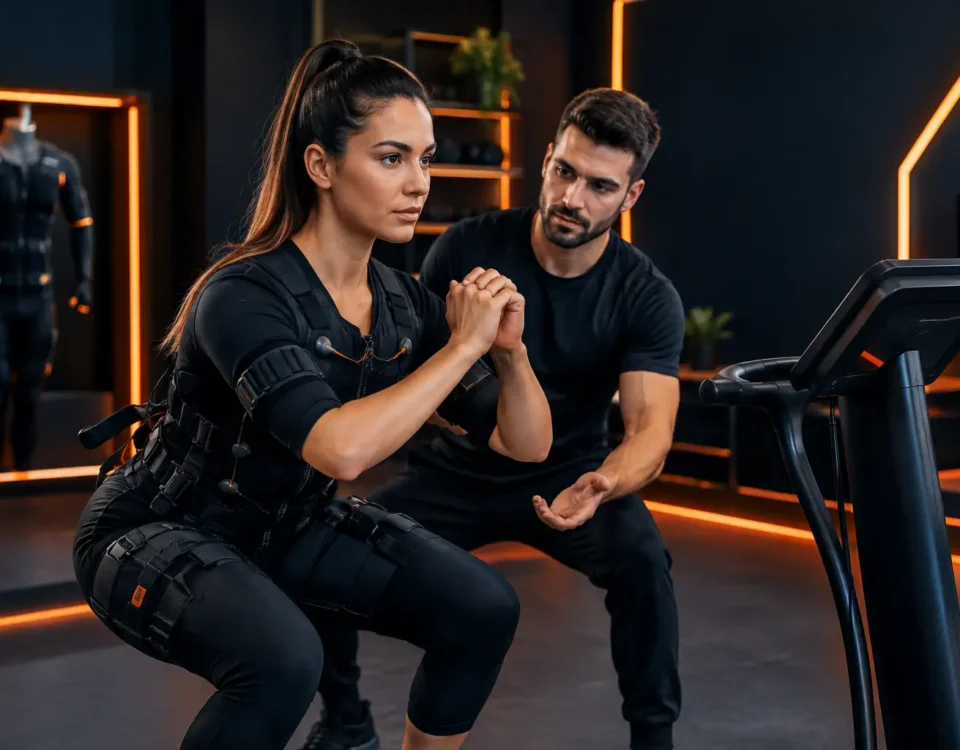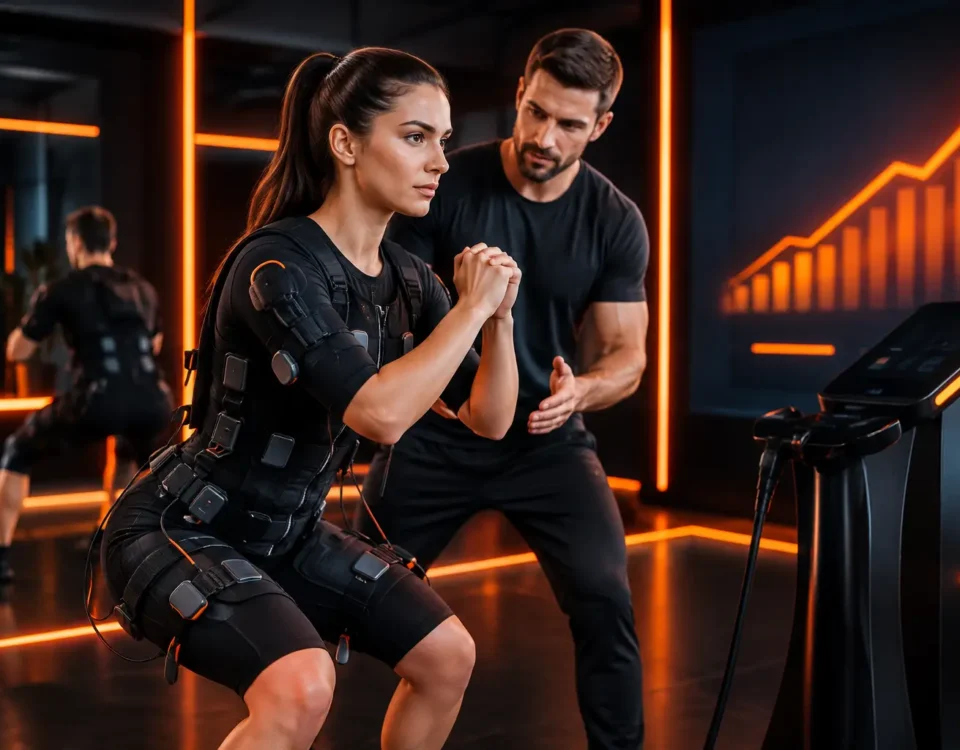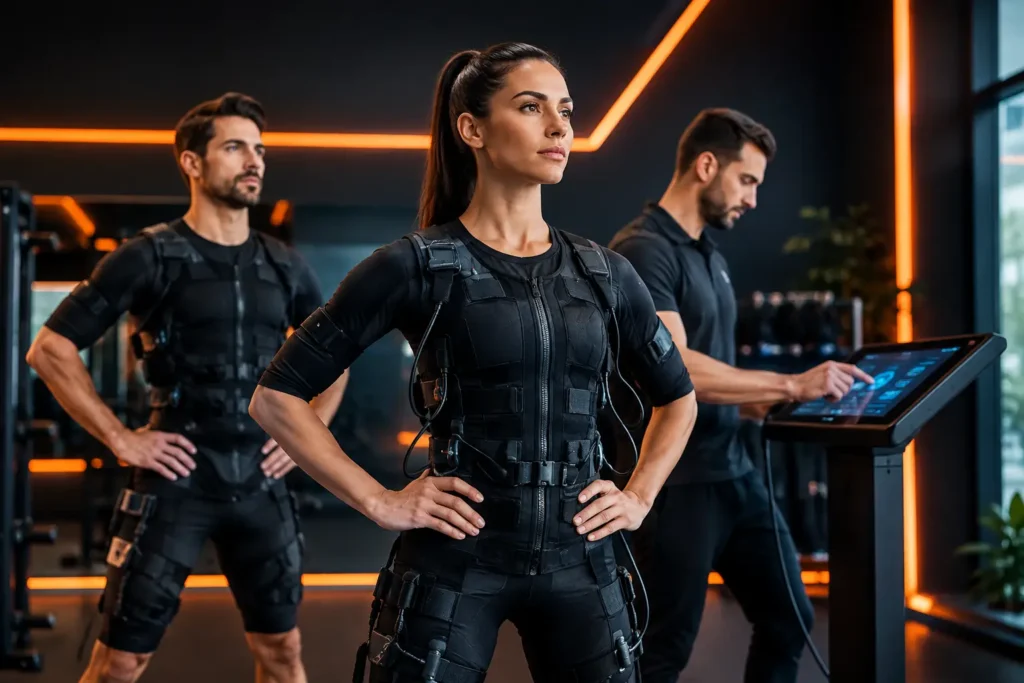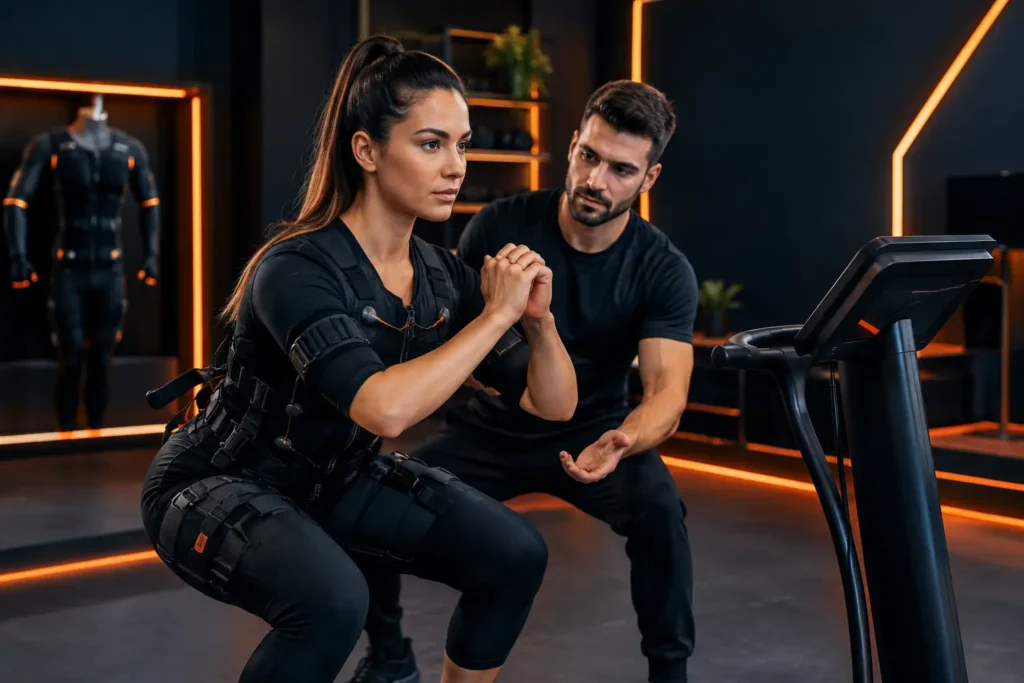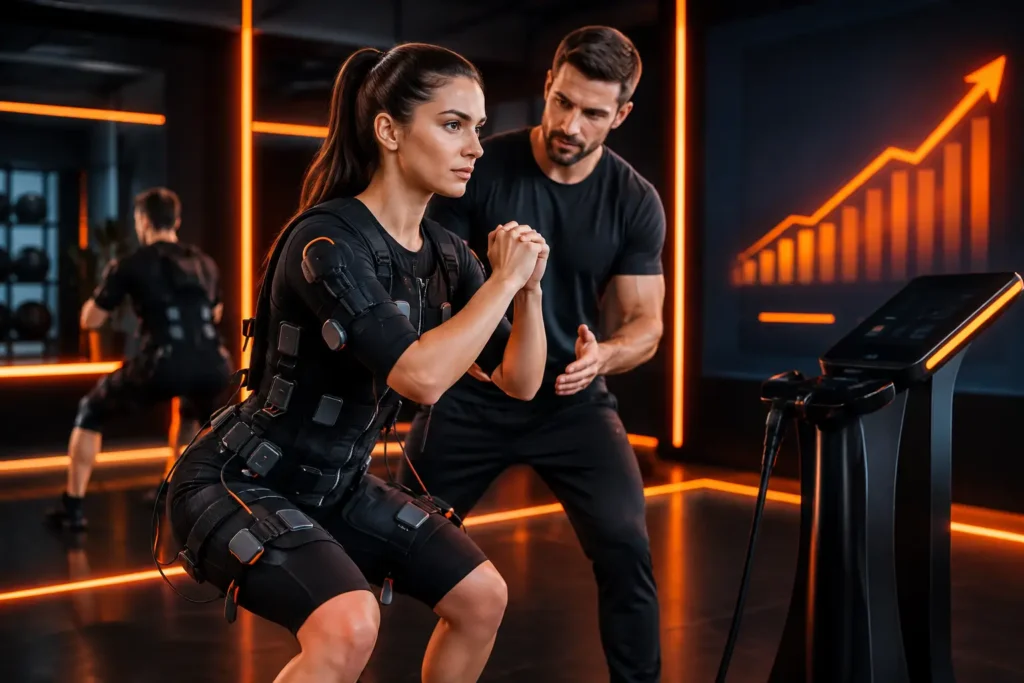

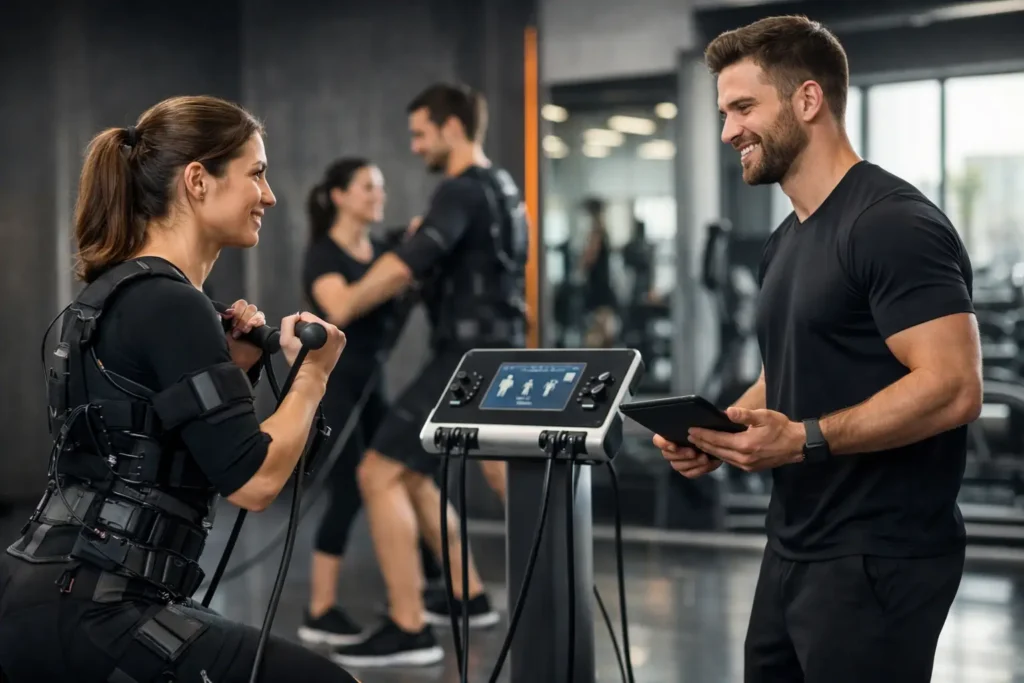
A conventional gym floor can add EMS as one more service. A well-designed EMS concept can create a distinct revenue center with its own offer, client journey, staffing plan, and pricing power. The best EMS concepts for gyms are not defined by the device alone. They are built around the operator’s available capital, target client, space, sales capability, and preferred path to growth.
For some businesses, the right starting point is one coach serving clients at home or in partner locations. For others, it is a dedicated studio built for structured appointments and repeat memberships. A premium wellness venue may need a dry wireless format that feels private, efficient, and aligned with a high-end experience. Each model can work. The key is choosing the one your operation can sell, deliver, and scale consistently.
What Makes an EMS Concept Commercially Viable?
The most profitable-looking concept on paper is not always the strongest fit in practice. Operators should evaluate EMS through five commercial questions: how much investment is required to launch, how many clients can be served per hour, what the recurring offer looks like, how much staff time is needed, and how easily the concept fits into the existing business.
Client acquisition matters just as much. A gym with an established personal training base may convert members into EMS sessions quickly. A new wellness entrepreneur may need a lower-overhead model that allows them to build demand before committing to a fixed studio. A clinic-adjacent business may prioritize privacy, appointment reliability, and a professional consultation process over high client volume.
EMS works best as a coached, appointment-based service rather than an unattended equipment add-on. That creates a clear value proposition: focused sessions, expert guidance, measurable progression, and a time-efficient training format. It also means operators must plan for staff training, scheduling, safety screening, cleaning procedures, lead follow-up, and retention from day one.
Best EMS Concepts for Gyms and Fitness Operators
1. Mobile EMS for Low-Overhead Market Entry
Mobile EMS is the most flexible concept for trainers, independent coaches, and entrepreneurs testing a local market. The operator brings the service to clients at home, at workplaces, in hotels, or through partnerships with gyms and wellness facilities. Instead of carrying the cost of a permanent location, the business begins with a compact operating model and a highly personal service.
This model is particularly effective when the founder already has a personal training client base. Existing trust shortens the sales cycle, while EMS can become an upgrade for clients who value convenience and coached sessions. It can also work well in areas where clients have limited time, travel frequently, or prefer private training.
The trade-off is capacity. Travel time limits the number of appointments per day, and the operator is often the coach, salesperson, scheduler, and service manager. Mobile EMS is therefore best treated as a focused premium service, not a volume business. Route planning, minimum session packages, and concentrated service zones protect margin.
A mobile launch should have a clear progression plan. Once demand becomes consistent, the operator can add a second coach, establish recurring locations, or move into a small studio. Flexible equipment access, including rental or rent-to-own, can help preserve working capital while that demand is being proven.
2. Studio EMS for Repeatable Revenue and Capacity
A dedicated EMS studio is the strongest model for operators seeking predictable schedules, recurring packages, and a scalable team structure. Clients come to a fixed location, follow a consistent onboarding process, and book regular coached sessions. This creates a more controlled operating environment than mobile delivery, with better use of staff time and a clearer brand presence.
The studio model suits gym owners adding a specialized zone, existing EMS operators expanding capacity, and entrepreneurs who want a standalone service business. It can be designed around one-to-one sessions, paired training, or small-group formats, depending on the system configuration, market positioning, and staffing plan.
| Commercial factor | Studio EMS approach | | — | — | | Primary advantage | Consistent appointments and repeatable operations | | Ideal customer base | Clients seeking structured coaching and regular sessions | | Capacity potential | Higher than mobile, based on rooms, systems, and staff | | Main investment areas | Equipment, fit-out, staff training, and local marketing | | Best growth lever | Memberships, packages, referrals, and team utilization |
The central decision is not simply how many systems to install. It is how the timetable will fill. A studio with a disciplined consultation process, follow-up system, and recurring package structure can grow steadily. A larger setup without a sales process can become an expensive underused room.
For gyms, EMS can also solve a retention challenge. Members who have stopped using the main floor may respond to a scheduled, coach-led format. The service should still be positioned carefully. It is not a replacement for every training preference, and it should not be sold with exaggerated body-composition promises. Its commercial strength is the combination of professional supervision, time efficiency, and a distinct training experience.
3. Premium Dry Wireless EMS for Boutique and VIP Settings
Premium dry wireless EMS is designed for businesses where presentation, privacy, and convenience are part of the product. Boutique fitness concepts, luxury wellness spaces, beauty and longevity venues, private clubs, and hotel environments can use this format to deliver a more polished client experience without centering the session around traditional wet garments or extensive setup.
This concept is not automatically the best choice because it carries a premium position. It works when the surrounding brand can support it. Clients need to understand why the service is different, and the venue needs a refined journey from consultation through booking, session delivery, and follow-up.
The operational advantage is a smoother experience in settings where clients expect comfort and discretion. The commercial opportunity is higher perceived value when the coaching, environment, and service standards match the equipment. However, operators should avoid assuming that premium equipment alone justifies premium pricing. Staff confidence, room design, punctual scheduling, and client communication all shape whether the offer feels credible.
A premium dry wireless concept is often strongest as an anchor service within a wider wellness menu. It can complement personal training, recovery-oriented services, body care, or private memberships, provided each service has a clear role rather than competing for the same client budget.
Match the Model to Your Business Reality
The right concept depends less on what is trending and more on what your business can execute well. A personal trainer with limited capital and strong relationships should usually begin with mobility and direct client delivery. A gym with unused rooms, front-desk traffic, and a coaching team may be ready for a studio model. A high-end venue with an affluent audience and a strong service culture may have the foundation for premium dry wireless EMS.
Before selecting equipment, build a simple operating forecast. Estimate weekly appointment capacity, expected conversion from consultations, average client package, coach hours, facility costs, and marketing spend. Use conservative assumptions. The goal is not to create an attractive spreadsheet. The goal is to identify the minimum client volume needed to operate confidently.
Also consider the launch sequence. Many operators benefit from starting with a limited number of sessions and a tightly defined offer rather than opening with too many options. A straightforward introductory consultation, a recommended package, and a clear rebooking process are easier for staff to explain and for clients to buy.
Build the Offer Around Retention, Not Single Sessions
EMS is most commercially stable when clients see it as an ongoing coached program. Single sessions can introduce the service, but packages and memberships create the continuity needed for staffing, forecasting, and client results tracking. The offer should explain frequency, progression, coach support, cancellation terms, and what clients can reasonably expect from participation.
Train coaches to sell through consultation, not pressure. They should understand the client’s schedule, goals, training history, and preferences before recommending a format. This improves fit and protects the brand from overpromising. It also gives the operator better data on which audience segments respond to the service.
Staff education is non-negotiable. Coaches need practical instruction on equipment use, session structure, client communication, contraindication awareness, and documentation. The system should be supported by onboarding, warranty coverage, access to spare parts, and operational guidance. Equipment downtime or uncertain coaching standards can damage a new EMS business faster than a modest initial setup.
Choose a Partner That Supports the Business Model
A gym does not need another equipment purchase that arrives without a commercialization plan. It needs a model that matches its investment level and a partner that can support setup, training, service continuity, and growth decisions. That is why comparing mobile, studio, and premium formats before committing matters more than chasing a single specification.
EMS Leader helps operators evaluate these paths with equipment options, launch support, academy training, and business guidance designed around real operating conditions. The best next move is to choose the concept that your team can deliver exceptionally well, then build capacity only after demand has earned it.