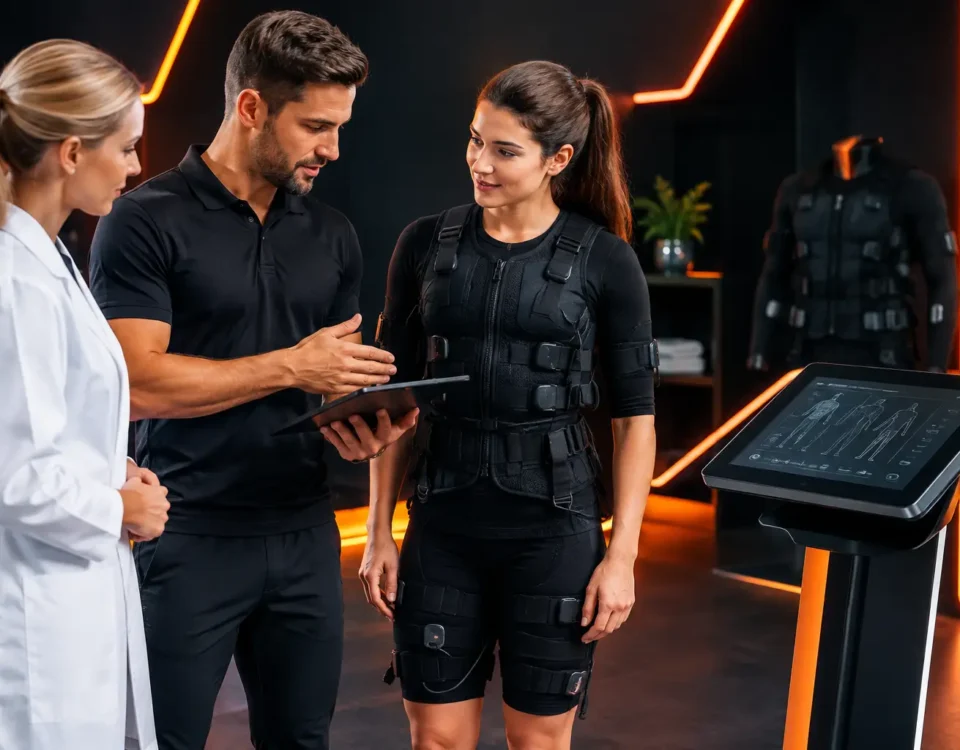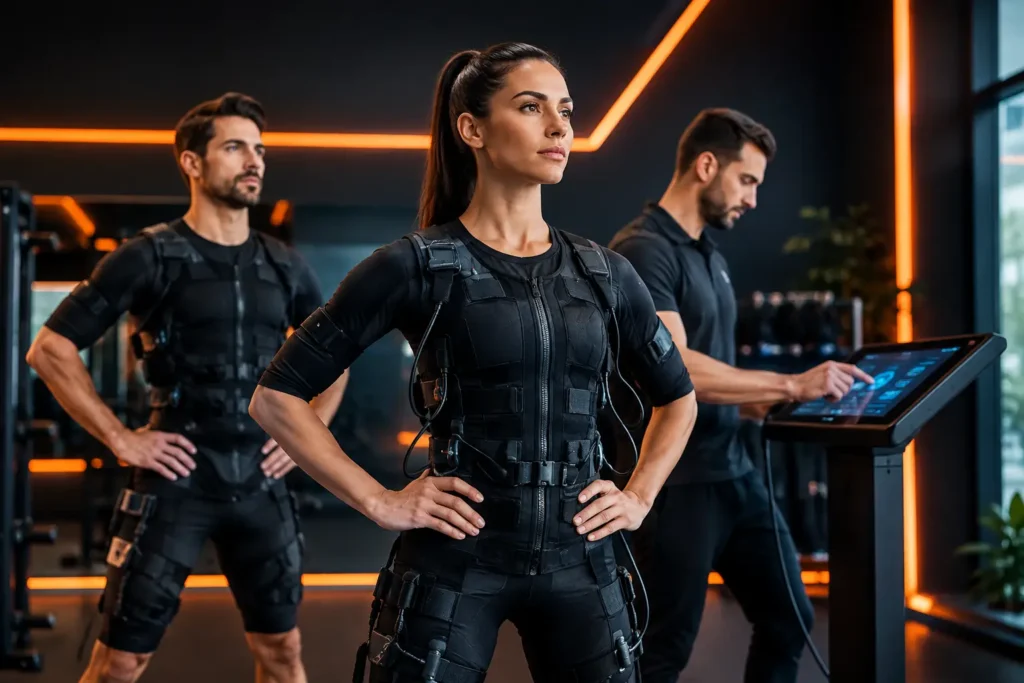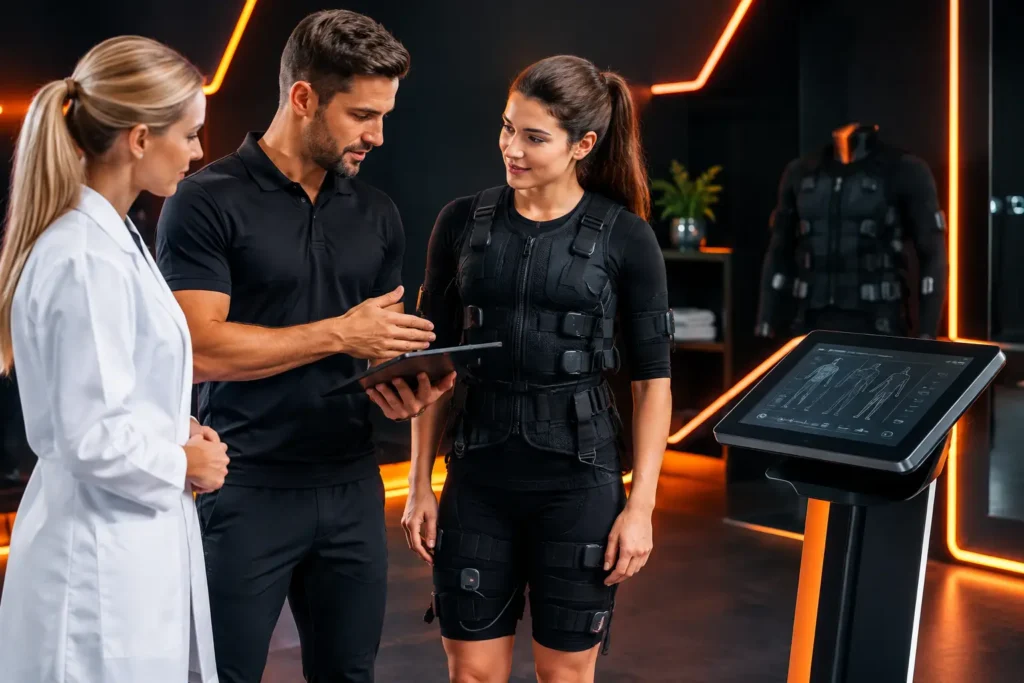


A strong EMS market outlook is not a reason to buy equipment without a plan. It is a reason to look closely at where demand is forming, which client experience your market will pay for, and how quickly your operation can convert interest into recurring appointments. For fitness, wellness, and health-sector operators, the opportunity is increasingly defined by positioning and execution rather than by the device alone.
Whole-body EMS continues to appeal because it supports short, coached sessions that fit busy schedules. That value proposition remains relevant for professionals, executives, parents, athletes, and clients who want a structured training format with personal attention. But growth will not be equal across every location or business model. Operators entering the market with a clear offer, trained staff, and disciplined client acquisition are better placed than those treating EMS as a passive add-on.
EMS Market Outlook: Growth Is Becoming More Selective
The market is moving beyond early curiosity. Many prospective clients now understand the basic concept of EMS, which reduces the amount of education needed at the first conversation. At the same time, they are more selective. They compare service quality, coaching standards, convenience, atmosphere, and membership flexibility before committing.
This is positive for serious operators. A market that rewards professionalism creates room for businesses that deliver a consistent experience and communicate their value clearly. It puts pressure on poorly planned concepts, but it also reduces the advantage of being merely first.
The most promising demand is concentrated around three commercial needs: time-efficient one-to-one coaching, scalable supervised training in studios and clubs, and premium wellness experiences where privacy and design matter as much as workout duration. These needs require different equipment choices, staffing models, and sales processes.
Convenience remains a commercial advantage
EMS sessions are typically short, but the real value is not simply speed. Clients pay for a scheduled, guided service that removes uncertainty from training. For a personal trainer, this can create a differentiated offer with a compact footprint. For a gym or clinic manager, it can add a bookable premium service without requiring a large expansion of floor space.
Mobile EMS can be particularly attractive where clients value home, office, hotel, or private-location appointments. The trade-off is that travel time limits daily capacity. A mobile operator needs geographic discipline, route planning, and a pricing structure that protects time on the road.
Premiumization is shaping client expectations
At the higher end of the wellness market, clients increasingly expect privacy, comfort, professional onboarding, and a polished environment. Dry wireless EMS is well suited to boutique concepts where the experience must feel efficient and elevated. This model can support strong positioning, but it requires attention to presentation, staff confidence, and service consistency.
Premium does not mean expensive decor alone. It means the client understands why the experience is different from a standard gym session. Consultation quality, body assessment processes where appropriate, appointment flow, and follow-up communication all contribute to perceived value.
The Right EMS Model Depends on Capacity, Not Hype
The best entry point is determined by your available capital, local demand, operating hours, and sales capability. A solo trainer with a strong personal client base faces a different decision from a gym owner seeking to increase revenue per member.
| Business model | Best fit | Commercial advantage | Main operating consideration | | — | — | — | — | | Mobile EMS | Trainers and low-overhead startups | Fast market entry and flexible locations | Travel time and limited daily capacity | | Studio EMS | Gyms, clinics, and dedicated operators | Multiple clients, repeatable scheduling, and team delivery | Requires stronger occupancy and staff management | | Premium dry wireless EMS | Boutique wellness and VIP concepts | High-value positioning and elevated client experience | Demands a refined brand experience and targeted acquisition |
A mobile model can validate demand with a lower initial commitment. It is often the practical choice for operators who already have trusted clients and want to test package pricing before opening a fixed site. However, it is not automatically the cheapest route to profitability. If travel, setup, and cancellations are not managed carefully, utilization can suffer.
A studio model generally has greater revenue capacity because it creates more bookable slots and can support several clients or coaches within a structured timetable. The challenge is filling those slots. Studio operators need a launch campaign, lead-handling process, sales consultations, retention plan, and enough working capital to build momentum.
Premium dry wireless EMS can create distinction in markets where clients want discretion and convenience. It may be suitable for luxury fitness, beauty, longevity, hospitality, and private wellness concepts. Yet premium positioning only works when the entire service supports it. An inconsistent experience quickly weakens a higher-price offer.
What Will Determine EMS Business Performance
The equipment decision matters, but it is rarely the sole driver of commercial results. The stronger question is whether the equipment supports a model you can market, operate, and scale.
First, client acquisition must be planned before launch. Define your primary audience and the reason they should book an introductory session. For some operators, the best starting point is an existing database of personal training or gym members. For others, local partnerships with wellness businesses, corporate programs, hotels, or residential communities can create qualified introductions. Broad advertising without a defined offer often produces interest but not enough appointments.
Second, conversion depends on the first-session experience. Prospects need clear expectations, professional guidance, and a logical next step. A business should know how it will move a first visit into a package, membership, or recurring training plan. This is not about high-pressure sales. It is about giving clients a clear structure for continued participation.
Third, retention protects the economics of the business. The cost of attracting a new client is usually higher than the effort required to keep a satisfied one engaged. Operators should track attendance, package renewal timing, client feedback, and coach utilization. If clients leave after only a few sessions, the issue may be pricing, onboarding, scheduling, service delivery, or a mismatch between the offer and the target market.
Finally, training and after-sales support are business assets, not extras. Staff must be confident in setup, session delivery, safety protocols, client communication, and routine equipment care. Downtime, uncertainty, or poor onboarding can slow a new operation at the exact point it needs consistency. A partner that provides equipment access alongside training, warranty coverage, spare parts, and operational guidance helps reduce that friction.
Financing Flexibility Can Improve the Launch Decision
One of the most common mistakes in evaluating the EMS market outlook is focusing only on the purchase price of equipment. The more useful question is how the investment fits your cash flow and launch timeline.
Direct purchase may suit an established operator with available capital and a proven client pipeline. Rental or rent-to-own arrangements may be more appropriate for a first-time entrant who wants to preserve cash for marketing, rent, staffing, and early operating expenses. Neither model is universally better. The right choice depends on risk tolerance, expected occupancy, and the capital required to build demand.
Before committing, create a simple operating plan that includes your likely session capacity, realistic appointment utilization, staffing cost, facility or travel cost, marketing budget, financing commitment, and maintenance needs. Use conservative assumptions. A plan that works only at full capacity is not a plan designed for normal business conditions.
How Operators Should Prepare for the Next 12 Months
The next phase of EMS growth will favor businesses that are easy to understand and easy to book. Clients should know who the service is for, what happens in a session, where it takes place, and how they continue after the first appointment.
For new entrants, the priority is speed with control: select a model that matches your current resources, complete practical training, prepare your sales process, and launch with a targeted audience rather than trying to serve everyone. For established gyms and clinics, the priority is integration: make EMS visible in the customer journey, train staff to refer suitable clients, and measure utilization separately from general membership activity.
EMS Leader works with operators who want this type of structured path, from selecting a mobile, studio, or premium setup to planning the commercial model around it. The objective is not simply to place equipment in a room. It is to build an offer that has a credible route to repeat bookings and long-term operation.
The market opportunity is real, but disciplined operators will capture the most value. Choose the model your location and client base can support, protect cash flow during launch, and make every session part of a service clients have a reason to return to.