
A clinic can have an excellent reputation, skilled staff, and a loyal client base, yet still choose an EMS setup that limits growth from day one. The best EMS model for clinics is not simply the system with the most features. It is the model that fits your service format, available space, staff capacity, client expectations, and commercial targets.
For most clinic operators, the decision comes down to a practical question: Will EMS be a focused one-to-one service, a scalable appointment-based program, or a premium experience that supports higher-value positioning? Answer that before comparing equipment specifications. The wrong model can create scheduling bottlenecks, underused capacity, or an investment level that does not match your route to revenue.
Start With the Clinic Business Model
EMS can support several commercial models inside a clinic environment, but each requires different operating conditions. A physiotherapy-adjacent wellness clinic, a body-contouring concept, a performance center, and a high-end longevity studio may all use EMS differently. The equipment choice should follow the business model, not lead it.
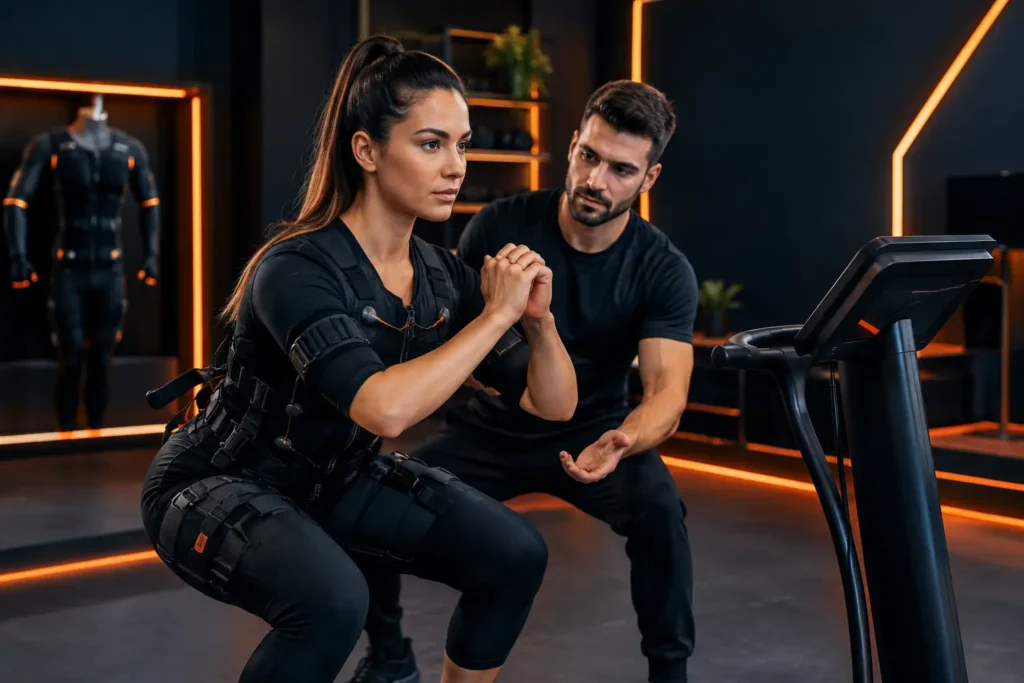
A clinic with limited floor space and a service-led team may benefit from a mobile or compact EMS model. This setup supports scheduled individual sessions, requires less fixed infrastructure, and allows a practitioner to move between treatment rooms, partner locations, or corporate wellness appointments. It is often the most controlled way to test demand before committing to a larger dedicated area.
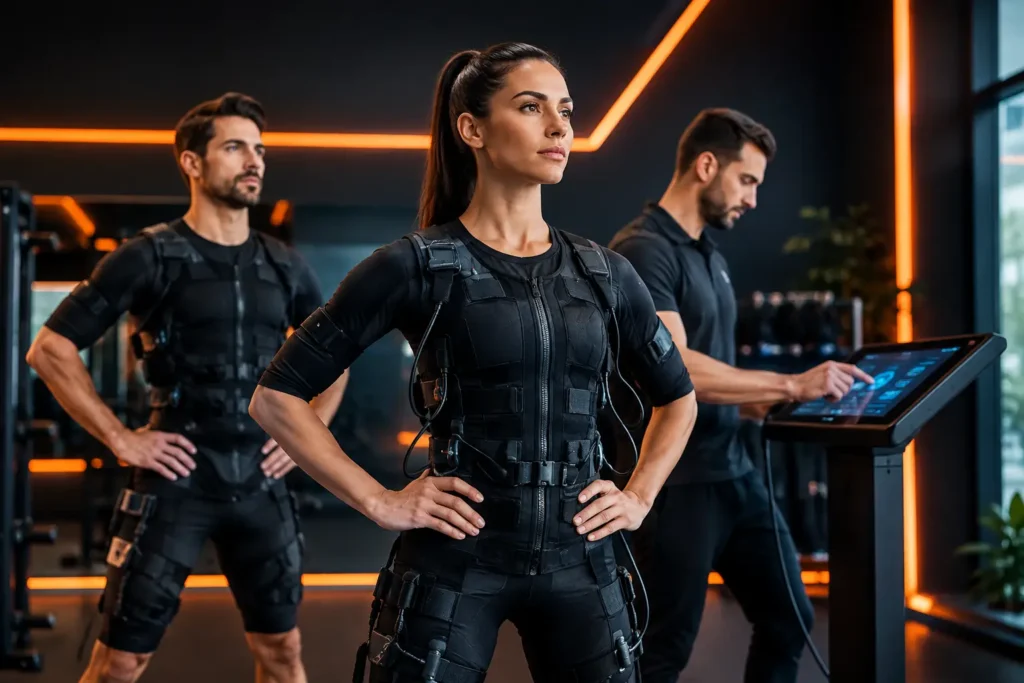
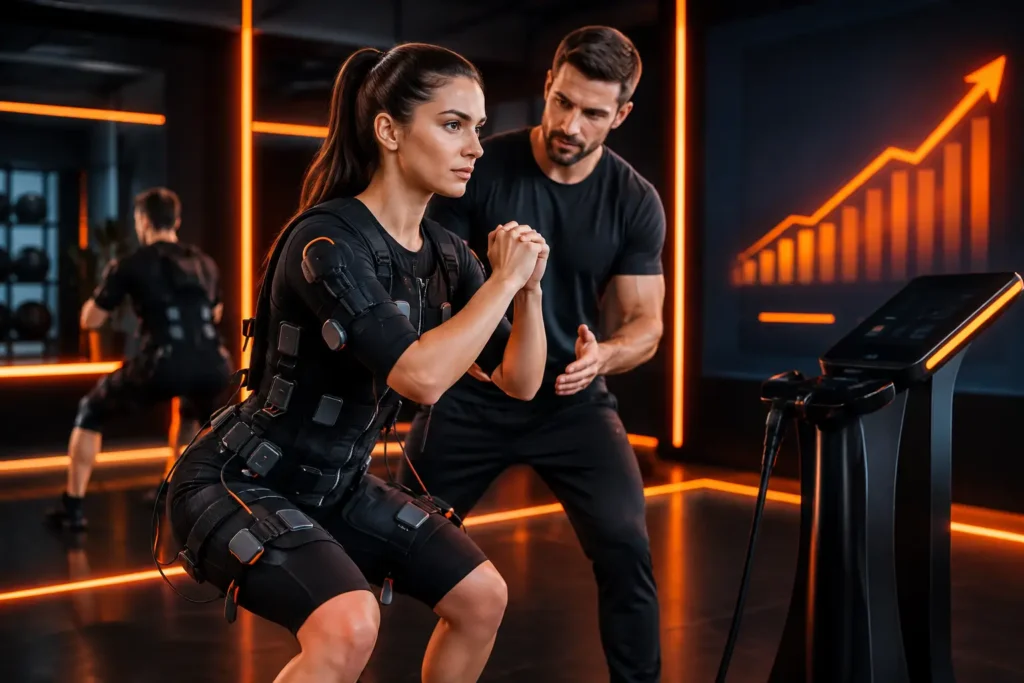
A clinic planning to make EMS a core revenue line needs a studio-oriented model. This approach is designed for consistent appointment flow, multiple users, and a more defined client journey. It creates better conditions for memberships, structured training packages, and recurring sessions, provided the clinic has sufficient staff, changing space, cleaning procedures, and booking discipline.
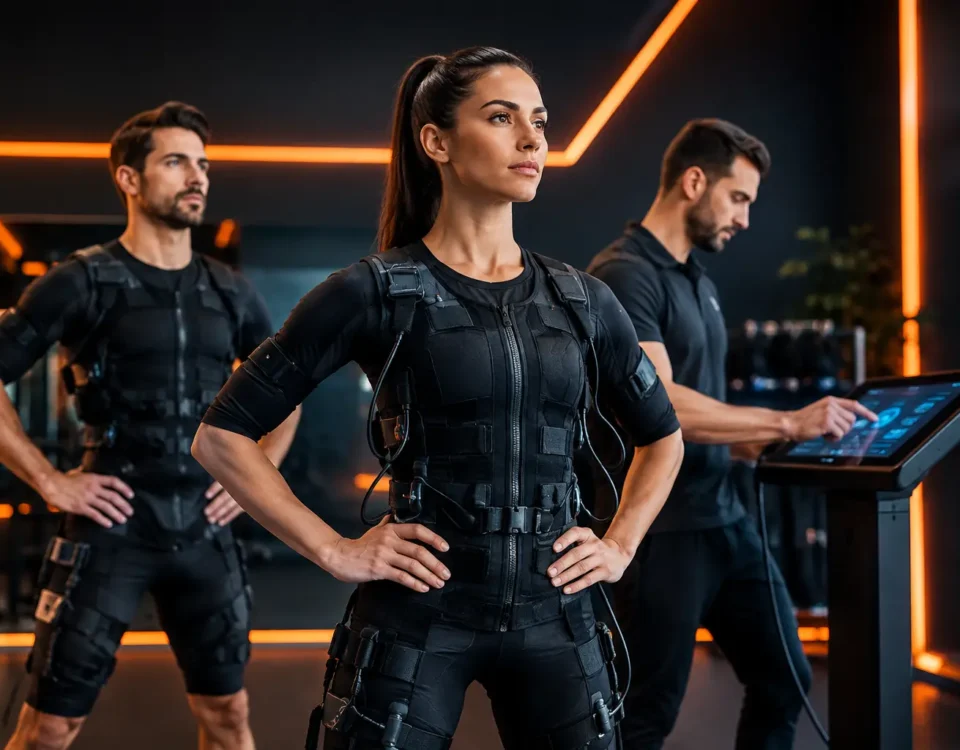
Premium dry wireless EMS is suited to clinics where privacy, convenience, design, and client experience justify a higher-value offer. This model can fit boutique wellness, recovery, longevity, and VIP concepts especially well. It is not automatically the best option for every clinic, however. The client base must recognize and be willing to pay for the added convenience and premium positioning.
The Best EMS Model for Clinics Depends on Capacity
Capacity is where many investment decisions become clearer. Do not ask only how many people a system can train at once. Ask how many completed, billable sessions your clinic can realistically deliver each week.
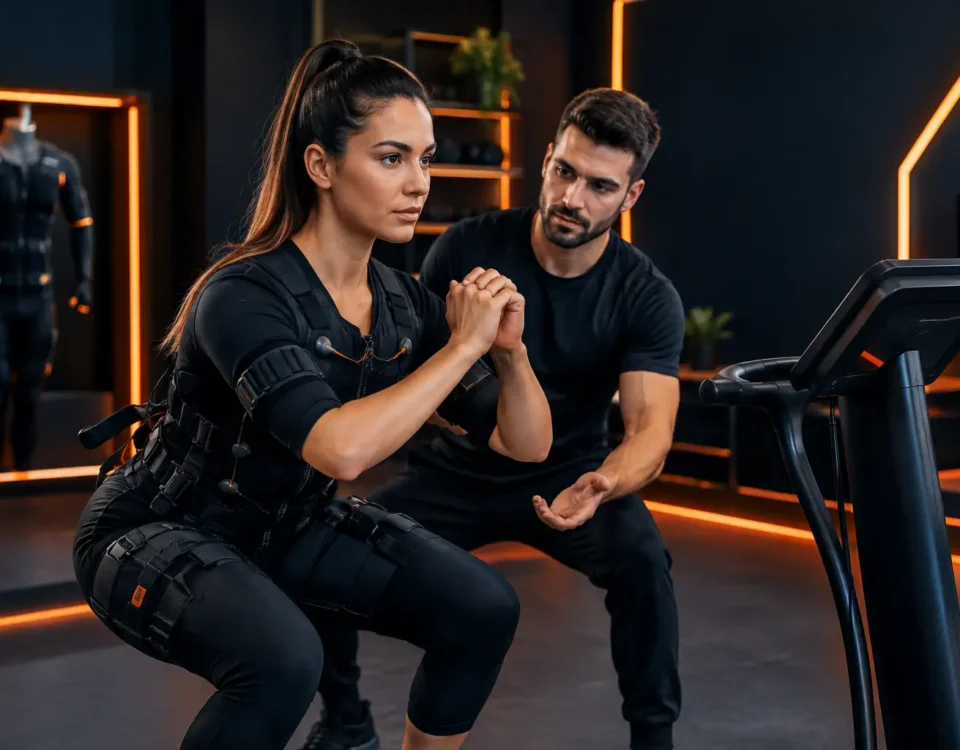
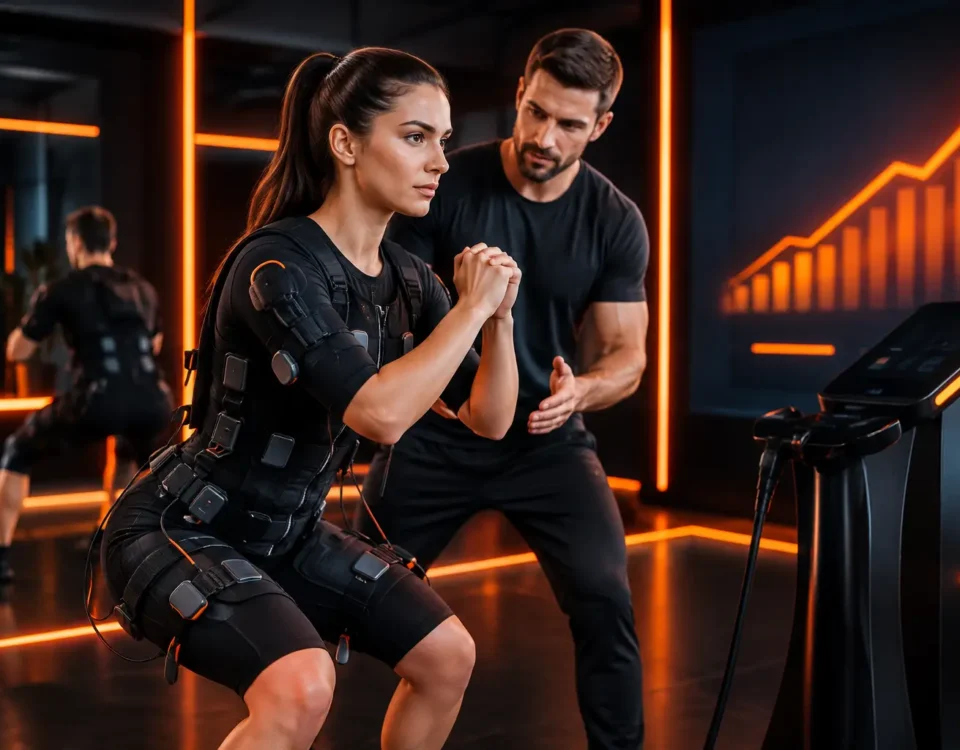
A one-to-one model gives the operator close control over coaching, client onboarding, and session quality. It is a strong fit for new EMS providers, clinics with a consultative service style, or teams that want to build confidence before adding volume. Its trade-off is simple: revenue depends heavily on practitioner availability. If one staff member is fully booked, capacity stops there unless you add more trained personnel or equipment.
A multi-client studio model increases throughput and can improve revenue per operating hour. It works best when the clinic has a reliable lead flow, well-organized scheduling, and team members trained to deliver a consistent session experience. More stations do not create demand by themselves. They create the ability to serve demand once your sales process, retention plan, and staffing are ready.
Use this practical comparison when assessing capacity:
| Clinic priority | Most suitable EMS direction | Main commercial advantage | Key consideration | |—|—|—|—| | Low initial commitment | Mobile or compact one-to-one EMS | Easier launch with limited space | Staff time remains the primary capacity limit | | Dedicated EMS service line | Studio EMS setup | Higher appointment throughput | Requires stronger operations and client acquisition | | High-end wellness positioning | Premium dry wireless EMS | Supports elevated experience and pricing strategy | Needs a premium audience and polished service delivery | | Multiple locations or external services | Portable EMS model | Flexibility across rooms and sites | Logistics and equipment handling need clear processes |
Match Equipment to Your Client Journey
Clinics often focus on the session itself and overlook everything around it. Yet the client journey determines whether EMS becomes a repeatable business line or an occasional add-on.
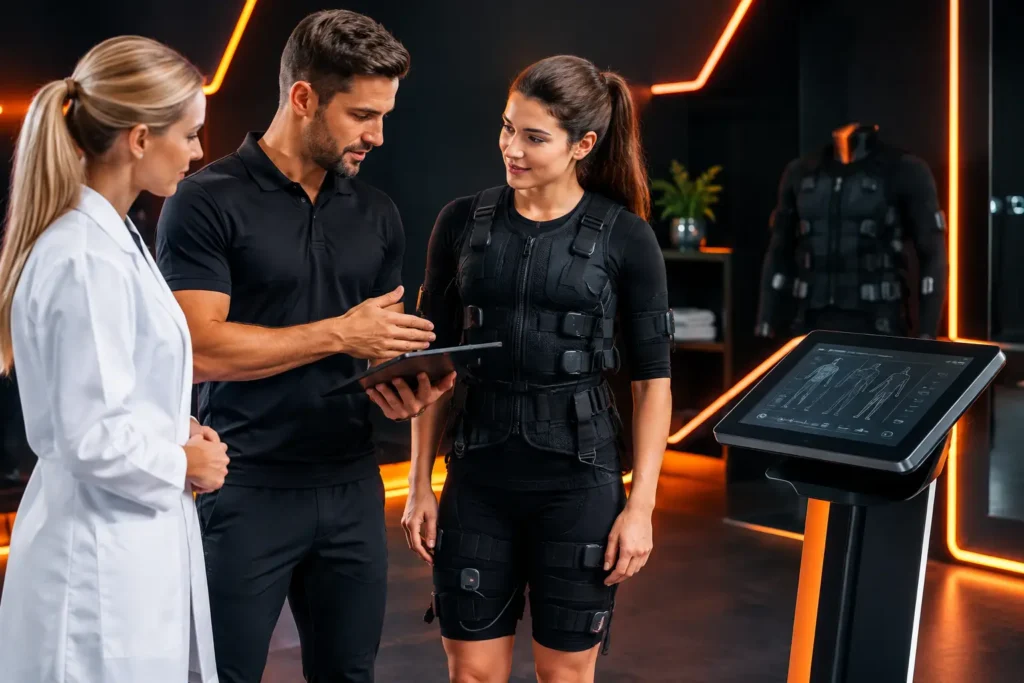
Consider the path from inquiry to renewal. A new client may need an assessment, onboarding, initial sessions, progress reviews, and a clear recommendation for continued service. If EMS is delivered as an isolated appointment with no structured follow-up, retention can suffer regardless of equipment quality.
For a clinic serving clients who value individual attention, a one-to-one EMS format can create a highly personal experience. Staff can adapt session pacing, explain the process carefully, and build a professional relationship that supports package sales. This is especially useful when EMS is being introduced to an existing clinic audience that needs education before committing.
For clinics serving busy professionals or established fitness clients, a studio format may be more efficient. Short, well-scheduled appointments can fit into a predictable weekly routine. The operational goal is consistency: easy booking, prepared equipment, trained staff, and enough turnaround time between sessions to protect quality.
Premium dry wireless EMS can reduce friction in the experience by supporting a cleaner, more private, and more design-conscious environment. But premium positioning has to be reflected across the entire service, including consultation, staff presentation, room standard, communications, and aftercare guidance. Equipment alone cannot carry a premium offer.
Evaluate Space, Staffing, and Daily Operations
Your floor plan should influence the model selection early. A portable system can work across compact rooms and reduce the need for a dedicated EMS zone. A studio installation needs enough room for safe movement, client preparation, storage, cleaning, and a professional coaching environment.
Staffing matters just as much. The most commercially attractive system on paper may become underutilized if only one person is trained to operate it. Build an EMS schedule that can survive vacations, busy clinic periods, and staff turnover. Training should include not only equipment use, but consultation flow, session delivery, hygiene procedures, basic sales conversations, and client retention practices.
Before purchasing or renting, map a typical operating day. Identify who handles inquiries, who conducts assessments, how equipment is prepared, how long appointments last, and where clients change or wait. This exercise often reveals whether a clinic is ready for a multi-station setup or should begin with a more flexible model.
Assess Investment Through Payback, Not Equipment Cost Alone
The lowest-cost route is not always the lowest-risk route. An underpowered setup can restrict your ability to grow, while an oversized setup can tie up capital before your client pipeline is proven. The right investment level depends on your launch plan and the demand you can create within the first months of operation.
Calculate the investment alongside realistic operating costs: staffing, room use, training, marketing, laundry or garment management where applicable, maintenance, and financing. Then estimate how many sessions or packages must be sold to cover those costs. Avoid building a plan around perfect utilization. A conservative forecast gives you a more useful picture of payback potential.
Flexible access models can be valuable when a clinic wants to protect cash flow. Rental or rent-to-own arrangements may allow operators to launch with a lower upfront commitment while preserving capital for staff training, local marketing, room preparation, and client acquisition. Direct purchase can make sense for established clinics with clear demand, available capital, and a long-term equipment strategy.
Support Is Part of the EMS Model
For clinics, an EMS system is not just hardware. It is an operating capability. Setup support, practical training, warranty coverage, available spare parts, and business guidance can make a meaningful difference during launch and beyond.
This is particularly relevant for first-time EMS operators. A clinic may have strong clinical or wellness expertise but limited experience with EMS scheduling, package design, and commercial positioning. Partner support can shorten the gap between receiving equipment and running a professional service.
EMS Leader approaches this decision as a business-model question, helping operators compare mobile, studio, and premium dry wireless options against their investment level and growth plan. The objective is not to push every clinic toward the largest system. It is to establish a setup that the team can sell, deliver, and scale with confidence.
Choose for the Next Stage, Not Just Opening Week
The best EMS model for clinics should work on launch day while leaving room for the business you intend to build. If demand is still unproven, begin with a format that controls risk and creates operational learning. If your clinic already has strong traffic, trained staff, and a clear EMS offer, a studio model may provide the capacity needed to capitalize on that foundation.
Make the decision with a realistic view of clients, staff, space, and sales activity. The right EMS setup gives your clinic a clear service to market, a manageable operation to run, and a credible path to grow when demand is earned.