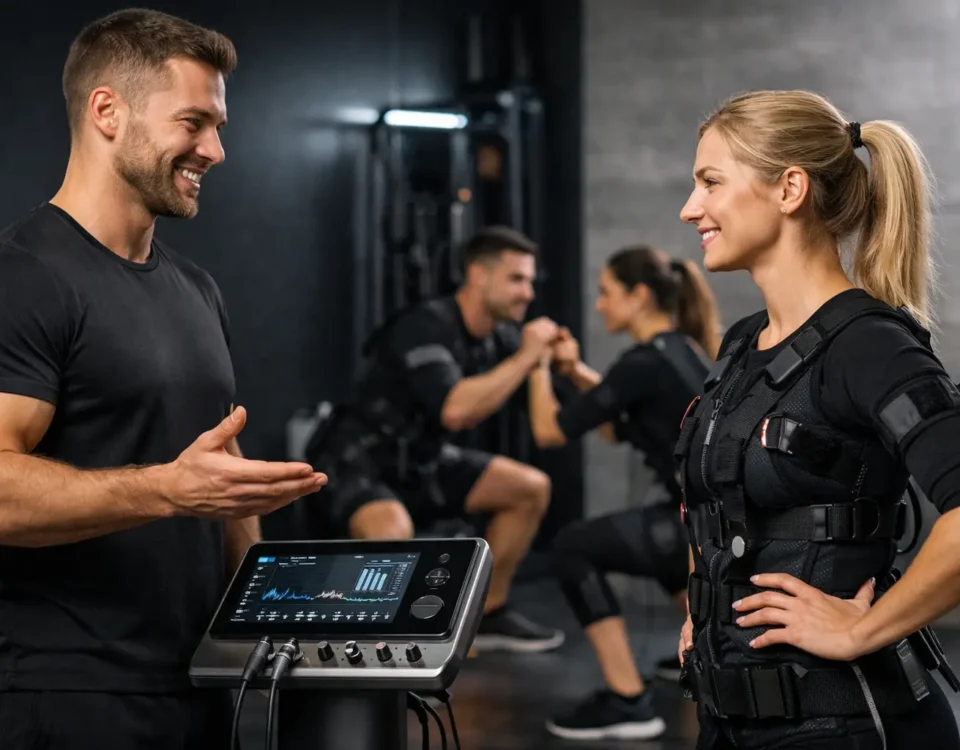


A profitable EMS studio is not built around the device alone. It is built around what happens in the 15 minutes before a session, the 20 minutes during it, and the follow-up that determines whether a first-time client becomes a recurring member. When you set up EMS studio workflow correctly, capacity becomes predictable, your team performs with confidence, and clients experience a service worth returning to.
For a studio owner, workflow is commercial infrastructure. It controls how many sessions can run per day, how much staff time is spent on administration, how consistently sessions are delivered, and whether growth creates momentum or operational stress.
Start With the Client Journey, Not the Equipment Layout
The best workflow begins on the client side. Map every step from inquiry to renewal before deciding who stands where or which calendar software to use. A client should always know what happens next, while your team should never need to improvise basic operational steps.
A practical EMS client journey has five stages: lead response, qualification and booking, onboarding, session delivery, and retention. Each stage needs one clear owner, one standard process, and one place where information is recorded.
For example, a new inquiry should receive a prompt response with a concise explanation of the service, what to wear, session duration, and how to book. The goal is not to provide a long technical lesson by message. The goal is to move a qualified prospect into a consultation or first session with accurate expectations.
At booking, collect the information your operator needs to prepare safely and professionally. This can include a health and readiness questionnaire, informed consent, training goals, prior EMS experience, and preferred appointment times. Your protocols should follow local requirements and manufacturer guidance, with appropriate screening and escalation procedures for cases that require additional professional input.
Set Up EMS Studio Workflow Around Fixed Time Blocks
EMS appointments are short, but short appointments can become chaotic when changeovers are unplanned. The answer is not simply to book every available minute. It is to create repeatable session blocks that protect both client experience and staff performance.
A 30-minute booking block may include a brief check-in, suit preparation and fitting, the coached EMS session, cleaning and reset, and notes before the next client arrives. The exact schedule depends on your equipment, staffing model, and level of service. A premium one-to-one studio may reserve more time for consultation and recovery discussion, while a multi-station studio may use staggered starts to improve throughput.
Avoid treating reset time as empty time. It is part of the product. Rushed cleaning, missing client notes, and hurried suit preparation can quickly reduce perceived quality.
Build a daily operating rhythm
Your daily schedule should have a rhythm rather than a collection of appointments. Opening procedures confirm that equipment is charged, accessories are available, suits are ready, software is working, and the session area meets your hygiene standard. Closing procedures capture maintenance issues, laundry status, stock needs, client follow-ups, and the next day’s priority bookings.
Between those points, establish fixed windows for consultations, staff breaks, sales follow-up, and administrative tasks. If your trainers must answer every lead message between sessions, response quality and coaching quality will both suffer. Assign lead management to a dedicated team member when volume supports it, or protect specific administrative blocks when you are operating lean.
Design the Floor for Fast, Calm Handoffs
Your floor plan should reduce unnecessary movement. Clients should be able to enter, change, store belongings, prepare, train, and exit without crossing through an operational bottleneck. Staff should have immediate access to clean suits, consumables, cleaning supplies, towels, and charging points.
Separate clean inventory from used items. This sounds basic, but it prevents confusion at peak times and makes staff accountability far easier. Label storage clearly and use a simple replenishment rule so that each operator knows when stock requires attention.
For studios with more than one training station, decide whether clients arrive simultaneously or in staggered waves. Simultaneous starts can simplify coaching routines, but they create pressure in reception and changing areas. Staggered starts smooth the flow and may improve personal attention, although they require stronger scheduling discipline. The right model depends on your physical space, team size, and target market.
| Workflow area | Standard to define | Business impact | | — | — | — | | Reception | Check-in, waiver status, payment status | Fewer delays and missed details | | Preparation | Suit allocation, fitting, hygiene check | Consistent client experience | | Training floor | Coach-to-client ratio and session structure | Better capacity control | | Reset | Cleaning, charging, laundry handling | Faster turnover and equipment care | | Follow-up | Notes, next booking, membership conversation | Higher retention opportunities |
Make Every Session Repeatable, Not Robotic
Consistency does not mean every client receives the same experience. It means your team follows the same professional framework while adapting the session to the client’s goals, readiness, and recorded progression.
Create a session framework that guides coaches from welcome to close. It should cover confirmation of the client’s status, equipment fitting, movement selection, intensity management within approved training protocols, feedback during the session, and post-session notes. Keep the notes practical. A future coach needs to understand what was performed, how the client responded, what should be adjusted next time, and what commercial or service follow-up is needed.
This documentation is especially valuable as your studio grows. Without it, clients become dependent on one trainer, and quality varies when schedules change. With it, your business can deliver a recognizable standard across the team.
Train staff to explain the purpose of the session in plain language. Clients are more likely to continue when they understand their progression and feel that their time is being managed professionally. Avoid exaggerated promises. Focus on coaching quality, consistency, personal attention, and a clear training plan.
Connect Booking, Payments, and Client Notes
A fragmented system creates hidden labor. If bookings live in one tool, payments in another, waivers in email, and client notes on paper, your team will spend too much time finding information and too little time serving clients.
Choose tools that fit your current operating level. A single-location startup may only need a reliable booking system, payment process, digital intake forms, and a shared client record. A larger studio may benefit from integrated memberships, automated reminders, staff permissions, reporting, and inventory controls.
The critical requirement is not complexity. It is that your team can see the day’s schedule, client status, payment position, and coaching notes before the appointment begins. Automate reminders and missed-appointment follow-ups where possible, but keep important conversations personal. A high-value EMS service should not feel like it is being managed by generic messages alone.
Build Retention Into the Last Two Minutes
The end of a session is where many studios lose future revenue. The client leaves feeling positive, but no one asks about the next appointment, confirms their plan, or records an issue that could affect attendance.
Give coaches a simple closing routine: ask how the session felt, record relevant feedback, confirm the next booking, and identify whether the client needs a plan review. For trial clients, the next step should be especially clear. Do not leave them with a vague invitation to return. Offer a defined continuation path based on their schedule and service goals.
Retention is not only a sales responsibility. It begins with reliable appointments, clean equipment, attentive coaching, and visible progress tracking. The sales conversation becomes easier when the operation has already demonstrated value.
Measure the Numbers That Expose Friction
Revenue matters, but it is a late indicator. A studio workflow should be reviewed through numbers that reveal problems before they reduce monthly performance.
Track inquiry response time, consultation-to-first-session conversion, show rate, average sessions per active client, rebooking rate, no-shows, trainer utilization, and station utilization. Also track session delays and equipment downtime. These figures identify whether the constraint is demand, scheduling, staffing, client experience, or maintenance.
Do not chase maximum utilization from the first month. An overly packed schedule can damage service quality and leave no room for onboarding, resets, or recovery when a session runs late. Build capacity in stages, then adjust staffing and opening hours when demand proves consistent.
Standardize Before You Expand
Before adding stations, hiring more coaches, or opening another location, test whether your existing workflow works without the owner handling every exception. If it does not, more capacity will simply multiply the inconsistency.
Document your procedures in concise checklists and train every new team member against them. Review the process after real operating weeks, not only during setup. The most useful improvements often come from recurring friction: a crowded changing area, a forgotten follow-up, a slow reset, or an unclear handoff between reception and coach.
EMS Leader supports operators with equipment, training, setup planning, and commercialization guidance because a studio launch requires more than a device delivery. The most effective setup matches the equipment model, investment plan, staffing capacity, and intended client experience from the beginning.
A disciplined workflow gives your studio room to grow without losing the personal service that brought clients through the door. Start with one controlled day of operations, observe where time and attention are being lost, and refine the process until every session feels prepared rather than rushed.