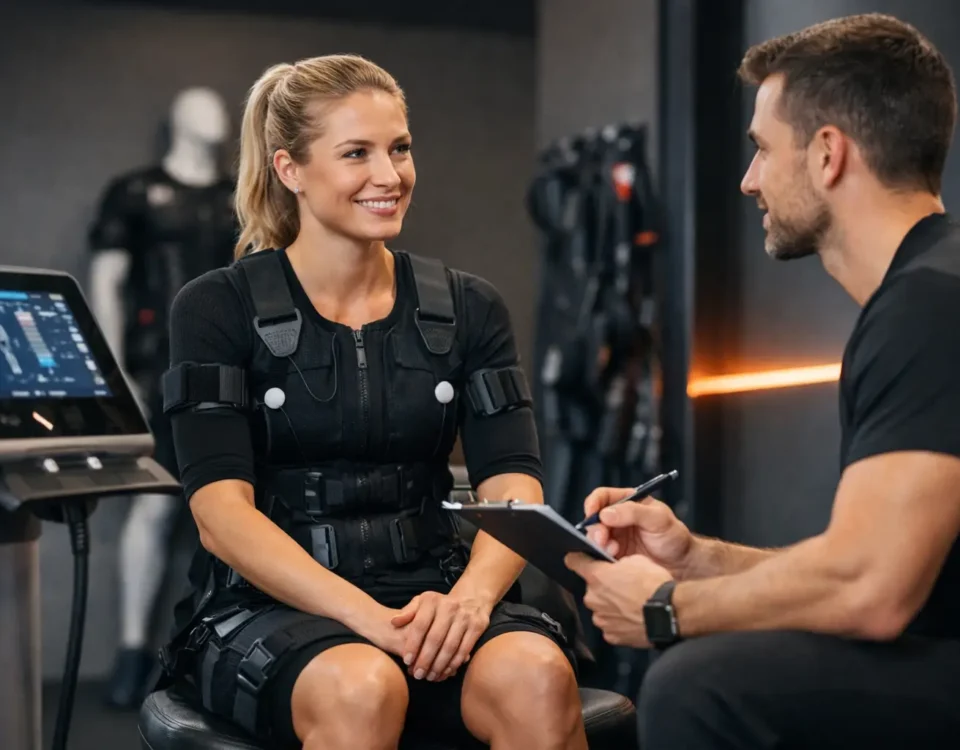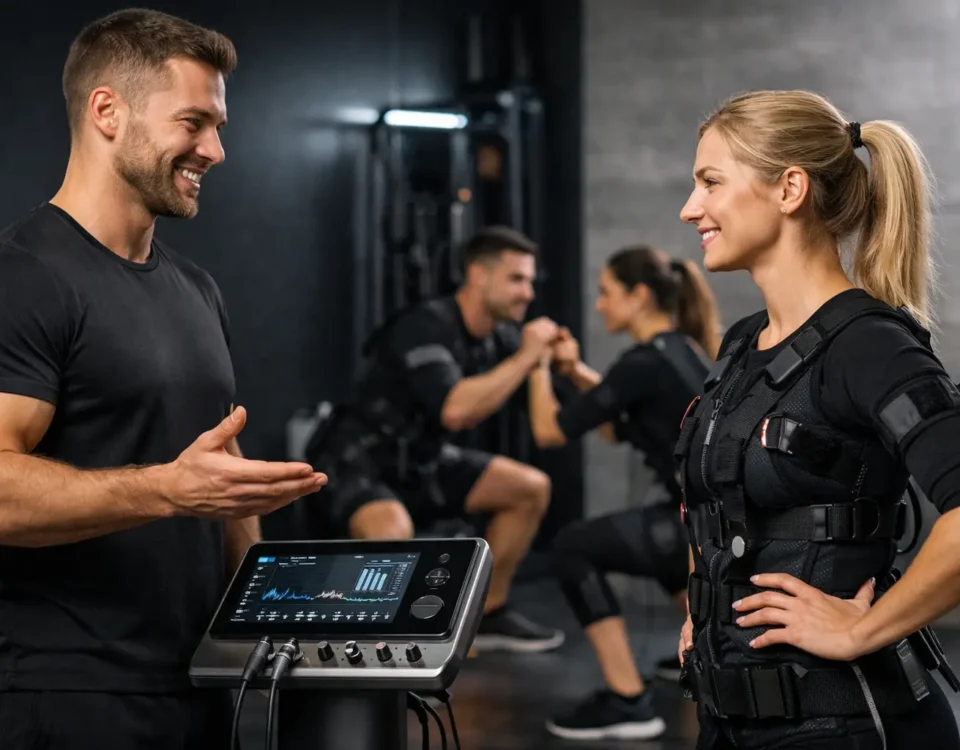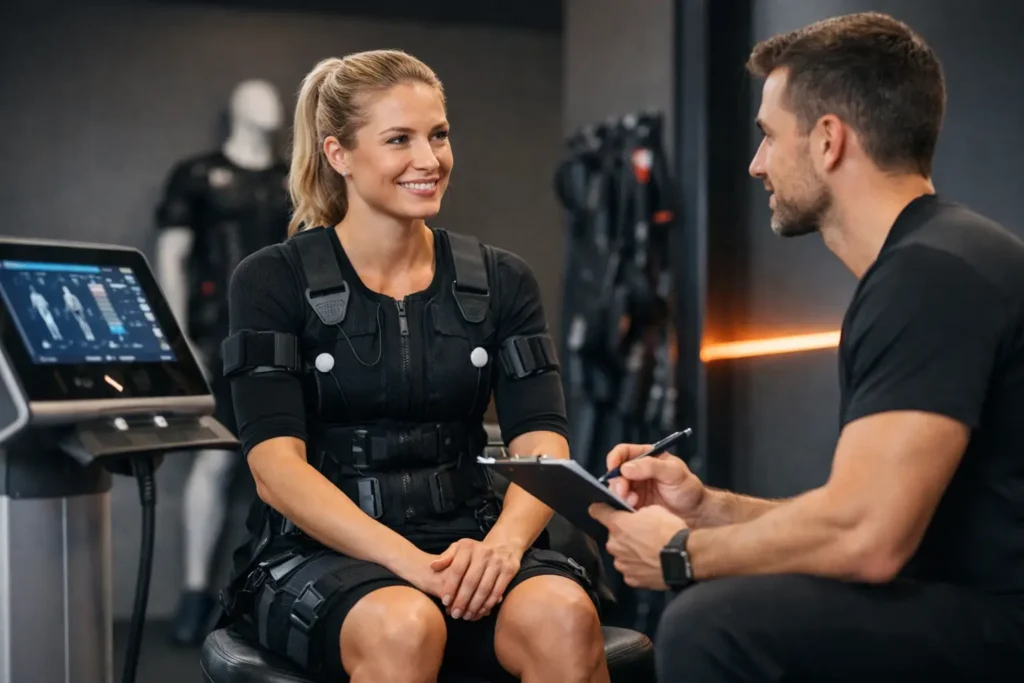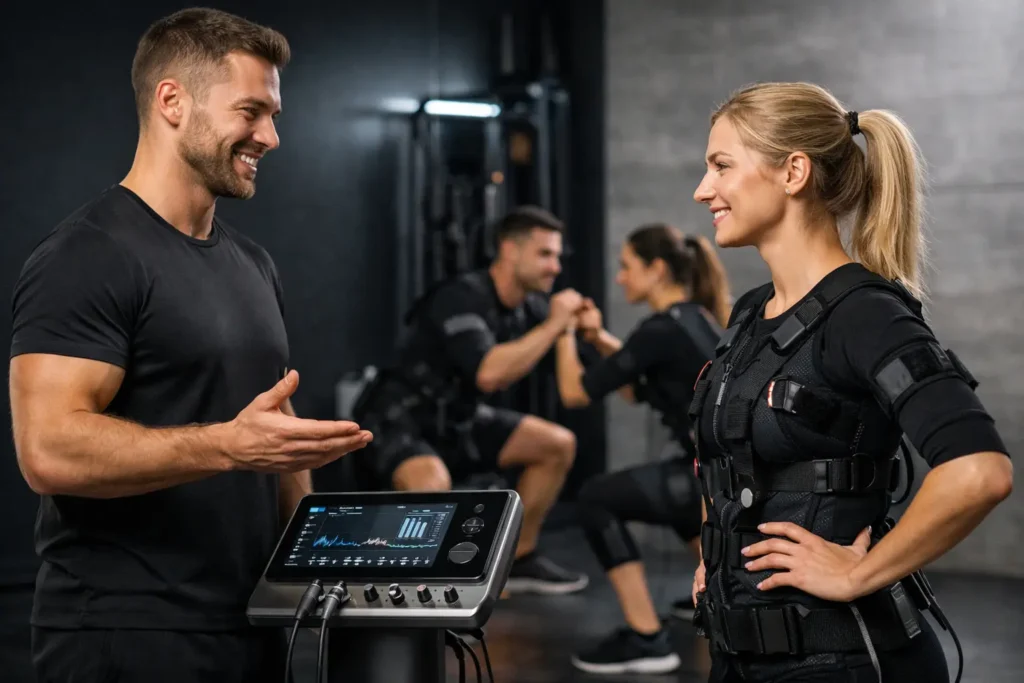


An EMS device can be delivered in a box. An EMS business cannot. That difference is the real answer to why choose turnkey EMS support when you are evaluating a new service line, studio concept, or mobile training model. Your revenue will depend on far more than the system itself: staff confidence, client onboarding, session delivery, pricing, maintenance, positioning, and the ability to solve problems quickly once clients are booked.
For trainers, gym owners, clinic managers, and wellness entrepreneurs, turnkey support turns an equipment decision into an operating plan. It reduces avoidable delays at launch and gives the business a clearer path from first consultation to recurring client revenue.
What Turnkey EMS Support Actually Covers
Turnkey does not mean every EMS business should look the same. A mobile operator serving one-to-one clients has different priorities from a multi-coach studio or a premium dry wireless concept. The value of turnkey support is that the equipment, training, setup, and commercial guidance are aligned with the model you intend to run.
A well-structured turnkey package normally starts with model selection. This is where operators assess client capacity, available space, service format, desired investment level, and local demand. The goal is not to choose the most complex setup. It is to choose a system that fits the business you can realistically operate and sell.
Support then extends into onboarding, practical training, warranty coverage, spare parts access, and after-sales assistance. Commercial guidance may also include service positioning, ROI planning, package structure, and operating recommendations. These pieces are connected. Better staff training supports a better client experience. Better service design makes it easier to communicate value. Reliable after-sales support protects continuity when the business is already generating appointments.
Why Choose Turnkey EMS Support Instead of Equipment Alone?
Buying equipment only can appear simpler at the start. For experienced operators with an established EMS team, a tested sales process, technical knowledge, and a clear replacement plan, it may be appropriate. But for many new entrants, the lower initial complexity is misleading. The missing work does not disappear. It shifts to the operator.
You may need to identify suitable protocols, train coaches independently, create onboarding materials, define safety procedures, source accessories, develop pricing, and determine how to handle technical issues. Each task can be managed, but together they can slow launch and create inconsistency during the period when first impressions matter most.
Turnkey EMS support reduces that operational load. It gives decision-makers a more complete framework before capital is committed. Instead of asking only, “Which machine should I buy?” you can ask more useful questions: “How many clients can we serve per hour?” “What is our staffing requirement?” “What service mix fits our market?” and “What needs to happen for the investment to pay back?”
That shift matters because EMS is a service business. The system is a core asset, but the client experience is where retention and pricing power are built.
Faster Launch With Fewer Unplanned Decisions
Launching quickly is not about rushing. It is about removing decisions that should have been made before opening day. A turnkey approach helps operators organize the basics in the right sequence: business model, equipment configuration, site or mobile setup, staff training, service delivery, and launch readiness.
For a mobile EMS trainer, that could mean choosing a portable setup, establishing a travel radius, preparing session flow, and setting packages that make travel time commercially viable. For a studio operator, it may involve planning coach capacity, changing areas, cleaning processes, booking intervals, and membership options.
The practical benefit is momentum. When equipment arrives with a defined support pathway, the operator can spend more time recruiting clients and less time trying to build the operation from scratch.
Training That Protects Service Quality
Clients do not judge an EMS business by hardware specifications. They judge the professionalism of the consultation, the confidence of the coach, the clarity of instruction, and the quality of the session. Training is therefore not an optional extra added after purchase. It is part of the commercial product.
A proper onboarding process helps staff understand setup, session management, client communication, equipment care, and appropriate operational procedures. This is particularly valuable when you are adding EMS to an existing gym, clinic, or wellness business where staff may have strong general fitness knowledge but limited EMS experience.
Training also helps create consistency across coaches. That becomes more important as the business grows. If every trainer explains the service differently or follows an inconsistent workflow, client trust can suffer and management becomes harder. Standardized delivery gives the operator a base that can be monitored, improved, and replicated.
Better Control of Downtime and Operating Risk
Equipment downtime has a direct commercial cost. A cancelled session can mean more than one lost appointment. It can affect client confidence, coach schedules, referrals, and recurring package retention.
This is why warranty coverage, spare parts availability, and responsive after-sales support should be evaluated as seriously as the system specification. Ask what support looks like after installation, how consumable or replacement components are handled, and what process applies when technical assistance is needed.
No provider can eliminate every interruption. What matters is whether there is a clear support structure when an issue occurs. Operators who plan for this from the beginning are in a stronger position than those who treat maintenance as an afterthought.
The Business Model Must Drive the Setup
The right turnkey solution depends on your commercial model. A provider should help you compare options based on operational reality, not push one format for every buyer.
| EMS business model | Best suited for | Primary operational focus | | — | — | — | | Mobile EMS | Personal trainers and low-overhead startups | Portability, one-to-one scheduling, local client acquisition | | Studio EMS | Gyms, studios, and clinics seeking scale | Staff capacity, room flow, bookings, and repeatable delivery | | Premium dry wireless EMS | Boutique wellness and VIP concepts | Service experience, brand positioning, and premium package design |
Mobile EMS can be an accessible entry point because it avoids the fixed overhead of a dedicated facility. The trade-off is that travel, scheduling, and client density need close attention. A full studio may offer greater capacity and stronger visibility, but it requires more planning around staffing, rent, space utilization, and lead generation. Premium dry wireless concepts can support a differentiated experience, yet they demand a service environment and audience willing to recognize that added value.
Turnkey support is useful because it forces these questions into the decision before the equipment is selected. It is easier to align investment with strategy at the beginning than to retrofit a business model later.
Financing Flexibility Supports Smarter Entry
Capital allocation is one of the biggest concerns for operators entering EMS. A direct purchase may suit an established business with available funds and a clear expansion plan. Rental or rent-to-own options can be more suitable for entrepreneurs who want to protect working capital while validating demand or building a client base.
There is no universally better route. Financing should be evaluated alongside the expected rollout, client acquisition budget, staffing needs, and cash flow requirements. The most attractive equipment option can become a poor business decision if it leaves too little room for marketing, facility costs, insurance, or daily operations.
A turnkey partner should help frame this as a business decision rather than a product transaction. The discussion should include capacity assumptions, realistic utilization, package pricing for your market, and the operational milestones required to support payback. These are planning inputs, not income guarantees, but they give you a disciplined basis for moving forward.
Questions to Ask Before You Commit
Before selecting a turnkey EMS provider, ask how the support works in practice. Is training included for the people who will actually deliver sessions? Is there guidance on selecting the right business model? What does installation or setup support involve? How are warranty requests and spare parts handled? Can the provider help you understand the operational requirements of mobile, studio, and premium formats?
Also ask what happens after launch. A strong partner remains useful when you need a refresher for new staff, need to expand capacity, or want to review whether the current setup still fits your client demand. The relationship should not end when the equipment is delivered.
For operators serving multiple locations or planning cross-border growth, access to structured support can become even more valuable. EMS Leader supports businesses across Europe, the United Kingdom, Türkiye, the Middle East, and Turkish Republics through equipment, training, setup, and after-sales solutions.
A Practical Starting Point for Serious Operators
Turnkey EMS support is not about outsourcing every business decision. You still need to understand your customer, sell the service well, manage quality, and build retention. What it does provide is a stronger operating foundation, so your energy goes into developing the business rather than solving preventable setup problems.
Start with the model you can operate confidently, match the equipment and financing approach to that model, and make training and after-sales support part of the investment decision. A properly supported launch gives your EMS business room to earn trust one well-delivered client session at a time.