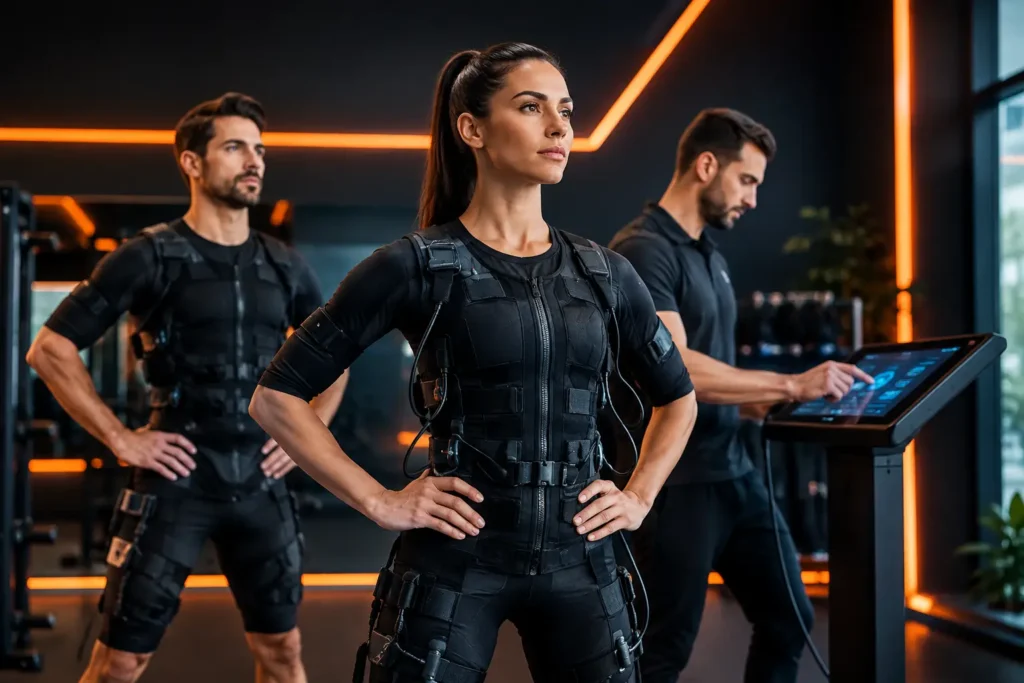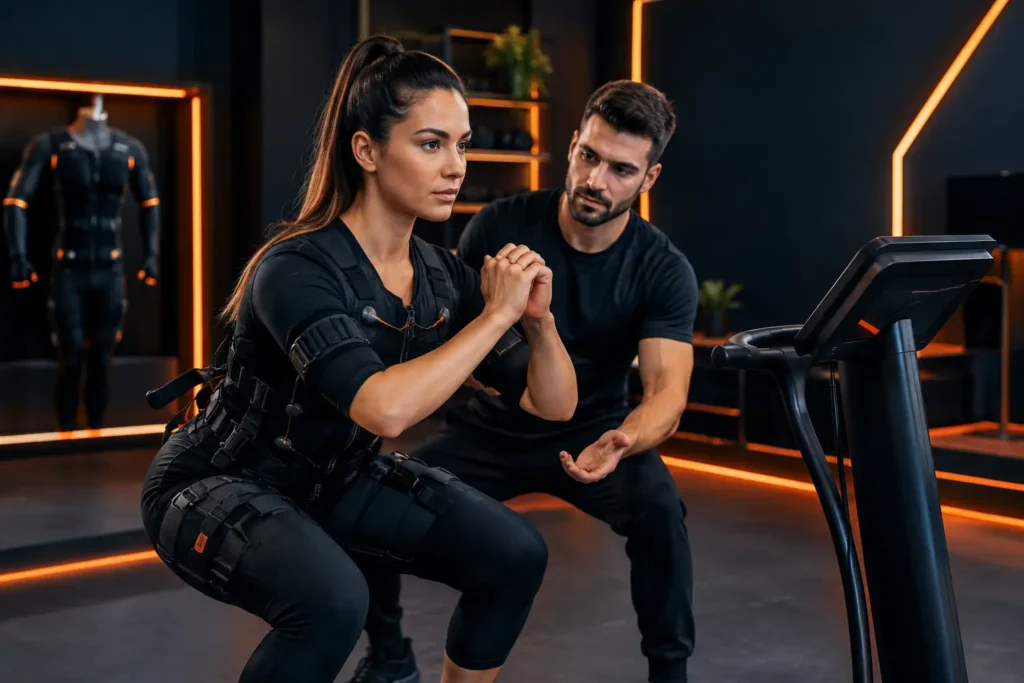

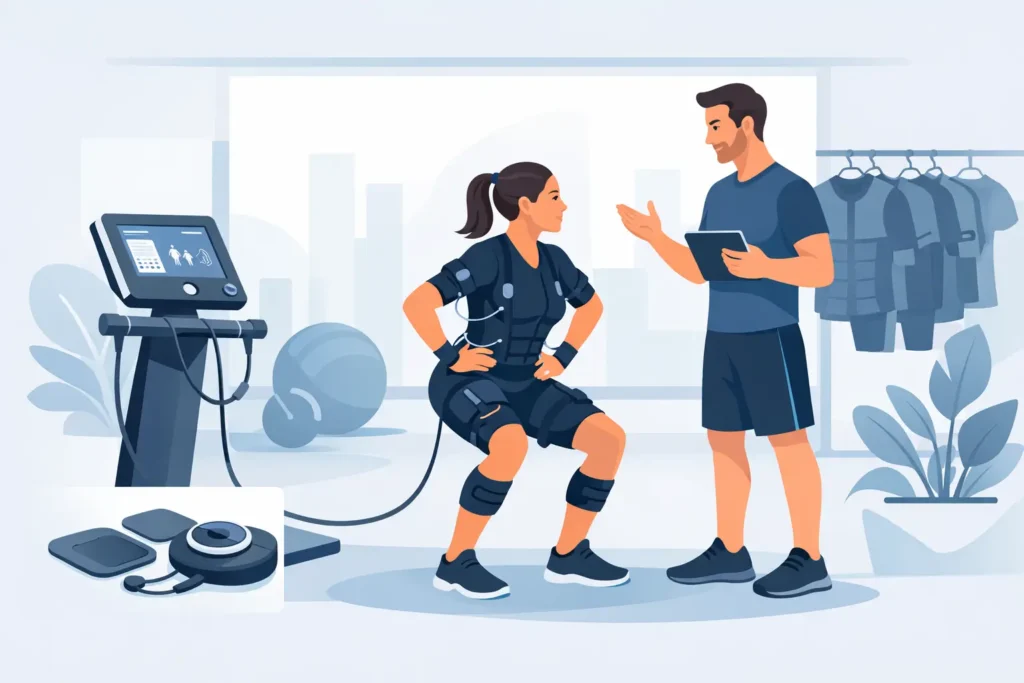
If you want to buy EMS machine for studio use, the wrong decision usually does not look wrong on day one. It looks polished in a demo, affordable on paper, and promising in a sales pitch. The real test comes later – when you need reliable session flow, trainer confidence, client retention, and a payback timeline that actually matches your business plan.
For studio operators, this is not just an equipment purchase. It is a commercial decision tied to pricing, throughput, staffing, maintenance, and brand positioning. A machine that works for a solo mobile trainer may be the wrong fit for a fixed-location studio trying to scale recurring revenue.
What matters before you buy EMS machine for studio use
A studio environment puts different pressure on an EMS system than a mobile setup. You are not only looking at pulse quality or design. You are evaluating how the system performs across repeated daily sessions, multiple trainers, different client body types, and a service model that depends on consistency.
That means your first question should not be, “What does the machine cost?” The better question is, “What kind of studio am I building, and what system supports that model profitably?”
A compact studio focused on premium one-to-one coaching can justify a different setup than a gym adding EMS as a high-margin service line. A clinic-adjacent concept may need a more structured onboarding and support package than a boutique wellness brand with an experienced performance team. The machine has to match the business model, not just the treatment concept.
The buying decision is really an ROI decision
When operators compare EMS systems, they often focus too heavily on purchase price and not enough on earning potential. A cheaper machine that creates downtime, limits scheduling flexibility, or requires more operator intervention can become more expensive very quickly.
In a studio setting, ROI depends on a few practical variables. Client capacity matters. Session pricing matters. Trainer efficiency matters. Support response time matters more than many buyers expect. If your equipment issue cancels a full day of booked sessions, your real cost is not the spare part. It is lost revenue, damaged trust, and operational disruption.
This is why serious buyers look beyond hardware. They assess the full commercial package: onboarding, training, warranty terms, spare parts access, launch support, and whether the supplier can help structure the business around realistic utilization.
Studio EMS needs capacity, repeatability, and control
The best studio systems are built around repeatable delivery. Your trainers should be able to run sessions with confidence, maintain a clear client experience, and adjust intensity without creating confusion or inconsistency.
That sounds obvious, but many operators underestimate how quickly complexity shows up in daily use. If the setup is cumbersome, if garment management creates friction, or if trainer onboarding takes too long, your service quality starts to vary. In a premium studio, inconsistency is expensive.
Control matters just as much as convenience. You need a system that supports accurate coaching, smooth client transitions, and a professional workflow. Whether you are serving busy professionals, rehab-adjacent clients, or high-end wellness members, the technology should help standardize quality rather than relying on trainer improvisation.
How to evaluate an EMS supplier, not just the machine
If you are planning to buy EMS machine for studio operations, the supplier matters as much as the equipment itself. A strong supplier reduces launch risk. A weak one leaves you solving technical and commercial problems on your own.
Look at how they handle pre-sale consultation. Do they ask about your location, client profile, investment level, and pricing strategy? Or do they push a unit without understanding your model? Commercial EMS is not a one-size-fits-all category. A partner should be able to explain which setup fits a premium boutique studio, which one fits a growth-stage gym, and what kind of payback period is realistic in each case.
Training support is another major filter. Your team needs to learn more than button sequences. They need session structure, client communication, contraindication awareness, and operational routines that help the studio run profitably from the start. Good training shortens the time between installation and revenue generation.
After-sales support is where weak offers are exposed. Ask direct questions. How fast are spare parts available? What happens if the system goes down? Is warranty coverage straightforward or filled with exclusions? Can the provider support expansion if you move from one station to multiple trainers or locations? These are not secondary details. They directly affect revenue continuity.
Purchase, rental, or rent-to-own?
This is one of the most important commercial decisions in the process, and the right answer depends on your capital strategy.
A direct purchase usually makes sense for operators with clear demand, available budget, and a long-term plan to build a stable EMS offering inside an established business. You own the asset, control long-term cost more tightly, and can optimize margins over time. The trade-off is higher upfront investment.
Rental can be attractive when launch speed and capital preservation matter more than ownership. This model lowers the barrier to entry and gives first-time operators room to validate pricing, retention, and local demand before committing more aggressively. It can also fit businesses that want to test EMS as an additional profit center without tying up cash.
Rent-to-own sits in the middle. It works well for operators who want a path to ownership but prefer to spread the cost while building utilization. For many studios, this reduces pressure in the first months, when marketing, trainer ramp-up, and local positioning are still being refined.
The key is to choose the financing model that protects cash flow while keeping your growth options open. A lower monthly commitment can be smarter than a lower sticker price if it helps you launch earlier and market more effectively.
Red flags to avoid when buying for a studio
The first red flag is buying based on technical specs alone. Specs matter, but they do not tell you how the system performs in a real commercial setting with back-to-back sessions, multiple operators, and client retention targets.
The second is underestimating support. If the offer looks cheap because training, onboarding, or warranty coverage are thin, you may be accepting future cost and risk that will hit you later.
The third is choosing a setup designed for a different business model. A mobile-focused operator can tolerate different workflow limitations than a studio trying to deliver polished, repeatable sessions all day.
The fourth is ignoring commercialization. Great equipment does not automatically produce bookings. If your supplier cannot help you think through positioning, pricing, launch timing, and service structure, then you are buying a machine, not building a business.
What a profitable studio setup usually includes
A profitable studio EMS setup usually starts with equipment that matches planned session volume and target positioning. It also includes practical onboarding for the team, clear client protocols, dependable warranty support, and enough commercial guidance to avoid trial-and-error during launch.
This is where consultative providers create real value. They do not stop at delivery. They help operators think through investment level, capacity planning, offer structure, and the path from first sessions to stable recurring revenue. For a serious studio, that reduces friction and shortens the road to payback.
Operators who work with EMS Leader often value this broader approach because the decision is treated as a business build, not a hardware transaction. That distinction matters most when your goal is not just to install an EMS system, but to create a scalable profit center around it.
The right machine is the one that fits your studio model
There is no single best answer for every buyer. A premium boutique studio may prioritize experience, aesthetics, and a higher-ticket client journey. A growth-focused gym may care more about operational efficiency and capacity. A wellness concept entering EMS for the first time may prioritize support, flexibility, and lower entry risk.
That is why the smartest buying process starts with business model clarity. Once you know your pricing strategy, target client, staffing structure, and growth plan, the equipment decision becomes much easier. Without that clarity, even a high-quality machine can be the wrong investment.
If you are preparing to enter or expand in studio EMS, buy with the end model in mind. The strongest investment is not the one that looks good in a quote. It is the one that helps your studio launch cleanly, operate reliably, and keep generating revenue long after the first demo is over.