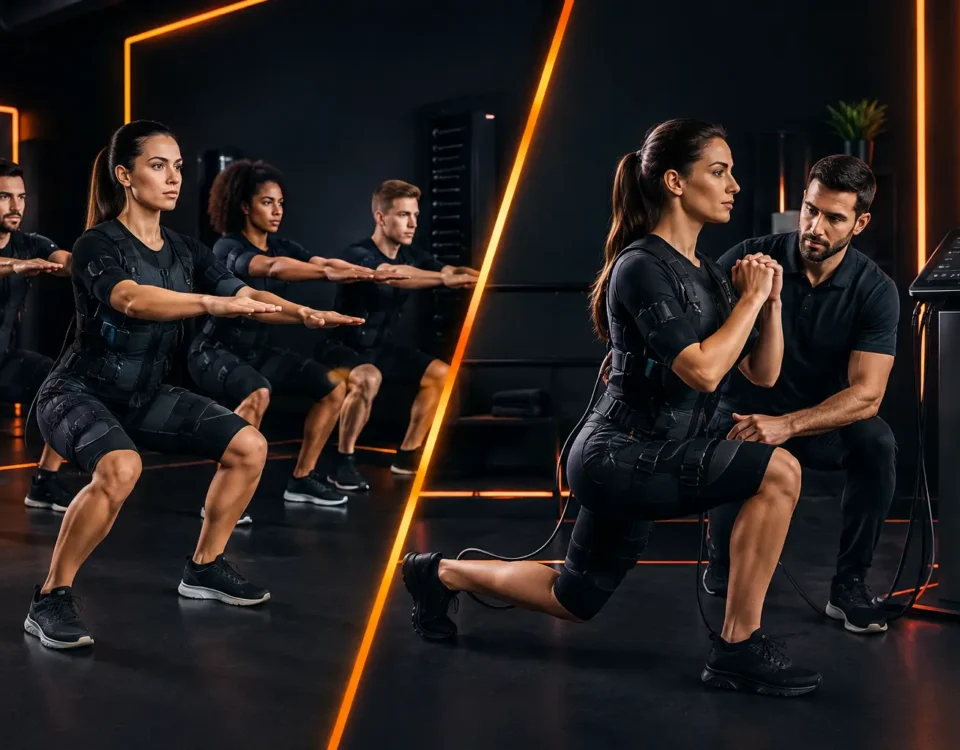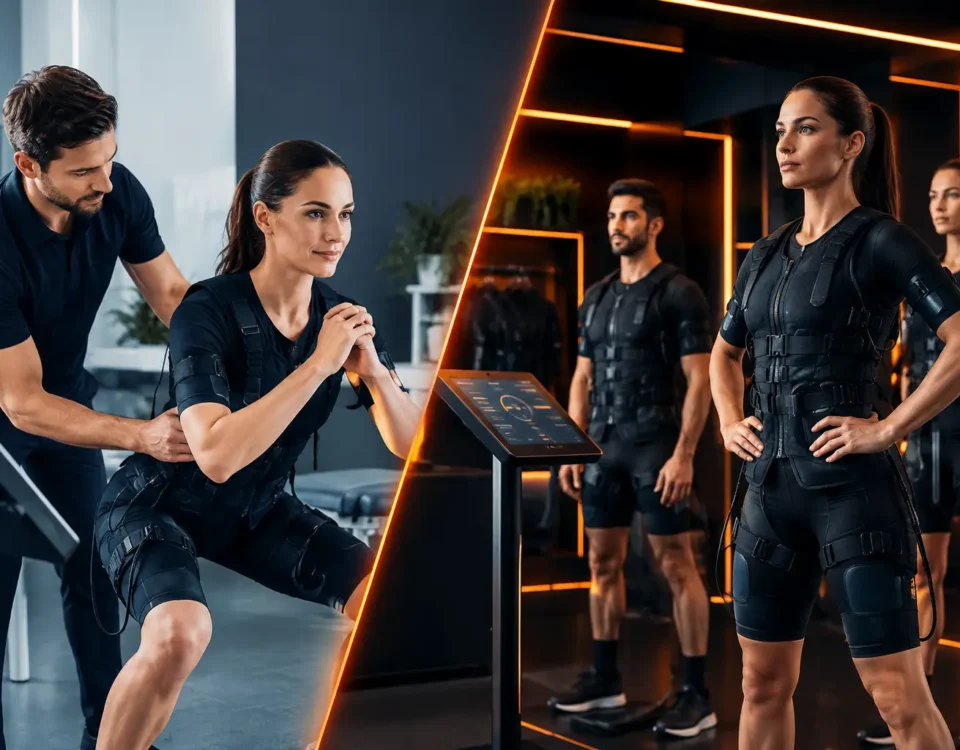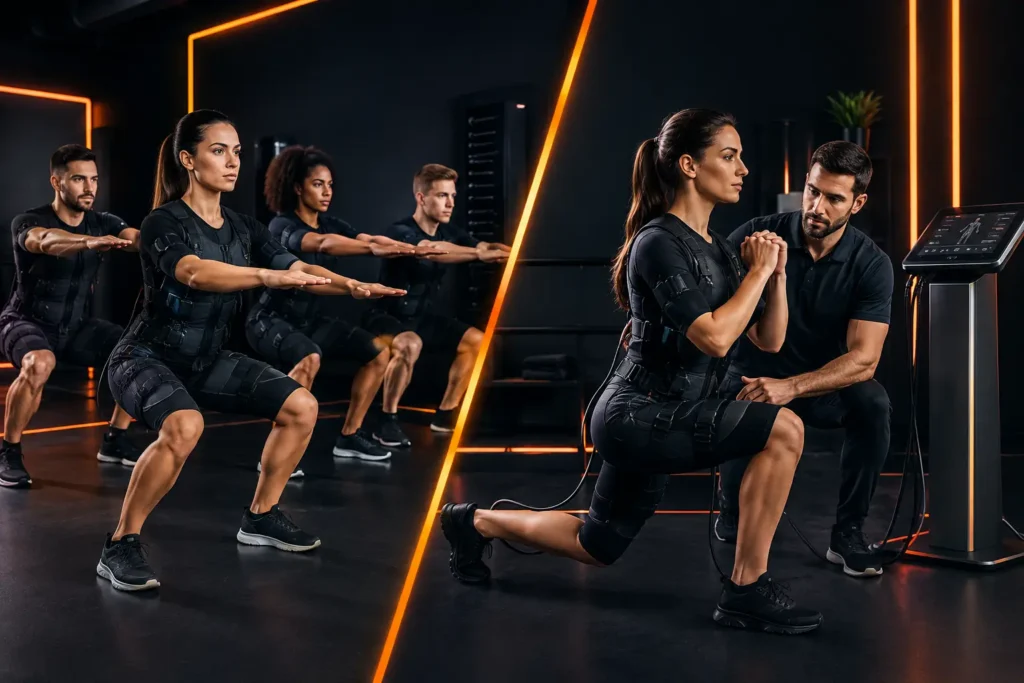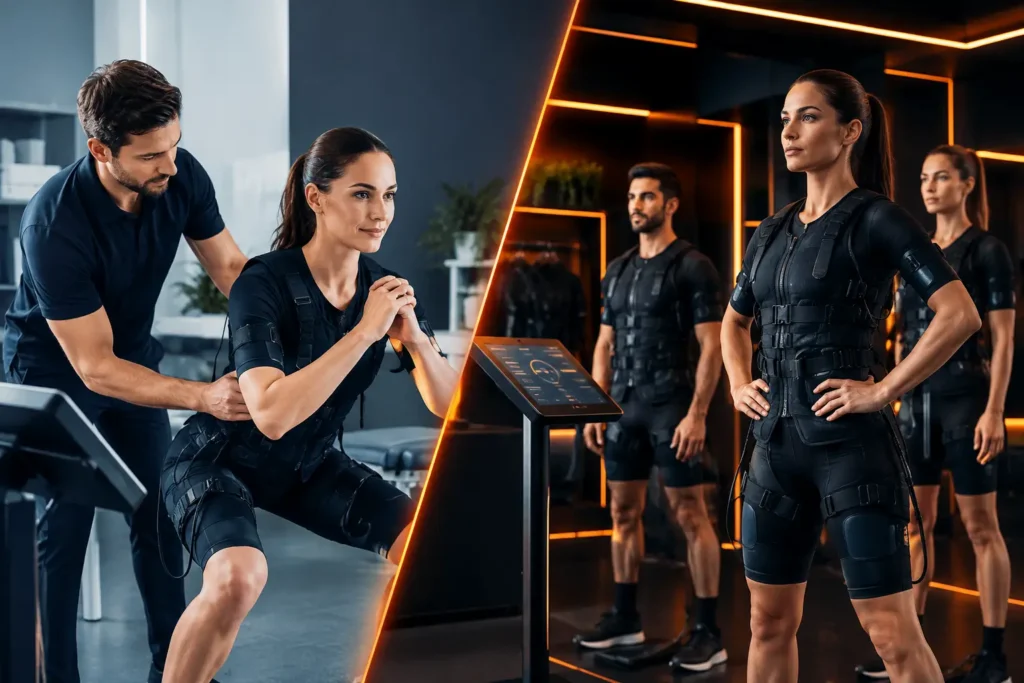

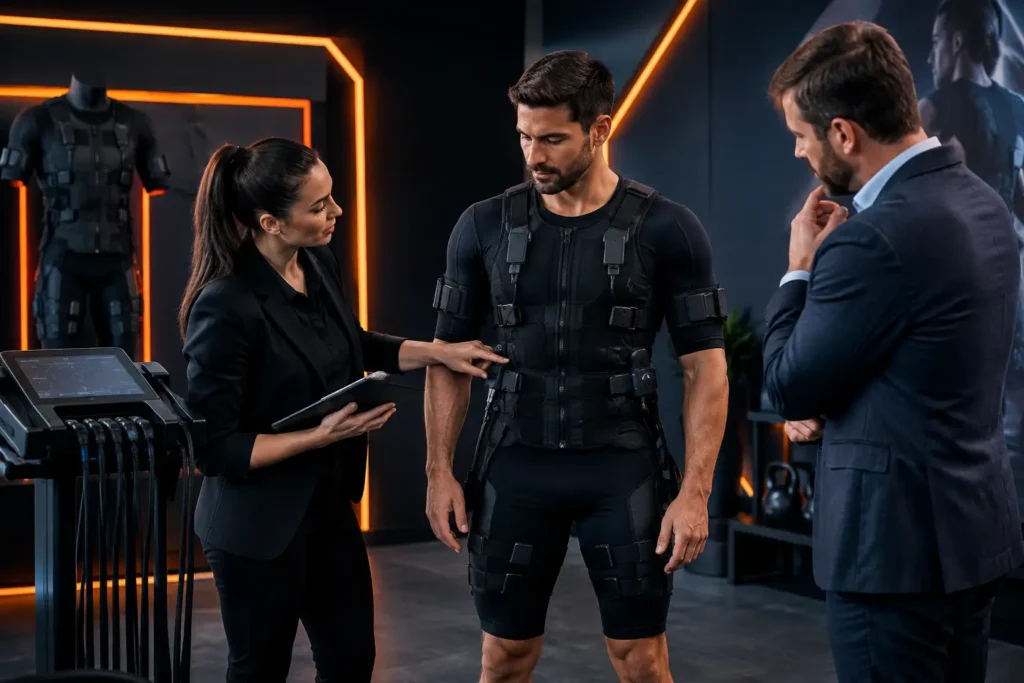
A dry EMS suit can change the way a premium EMS service feels to the client and operates for the team. But an attractive design or a short demonstration is not enough to justify a commercial equipment decision. The right dry EMS suit review criteria should test the complete operating model: client experience, daily turnover, system reliability, training requirements, and the supplier’s ability to support your business after launch.
For a mobile trainer, the priority may be portability and fast setup. For a boutique wellness concept, presentation, comfort, and privacy may carry more weight. For a multi-coach studio, repeatable workflow and serviceability become central. Review the suit in the context of the business you intend to build, not as an isolated piece of fitness equipment.
Start with the client experience
Dry EMS is often considered by operators who want a clean, convenient, premium-format service. The suit must support that promise from the moment a client arrives. Evaluate how it looks, feels, adjusts, and performs across a broad range of body types.
Ask to see the full fitting process, not only a prepared demonstration. How long does it take a trained coach to size, fit, and remove the suit? Can the client move naturally through the intended session format? Are adjustment points easy for staff to access and explain? A suit that appears polished but takes too long to fit can slow appointments and reduce usable capacity.
Comfort is not a minor feature. It affects client confidence, repeat bookings, and the coach’s ability to focus on instruction rather than constant suit adjustments. Review material feel, fit options, closure design, and the way the garment sits during common movements. The objective is not to find one universal fit. It is to confirm that the available sizing and adjustment approach matches the client profile you expect to serve.
Assess hygiene as an operating process
A dry system does not remove the need for a clear hygiene routine. It changes the routine. Before committing, ask the supplier to explain the recommended cleaning, drying, storage, and inspection process for every suit component.
Your team should know what must happen between appointments, at the end of each day, and when a garment needs closer inspection. Consider whether you will need multiple suit sizes or additional units to maintain service continuity during cleaning, busy periods, or maintenance. A practical hygiene protocol protects the client experience and makes staff onboarding easier.
Review the system, not the suit alone
A dry EMS suit is part of a broader EMS setup. Its commercial value depends on how well it integrates with the control unit, the coaching workflow, the training environment, and the support structure behind it. A review that focuses only on garment appearance misses the risks that tend to matter later.
Examine the connection method and the practical freedom of movement it allows. Wireless operation may support a more open, premium session environment, but operators should still understand charging routines, connection checks, and the process for resolving interruptions. Request a realistic setup demonstration with multiple steps: powering the system, fitting the client, establishing the connection, beginning a session, ending it, and preparing for the next booking.
Ask what the coach sees and controls during a session. Controls should be understandable enough for trained staff to use consistently, while still allowing the level of supervision required by your service standards. If you plan to employ several coaches, assess how easily the workflow can be standardized across the team.
| Review area | What to verify | Why it matters commercially | |—|—|—| | Fit and sizing | Available sizes, adjustments, fitting time | Supports comfort and smoother appointments | | Cleaning process | Approved cleaning, drying, and storage steps | Helps maintain a professional client experience | | Daily workflow | Setup, connection, session closeout, reset | Influences staff efficiency and schedule planning | | Power management | Charging requirements and operating routine | Reduces avoidable interruptions | | Service support | Troubleshooting, spare parts, warranty terms | Protects continuity when issues arise | | Training | Operator onboarding and coach education | Creates a safer, more consistent service delivery |
Compare dry EMS suit review criteria by business model
There is no single correct dry EMS configuration for every operator. The best choice depends on the offer, the venue, and the type of client relationship you want to create.
Mobile and one-to-one operators
For a mobile EMS business, carry weight, packing logic, setup time, and charging discipline deserve close attention. Equipment that requires complicated preparation can become a burden when you are moving between homes, offices, hotels, or partner locations.
Evaluate whether the suit and system can be transported and stored responsibly in your actual workday. Also consider your backup plan. A mobile operator has less margin for a missing accessory, a charging oversight, or a connection issue just before an appointment. Supplier training and access to spare parts are especially valuable in this model.
Boutique wellness and VIP concepts
In a premium setting, clients judge the entire experience. The suit’s visual presentation, fitting privacy, cleanliness, and ease of use all influence perceived value. A refined concept may benefit from a dry format because it can support a more polished arrival-to-finish journey, provided the team has a disciplined operating routine.
Review the suit in the environment where it will be used. Lighting, changing space, storage, and the layout of the coaching area affect the experience as much as the equipment itself. If your audience expects a high-touch service, build sufficient time into the appointment for consultation, fitting, and proper post-session care.
Studios, gyms, and clinics
Higher-volume settings need consistency. Focus on how many qualified staff members can be trained, how easily procedures can be documented, and how the equipment is managed across shifts. A suit that works well with one experienced owner must also work when another trained coach is delivering the session.
For gyms and clinics, clarify responsibility for cleaning, charging, inspections, and reporting technical issues. This may sound operationally basic, but defined ownership prevents small gaps from becoming canceled appointments. If your EMS service will sit alongside other training or wellness offerings, assess how it fits the existing member journey and staff schedule.
Look beyond the product specification
Technical specifications matter, but commercial decisions are won through implementation. Before purchasing, renting, or entering a rent-to-own arrangement, ask what happens after delivery. Who provides installation guidance? What training is included? How are support requests handled? What spare parts are available, and what are the applicable warranty conditions?
A supplier should be able to discuss the equipment in relation to your business model, not simply recite features. You need clarity on launch preparation, team training, client onboarding, and the operational habits that protect your investment. This is particularly relevant for first-time EMS operators, who may need support turning a device into a structured service offer.
Use the review process to compare commercial options as well. A direct purchase, rental model, or rent-to-own route may suit different capital plans and launch stages. The right arrangement is the one that gives your business adequate equipment access and support without forcing assumptions about client demand or expansion timing.
Questions to ask during a dry EMS suit demonstration
A serious demonstration should invite practical questions. Ask the provider to show the suit on more than one body type, explain the daily care routine, and walk through what staff should do if a connection or component issue occurs. Confirm what operator training covers and whether refresher education is available as your team grows.
Also ask which elements are included in the proposed configuration and which items may be needed later. This avoids comparing one quote with another when the scope is not the same. If you are building a premium service, test the session flow as a client would experience it, from arrival through changeover.
Do not make the decision solely on the shortest demo or the lowest initial outlay. A lower entry cost can be attractive, but it should be weighed against fit quality, workflow, training, support, and the confidence your team will have using the system day after day.
Make the review part of your launch plan
The most useful dry EMS suit review is not a scorecard filled out after a showroom visit. It is a decision tool connected to your launch plan. Define your target client, appointment format, staffing model, hygiene routine, and commercial route before you compare offers. Then use those requirements to judge each suit and system consistently.
For operators evaluating a premium dry wireless EMS concept, EMS Leader can help frame that decision around equipment access, onboarding, operational setup, and the business model behind the service. A well-chosen suit should make your team more prepared to deliver a consistent, professional experience – not leave them to solve operational questions after the first client books.