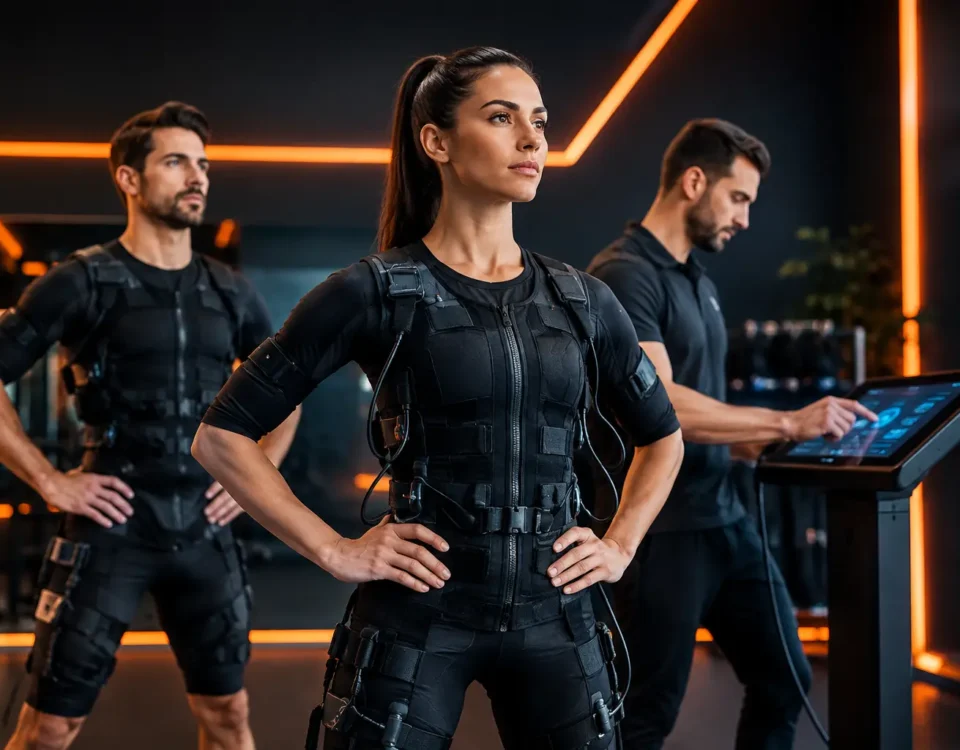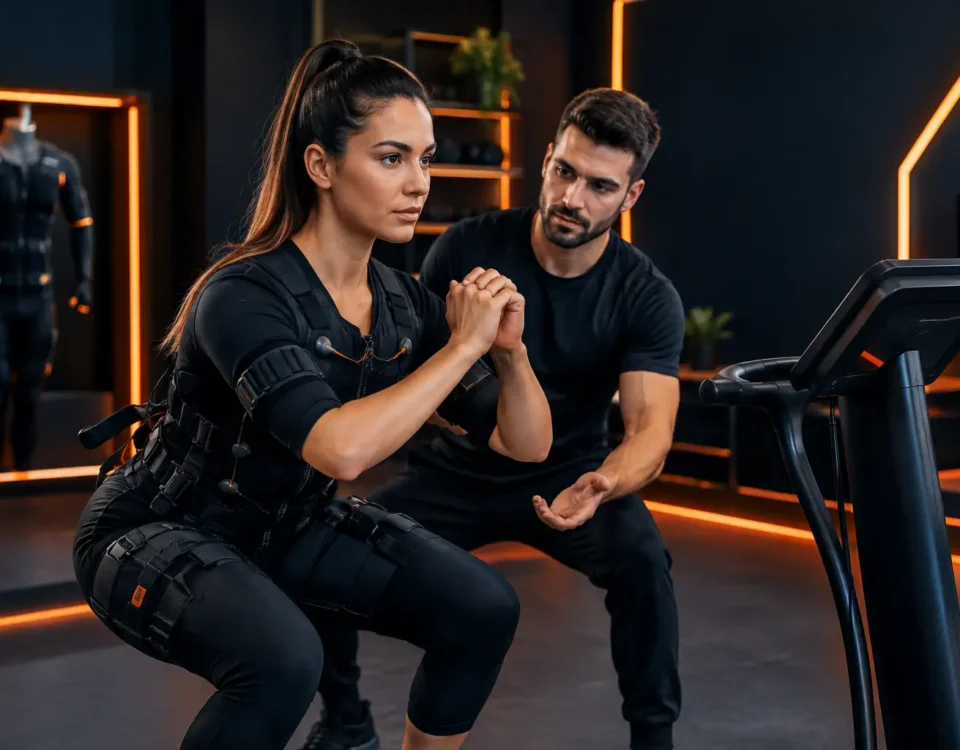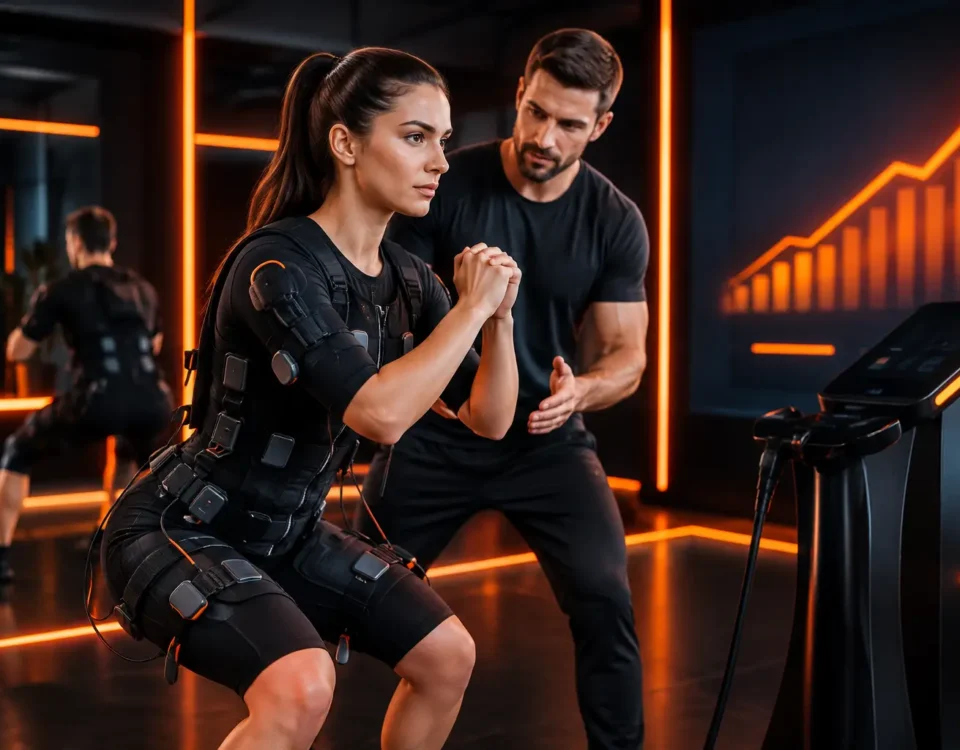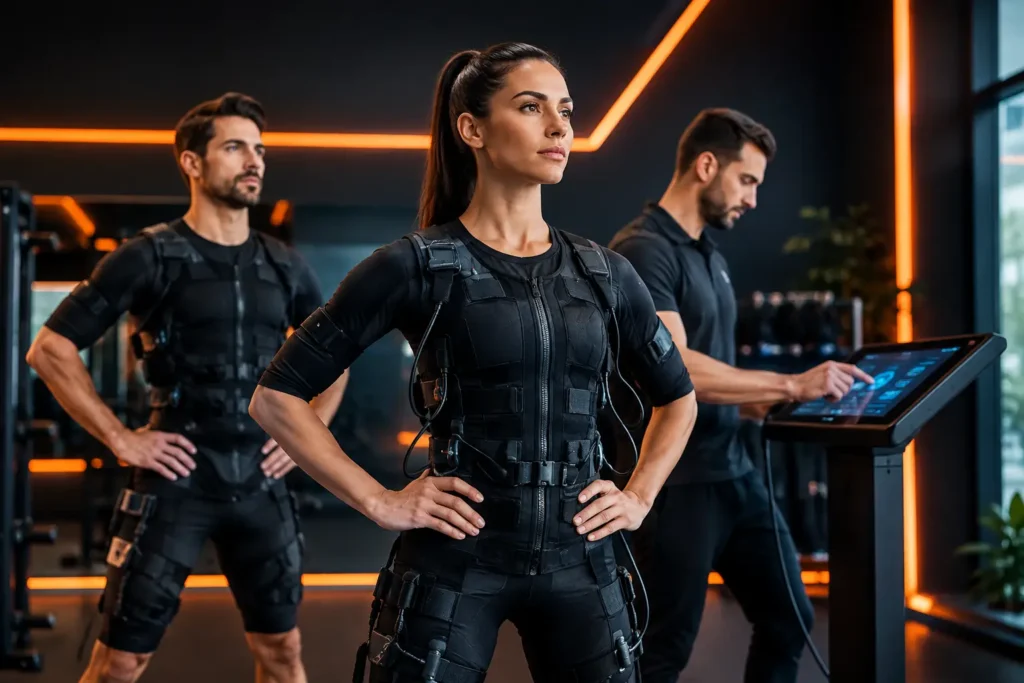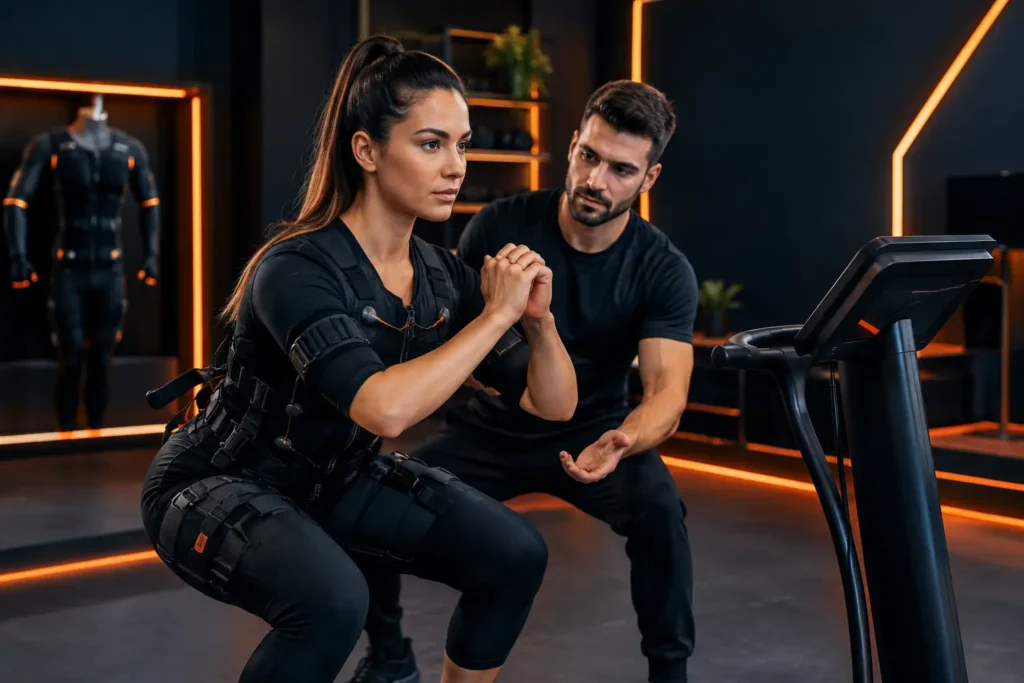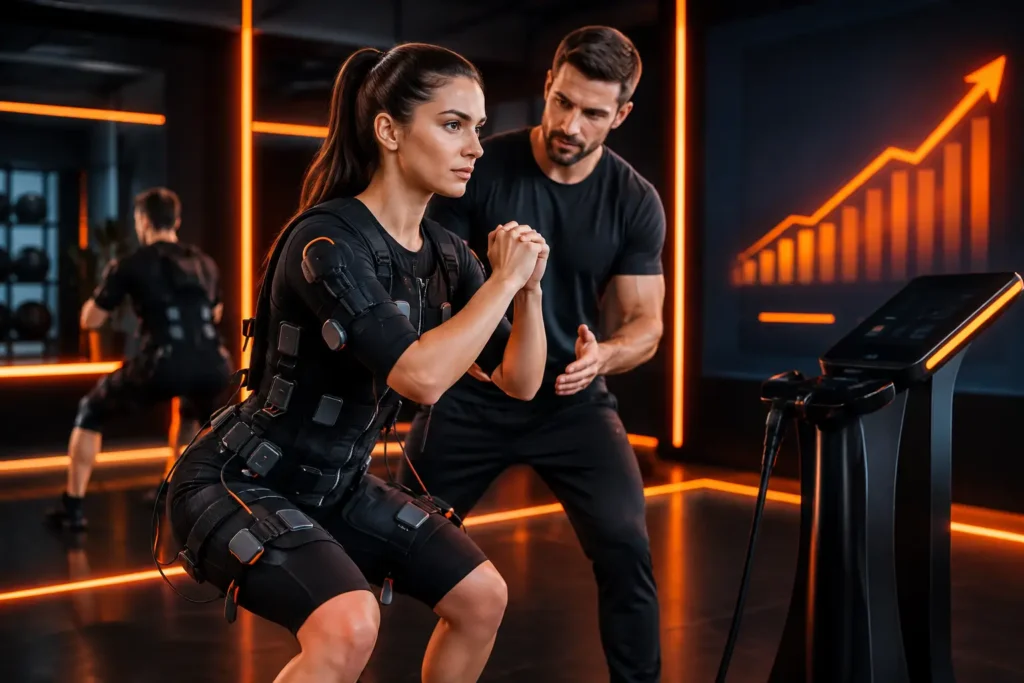

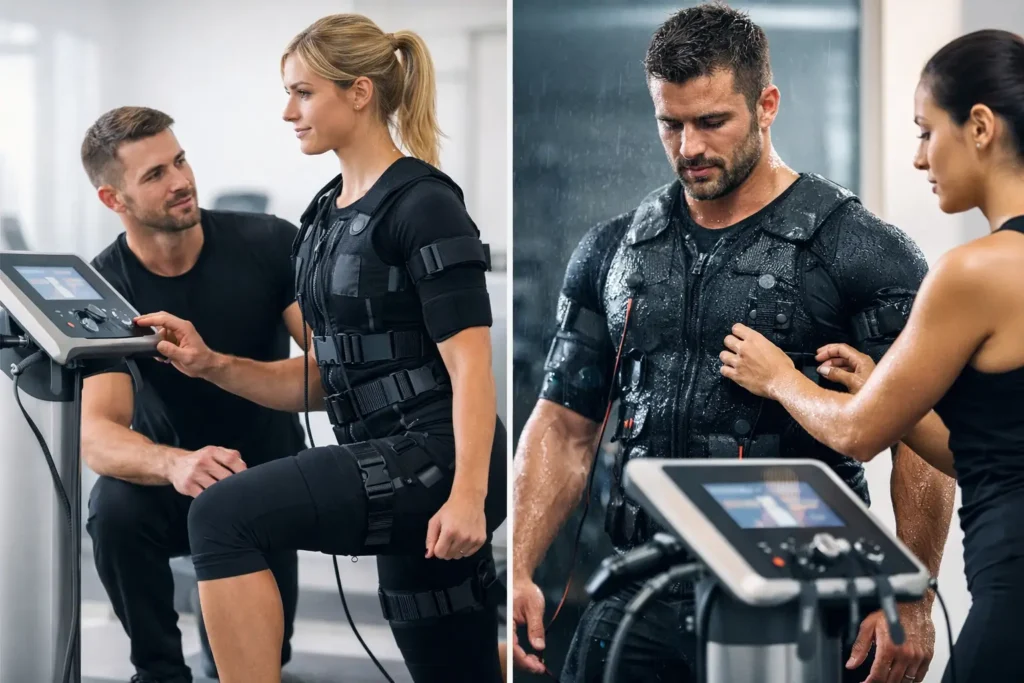
A wet EMS session can be highly effective, but the preparation is visible: clients change, garments are moistened, electrodes are positioned, and the system is connected before training begins. Dry EMS versus wet EMS is therefore not just a technology question for an operator. It is a decision about session flow, staffing, target market, space requirements, and the type of business you want to build.
For a trainer starting with one-on-one appointments, wet EMS may offer a practical route into the market. For a boutique wellness concept where privacy, convenience, and a premium experience drive demand, dry wireless EMS may be the stronger commercial fit. The right choice depends less on which system sounds more advanced and more on how reliably it supports your operating model.
What separates dry EMS versus wet EMS?
Both systems use electrical muscle stimulation to support guided exercise. The main difference is how the electrodes make contact with the body and how the session is delivered.
Wet EMS generally uses a textile suit or undergarment with electrodes that need moisture to create conductivity. Water is applied before the session, and many systems use cables connected to a central control unit. This format is familiar in traditional EMS studio environments and can suit operators who want a structured, coach-led training process.
Dry EMS uses dry textile electrodes designed to work without wetting the suit. Many premium dry systems are wireless, with a battery-powered control unit and greater freedom of movement. That changes the practical experience: less preparation around moisture, fewer cables in the training area, and a cleaner visual presentation for certain client segments.
Neither format automatically creates a better business. System quality, trainer education, client screening, hygiene procedures, programming, and service delivery matter in both cases. The commercial question is whether the equipment supports your intended pace and positioning.
Compare the business impact before the technical details
| Business factor | Wet EMS | Dry EMS | |—|—|—| | Initial business model | Often suited to entry-level mobile or studio concepts | Often suited to premium boutique and VIP concepts | | Session preparation | Requires garment moistening and setup | Typically faster, with no water-based preparation | | Mobility | Can be limited by cables or central units, depending on the system | Often supports freer movement with wireless operation | | Client experience | Functional, training-focused, established format | Premium, convenient, and presentation-conscious format | | Hygiene workflow | Requires clear washing, drying, and moisture management routines | Still requires cleaning, but avoids wet garment handling during setup | | Facility fit | Practical for dedicated EMS rooms and training studios | Strong fit for boutique wellness, luxury spaces, and private training | | Commercial positioning | Can support accessible EMS services | Can support differentiated premium service packaging |
The table is a starting point, not a rule. A well-run wet EMS studio can deliver an excellent client experience, and dry EMS can be a poor fit if an operator has not built a premium service around it. Equipment should reinforce the offer, not substitute for it.
Wet EMS: a practical model for structured operations
Wet EMS remains a logical option for many trainers, studios, and clinics entering the category. It is commonly associated with focused, supervised sessions where the operator manages preparation, intensity, movement, and progression closely. For a business centered on personal coaching, that structure can be an advantage.
The operating trade-off is time. Each appointment requires a consistent process for preparing the suit, managing moisture, changing clients over, cleaning equipment, and maintaining garments. If you are building a schedule with back-to-back sessions, these details affect how many appointments can realistically fit into a day.
Wet EMS may fit particularly well when your priority is a lower-barrier launch, a small-footprint studio service, or a mobile one-to-one model. A mobile operator can bring a controlled EMS session directly to clients, provided the transport, setup, hygiene, and power requirements are planned properly. The model works best when the trainer treats operations as seriously as coaching.
It also suits businesses that want to lead with measurable programming, personal attention, and repeatable appointment structure rather than luxury positioning. Clients may not mind the extra preparation if the service feels organized, professional, and results-oriented.
Where wet EMS needs operational discipline
The biggest risk is underestimating the workflow. Moisture management, garment rotation, laundry capacity, storage, and session timing can become bottlenecks as client volume grows. A suit that is not ready for the next booking is not a small inconvenience. It directly affects punctuality and the perceived quality of the service.
Operators should map the full appointment cycle before investing: client arrival, consultation, changing, setup, training, cooldown, cleaning, and reset. That map will reveal whether a single coach can maintain the desired capacity or whether support staff and additional suit inventory are needed.
Dry EMS: built around convenience and premium positioning
Dry EMS changes the visible friction of an appointment. Without wetting garments, the setup can feel faster and more refined, especially in private studios, hotel wellness environments, luxury gyms, and high-touch longevity concepts. Wireless operation can also create a more open training environment with fewer visual distractions.
That convenience can support stronger pricing power when it is part of a complete premium offer. The client is not paying simply for a dry suit. They are paying for a private, efficient, professionally coached experience that fits a demanding schedule and a higher service expectation.
For operators, dry EMS can create a clearer point of differentiation in markets where traditional wet EMS is already familiar. It may also make sense for concepts that combine EMS with personal training, recovery-focused wellness services, body composition consultations, or membership-based VIP access. The equipment becomes part of the experience design.
However, premium equipment does not remove the need for commercial discipline. A dry EMS model usually requires careful positioning, polished staff presentation, clear consultation procedures, and a facility that matches the promised experience. If the space, sales process, and client service remain basic, the investment may not produce its intended return.
When dry EMS is the stronger choice
Dry EMS is often the better fit when convenience is central to the customer promise. That includes clients who value fast appointments, private coaching, clean aesthetics, and freedom of movement. It can also be a strong choice for operators who want to build a boutique brand rather than compete primarily on session price.
It is less about replacing wet EMS and more about serving a different commercial opportunity. A premium concept needs a client base willing to pay for time efficiency and experience. Before choosing dry EMS, validate local demand, competitor positioning, your intended price structure, and how many premium clients your sales process can realistically convert.
Capacity, pricing, and payback should drive the decision
When evaluating dry EMS versus wet EMS, avoid making the choice based on equipment cost alone. A lower initial investment can be attractive, but the full business case includes capacity, staffing, rent, laundry or garment management, maintenance, financing terms, client acquisition, and retention.
Start with a simple operating forecast. Estimate how many sessions your coach can deliver per day after allowing for setup and reset time. Then model conservative utilization rather than assuming a full schedule from the first month. Consider your membership options, package structure, and the service level required to retain clients over time.
Wet EMS may support an efficient, accessible service model with a disciplined appointment system. Dry EMS may justify a higher-value offer if the market recognizes and values the added convenience. The best payback period comes from a model that your team can sell, deliver, and repeat consistently – not from the system with the most features.
Flexible acquisition options can also affect the decision. Rental or rent-to-own can reduce the pressure of a major upfront purchase and give new operators room to validate demand while building a client base. For established studios, direct purchase may align better with long-term expansion plans. The right financing route should match your cash flow, launch timeline, and growth targets.
Training and safety are part of the equipment decision
EMS is not a plug-and-play revenue stream. Whether you choose wet or dry equipment, trainers need product-specific instruction, clear operating procedures, and confidence managing client intensity and movement. Appropriate client screening and adherence to local regulations and manufacturer guidance are essential.
This is especially relevant for businesses that plan to scale beyond one coach. A system is only scalable when each trainer can deliver a consistent session standard. Build onboarding around consultation, fit and setup, coaching cues, hygiene, equipment checks, and post-session documentation. That protects the client experience and makes the business easier to manage.
After-sales support matters here as much as the original purchase. Access to training, warranty coverage, spare parts, and operational guidance can reduce downtime and help an operator solve problems before they affect scheduled clients. EMS Leader approaches equipment selection as a business-model decision because the system, support structure, and commercial plan need to work together.
Choose the system that supports the service you can own
If your opportunity is mobile training, a compact wet EMS setup may be the practical place to start. If you are building a high-capacity studio with standardized coach-led appointments, wet EMS can remain a strong foundation. If your ambition is a boutique, private, premium wellness offer, dry wireless EMS may give you the experience and positioning needed to stand apart.
The most useful next step is to sketch one real client journey, from booking through departure, and identify every minute, staff action, and cost involved. The right EMS system is the one that makes that journey easier to deliver at the standard your market will pay for.