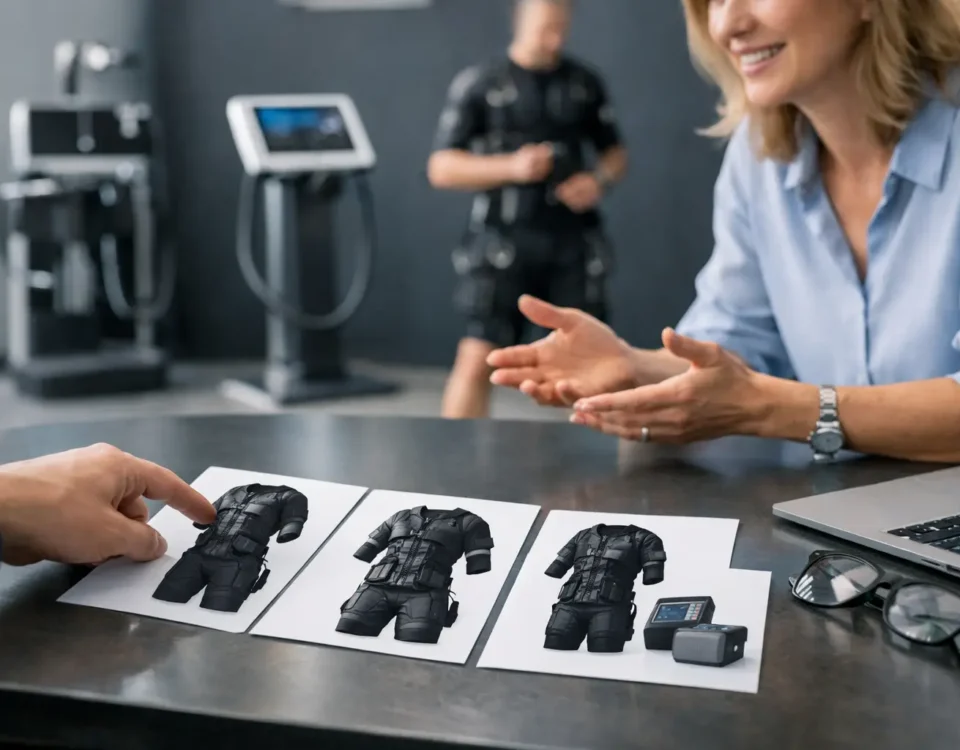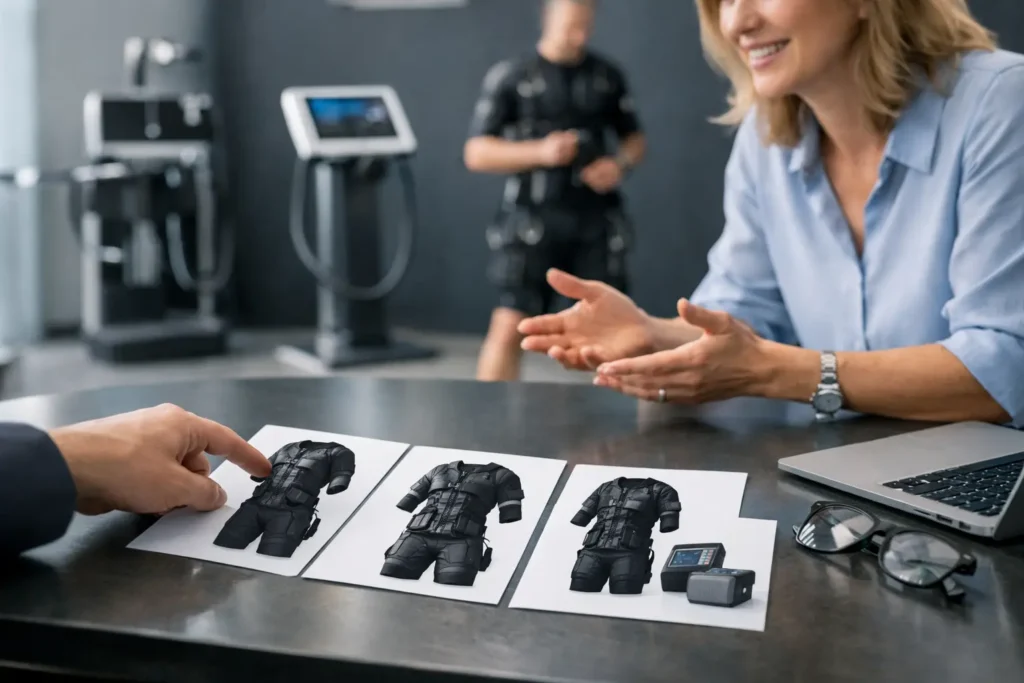

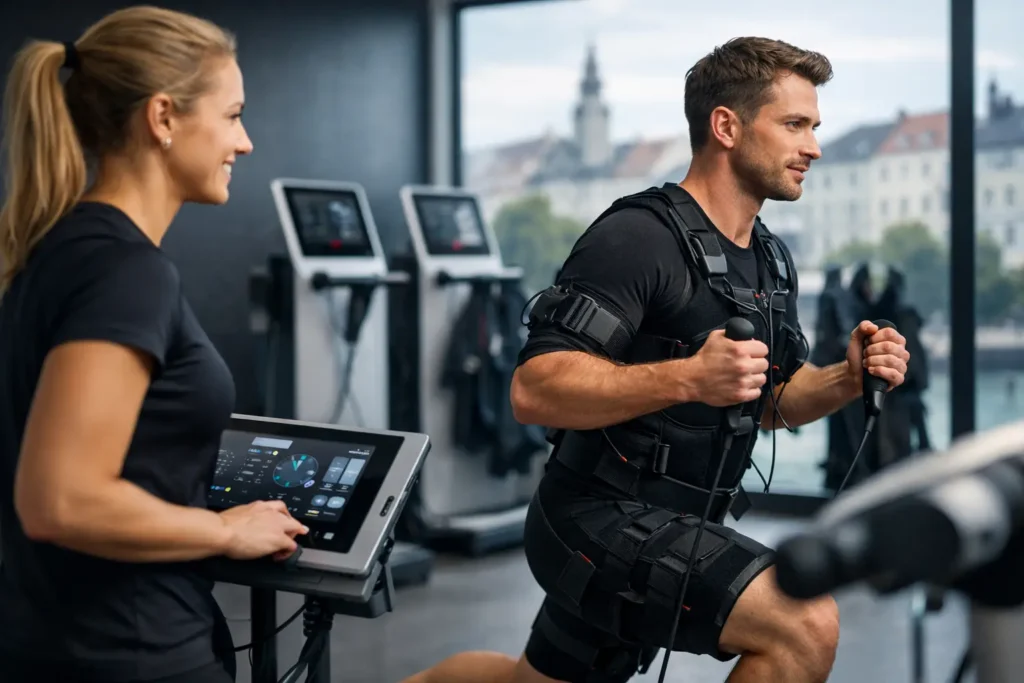
For operators assessing EMS business trends Europe-wide, the most valuable signal is not a single equipment feature. It is the shift toward business models that make EMS easier to sell, easier to operate, and more credible as a recurring premium service. Clients still want efficient training, but operators need predictable capacity, clear positioning, and an investment structure that does not slow down launch.
The European EMS market is becoming more commercially mature. That creates opportunity for personal trainers, gym owners, wellness founders, and clinic-adjacent operators, but it also raises the standard. A system alone is no longer a business plan. The operators gaining traction are matching the right EMS format to a defined client segment, pricing it around service value, and building retention into the offer from day one.
EMS Business Trends in Europe: The Commercial Shift
The strongest trend is a move away from treating EMS as a novelty session and toward treating it as a structured business unit. This matters because novelty can attract trial bookings, while a repeatable operating model creates stable revenue. European clients are increasingly familiar with time-efficient training and boutique wellness concepts. Their question is less likely to be “What is EMS?” and more likely to be “Why should I choose this service and keep coming back?”
That places pressure on the operator to deliver a clear experience. A professional consultation, a defined session protocol, educated coaching, reliable equipment, and a membership or package structure all affect perceived value. The hardware supports the offer, but the operating system around it determines whether the business can grow.
For new entrants, this also changes the investment decision. The best setup is not necessarily the largest or most advanced system available. It is the setup that fits local demand, available staff, floor space, and the route to client acquisition.
Premium Positioning Is Replacing Discount-Led Selling
Across European fitness and wellness markets, EMS is increasingly positioned as a coached, appointment-based service rather than a low-cost gym add-on. This is especially visible in urban areas where clients place a premium on convenience, privacy, personal attention, and efficient use of time.
Premium positioning does not mean simply charging more. It means making the service feel organized and intentional. A client should understand who the service is for, what a session includes, how progress is monitored, and why ongoing coaching matters. A boutique studio may emphasize private training and a refined environment. A gym may package EMS as a high-value personal training upgrade. A mobile operator may lead with convenience and one-to-one attention.
The trade-off is clear: premium positioning requires stronger service delivery. Operators cannot rely on promotional pricing to cover inconsistent coaching or weak follow-up. The upside is better pricing power and a more defensible offer when the experience is executed well.
Flexible Entry Models Are Expanding the Market
Capital discipline is one of the most practical EMS business trends in Europe. Many capable trainers and wellness entrepreneurs do not want to commit to a full studio build before proving local demand. At the same time, established facilities may prefer to test an EMS category before allocating more floor space and staff.
This is why rental and rent-to-own models are becoming strategically relevant, not just financially convenient. They can reduce the pressure of a large upfront equipment purchase and allow operators to preserve cash for launch activity, marketing, staffing, and client onboarding. Direct purchase can still be the right route for an established operator with clear demand and a long-term expansion plan. The right choice depends on cash flow, risk tolerance, and how quickly the business expects to scale.
A mobile model is often the lowest-friction entry point. It can suit a qualified trainer who already has a client base and wants to add a premium service without taking on a commercial lease. A studio model has higher fixed costs, but it can create greater session capacity and stronger brand visibility. Dry wireless EMS is increasingly relevant for premium wellness concepts that want a clean, high-end client experience with minimal setup interruption.
| Business model | Best fit | Commercial advantage | Main operational consideration | | — | — | — | — | | Mobile EMS | Independent trainers and early-stage operators | Lower overhead and direct client access | Travel time limits daily capacity | | Studio EMS | Gyms, clinics, and dedicated EMS locations | Scalable sessions and stronger local presence | Requires scheduling, staffing, and consistent lead flow | | Premium dry wireless EMS | Boutique wellness and VIP concepts | Elevated experience and premium positioning | Demands strong service standards and brand execution |
Retention Is Becoming More Valuable Than Trial Volume
A full introductory calendar can look promising, but it does not automatically produce a sustainable EMS business. The more important metric is how many clients continue after their first package or initial sessions. Retention drives revenue predictability, improves referral potential, and makes marketing spend more efficient.
European operators are responding by building more structured client journeys. The first appointment is becoming an assessment and expectation-setting conversation, not merely a demonstration. Follow-up communication, session planning, package renewal timing, and trainer consistency all influence whether a client sees EMS as a recurring part of their routine.
This is also where operational discipline pays off. Track attendance, renewal dates, session frequency, lead source, and trainer utilization. A small studio does not need complicated software to begin making better decisions, but it does need a consistent way to see where clients drop off and where demand is building.
Studios Are Designing for Utilization, Not Just Capacity
A common planning mistake is to focus only on how many clients an EMS system can serve at one time. Capacity matters, but utilization matters more. An underused multi-client setup can be less profitable than a well-scheduled one-to-one operation with strong repeat bookings.
Operators should model the business around realistic appointment blocks, trainer availability, setup and cleaning time, no-show rates, and peak demand. Morning, lunch, and after-work slots may produce the highest value in city-center and professional markets. In residential areas, daytime availability may be more useful. The answer depends on the local customer profile.
A gym integrating EMS should also decide whether the service will be sold by membership staff, personal trainers, or a dedicated EMS coach. Shared responsibility often creates weak ownership. A named person or team should be accountable for consultations, sales conversion, programming, and renewals.
Training and Compliance Are Part of the Offer
As the market becomes more professional, operators are placing greater value on proper onboarding and ongoing training. This is not only about using equipment correctly. It is about coaching confidence, client screening, session structure, safety procedures, and communicating the service without exaggerated claims.
Requirements and expectations can vary by country and facility type. Operators should confirm the local rules that apply to their business, insurance, qualifications, and client documentation. EMS should be marketed responsibly as a coached fitness or wellness service within the operator’s permitted scope. Avoid promises that turn a commercial message into a medical or guaranteed-results claim.
Strong training has a direct business effect. Coaches who can explain the process clearly, adjust sessions appropriately, and handle client questions professionally create more confidence. Confidence improves conversions, renewals, and referrals.
Hybrid Wellness Concepts Create New Demand
EMS is no longer limited to a traditional training studio. It is being considered alongside personal training, recovery-focused services, body care, longevity concepts, hospitality wellness, and private member experiences. This does not mean every business should add multiple services. It means EMS can work as a high-value component inside a broader client journey when the audience and positioning align.
For example, a boutique wellness location may use premium dry wireless EMS to support a private, appointment-led service model. A personal training business may use mobile EMS to offer time-efficient sessions at a client’s preferred location. A gym may add a dedicated EMS zone to create an upgrade path for members who want more guidance than the standard floor experience provides.
The opportunity is strongest when EMS solves a clear commercial problem: improving client value, differentiating the offer, filling underused appointment time, or creating a new premium revenue line. Adding EMS without a sales process or client segment in mind usually produces slower results.
What European Operators Should Do Next
The market favors decisive planning over rushed purchasing. Start by defining the client you intend to serve, the environment where sessions will take place, and the number of appointments your team can realistically deliver each week. Then choose the model that supports that plan, rather than trying to force your plan around equipment.
Before launch, build the basics: a consultation flow, service packages, trainer protocols, a lead-generation plan, and a monthly view of operating costs and utilization targets. Support after installation matters as much as the initial selection, particularly for operators entering EMS for the first time. EMS Leader approaches this decision as a business-entry process, combining equipment options with setup guidance, training, and after-sales support.
Europe’s EMS market still offers room for well-positioned operators, but the next stage of growth will reward those who run EMS as a disciplined service business. Choose a model that fits your market, protect cash flow during the launch phase, and make every first session the beginning of a client relationship rather than the end of a sale.