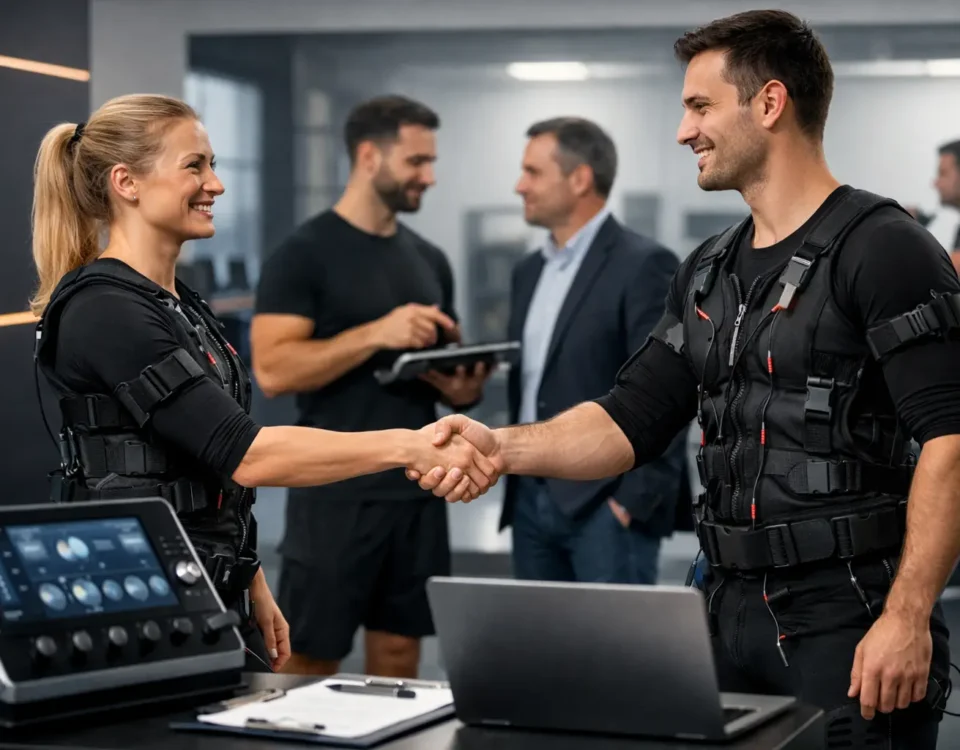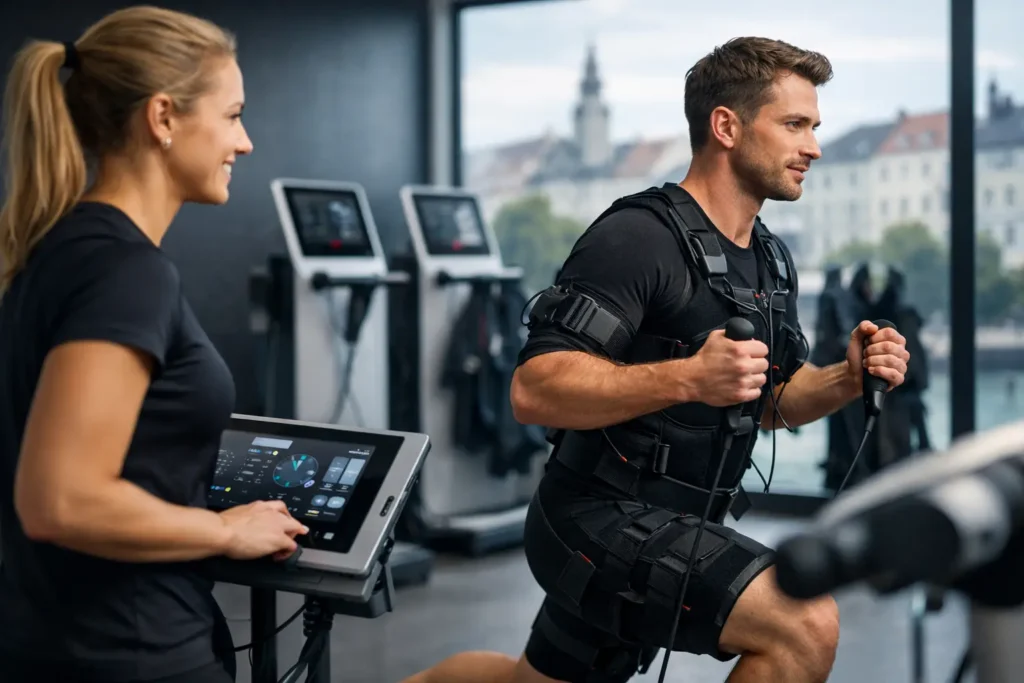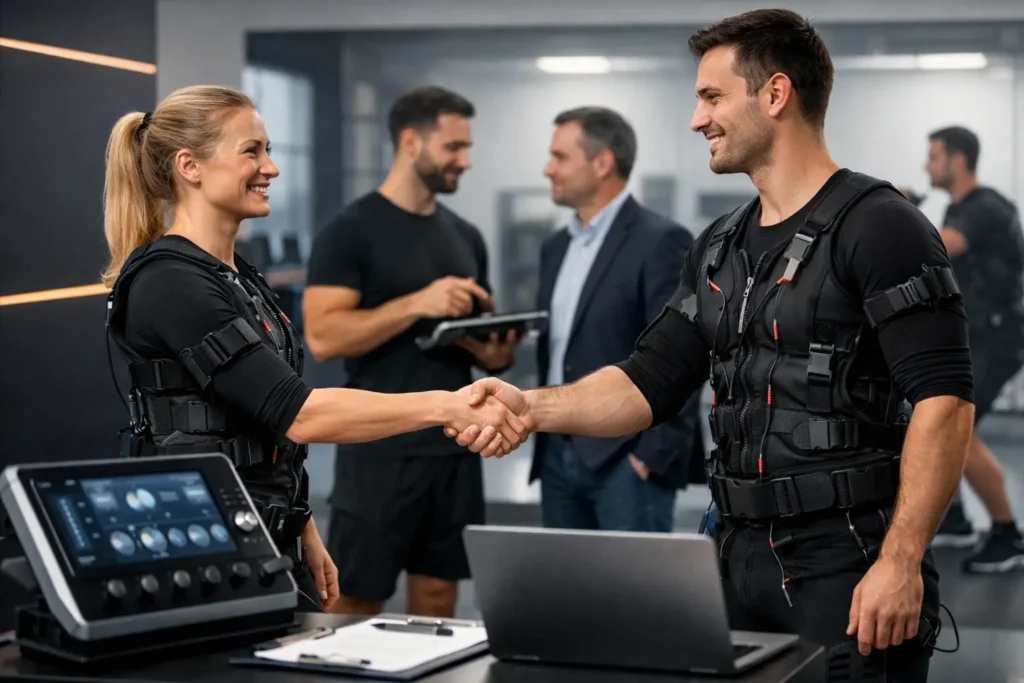

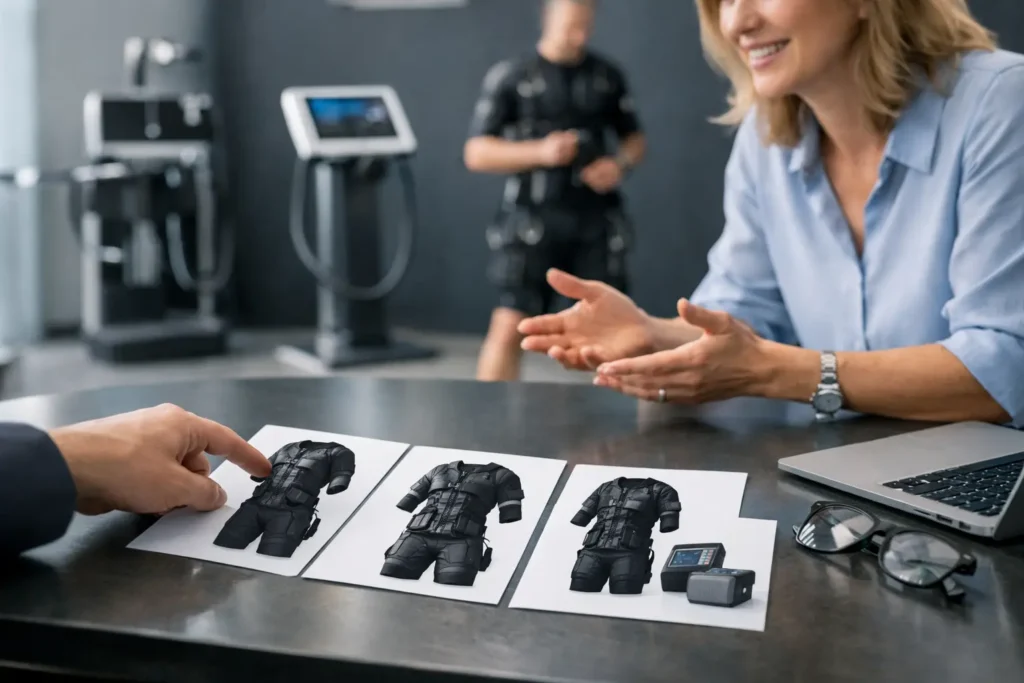
A mobile personal trainer, a growing gym, and a luxury wellness founder can all succeed with EMS. They should not buy the same setup. Knowing how to choose an EMS model starts with the commercial model you want to operate, not with the device features that look most impressive in a brochure.
The right decision aligns your investment level, session capacity, client experience, and operational resources. Get that alignment right before launch, and EMS becomes a clear service line with defined pricing, scheduling, and growth potential. Get it wrong, and even capable equipment can create unnecessary pressure on cash flow and daily operations.
Start With the Business You Want to Build
Before comparing systems, define the service you will sell. EMS is not one business model. It can support private training delivered at the client’s location, a dedicated studio built around recurring appointments, or a premium wellness experience designed for a high-value audience.
Your first question is simple: will EMS be your primary offer, an added service inside an existing facility, or a premium differentiator for a specialized concept? The answer shapes the right equipment configuration, the amount of training you need, and the investment structure that makes sense.
A personal trainer entering EMS for the first time usually needs flexibility and a controlled starting cost. A gym owner may prioritize throughput, staff usability, and the ability to serve several clients during peak hours. A boutique operator may care most about the presentation, privacy, and premium feel of every session.
Avoid choosing based only on the lowest initial payment or the largest technical specification. A lower-cost setup can become expensive if it limits the client experience you intend to sell. Equally, a premium configuration can slow your payback if your market is not prepared to support premium positioning.
How to Choose an EMS Model by Operating Style
The three most practical categories are mobile EMS, studio EMS, and premium dry wireless EMS. Each has a different role in a business plan.
| EMS model | Best suited for | Main commercial advantage | Key consideration | | — | — | — | — | | Mobile EMS | Solo trainers and new operators | Lower-entry route with location flexibility | Travel time limits daily appointment capacity | | Studio EMS | Gyms, clinics, and dedicated EMS studios | Scalable scheduling and higher client throughput | Requires a fixed location and stronger operational planning | | Premium dry wireless EMS | Boutique, VIP, and luxury wellness concepts | Elevated client experience and premium positioning | Works best when brand, service, and pricing support the concept |
Mobile EMS for a flexible market entry
Mobile EMS is often the most practical choice for trainers who already have a client base or want to test demand before opening a location. You can deliver sessions in homes, offices, partner facilities, or rented training spaces. This keeps fixed overhead lower and lets you build proof of demand before taking on a long-term lease.
The trade-off is time. Travel, setup, and logistics reduce the number of appointments you can run in a day. Mobile EMS works best when sessions are priced to reflect the convenience offered and when your service area is organized efficiently. It is a strong model for one-to-one coaching, but it is not automatically the best route for high-volume operations.
Studio EMS for capacity and recurring revenue
Studio EMS fits operators who want a structured, repeatable appointment business. It can be integrated into an established gym or clinic, or launched as a dedicated EMS studio with its own membership and package strategy. The advantage is operational control: sessions happen in one place, staff can follow consistent procedures, and your schedule can be built around peak demand.
This model is particularly relevant when you plan to serve multiple clients, employ trainers, or build recurring packages rather than depend on individual bookings. It also gives you more room to create a professional intake process, retention system, and clear client journey.
The commitment is higher. You need to account for rent, staffing, local market demand, and lead generation before selecting the number of stations or suits. Capacity should follow realistic booking assumptions, not optimism. A well-utilized smaller setup is usually a better first step than excess capacity sitting idle.
Premium dry wireless EMS for high-value positioning
Premium dry wireless EMS is designed for concepts where experience matters as much as training delivery. It can suit boutique studios, private clubs, longevity-focused wellness spaces, and VIP services where clients expect discretion, efficient sessions, and a polished environment.
This is not simply a technical upgrade. It is a positioning decision. Premium equipment supports premium pricing only when the surrounding offer supports it: skilled coaching, thoughtful onboarding, a refined space, and service standards that feel consistent from first inquiry to follow-up.
If your market is price-sensitive or your business is still validating basic demand, this may not be the first model to choose. If you already serve clients who value convenience, exclusivity, and personalized service, it can help define a more differentiated offer.
Compare Investment Against Real Capacity
The most useful calculation is not the equipment cost alone. It is the relationship between total monthly commitment, available appointment slots, expected utilization, and your average revenue per session or package.
Start by mapping your actual operating week. How many EMS sessions can you deliver after allowing for setup, cleaning, consultation, travel if applicable, staff breaks, and administration? Then estimate a conservative utilization level for the first months, rather than assuming every slot will be booked immediately.
For example, a mobile operator may have fewer daily sessions but a lower overhead structure. A studio may require greater fixed investment but provide more bookable capacity and better schedule density. Neither model is inherently more profitable. The stronger model is the one that matches your client acquisition ability and management capacity.
Financing also changes the decision. Rental and rent-to-own options can preserve working capital for launch activity such as local marketing, staff training, insurance, fit-out, and initial operating reserves. Direct purchase may suit established operators with capital available and a clear long-term plan. The right route depends on your liquidity, growth pace, and appetite for upfront commitment.
Treat Support as Part of the Equipment Decision
An EMS system is only commercially useful when your team can operate it confidently and clients receive a safe, consistent experience. Training, onboarding, warranty coverage, spare-part availability, and setup support should be considered part of the business model, not optional extras.
Ask practical questions before committing. Who trains your staff? How quickly can replacement parts be accessed? Is there guidance on client onboarding, operational workflows, and package design? Can the provider help you select a configuration that fits your launch plan instead of pushing a one-size-fits-all package?
This matters even more for first-time operators. Your early reputation will be shaped by appointment quality, trainer confidence, equipment readiness, and how professionally you handle client questions. A cheaper purchase with limited after-sales support can create avoidable downtime at exactly the point when your business needs momentum.
Match the Model to Your Market Position
Your local audience should influence the final choice. A trainer serving busy professionals may find mobile convenience is the main selling point. A gym with an established membership base may benefit from a studio model that adds a focused, bookable service. A premium wellness venue may have an audience willing to pay for privacy and a higher-touch experience.
Research the language your prospects use. Are they asking for time efficiency, personal attention, facility access, privacy, or an elevated wellness environment? Their priorities should shape your offer, your sales message, and the model you select.
Do not assume every client needs the same service. Some operators begin with mobile EMS to build a base, then move into a studio when demand and referral flow justify a fixed location. Others add a premium dry wireless service within an existing concept after establishing a reliable core operation. Growth does not have to happen all at once.
Make the Final Decision With a Launch Plan
Choose the EMS model you can launch well in the next 90 days, not the model that only works after every future milestone is achieved. Your plan should identify the target client, delivery location, session format, team responsibilities, financing route, and first client-acquisition activities.
EMS Leader helps operators assess these decisions across mobile, studio, and premium wireless concepts, with equipment access and business support structured around the model being built. The goal is not to place a system in a room. It is to create an EMS offer your market can understand, your team can deliver, and your business can sustain.
A good EMS model should feel commercially clear before it feels ambitious. Select the setup that gives you enough capacity to grow, enough support to operate confidently, and a service proposition clients will recognize as worth booking again.