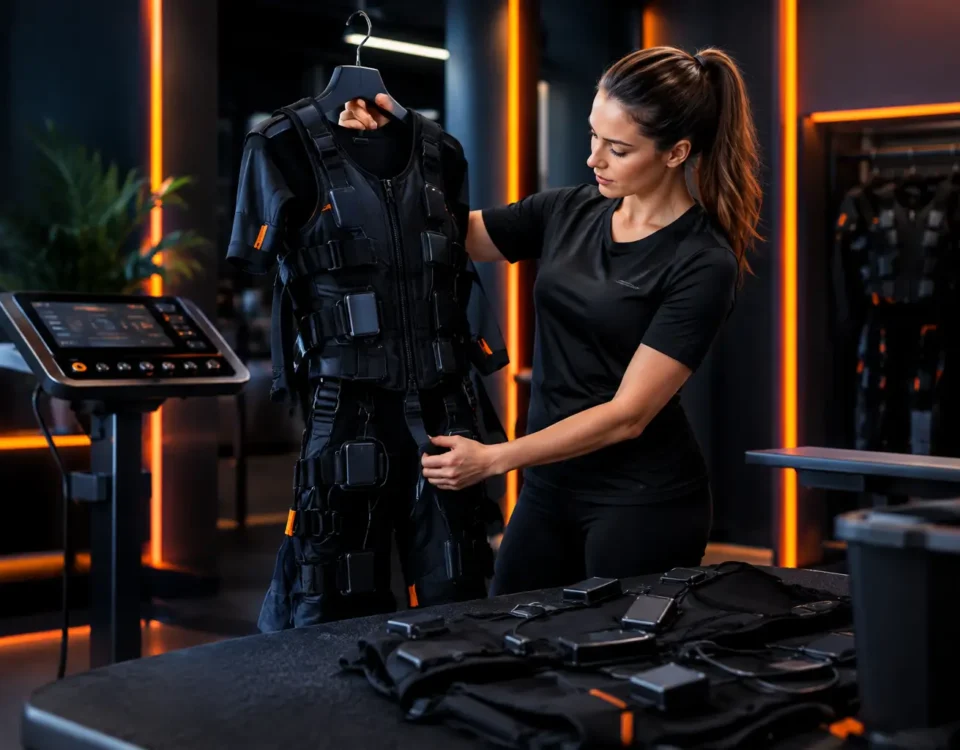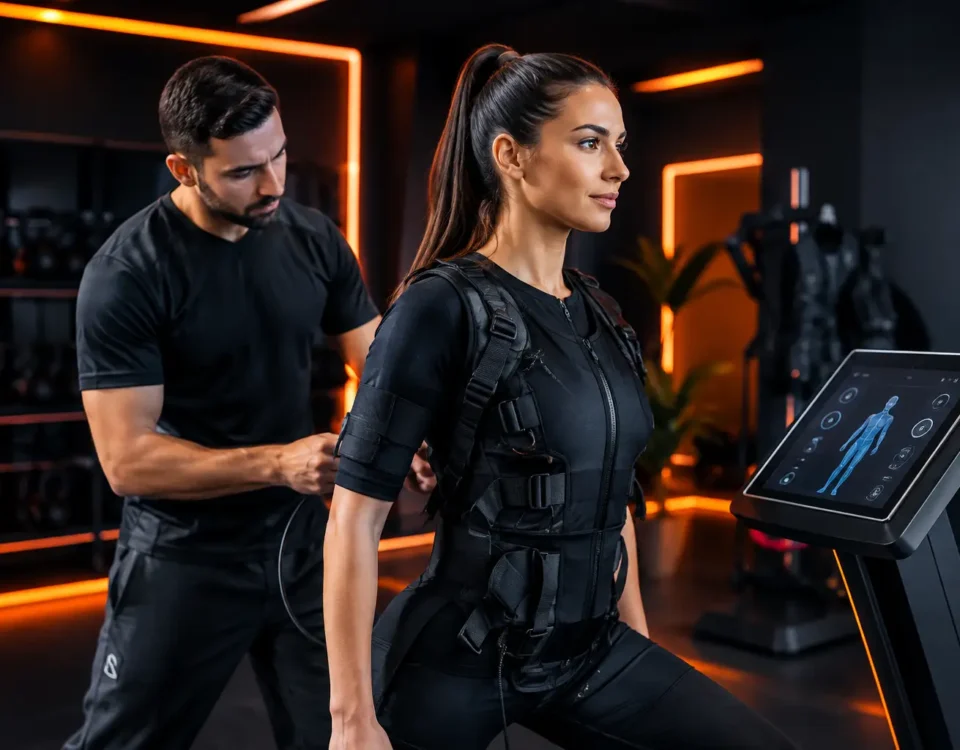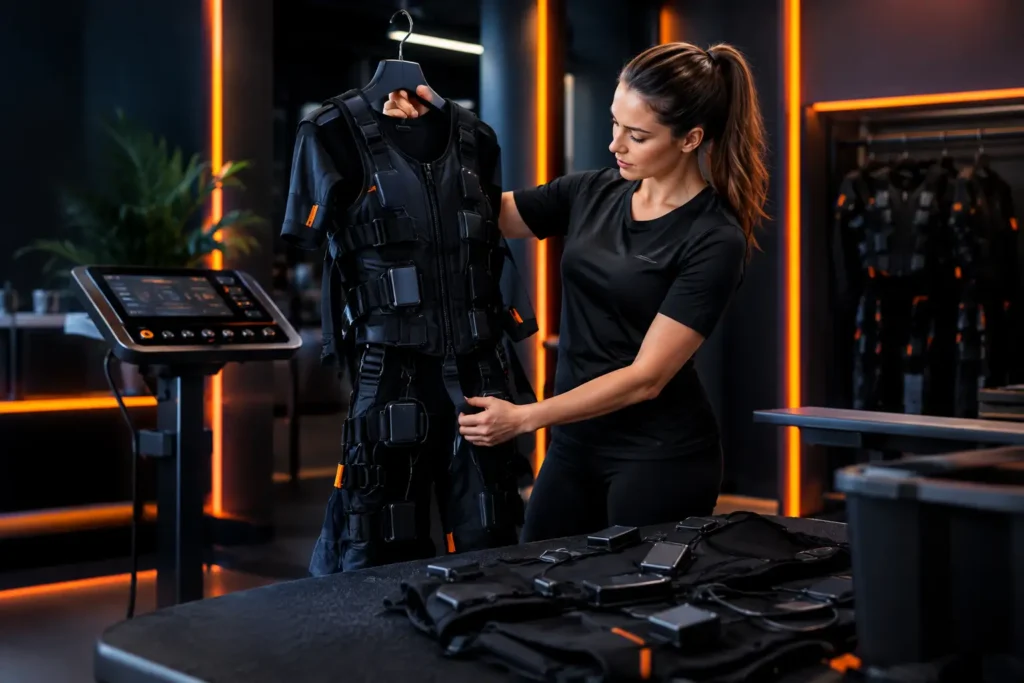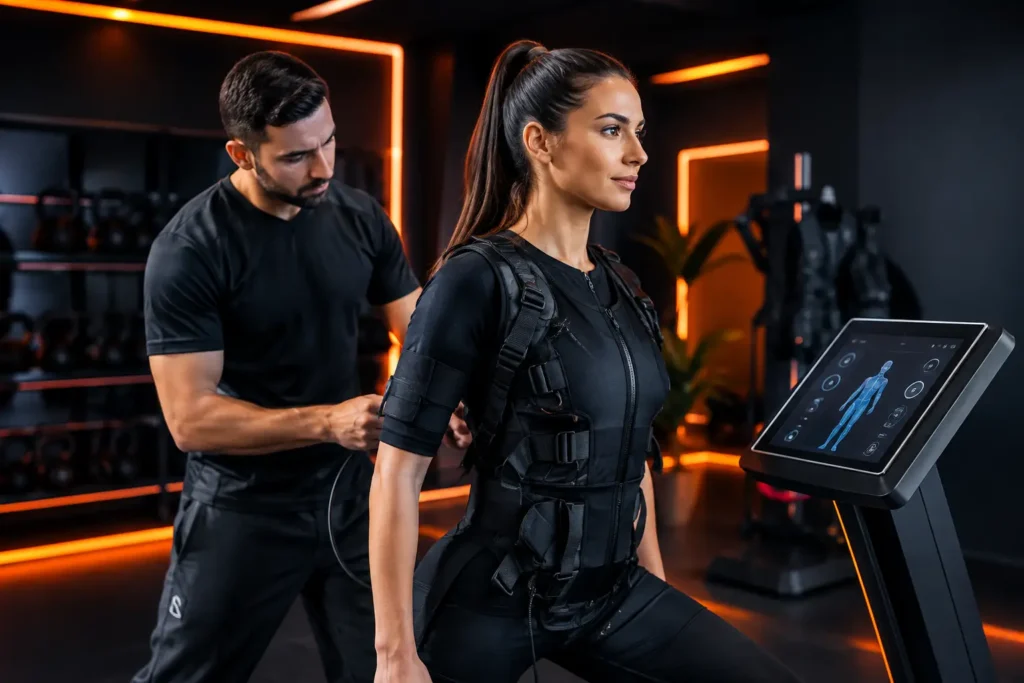


A new EMS business rarely fails because the operator lacks ambition. It stalls when the investment structure does not match the service model. The right EMS pricing models give a personal trainer, studio owner, or wellness entrepreneur a realistic route to launch without placing unnecessary pressure on cash flow from day one.
The question is not simply whether to rent or buy an EMS system. The real decision is which commercial setup supports your client volume, sales cycle, available capital, and growth target. A mobile operator needs flexibility. A multi-coach studio needs capacity and predictable operating costs. A premium wellness concept needs an experience that protects high-ticket positioning.
EMS Pricing Models Start With the Business Model
Equipment pricing should follow the way your business will generate revenue. Choosing a lower-entry option for a high-throughput studio can create capacity limits quickly. Buying a more advanced setup before validating local demand can tie up capital that would be better used for marketing, staff, or client onboarding.
For most operators, the decision falls into three commercial paths: mobile EMS, studio EMS, and premium dry wireless EMS. Each can be acquired through rental, rent-to-own, or direct purchase, but the best financing route depends on the maturity of the business.
| Business model | Best suited for | Capital approach | Commercial priority | |—|—|—|—| | Mobile EMS | Independent trainers and new operators | Lower-entry rental or rent-to-own | Fast launch and client acquisition | | Studio EMS | Gyms, clinics, and dedicated EMS facilities | Rent-to-own or direct purchase | Capacity, scheduling, and repeat revenue | | Premium dry wireless EMS | Boutique wellness and VIP concepts | Direct purchase or strategic financing | Experience, differentiation, and pricing power |
The system itself matters, but the operating model matters more. Equipment is only productive when it is in sessions, supported by trained staff, and built into a clear membership or package structure.
Rental: Lower Entry, Faster Market Validation
Rental is often the most practical starting point for professionals entering EMS for the first time. Rather than making a large upfront commitment, the operator can begin serving clients while preserving capital for local promotion, insurance, space, transport, and working expenses.
This model works especially well for mobile EMS. A personal trainer can deliver one-to-one sessions at clients’ homes, offices, partner gyms, or private wellness locations. The operator keeps overhead low and learns which neighborhoods, client profiles, and packages create the strongest demand.
The trade-off is simple: rental prioritizes flexibility over long-term ownership. Monthly costs must be included in your service pricing and revenue forecast. It is not the right model for every established studio, particularly one with consistent demand and a long investment horizon. But it can reduce the risk of entering a new category before the sales process is proven.
Rental also makes sense when timing matters. If an operator has an upcoming launch, a new location, or a short-term partnership opportunity, access to a ready-to-use system can be more valuable than waiting to assemble a larger capital budget.
When Rental Is the Better Commercial Choice
Rental is usually a strong fit when you are testing demand, operating independently, protecting cash reserves, or adding EMS as a new service within an existing fitness or wellness business. It is also useful for operators who value the ability to adapt their setup as their client base develops.
The key is to treat rental as a business tool, not merely an equipment expense. Build it into a plan that includes lead generation, consultations, conversion targets, session delivery, and retention. Without that structure, even a low initial investment can become an underused monthly cost.
Rent-to-Own: Balance Flexibility and Asset Building
Rent-to-own sits between short-term access and outright ownership. It gives the operator a more manageable entry path while creating a defined route toward owning the equipment. For many emerging studios, this is the most balanced approach.
A rent-to-own structure can support a business that has already validated interest but wants to avoid concentrating too much capital in one initial purchase. Instead, the monthly commitment is planned alongside recurring client revenue. As the membership base grows, the business moves toward owning a productive asset rather than renting indefinitely.
This approach is particularly relevant for studio EMS. A gym adding EMS training, a clinic expanding its wellness services, or a dedicated EMS studio opening its first location often needs to preserve funds for fit-out, staffing, booking systems, and launch marketing. Spreading the equipment investment can make those priorities easier to manage.
However, rent-to-own still requires discipline. Operators should confirm the total commitment, ownership terms, included support, warranty coverage, and the expected duration of payments. The monthly figure alone does not show the full commercial picture.
Plan Payments Around Conservative Capacity
Do not base the equipment commitment on a fully booked schedule in month one. Instead, estimate revenue using conservative assumptions about consultations, conversion rates, weekly session frequency, cancellations, and coach availability.
For example, a studio may be able to serve multiple clients during its opening hours, but true capacity is determined by how many sessions are sold and delivered consistently. A realistic forecast leaves room for ramp-up time. It also protects the business from making decisions based on best-case scenarios.
Direct Purchase: Best for Established Demand and Control
Direct purchase is typically the strongest financial option when an operator has reliable demand, sufficient capital, and a clear long-term EMS strategy. Once the equipment is owned, the business has more control over its cost structure and can focus on improving utilization, retention, and team productivity.
This route is often appropriate for established gyms adding multiple EMS stations, clinics with a developed client base, and operators preparing a dedicated studio rollout. It can also be the right choice for premium dry wireless EMS concepts, where the equipment experience is central to the brand position.
The advantage is not simply avoiding ongoing financing payments. Ownership can support more confident expansion planning, particularly when the system will be used regularly over several years. Yet direct purchase should not drain the operating budget. A business still needs resources to sell the service well after installation.
A common mistake is treating the equipment purchase as the finish line. It is the starting point. Budget for training, sales consultation scripts, staff onboarding, accessories, maintenance planning, and a clear client journey from first inquiry to recurring package.
Price the Service, Not Just the Equipment
The most useful way to assess EMS pricing models is to connect the equipment decision to your client offer. A mobile trainer may sell premium one-to-one appointments with travel convenience. A studio may sell recurring memberships, small-group formats where appropriate, or structured training packages. A boutique concept may package EMS within a broader wellness experience.
Your service price should reflect more than session time. Consider coach labor, space or travel costs, financing or ownership costs, consumables and accessories, sales and marketing spend, and the level of client support provided. The result should be a commercial model that leaves room for profit after normal operating expenses, not just a price that appears attractive in a local market.
It also depends on your positioning. Competing solely on low session prices can make it difficult to sustain professional coaching, quality equipment, and after-sales standards. A stronger approach is to define the client value clearly: time-efficient training, personalized supervision, convenience, premium environment, or structured progress support.
Support Changes the Real Cost of Entry
Two offers can look similar on an equipment quote and produce very different business outcomes. Training quality, setup support, warranty coverage, spare-part access, and business guidance all affect launch speed and operational continuity.
For a first-time operator, structured onboarding can prevent costly delays. For an established gym, reliable technical and commercial support can reduce disruption as EMS becomes part of the weekly timetable. These services should be evaluated as part of the total investment, not as optional extras.
This is where a partnership-led provider adds value. EMS Leader approaches equipment access alongside model selection, onboarding, training, and commercialization planning, helping operators align their financing choice with how they actually intend to sell and deliver EMS services.
Questions to Ask Before You Commit
Before selecting a model, clarify how many sessions you expect to deliver each week, whether you will operate mobile or from a fixed location, how much capital must remain available after launch, and who will be trained to deliver the service. Then ask what is included beyond the system itself.
You should also consider the client you want to attract. A corporate professional seeking private, time-efficient training responds to a different offer than a gym member choosing a recurring studio package. The right equipment and payment model should reinforce that offer rather than force you into a service style that does not fit your market.
The best choice is the one that gives your EMS business enough room to sell, learn, and grow. Start with the investment structure that matches your current stage, then build the capacity and confidence to move forward on your own terms.