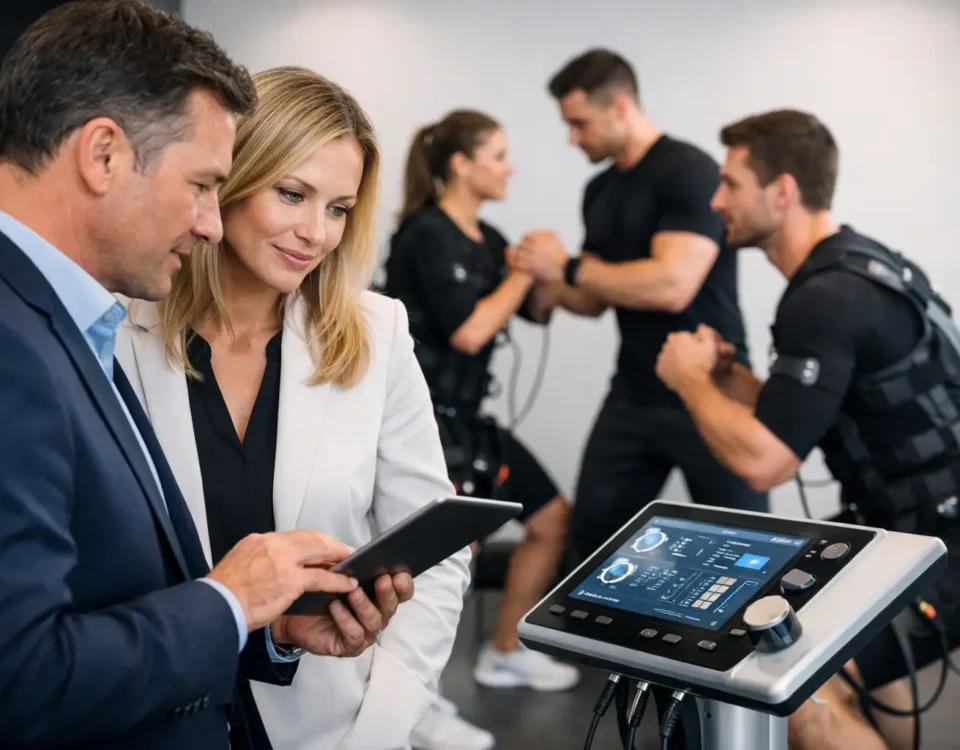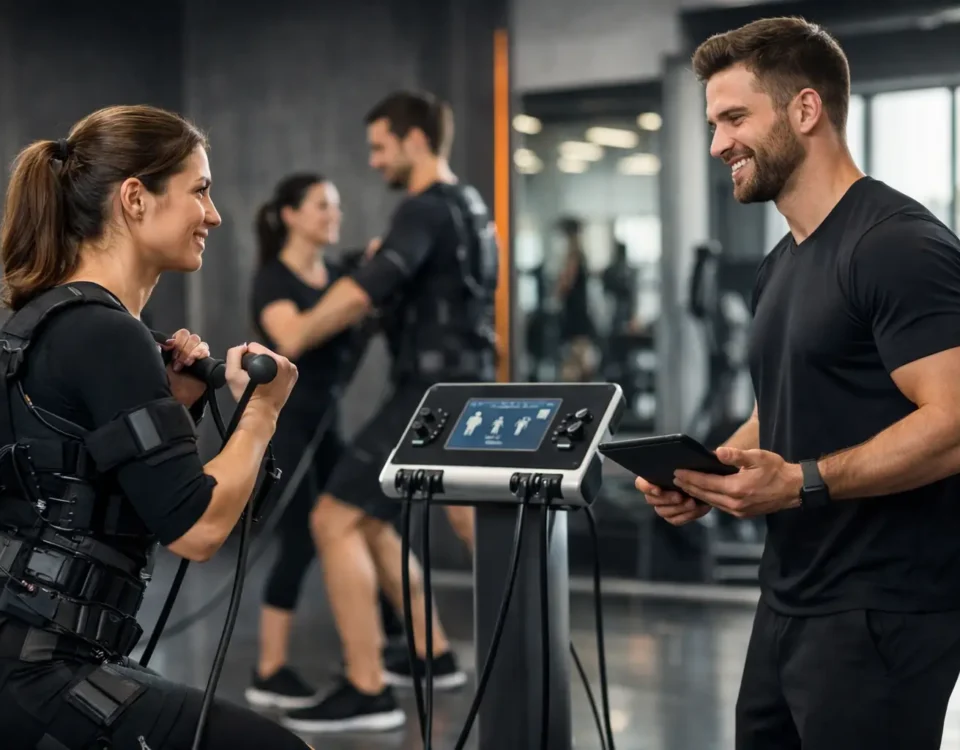


If a client asks whether your offer is closer to rehab, performance training, or pain relief, vague answers cost trust. That is why understanding ems therapy, ems rehabilitation, ems physiotherapy, nmes training, tens vs ems matters commercially, not just clinically. The more precisely you position your service, the easier it is to price it, market it, and build the right operating model around it.
For business owners, these terms are often grouped together because they all involve electrical stimulation. In practice, they serve different outcomes, attract different clients, and fit different delivery environments. A studio selling body transformation sessions is not selling the same result as a clinic supporting muscle re-education after injury. A wellness concept targeting pain management has a different client journey again. Clear distinctions lead to better offers and fewer mismatched expectations.
EMS therapy and EMS rehabilitation: where the business model changes
EMS therapy is the broadest of the terms. It usually refers to the use of electrical muscle stimulation to support physical function, recovery, conditioning, or symptom management, depending on the setting. In a commercial environment, that breadth can be useful for marketing, but it can also become too vague if operators do not define the exact service outcome.
EMS rehabilitation sits in a narrower lane. It is typically associated with restoring muscle activation, supporting recovery after injury or surgery, or helping clients rebuild function when voluntary contraction is limited or inefficient. That changes who delivers the service, how it is framed, and often what level of assessment is expected before the first session.
From a business standpoint, this distinction matters because rehab-led services usually require stronger integration with medical or allied health workflows. The sales cycle can be slower, documentation may be more structured, and outcomes are often measured in function rather than aesthetics or fitness. That does not make the model less attractive. It simply means the revenue logic is different. Retention can be strong, but positioning must be precise.
A fitness operator entering EMS should be careful not to market performance sessions as rehabilitation if they are not equipped to deliver that level of care. On the other hand, a clinic that already serves post-injury or post-operative clients may be leaving revenue on the table if it ignores EMS-assisted recovery options that fit its patient base.
EMS physiotherapy and NMES training are not the same offer
EMS physiotherapy usually refers to stimulation used inside a physiotherapy setting, guided by clinical reasoning and tied to a treatment plan. The goal may be pain reduction, muscle activation, edema management, movement re-education, or support during a staged return to function. The session is part of a broader therapeutic process.
NMES training, or neuromuscular electrical stimulation training, is more specific. It focuses on stimulating muscle contraction to improve strength, recruitment, endurance, or neuromuscular control. In many cases, NMES training can sit comfortably in performance, recovery, or hybrid wellness settings, not only inside a clinic.
That difference creates real commercial options. If you run a gym, boutique studio, or mobile EMS service, NMES-oriented positioning may be easier to integrate because it aligns with visible goals such as strength support, muscle engagement, and time-efficient sessions. If you operate a clinic, EMS physiotherapy may better fit your existing authority and client expectations.
The key is not choosing the term that sounds most advanced. It is choosing the one that matches your delivery model. Operators who get this right usually launch faster because the offer, pricing, and client conversation stay aligned from the first consultation.
TENS vs EMS: a distinction every operator should explain well
The tens vs ems question comes up constantly, and it is one of the easiest ways to establish credibility with potential clients and referral partners. TENS stands for transcutaneous electrical nerve stimulation. It is commonly used for pain modulation. EMS, by contrast, is designed to stimulate muscle contraction.
That means the client experience and intended result are different. TENS is generally associated with symptom relief. EMS is associated with muscle work. There can be overlap in broader wellness conversations, but commercially they should not be sold as interchangeable.
This matters even more when building your business model. If your offer is built around body transformation, strength support, or functional training efficiency, EMS is the core value proposition. If your market is more focused on discomfort management, recovery support, or adjunctive therapeutic care, the conversation may include TENS, but your service architecture, staff training, and equipment strategy still need to reflect what you actually deliver.
Overpromising here is expensive. A client seeking pain relief may not convert into a premium EMS training package if the expectation was set poorly. A performance-focused client may also lose confidence if the language feels too medical or too vague. Clear education supports better sales and lower churn.
Choosing the right commercial angle for your market
Most operators do not fail because EMS lacks demand. They struggle because the offer is too broad. The strongest EMS businesses tend to choose a primary lane and build around it.
A mobile trainer usually benefits from a straightforward training and body-conditioning message. The model is lean, startup cost is lower, and the service is easy to bring directly to busy clients. In that setting, NMES training language may support credibility, but the commercial pitch should remain simple and outcome-focused.
A studio operator has more room to segment. One package can target fitness clients who want time-efficient sessions, while another can focus on recovery support or low-impact strength work. Capacity, scheduling, and pricing strategy become the growth drivers. Here, precise terminology helps staff sell the right package instead of forcing every client into the same offer.
A clinic or health-led concept can take a more specialized route. EMS rehabilitation or EMS physiotherapy positioning may fit naturally if the team already includes licensed professionals and the client journey includes assessment, treatment planning, and reassessment. The upside is stronger authority and potentially higher perceived value. The trade-off is that operations may be less scalable than a pure fitness model.
For premium wellness and boutique concepts, the value often sits in experience as much as outcome. Dry wireless systems, private sessions, concierge delivery, and VIP service can justify high pricing, but only if the positioning is clean. In these environments, blending recovery, efficiency, and personalization works well. Mixing in clinical claims without the right framework usually does not.
Operational questions to answer before you invest
Before selecting equipment or financing, define the service you want to commercialize. Are you selling coaching, rehabilitation support, physiotherapy-led care, muscle activation, or premium personal training efficiency? Each route changes staffing needs, onboarding, and session design.
Then look at throughput. A solo mobile operator may prioritize portability and low overhead. A studio may care more about simultaneous client capacity and coach utilization. A clinic may focus on treatment integration and documentation flow. The same device category can produce very different returns depending on how it is deployed.
Training and support are not secondary issues. They affect launch speed and client retention. A business that buys hardware without a clear implementation plan often spends months trying to define offers after the investment is already made. A structured launch model usually performs better because pricing, scripts, protocols, and staff confidence are addressed early.
This is where a consultative supplier adds real value. Companies such as EMS Leader are not only relevant because of equipment access, but because they help operators choose a model that matches investment level, market position, and revenue goals. That reduces costly trial and error.
What smart operators communicate to clients
Clients do not need a lecture on electrotherapy. They do need clarity. Strong operators explain what the service is for, who it is for, and what results are realistic. They also explain what it is not.
That means saying plainly whether a session is designed for training efficiency, muscle activation, recovery support, or pain-related applications. It means screening appropriately and avoiding inflated claims. It also means matching the consultation process to the business model. A premium studio can keep the conversation concise, while a rehab-led setting may need more detailed intake and progress tracking.
The commercial payoff is simple. Better education leads to better fit. Better fit leads to stronger retention, referrals, and pricing confidence.
The EMS market is still full of opportunity, but the winners will not be the ones using the most technical language. They will be the ones who can translate ems therapy, ems rehabilitation, ems physiotherapy, nmes training, and tens vs ems into a clear, profitable service model that clients understand and staff can deliver with confidence.