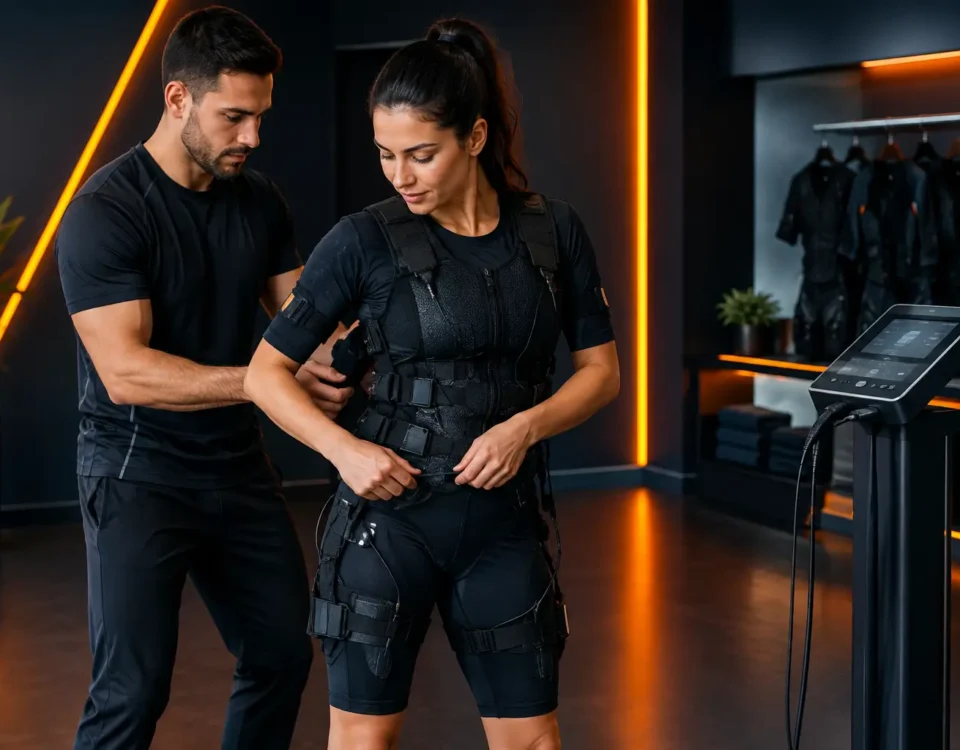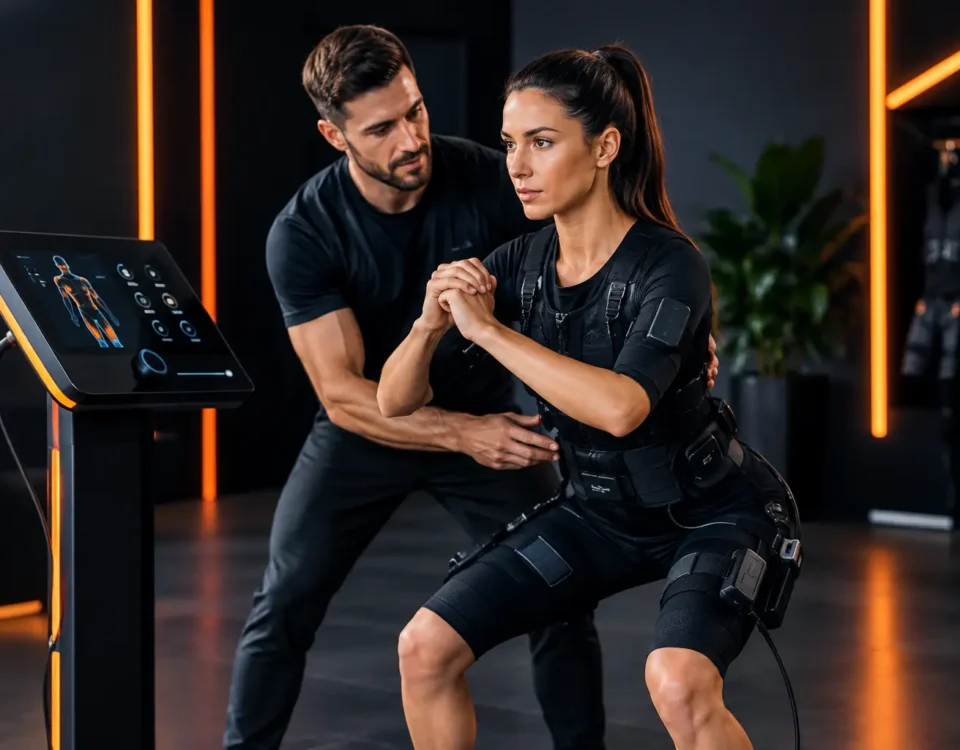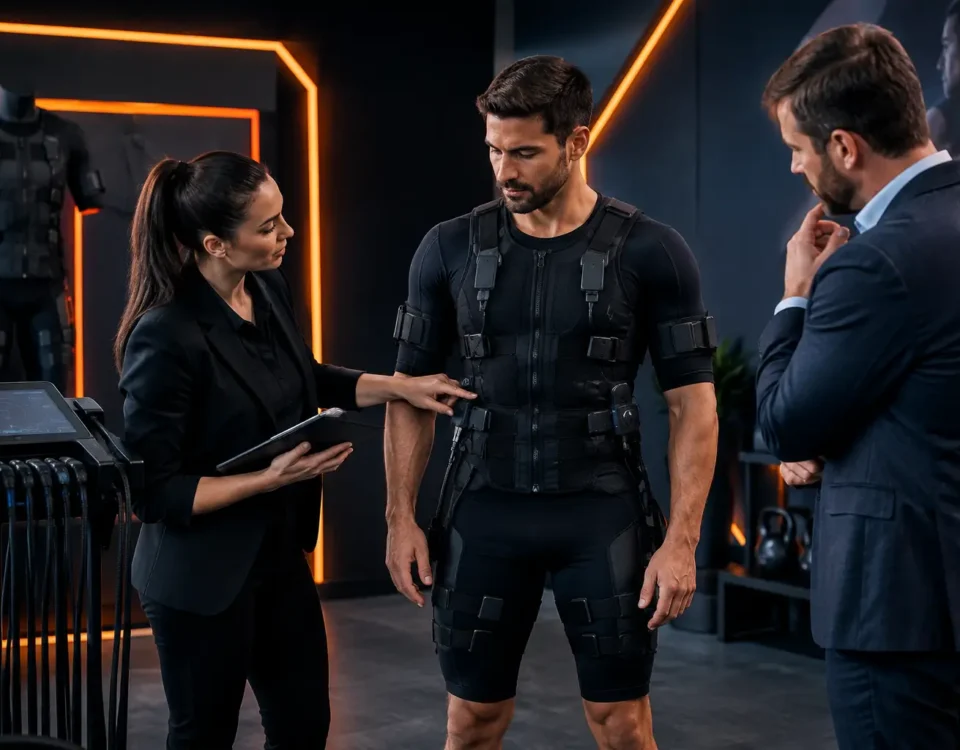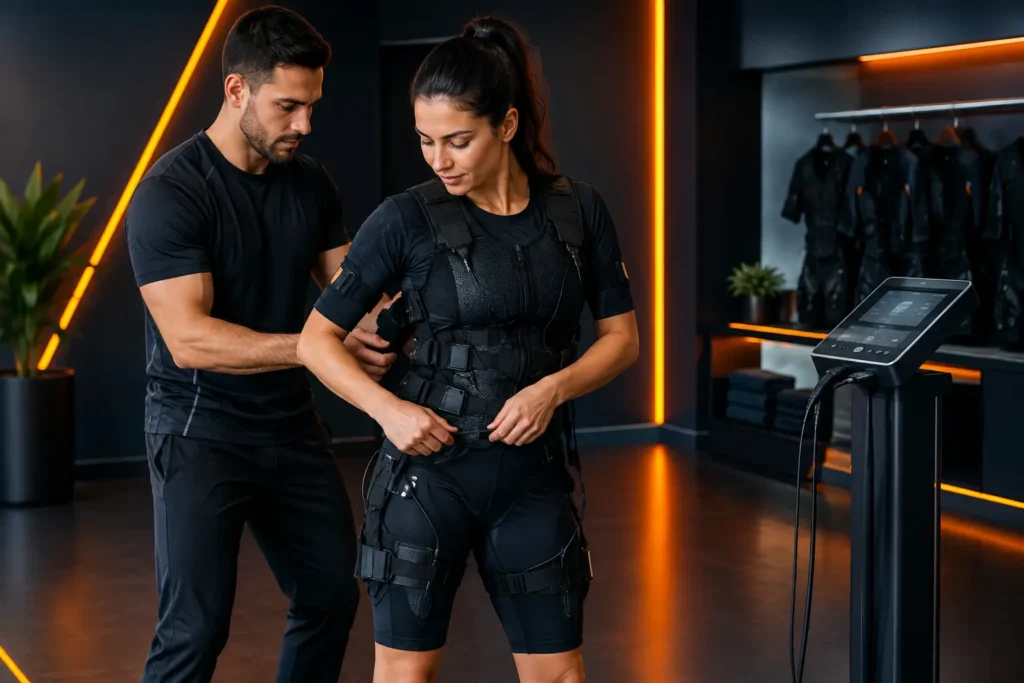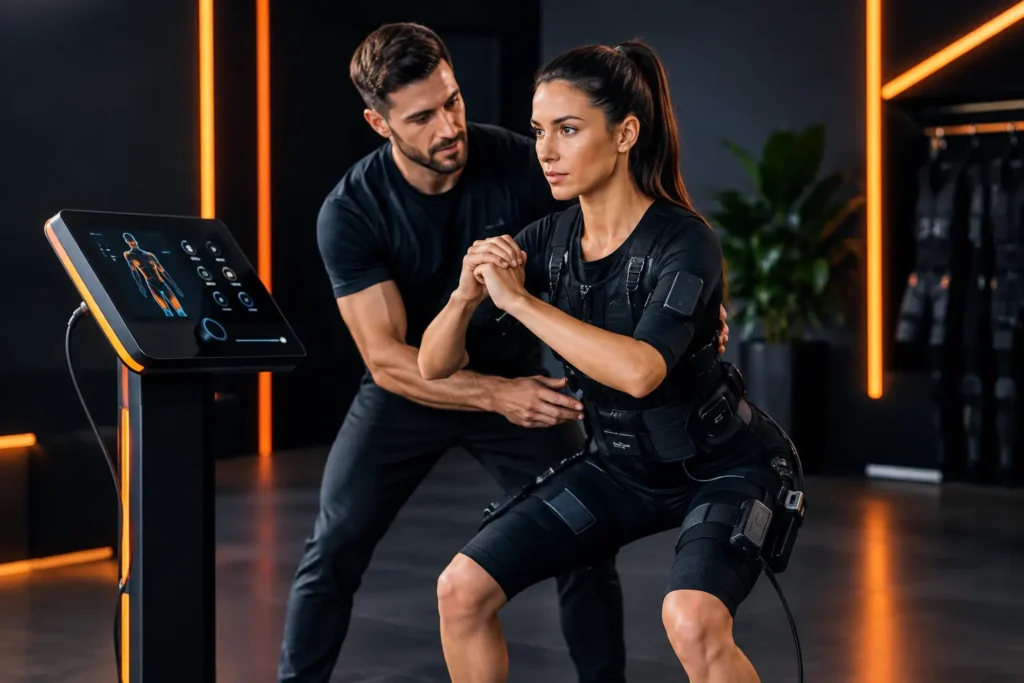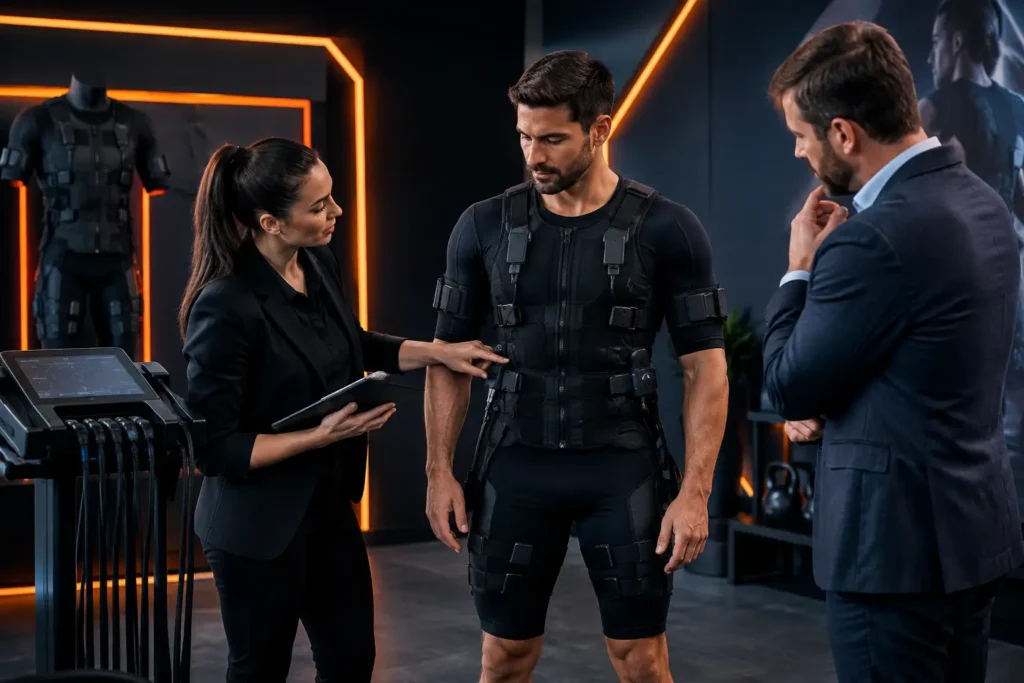

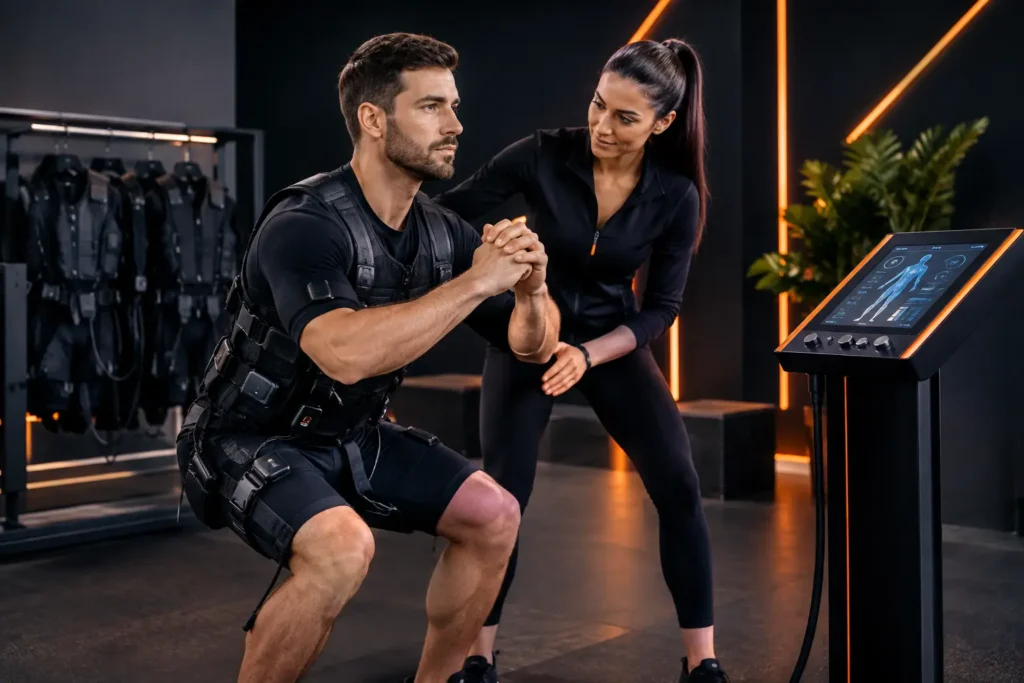
A wet suit, spray bottle, and post-session cleanup can be manageable in a dedicated studio. But for operators building a premium, mobile, or high-touch concept, every extra step affects capacity, presentation, and staff workflow. The top benefits of waterless EMS are therefore commercial as much as practical: dry EMS can support a cleaner service model, a more refined client experience, and greater flexibility in where and how sessions are delivered.
Waterless EMS generally refers to dry EMS systems that are designed to operate without wetting electrodes or garments before a session. It should not be confused with every EMS format on the market. Wet EMS and dry EMS have different operating workflows, and not every dry EMS system is wireless. For an operator, the right choice depends on the intended business model, local requirements, the equipment’s approved use, and the clientele being served.
Why Waterless EMS Fits a Premium Business Model
In commercial EMS, the equipment decision shapes much more than training delivery. It influences your facility requirements, staffing routine, client onboarding, laundry process, transport needs, and service positioning. A dry, waterless workflow can remove friction from several of those points.
That matters most when the service itself is part of the product. A boutique wellness space, private training suite, hotel concept, beauty and longevity environment, or VIP home-visit service may prioritize comfort and presentation as highly as training efficiency. In those settings, an operator needs a system that supports a polished experience without making preparation feel overly technical or inconvenient.
Waterless EMS does not automatically make a business better. A wet EMS setup may still be a sensible choice for an established studio with the right changing facilities, cleaning process, and client expectations. The business advantage of a dry system appears when its workflow matches the way you intend to sell, deliver, and scale the service.
Top Benefits of Waterless EMS for Operators
A more efficient session transition
Dry EMS can simplify the preparation and reset routine because there is no need to wet the suit or electrode areas before each appointment. This can make the handoff between sessions easier for staff and more straightforward for independent operators managing the complete client journey themselves.
The practical value is not simply speed. It is consistency. When a workflow has fewer preparation steps, it can be easier to train staff, maintain service standards, and keep appointments running on schedule. That is particularly useful when clients book short, premium appointments and expect punctuality.
Capacity still depends on staffing, changing arrangements, consultation procedures, cleaning protocols, and the specific equipment configuration. Operators should plan their schedule around the full service cycle, not only the active EMS session.
A cleaner, more premium first impression
Client perception begins before training starts. Some clients are comfortable with a traditional wet EMS process. Others may prefer an experience that feels more similar to putting on premium fitness apparel than preparing for a technical treatment.
A waterless setup can help reduce the visual and sensory barriers that first-time clients sometimes associate with EMS. For businesses serving executives, private clients, luxury hospitality guests, or wellness-focused members, that distinction can support a higher-service positioning.
This is not about making exaggerated promises. It is about removing unnecessary friction. A client who understands the process, feels comfortable with the garment, and sees a well-organized operation is more likely to view the service as professional and worth returning to.
Better fit for mobile and off-site services
Mobility is one of the strongest commercial reasons to consider waterless EMS. A mobile operator must transport equipment, set up efficiently, protect the client environment, and leave the space in the same condition it was found. Avoiding water-based preparation can make that model easier to manage.
This can be relevant for personal trainers working in clients’ homes, corporate wellness providers, hotel fitness teams, concierge services, and operators testing demand before committing to a permanent facility. A dry workflow may reduce the amount of supporting equipment and consumables needed for each visit.
However, mobile EMS is not just a transport question. Operators still need suitable space, a professional intake process, trained supervision, hygiene procedures, reliable charging and equipment checks where applicable, and clear client communication. The business model works best when those operational details are designed before launch.
Less dependence on laundry and drying logistics
Garment care has a direct impact on day-to-day operations. In a wet EMS setting, cleaning, drying, and preparing suits can become a meaningful part of the schedule. A dry system may reduce dependence on wet garments and the associated drying routine.
For smaller locations, this can be valuable. A compact boutique may not have the storage, ventilation, utility area, or staff time that a more intensive garment workflow requires. For mobile providers, it can also reduce the burden of carrying used items and managing turnaround between bookings.
The exact maintenance requirements always depend on the system and garment design. Operators should follow the manufacturer’s care instructions and establish written hygiene procedures for their staff. Waterless does not mean maintenance-free. It means the maintenance model may be more manageable for certain concepts.
Greater location flexibility
Traditional facility planning often starts with square footage. A waterless EMS model encourages a different question: where can the service be delivered professionally and consistently?
Dry EMS can be a strong option for businesses that want to operate from a private suite, compact wellness room, hotel area, premium gym zone, or temporary activation space. It may also support phased expansion, allowing an operator to validate demand with a focused service concept before moving into a larger dedicated studio.
This flexibility can lower operational complexity, but it should not lead to rushed decisions. Every location still needs to fit the equipment’s requirements, client privacy expectations, safety procedures, and local business regulations. The goal is not to use the smallest possible space. It is to use a space that reinforces the service you are selling.
A differentiated service for premium client segments
Not every client chooses EMS for the same reason. Some want focused personal training. Some value privacy and time efficiency. Others are attracted to new wellness experiences and expect a high level of service. Waterless EMS gives operators a clear way to shape an offer around convenience, exclusivity, and comfort.
That can be especially useful in markets where standard personal training is widely available. Rather than competing only on session price, an operator can develop a more defined proposition: private appointments, a polished setup, qualified coaching, and a controlled client experience.
The differentiation must be real. Premium pricing should be supported by trained staff, a professional environment, clear consultation, reliable scheduling, and equipment that suits the concept. The suit alone does not create a premium brand. The full operating model does.
Comparing Waterless and Wet EMS Workflows
| Business consideration | Waterless or dry EMS workflow | Wet EMS workflow | | — | — | — | | Session preparation | May reduce garment-wetting steps | Typically includes wetting electrodes or garment areas | | Mobile use | Often well suited to portable, high-touch services | Can require more preparation materials and cleanup planning | | Facility needs | May fit compact or premium spaces more easily | May require more attention to drying, storage, and garment handling | | Client experience | Can feel clean, simple, and apparel-like | Familiar for clients accustomed to conventional EMS procedures | | Best fit | Boutique, VIP, mobile, hotel, and flexible-format concepts | Dedicated studios with established wet-workflow operations |
This is a workflow comparison, not a performance ranking. The most appropriate system is the one that matches your client profile, team capability, facility setup, and commercial plan.
What to Evaluate Before Choosing a Waterless EMS System
Before selecting equipment, define the business model first. Are you launching as a solo mobile trainer, adding EMS to an existing gym, opening a specialized studio, or creating a premium wellness service? Each path requires different decisions around equipment quantity, staffing, client flow, financing, and space.
Then assess the equipment beyond its headline features. Ask how the garments are fitted and maintained, what training is provided, how onboarding works, whether spare parts and service support are available, and what operating guidance is included. These details affect launch confidence far more than a product brochure alone.
Also plan for responsible delivery. EMS services should be provided by appropriately trained professionals, within the equipment’s intended use and applicable local rules. A clear screening process, informed client communication, proper supervision, and documented operating procedures protect both the client experience and the business.
Build the Experience Before You Buy the Equipment
Waterless EMS is most valuable when it supports a clearly defined commercial offer. For a mobile professional, that may mean fewer setup barriers and a more practical travel workflow. For a studio owner, it may mean a refined service journey with easier transitions. For a premium wellness concept, it may mean an experience that aligns with privacy, presentation, and convenience.
The right next step is to map the complete client journey, from inquiry and consultation through session delivery and follow-up. Once that journey is clear, equipment selection becomes a business decision rather than a product comparison.