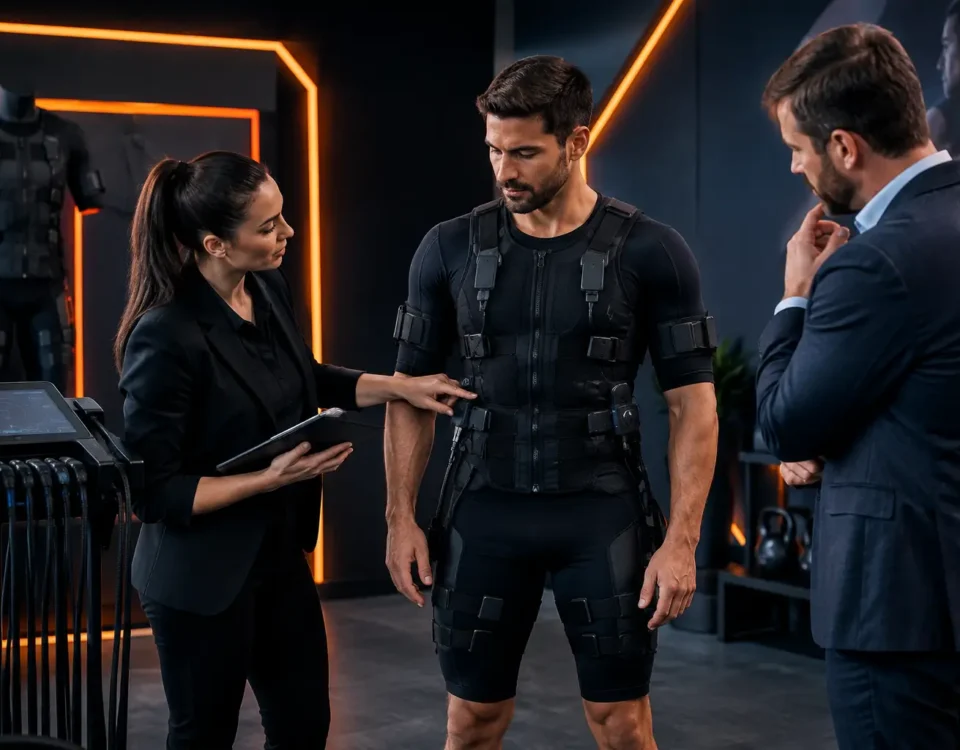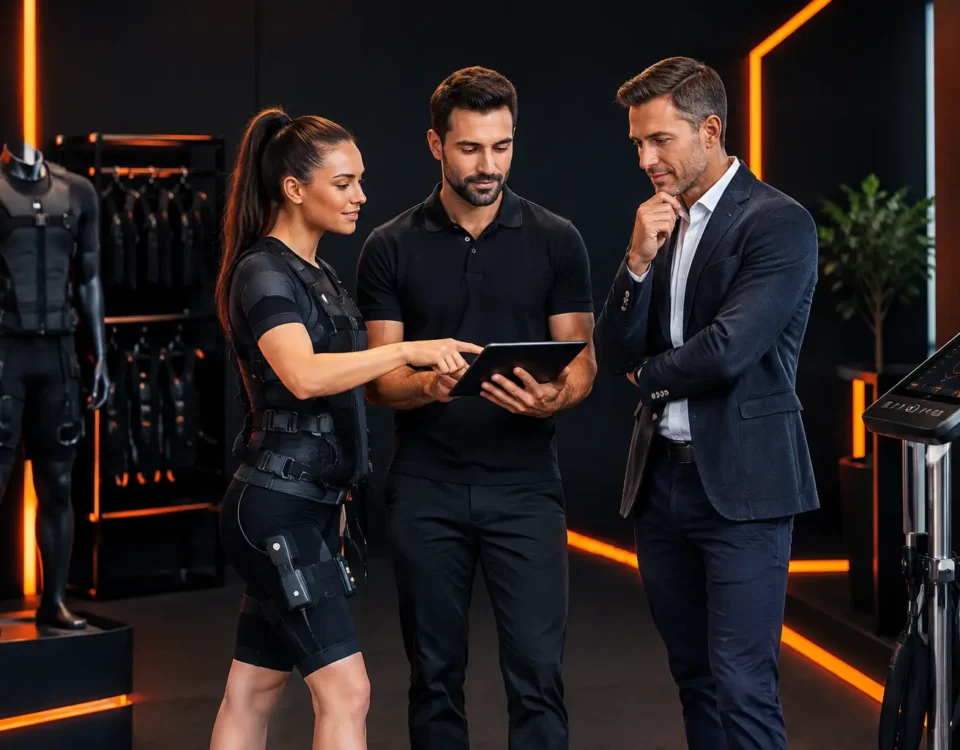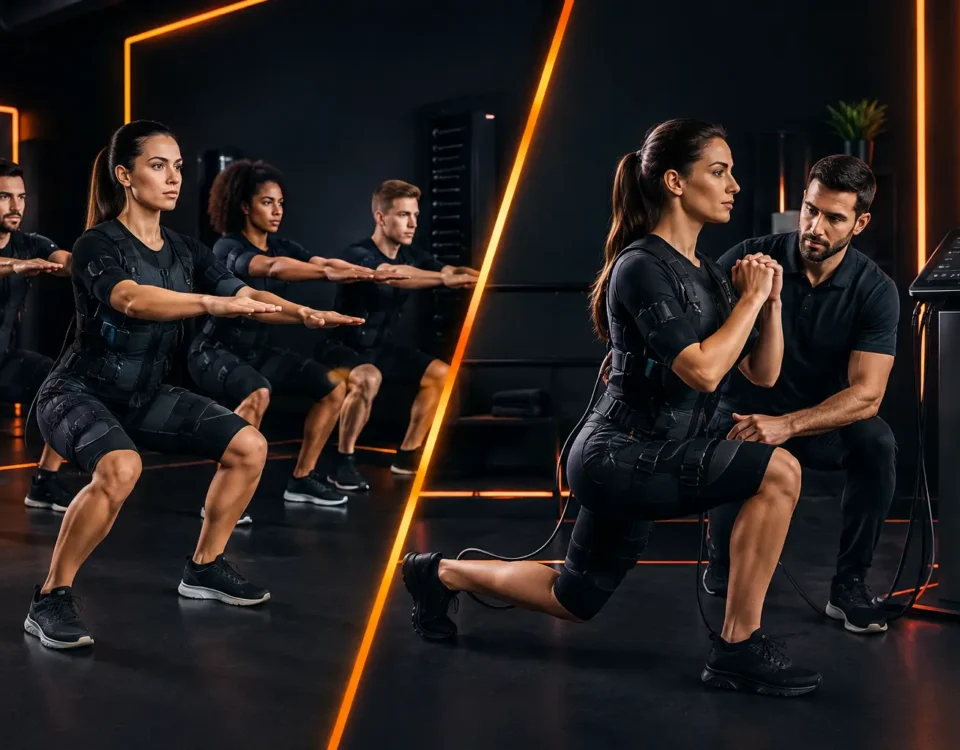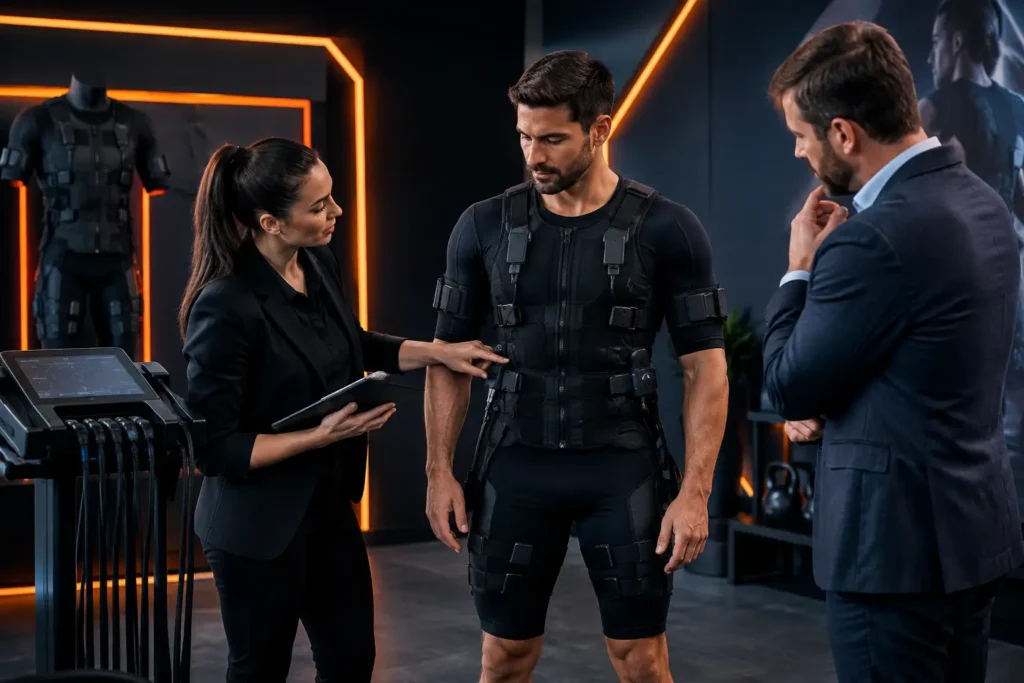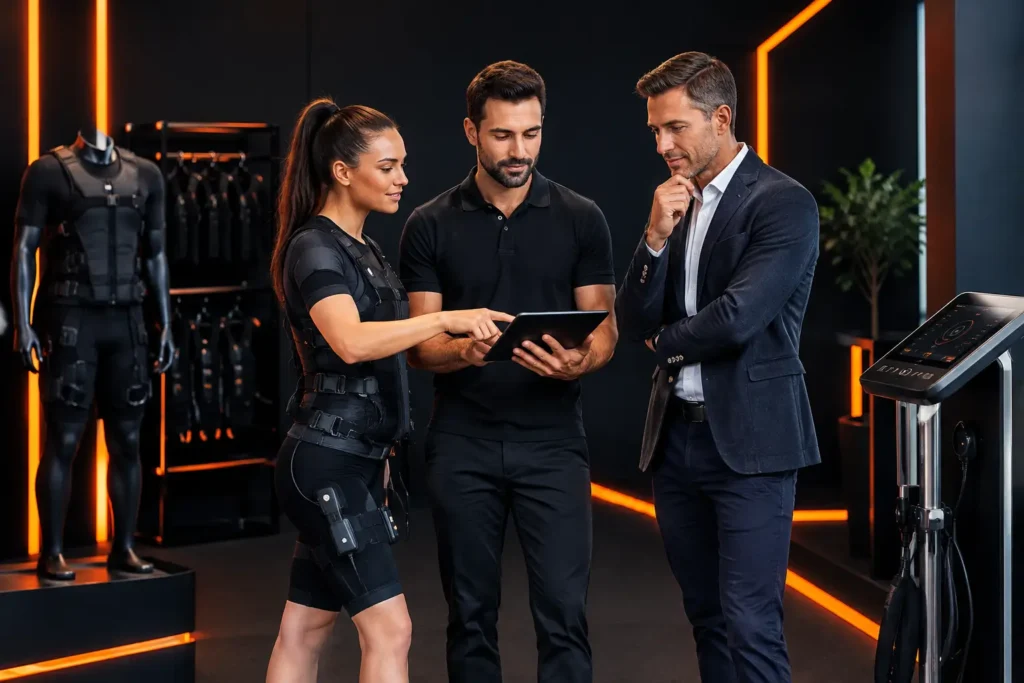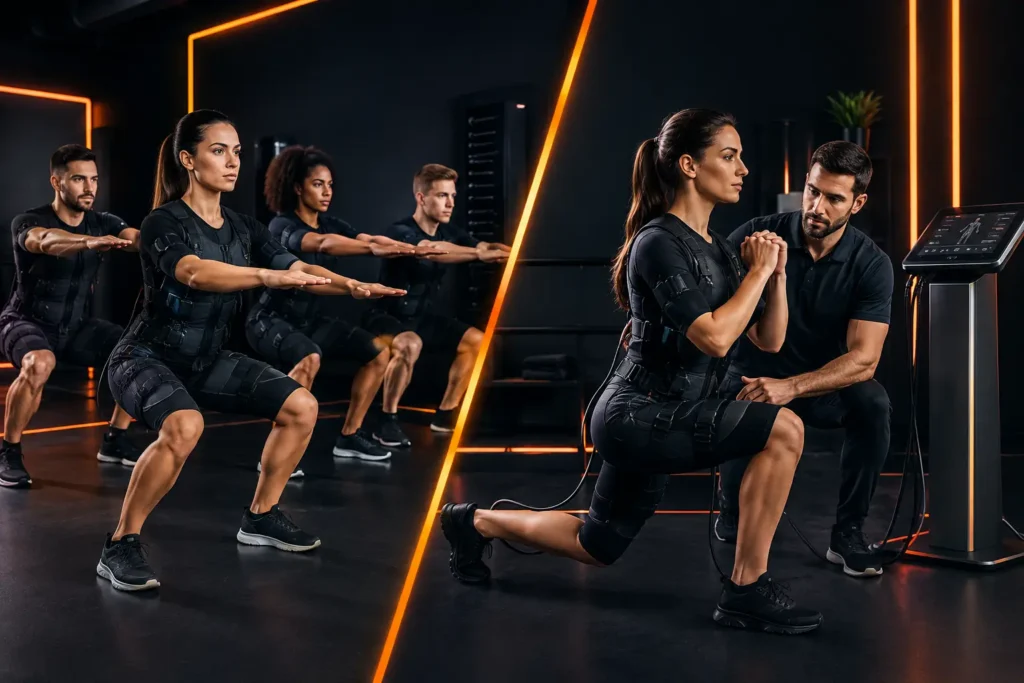

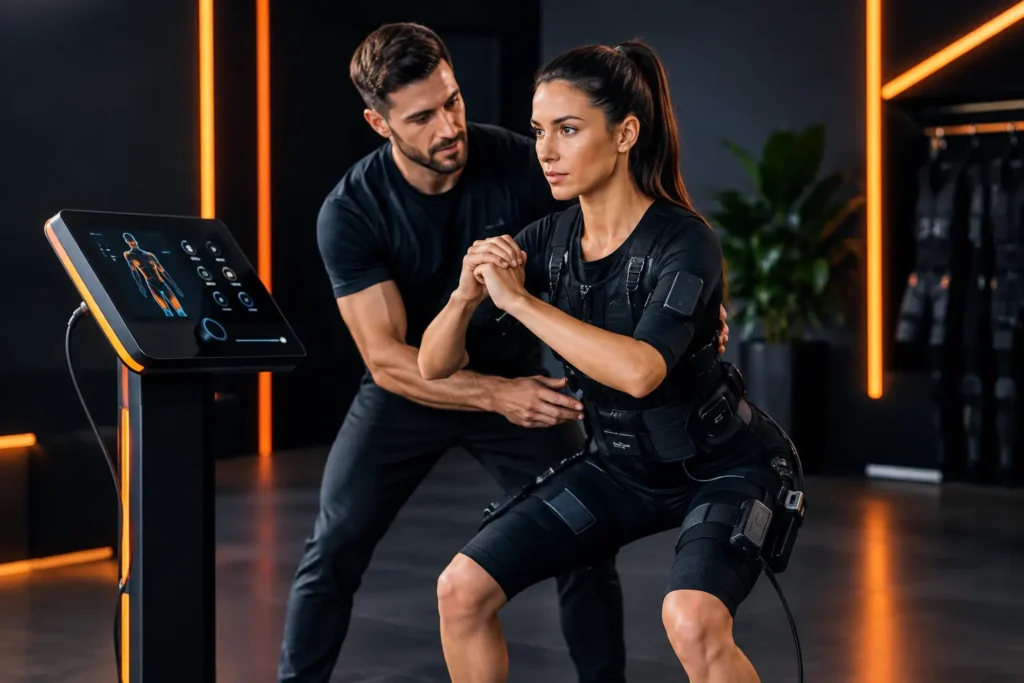
A wet suit, a spray bottle, and a client changing before every session can work in the right setting. But for boutique wellness concepts, VIP training rooms, luxury gyms, and mobile operators, that workflow may conflict with the experience clients expect. Waterless EMS offers a different commercial approach: a dry training format designed to reduce setup friction while supporting a more premium service environment.
For an operator, the question is not simply whether dry EMS looks more modern. The real question is whether it fits your target client, facility standards, session flow, and revenue model. The right decision depends on how you intend to sell the service and operate it consistently.
What waterless EMS means in practice
Waterless EMS is commonly used to describe dry EMS systems that do not rely on the traditional process of wetting electrodes or garments before a session. Rather than treating the term as a technical or regulatory category, operators should view it as a service model with a different preparation process and client experience.
Wet EMS and dry EMS should not be treated as interchangeable. Wet EMS typically involves a moistened garment or electrode area, while dry EMS uses a dry garment and electrode configuration designed for that system. The equipment, garment, fitting process, cleaning routine, and operating instructions can differ. Always follow the manufacturer’s instructions for the specific system and apparel you use.
Dry does not automatically mean wireless, either. Some dry EMS concepts use wireless technology, while others may not. When evaluating equipment, separate the questions clearly: Is the system dry? Is it wireless? How is it controlled? What does the client wear? What preparation and care are required between appointments?
Why premium operators consider waterless EMS
The strongest reason to consider waterless EMS is operational positioning. A dry setup can support a cleaner-looking, more streamlined customer journey, particularly in spaces where privacy, convenience, and presentation influence the purchase decision.
A client arriving for a premium appointment often values the details around the session as much as the session itself. If the service requires less preparation, less garment handling, and a more polished transition in and out of the training area, it may be easier to position as a high-touch fitness or wellness offering.
This matters for several business formats. A personal trainer can use a dry system to create a more professional mobile service. A boutique studio can build appointments around privacy and consistency. A gym or wellness center can add a differentiated experience without making it feel like a standard group-floor workout.
The commercial benefit is not a guaranteed financial outcome. It is the ability to create a clearer value proposition for clients who are willing to pay for convenience, personal attention, and an elevated environment.
Waterless EMS compared with wet EMS operations
The right format depends on your business model, not on a universal equipment preference.
| Operating factor | Wet EMS setup | Waterless EMS setup | |—|—|—| | Client preparation | May involve wetting the suit or electrode areas | Typically uses a dry garment-based process | | Service positioning | Often suited to established EMS studio workflows | Often suited to premium, boutique, mobile, or VIP concepts | | Between-session routine | Requires a process for moisture and garment handling | Requires a defined dry-garment hygiene and inspection process | | Client perception | Familiar to many traditional EMS users | Can support a more streamlined and technology-led experience | | Investment decision | Depends on system, capacity, and operating model | Depends on system, garment program, positioning, and target market |
Neither model removes the need for disciplined operations. Both require trained staff, correct fitting, informed client onboarding, equipment checks, and clear cleaning procedures. The difference is where the friction sits in the appointment flow.
For example, a high-volume EMS studio may be comfortable with a wet setup if its team has efficient procedures and clients already understand the format. A luxury wellness operator may prefer a waterless EMS concept because the dry workflow better matches the visual standard and pace of the business. A mobile trainer may prioritize portability, garment logistics, and client convenience above all else.
Build the business model before choosing the system
Equipment should support your offer, not define it. Before selecting a waterless EMS setup, decide what you are actually selling.
If your plan is private one-to-one training, assess how long each appointment takes from arrival to departure. Include consultation, garment sizing, system preparation, training, cleaning, and payment or rebooking. A dry workflow may help create a more efficient premium appointment, but only if staff can manage it consistently.
If you are building a boutique concept, consider the full environment. The changing area, garment storage, consultation space, trainer presentation, and booking structure all affect perceived value. A premium device in an unstructured environment will not automatically create a premium business.
If you are adding EMS to an existing gym, clinic, or wellness center, define the role it will play. It may be a standalone personal-training service, an appointment-only add-on, or part of a broader membership pathway. Each option requires different staffing, sales scripts, utilization expectations, and space planning.
A practical equipment consultation should cover client capacity, facility layout, staff training, garment management, local requirements, and your preferred acquisition model. Renting, rent-to-own, and direct purchase options can each make sense depending on your available capital and the level of flexibility you need during launch.
The operational details that protect the client experience
Waterless EMS may simplify some parts of setup, but it does not eliminate operational responsibility. The dry garment is still a client-facing part of the service, so sizing, condition, cleanliness, storage, and replacement planning need to be documented from the beginning.
Train staff to fit garments correctly and inspect equipment before use. Use a clear hygiene process that follows the manufacturer’s instructions and the applicable requirements in your market. Keep spare garments and essential accessories available so one missing item does not disrupt the day’s schedule.
Client screening and informed onboarding also remain essential. EMS is not a substitute for medical care, and operators should follow equipment instructions, local standards, and appropriate referral practices when a client’s health status requires professional medical guidance. A confident operator knows where the fitness service ends and when to pause or refer.
How to position a waterless EMS service
Avoid selling the format only as “no water.” Clients do not buy a training session because it avoids a spray bottle. They buy because the service feels relevant to their goals, schedule, and expectations.
Position the offer around practical experience: private appointments, trained supervision, a clean and organized environment, technology-led coaching, and a service format that respects the client’s time. For premium audiences, explain the process clearly before the first appointment so there are no surprises about garments, session structure, or preparation.
Your sales team should also be able to explain why the format suits the location. In a luxury club, the message may focus on discretion and convenience. In a corporate wellness setting, it may focus on structured appointment management. For a mobile trainer, it may focus on delivering a professional service without building a full studio first.
Questions to ask before investing in waterless EMS
Is dry EMS suitable for every business?
No. Dry EMS may be a strong fit for premium, mobile, boutique, and appointment-led services, but a wet EMS solution can be equally appropriate for an established studio model. The best choice depends on client expectations, throughput, available space, staffing, and the equipment’s approved operating requirements.
Does waterless EMS reduce all operating costs?
Not necessarily. It may change garment handling and session preparation, but operators still need to budget for training, apparel care, replacement items, maintenance, staffing, and client acquisition. Evaluate total operating workflow rather than focusing on one feature.
Can a first-time operator launch with a dry EMS concept?
Yes, provided the launch includes proper training, a clear service model, equipment onboarding, and realistic operational planning. First-time operators benefit from support that covers more than the device itself, including setup, consultation flow, sales positioning, and after-sales assistance.
The most useful next step is to map your intended client journey from booking to reappointment. When that journey is clear, it becomes much easier to determine whether waterless EMS is the right foundation for your business and what level of support you need to launch it well.