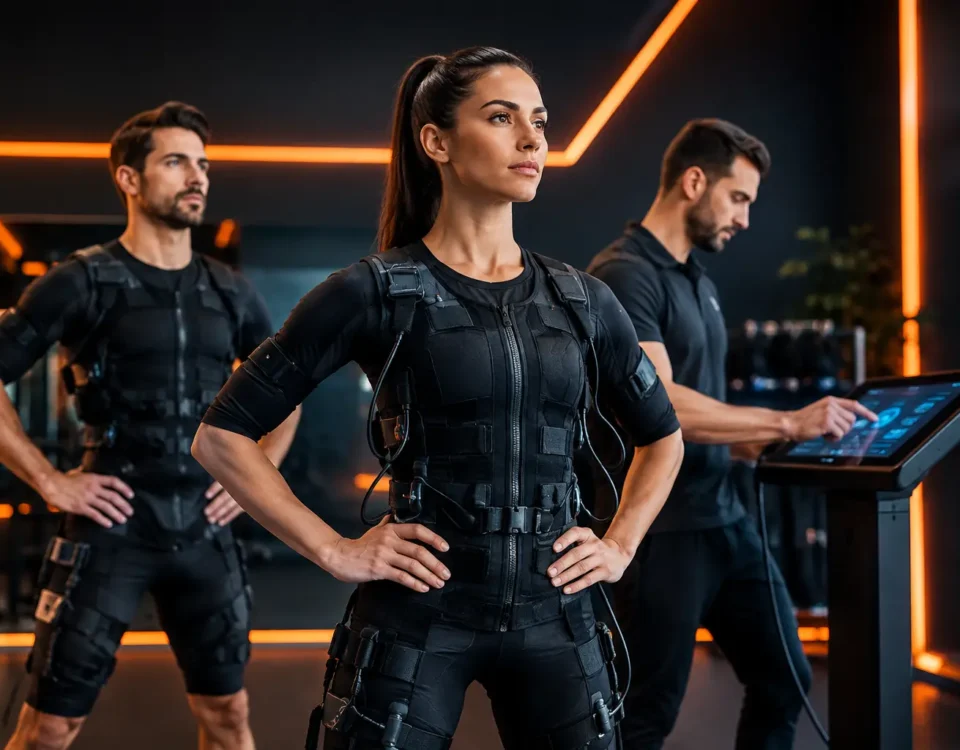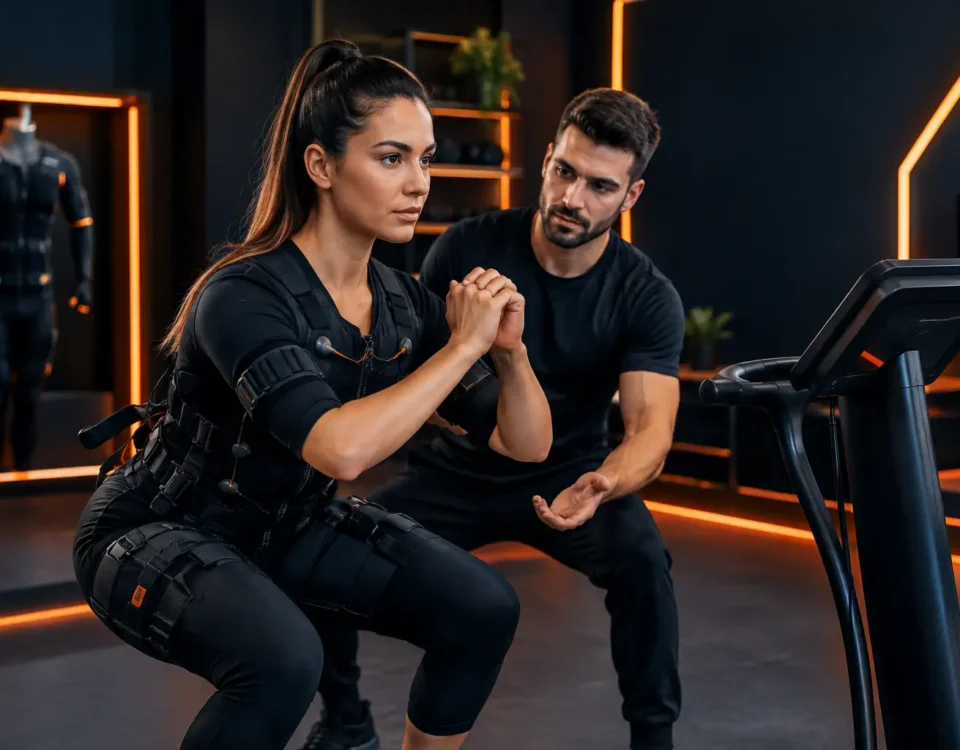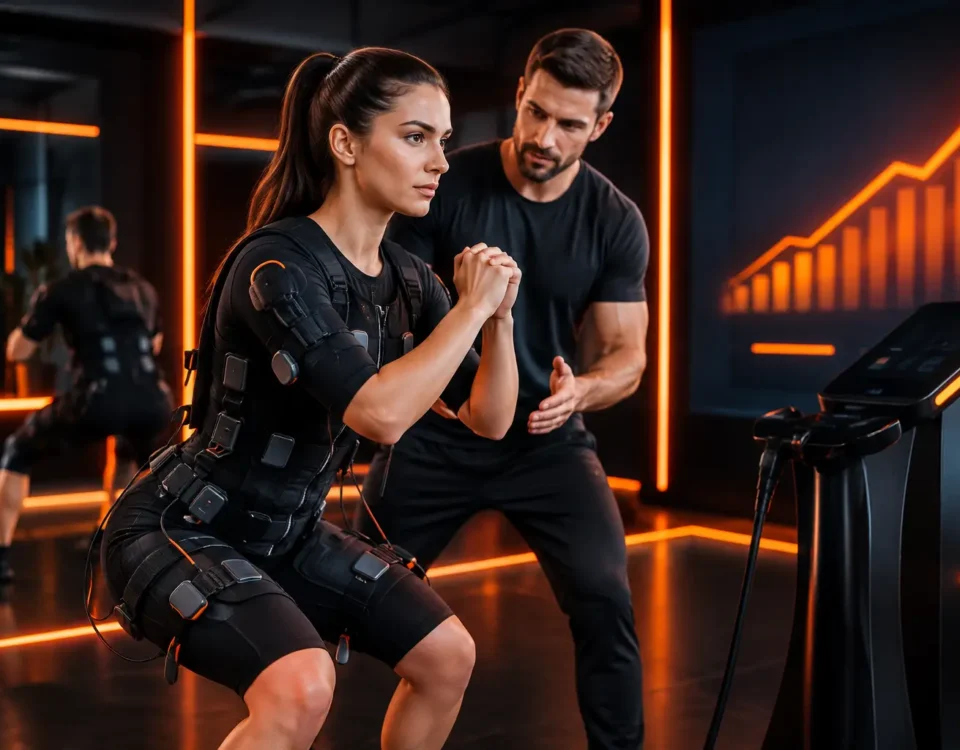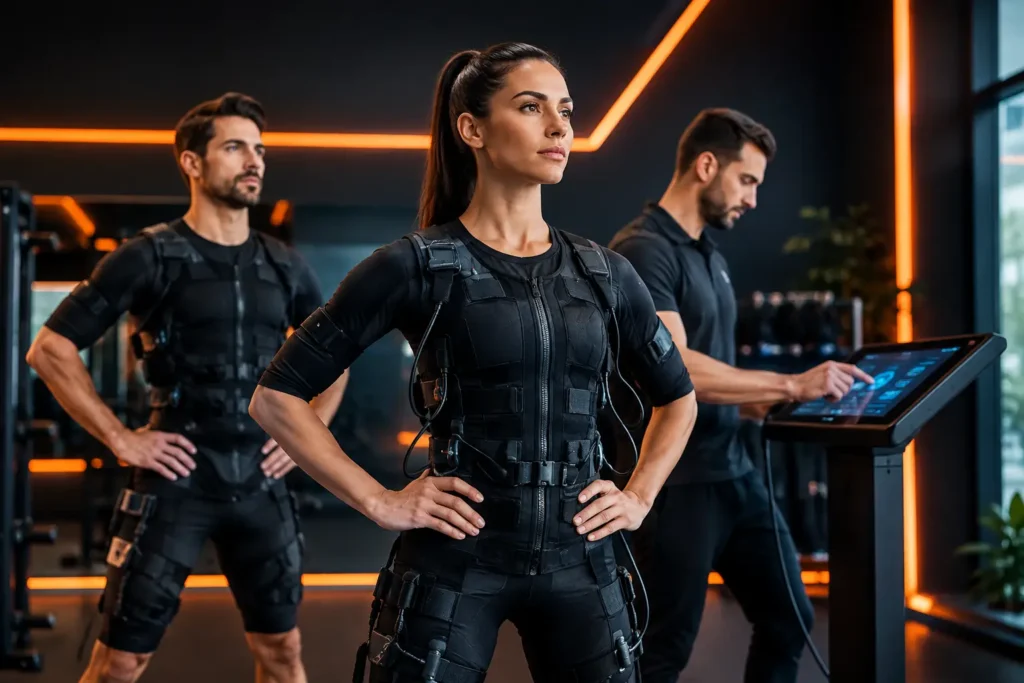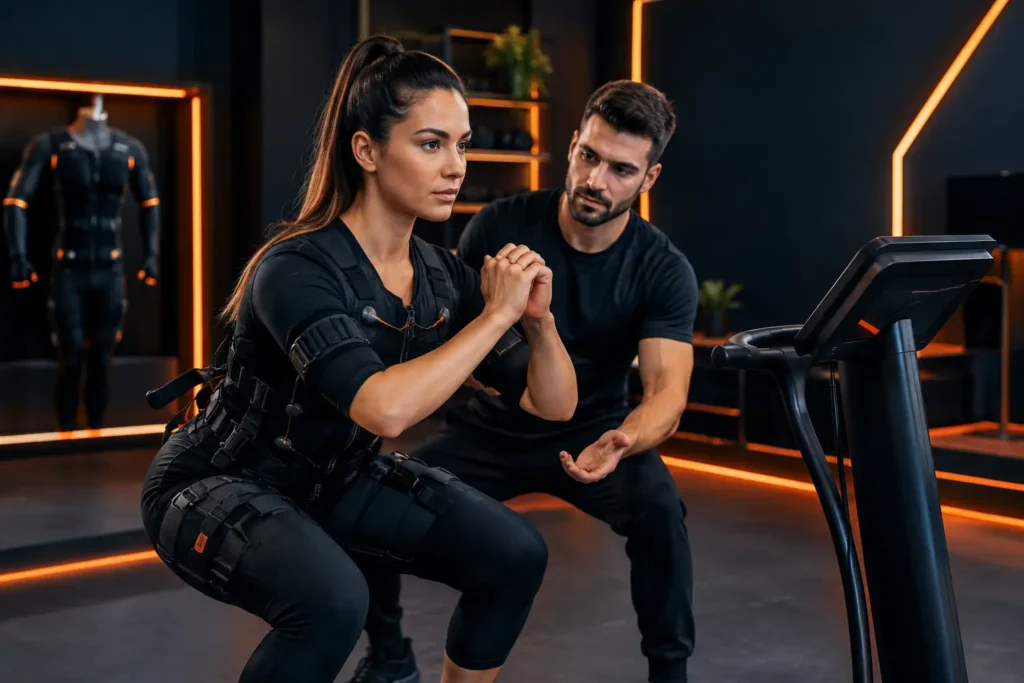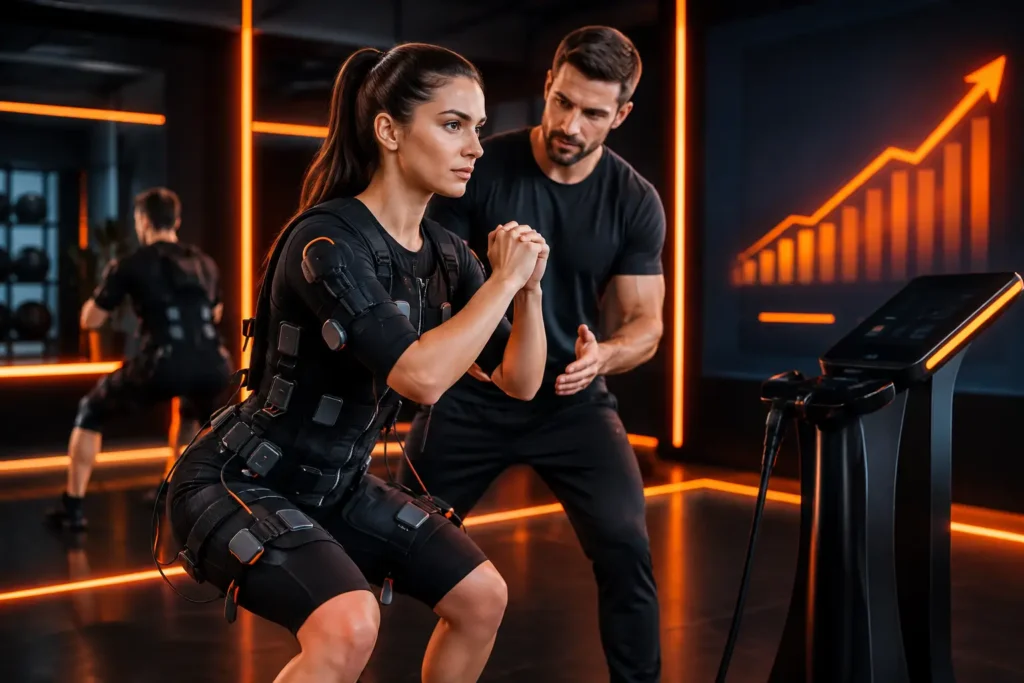

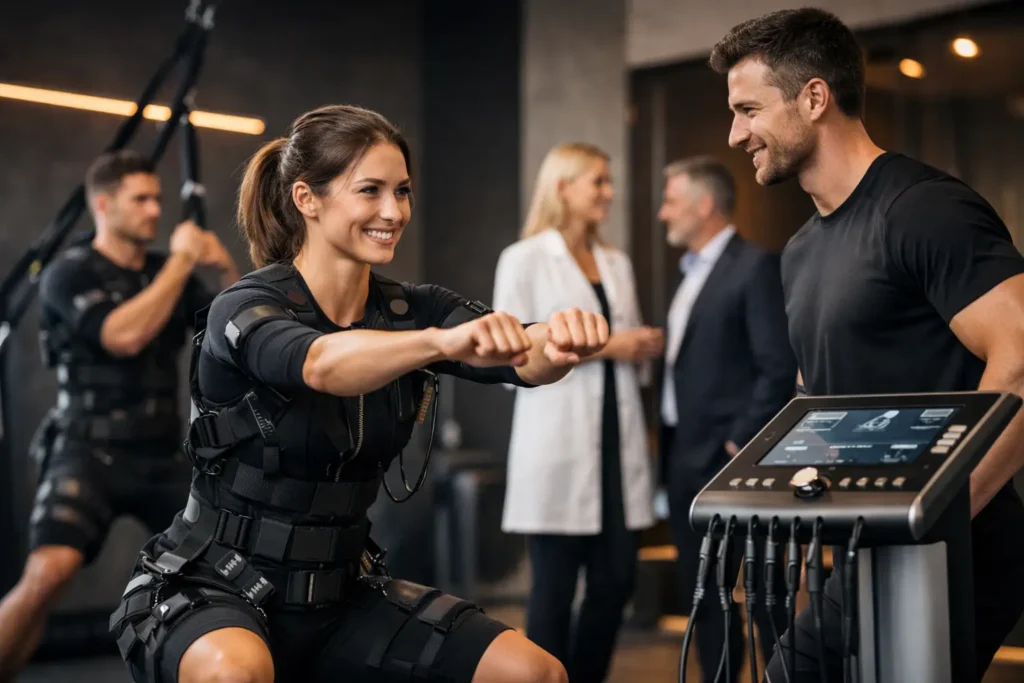
A premium EMS offer is not created by placing advanced equipment in an attractive room and charging more. Clients paying for a VIP wellness experience expect privacy, precision, professional guidance, and a reason to return. To build a premium EMS wellness concept, operators need to design the entire commercial experience around those expectations – from positioning and scheduling to staffing, technology, and follow-up.
For boutique studios, luxury gyms, wellness clubs, longevity concepts, and private training facilities, dry wireless EMS can support a high-value service model. The opportunity is strong, but the concept must be intentionally built. Premium positioning raises expectations as much as it raises pricing power.
Start With a Clear Premium Position
The first decision is not which EMS system to purchase. It is who the service is for and why that audience will choose it. A premium EMS wellness concept should solve a specific client need: time-efficient guided training, a private fitness experience, a high-touch wellness membership, or an exclusive add-on within an existing luxury facility.
Avoid trying to serve every market at once. A concept designed for busy executives will look different from one built for hotel guests, high-end personal training clients, or members of a longevity club. Each audience has different expectations around appointment times, coaching style, privacy, onboarding, and membership structure.
Your positioning should be easy for staff to explain in one sentence. For example: a private, coach-led EMS session designed for clients who value efficient training and personal attention. This gives the business a commercial anchor. It also helps prevent the common mistake of competing primarily on session price.
Premium is earned through consistency, not decoration alone. The client should feel the difference before, during, and after the appointment.
Choose a Model That Fits Your Location and Capacity
A premium dry wireless EMS setup works especially well where space, privacy, and service quality matter more than maximum class volume. The right format depends on the existing business, available floor area, local demand, and the operator’s investment plan.
| Operating model | Best fit | Commercial advantage | Key consideration | | — | — | — | — | | Private EMS suite | Boutique studios, clinics, luxury gyms | High perceived value and one-to-one attention | Requires strong coach utilization | | EMS wellness zone | Established gyms and wellness clubs | Adds a premium revenue stream to an existing member base | Needs clear separation from standard gym services | | Hotel or resort offering | Hospitality and destination wellness venues | Supports guest upgrades and short-format appointments | Demand may be seasonal | | Mobile VIP EMS service | Private residences, offices, concierge programs | Low fixed-location dependence | Logistics and scheduling require discipline |
A single private suite can be enough to validate demand. Operators do not always need a large studio to establish a credible premium offer. What matters is having enough appointment capacity to meet demand without making the service feel rushed or difficult to book.
For a new operator, flexible equipment access can reduce pressure at launch. Rental or rent-to-own structures may preserve capital for the parts of the concept clients actually see: the room, branding, staff training, local marketing, and an appropriate client-management process. Direct purchase can make sense when the business already has a tested client base and a clear expansion plan.
Build the Client Journey, Not Just the Session
Premium clients judge the full journey. A 20-minute EMS appointment may be the core service, but the experience begins at booking and continues after the client leaves.
Start with a structured consultation. This is where the coach learns about the client’s training background, goals, schedule, and comfort level. It also establishes professional boundaries and ensures the service is appropriate for the individual. The consultation should feel personal, not like a rushed waiver process.
The first session needs more explanation than a repeat visit. Clients should understand how the equipment works, what sensations to expect, how intensity is adjusted, and why the coach is guiding each movement. Clear communication builds trust and supports retention. Do not overwhelm clients with technical language. Give them enough context to feel informed and safe.
After the session, use a simple follow-up routine. Confirm the next appointment, record training preferences, and invite feedback. For high-value members, the details matter: preferred session times, coaching notes, garment sizing, and any relevant service preferences. This operational discipline makes the experience feel tailored at scale.
The physical environment should support the same promise. Clean changing areas, organized equipment, good lighting, calm acoustics, towels, hydration, and a professional reception process are not extras in a premium concept. They are part of the product.
Design Offers Around Commitment and Convenience
Single sessions can introduce the service, but recurring revenue usually comes from memberships, packages, and integrated wellness plans. The aim is not to pressure clients into long commitments. It is to give them a clear path from first session to regular participation.
A practical offer structure often includes an initial assessment and onboarding session, a recurring one-to-one membership, and a higher-tier option that adds benefits such as preferred booking windows, extended coaching attention, or access to complementary services available at the facility. If the concept is located inside a gym, clinic, hotel, or wellness club, EMS can also be positioned as a premium upgrade rather than a replacement for every existing service.
Pricing should reflect the experience, coach time, local market, equipment model, and operating costs. A premium rate without premium delivery damages trust. On the other hand, underpricing can make it difficult to fund skilled staff, maintain the space, and protect appointment availability.
Track the numbers from the beginning: consultations booked, consultation-to-first-session conversion, first-session-to-membership conversion, average sessions per client, coach utilization, and retention after the first few weeks. These figures reveal whether the issue is lead quality, sales communication, schedule design, or client experience.
Make Coaching the Center of the Experience
Wireless technology supports a cleaner and more flexible environment, but the coach remains the value driver. Clients are paying for expert guidance, individual adjustment, motivation, and accountability. Equipment without a trained coach can quickly become a commodity.
Every coach should be trained not only in equipment operation, but also in session flow, client communication, hygiene routines, contraindication screening procedures, and service recovery. If a client is uncertain or dissatisfied, the team needs a calm, professional process for responding.
Standardize the essentials while allowing personalization. A consistent check-in, fitting process, warm-up, coaching sequence, and close-out protects quality across the team. The trainer can still adapt exercises, intensity, and communication to the client. That balance is what lets a premium studio grow without losing its personal feel.
Staff scheduling matters as much as staff skill. A coach who is constantly moving between front desk tasks, room turnover, sales calls, and back-to-back sessions cannot deliver a relaxed VIP experience. Build enough transition time into the schedule for cleaning, client notes, and genuine conversation.
Plan the Investment Beyond the EMS System
The equipment decision should be part of a wider launch budget. A strong business plan accounts for the EMS system, accessories and spare parts, staff training, insurance, room preparation, booking software, branding, local launch activity, and working capital during the first operating period.
Operators often underestimate the value of implementation support. A system that arrives with onboarding, training, warranty coverage, technical assistance, and commercial guidance creates a more controlled route to launch. It reduces the risk of delayed openings, inconsistent service delivery, or choosing a capacity level that does not match the business model.
Before committing, map a realistic capacity scenario. How many appointments can each coach deliver per week while preserving service quality? What percentage of those appointment slots must be filled to cover fixed costs? How many new consultations are required each month to maintain growth? The answers will differ for a hotel, a boutique studio, and a gym-within-a-gym concept.
EMS Leader supports operators with equipment options and business-model guidance that can help align the setup with the intended client experience. The objective is not simply to install EMS hardware. It is to create an operating model that can be delivered consistently and expanded with confidence.
Launch With Proof, Not Hype
A premium concept benefits from a controlled opening period. Invite a selected group of existing clients, local professionals, partners, or members to experience the service before the public launch. Use this phase to test booking length, room flow, client questions, coach scripts, and package design.
Collect feedback, but look for patterns rather than reacting to every individual preference. If multiple clients are unclear about the difference between EMS and a standard personal-training session, refine the consultation. If sessions start late because fitting takes too long, improve the preparation process. Operational refinements made early protect your reputation later.
Marketing should show the service environment, professional coaching, privacy, and convenience. Avoid exaggerated body claims or promises that the service cannot responsibly support. The right client is more likely to respond to a credible, well-presented experience than to aggressive promotional language.
A premium EMS wellness concept becomes valuable when every part of the business reinforces the same message: your time is respected, your session is personal, and the service is delivered by professionals who have planned every detail.