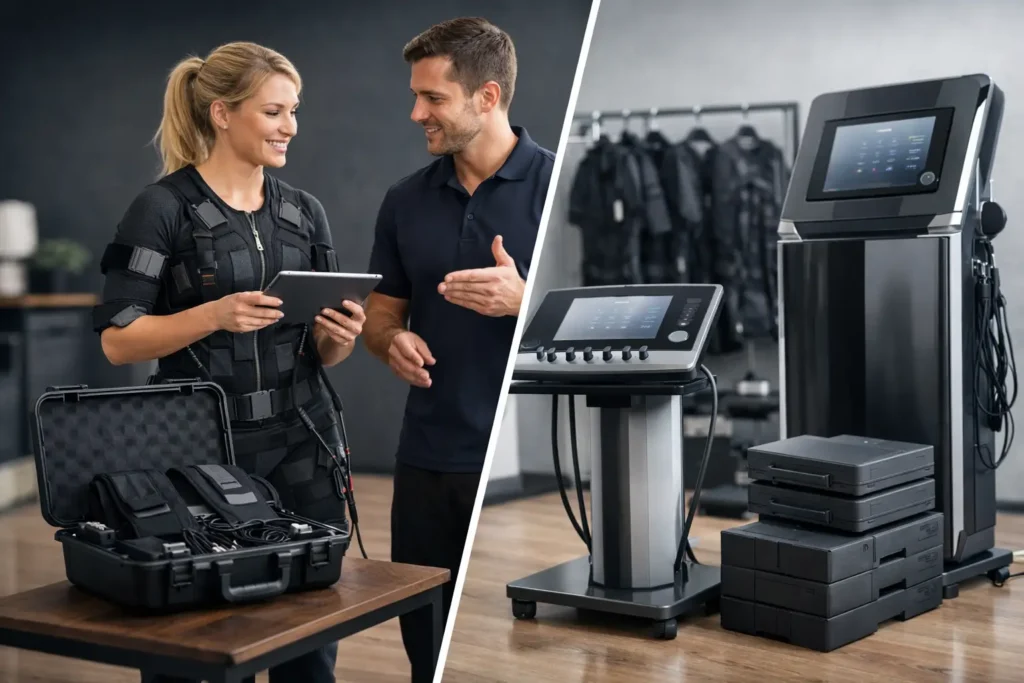

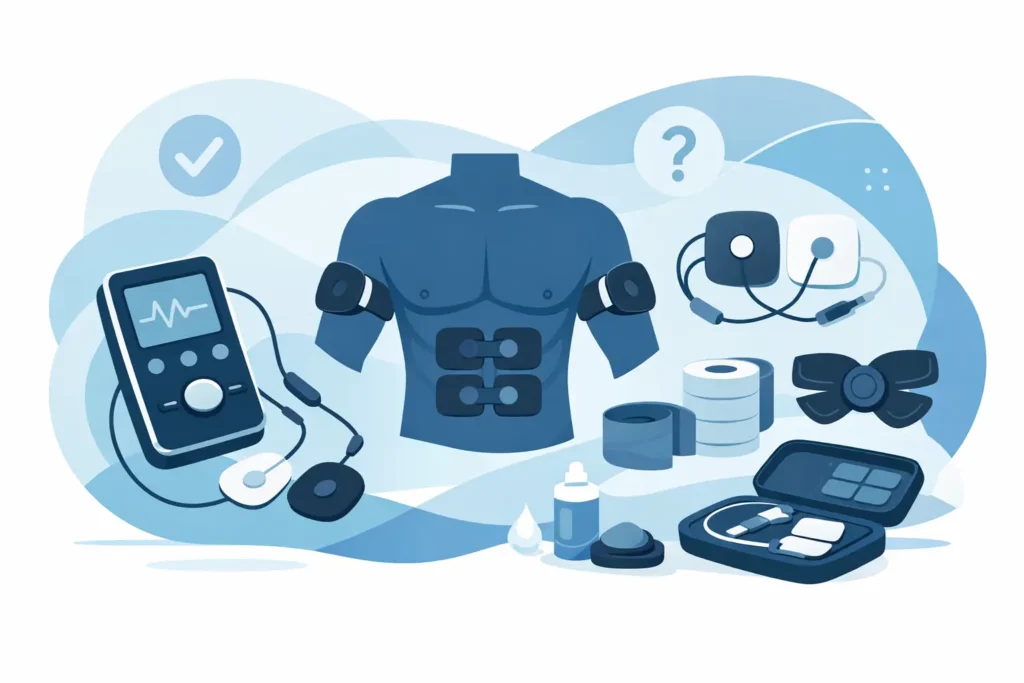
The wrong EMS setup usually does not fail in the demo. It fails three months later – when sessions are fully booked, consumables need replacing, and small hardware limitations start slowing down delivery. If you are evaluating an ems stimulator, muscle stimulator, ems controller, ems electrodes, ems accessories package for commercial use, the real question is not just performance. It is whether the full system supports the business model you want to run profitably.
For operators, equipment decisions affect more than training quality. They shape mobility, session capacity, client experience, staffing needs, maintenance costs, and how quickly you can recover your investment. That is why product selection should be tied directly to commercialization, not handled as a separate technical purchase.
What an EMS stimulator setup really means in business terms
Many buyers start by comparing output levels or design. That matters, but commercial success depends on how the entire system works together in daily operations. The ems stimulator is only one part of the delivery chain. The muscle stimulator must provide reliable performance across repeated client sessions, the ems controller needs to be intuitive under pressure, and the ems electrodes and ems accessories have to support efficient turnover without driving unnecessary replacement costs.
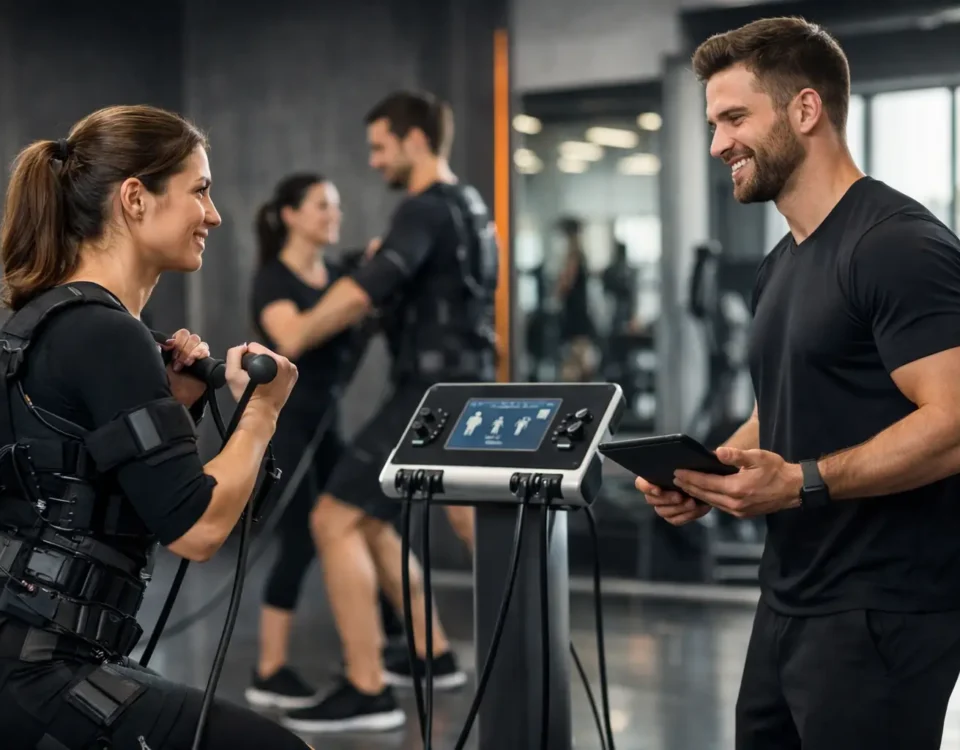
In practice, operators are not buying a single device. They are buying a service model. A mobile personal trainer needs portability, low setup time, and manageable consumable costs. A studio operator needs repeatability, staff-friendly controls, and a system that can support multiple sessions per day without operational friction. A premium wellness concept may prioritize wireless delivery, cleaner aesthetics, and a more elevated client experience.
This is where many comparisons go wrong. They evaluate features in isolation instead of asking how those features affect revenue and delivery.
How to assess an EMS stimulator, muscle stimulator, and EMS controller
The first filter is simple: what kind of business are you building? If your entry point is low-investment and service-led, a compact system that supports mobile 1-to-1 training may be the strongest fit. It keeps overhead lower and allows you to test your market before scaling. If you are opening a fixed location, the better choice may be a setup designed for higher operational consistency and easier team onboarding.
The ems stimulator itself should be judged on reliability, adjustment precision, and suitability for your session format. A system that performs well for occasional use may become a problem in a commercial schedule. You want stable output, predictable operation, and controls that do not create delays between clients.
The muscle stimulator experience also matters from a sales perspective. Clients may not understand technical specifications, but they notice session quality, comfort, and consistency. If intensity feels uneven, if setup takes too long, or if trainers struggle with adjustments, the client experience drops fast. That affects retention, referrals, and your ability to position the service at a premium price.
Then there is the ems controller. This is often underestimated. A controller should allow the operator to make quick, confident adjustments during the session without breaking flow. In a busy studio, every extra minute spent troubleshooting or reconfiguring reduces throughput. In a mobile format, a complicated controller creates friction where simplicity should be your advantage.
Good control design is not a luxury. It is an operational tool.
Why EMS electrodes and EMS accessories influence profitability
When operators calculate investment, they often focus on the core hardware price and overlook ongoing operational costs. That is a mistake. EMS electrodes and EMS accessories directly affect margin over time.
Electrodes need to deliver consistent conductivity, hold up under repeated use where applicable, and fit your service format. If they degrade too quickly, lose performance, or require frequent replacement, your cost per session rises. That may not look serious in month one, but across a year of regular delivery, it becomes a real financial variable.
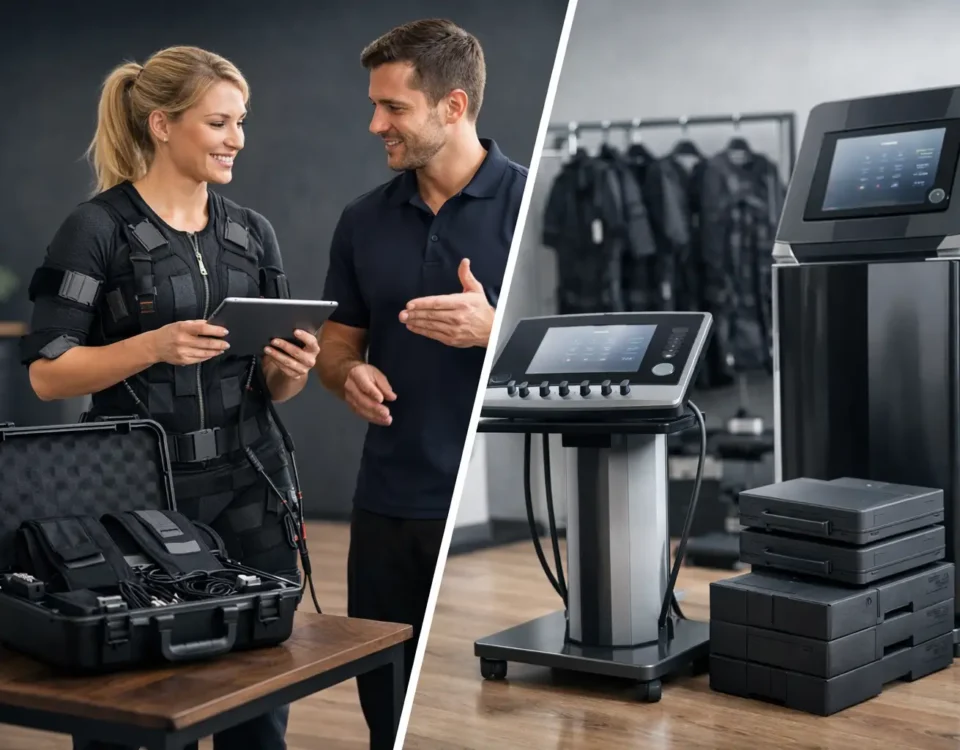
Accessories matter for the same reason. Garments, cables, connection components, charging systems, spare parts, transport solutions, and hygiene-related items all influence how smoothly your business runs. Cheap accessories often create expensive interruptions. A canceled session due to missing parts or unreliable components does more than cost one booking. It damages credibility.
For B2B buyers, the smarter question is not, “What is the lowest entry price?” It is, “What combination of hardware, accessories, support, and replacement access protects my revenue?”
Matching the equipment to your operating model
There is no universal best system. There is only the right system for the commercial model you intend to scale.
Mobile EMS businesses
A mobile operator usually benefits from lower upfront risk, faster launch, and direct access to clients without the cost of a full studio. In this model, portability and ease of setup are critical. The ems stimulator and ems controller should be compact, dependable, and quick to deploy. Accessories should support transport and fast turnaround between appointments.
The trade-off is capacity. Mobile businesses often begin with strong margins and lower overhead, but session volume is tied to travel time and the founder’s schedule. That makes equipment reliability even more important. If you lose a day to technical issues, you lose a meaningful share of weekly revenue.
Studio EMS businesses
A studio model changes the equation. Here, capacity, workflow, and staff consistency become central. Your muscle stimulator setup needs to perform under repeated daily use, and your ems electrodes and ems accessories need to support higher throughput without creating operational drag.
This model usually requires more planning upfront, but it can scale more efficiently with the right structure. Operators can increase bookings, train staff into a repeatable system, and build stronger recurring revenue. In a studio environment, support, warranty coverage, and spare parts access are not extras. They are part of business continuity.
Premium wireless and boutique concepts
Premium concepts compete on experience as much as results. Clients expect convenience, aesthetics, and a higher-end service environment. In these cases, dry wireless systems and refined accessories can strengthen positioning and pricing power.
The investment is typically higher, so the model depends on a market willing to pay for exclusivity and convenience. It can be a strong fit for luxury wellness, longevity, boutique fitness, or VIP personal training, but only if the commercial offer is matched to the local customer profile.
What serious buyers should ask before committing
Before choosing a system, ask practical questions that connect equipment to delivery.
How quickly can the business launch? What training is provided for operators or staff? What happens if a component fails? How easy is it to reorder electrodes or replace accessories? Is the system suitable for your intended pricing model and session volume? Can you start with rental or rent-to-own if you want to protect cash flow?
These are not secondary considerations. They are part of the buying decision itself.
A good equipment partner should help you compare not only devices, but business paths. That includes investment level, use case, client type, expected utilization, and support requirements. For many new entrants, financing flexibility is what turns an attractive concept into a launchable one. For more established operators, the priority may be scalability, warranty protection, and the confidence that spare parts and onboarding support are already in place.
That is where a consultative approach becomes valuable. Companies like EMS Leader position the equipment package inside a broader business framework, which is often what first-time and scaling operators actually need.
The best purchase is the one you can operate well
There is a temptation to buy for aspiration rather than reality. A premium setup can look compelling, but if your market, pricing, or delivery model is not ready for it, the numbers can become tight. The same is true in reverse. A lower-cost system may get you started, but if it limits throughput, creates inconsistency, or needs frequent replacement, it can hold back growth.
The strongest commercial decision usually sits in the middle of ambition and practicality. Choose an ems stimulator, muscle stimulator, ems controller, ems electrodes, and ems accessories setup that fits how you will actually operate in the next 12 to 24 months. Then make sure the support structure behind it is strong enough to keep the business moving when demand increases.
A serious EMS business is not built on equipment alone. It is built on equipment that can be sold, delivered, maintained, and scaled with confidence. That is the standard worth buying for.