
A dry wireless EMS versus wired comparison is not simply a technology choice. It determines where you can operate, how your sessions feel for clients, how your team manages appointments, and the type of service you can credibly sell. For an operator building an EMS business, the right answer depends less on what appears more advanced and more on the business model you intend to run.
A mobile trainer, a high-volume EMS studio, and a boutique wellness concept have different operational needs. Choosing the system first and defining the commercial model later can create avoidable friction. Start with the client journey, available space, staffing plan, and target price position. Then select the EMS format that supports them.
Dry Wireless EMS Versus Wired: The Business Difference
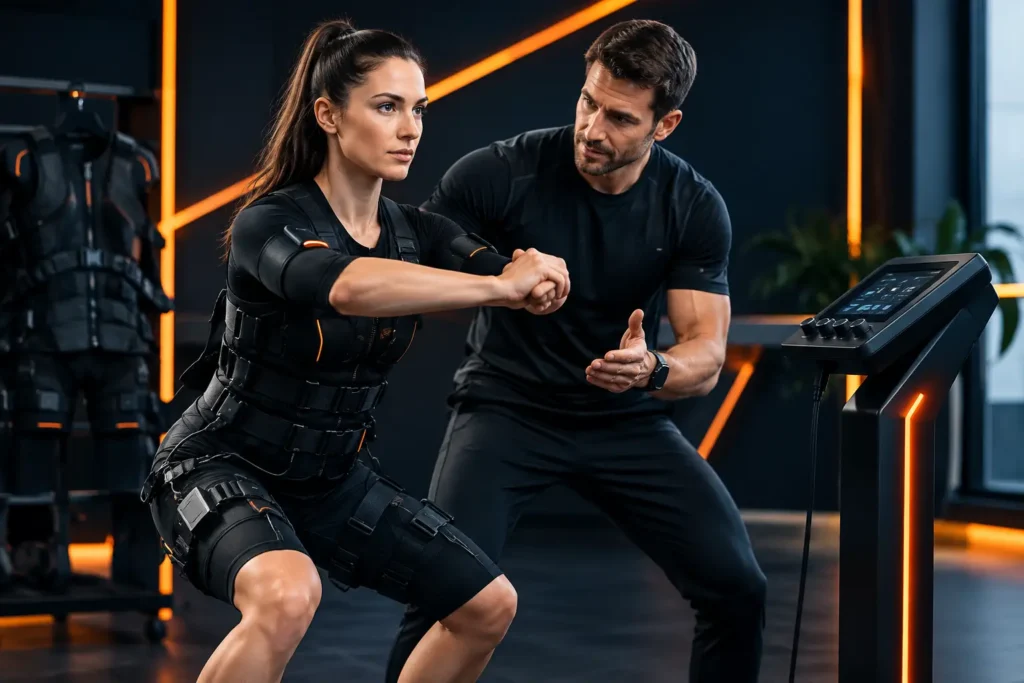
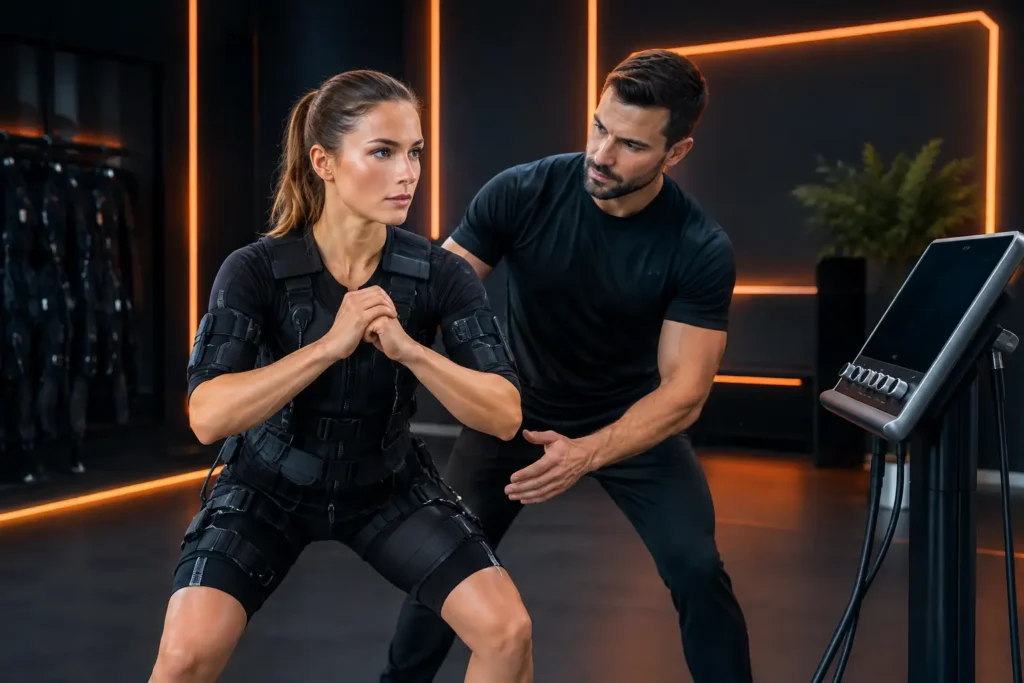
Wired EMS systems connect the training suit or electrodes to a central control unit through cables. This format is commonly associated with structured studio sessions, where the trainer works from a fixed training area and controls client programs from a central position.
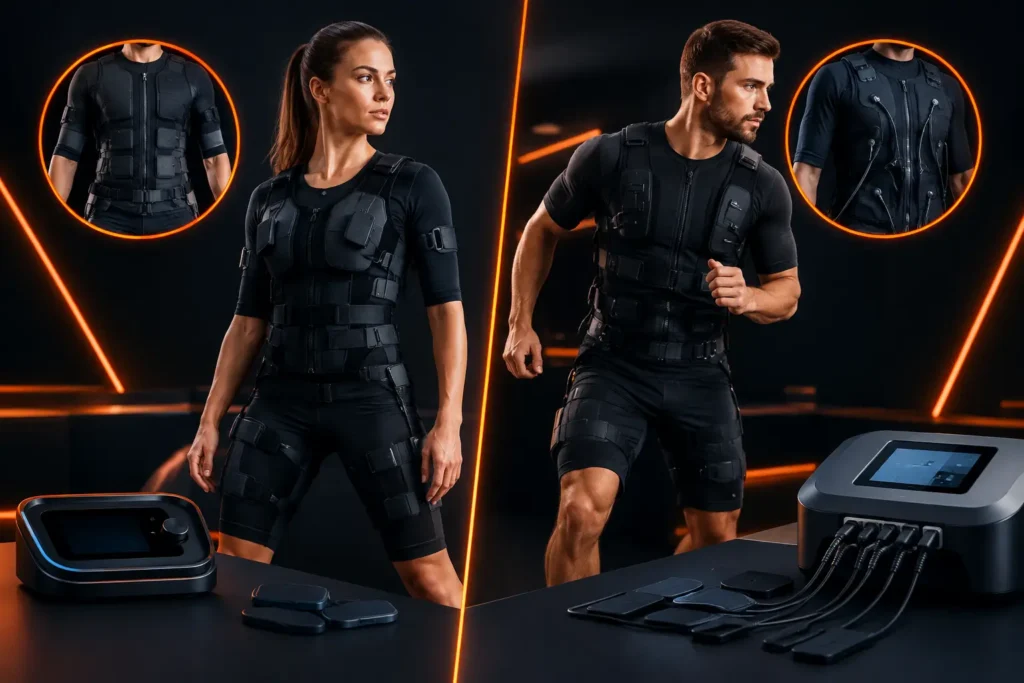
Dry wireless EMS removes the physical cable connection between the user and central equipment. Depending on the specific system and garment design, this can support a cleaner training environment and greater freedom of movement. Dry EMS garments are designed to be used without the traditional water-based preparation associated with wet electrode systems, although every system has its own operating instructions, fitting process, and care requirements.
The key distinction is commercial. Wired EMS usually favors consistency, controlled station-based delivery, and efficient multi-client operations. Dry wireless EMS can favor mobility, presentation, and a more premium, flexible session format. Neither approach is automatically better. Each creates a different operating model.
Compare the Operating Model Before the Hardware
| Decision area | Dry wireless EMS | Wired EMS | | — | — | — | | Training environment | Flexible for boutique rooms, private sessions, and selected off-site use | Best suited to a fixed, organized training location | | Client movement | No cables around the user during the session | Movement is managed within the cable range and training station | | Session presentation | Can support a clean, premium, technology-forward experience | Can support a focused, professional studio experience | | Setup process | Depends on garment and device workflow; dry garments may reduce wet preparation | Requires organized cable management and station readiness | | Scaling approach | Often aligned with lower-volume, higher-touch service positioning | Often aligned with repeatable studio processes and capacity planning | | Investment decision | Evaluate the premium concept, mobility needs, and garment replacement plan | Evaluate station count, space layout, and planned client throughput |
This comparison is directional, not a substitute for reviewing the specifications of a specific device. Wireless does not automatically mean dry, and dry does not automatically mean wireless. Buyers should confirm the exact suit, electrode, controller, charging, cleaning, and operating requirements of the system under consideration.
When Dry Wireless EMS Makes Commercial Sense
Dry wireless EMS is often a strong fit when the client experience is central to the offer. Boutique wellness operators, personal training businesses serving private clients, luxury gyms, and VIP concepts may value the absence of cables around the user. The visual simplicity can matter in premium environments where comfort, privacy, and presentation influence perceived value.
It can also make sense for businesses that need operational flexibility. A trainer working across partner locations, private residences, hotels, yacht clubs, or corporate wellness settings may prefer a format that is easier to transport and deploy than a fixed wired station. That does not mean every mobile business needs dry wireless equipment. It means mobility should be treated as a revenue model, not an incidental feature.
Dry wireless systems require disciplined operations. Operators need a clear process for garment sizing, charging, inspection, cleaning, storage, and turnaround between appointments. If a premium suit is part of the client experience, it should be treated as a business asset with a maintenance plan, not as a secondary accessory.
When Wired EMS Is the Better Business Tool
Wired EMS often fits operators who want a dedicated studio workflow. In a fixed location, cables can be managed as part of the room design and staff routine. The trainer has a defined control point, the client stations are organized, and the operating process can be standardized across the team.
For studios planning scheduled one-to-one or small-group EMS sessions, this structure may be an advantage. Standardization supports staff training, session consistency, room planning, and day-to-day quality control. It can also make it easier to map capacity: how many stations are available, how long each appointment takes, and how the timetable should be staffed.
A wired solution is not less professional because it is less mobile. For many clients, a well-organized EMS studio with trained coaches, clear hygiene procedures, and consistent programming is exactly the experience they expect. The commercial value comes from reliable delivery, not from eliminating every visible cable.
Client Experience Is More Than the Suit
Prospective operators often focus on whether clients will prefer a dry garment or a wired setup. Clients care about comfort, confidence, privacy, professional guidance, and a session that feels organized. The equipment contributes to that experience, but it does not create it alone.
With dry wireless EMS, operators can position the service around convenience and a polished, uncluttered environment. This can be useful in a high-touch setting where appointments are intentionally limited and personalized. The business should support that positioning with appropriate onboarding, consultation, staff presentation, and a clear service flow.
With wired EMS, the client experience can be equally premium when the station is designed well. Cables should be safely managed, the room should feel intentional rather than improvised, and the trainer should explain the process with confidence. A client who understands what will happen during the session is more likely to feel comfortable regardless of the system architecture.
In either model, qualified staff and appropriate client screening matter. EMS sessions should be delivered according to the device instructions, relevant training standards, and any applicable local requirements. Operators should not position EMS as medical care or make unsupported body, rehabilitation, or health promises.
Capacity, Staffing, and Space Planning
The most profitable-looking system on paper can become inefficient if it does not match the daily operation. Before purchasing or renting equipment, map the workflow from arrival to departure. Include changing time, garment preparation, consultation, training, cleaning, charging or equipment checks, and rebooking.
A wired studio usually benefits from a deliberate floor plan. The location of the control unit, stations, mirrors, storage, changing areas, and trainer movement all influence how smoothly sessions run. If multiple clients will be trained at the same time, the staff-to-client ratio and supervision model need to be defined before launch.
Dry wireless EMS may reduce constraints around cable placement, but it does not remove the need for a systemized workflow. Battery management, suit inventory, sanitation procedures, storage, and device readiness become central operational tasks. A mobile operator also needs a transport checklist and enough time between locations to avoid late starts or rushed preparation.
The practical question is simple: where could your team lose minutes every day? Small delays in setup, cleaning, or equipment readiness can compound across a week of appointments. Choose the format that your team can operate consistently, not just the one that looks strongest in a product demonstration.
Positioning and Pricing Strategy
Equipment format should reinforce the service category you want to own. Dry wireless EMS can support a premium private-training or wellness position when paired with strong hospitality, experienced coaching, and a carefully designed environment. It may be particularly relevant for concepts where discretion, convenience, and visual presentation are part of the offer.
Wired EMS can support a specialist studio position built around regular appointments, professional coaching, and operational consistency. It can also work well inside an established gym, clinic-adjacent wellness business, or performance center where clients already expect a dedicated training zone.
Do not assume dry wireless equipment automatically justifies a higher price, or that wired equipment requires a lower price. Pricing should reflect your local market, staff expertise, session format, location costs, appointment duration, and total client experience. The stronger question is whether your offer gives clients a clear reason to choose it repeatedly.
Questions to Ask Before You Decide
Ask whether your business will operate from one fixed location or serve clients in multiple locations. Consider whether you are building a high-throughput studio or a lower-volume premium service. Define who will manage garment care, charging, cleaning, and equipment checks. Finally, decide what your first six months of staffing and appointment scheduling realistically look like.
Also review the supplier relationship. Equipment is only one part of the launch. Professional onboarding, trainer education, installation or setup guidance where applicable, access to spare parts, warranty terms, and after-sales support can affect how confidently you open and how quickly you resolve operational issues.
A dry wireless EMS system may be the right platform for a premium, mobile, or boutique concept. A wired system may be the more practical foundation for a disciplined studio operation. Build the decision around the business you can deliver well from day one, then let the equipment strengthen that promise.