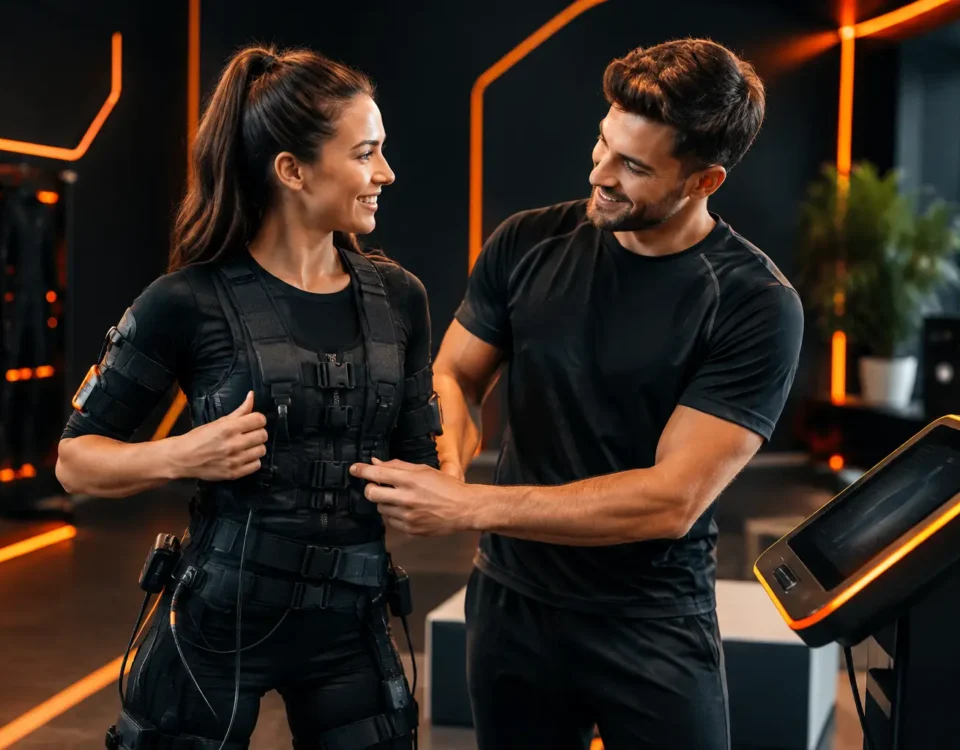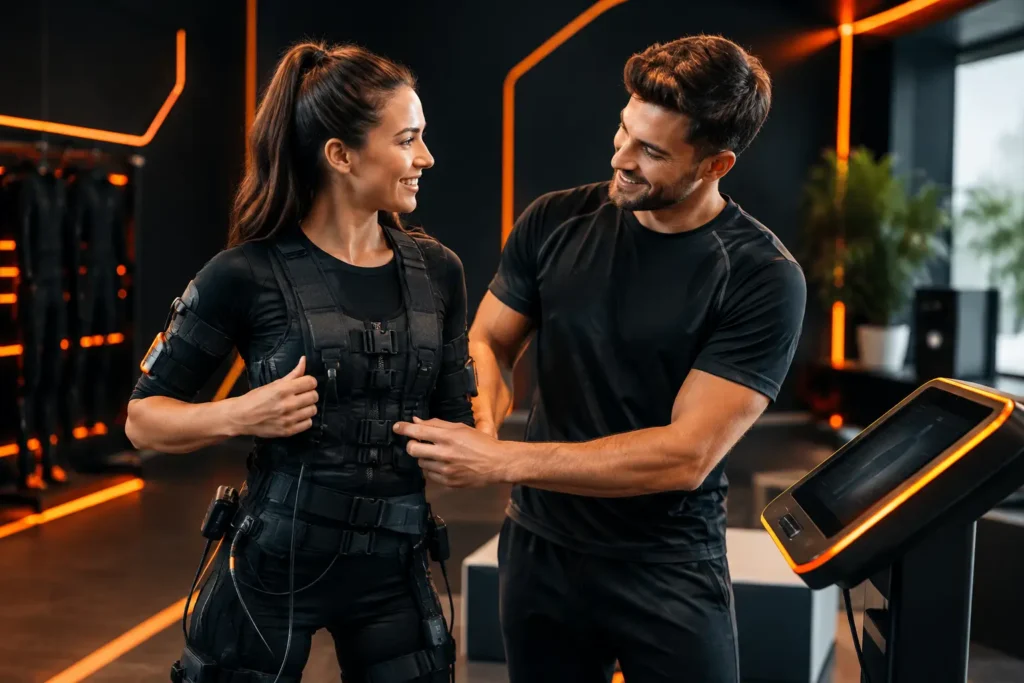


A fully booked calendar is not the only sign that a market is ready. The more useful signal is when clients actively seek focused, time-efficient, professionally guided wellness services and are willing to return for a structured experience. Wellness EMS demand is growing from that shift, but demand alone does not create a successful business. Operators still need the right format, service design, staffing plan, and commercial model for their local market.
For fitness and wellness professionals, the opportunity is not simply to add another machine to the floor. It is to build a differentiated service around guided EMS sessions, reliable appointment operations, and a client experience that justifies attention and repeat visits. That requires a practical view of where interest is strongest and what it takes to convert interest into sustainable revenue.
Why Wellness EMS Demand Is Rising
Many clients are no longer looking only for open gym access. They want scheduled sessions, professional accountability, and services that fit into limited time. EMS can fit naturally into that preference when it is presented as a coached fitness and wellness service, rather than as a shortcut or a replacement for conventional training.
The appeal also varies by customer. A busy professional may value appointment efficiency. A personal training client may want a more individualized format. A boutique wellness customer may be looking for privacy, comfort, and a premium environment. These are different buying motivations, yet all can support interest in EMS when the service is communicated clearly.
For operators, this creates a useful commercial distinction. A general gym membership competes largely on access and convenience. An EMS service can be positioned around coaching time, session structure, professional oversight, and a more personal client relationship. That may support a higher-touch business model, but it also raises expectations for staff quality, onboarding, hygiene, scheduling, and follow-up.
Demand is not identical in every market. A high-density city center, an established personal training community, a clinic-adjacent wellness location, and a luxury hospitality setting can each require a different offer. The strongest launch plans begin with the local customer, not the equipment catalog.
Where Wellness EMS Demand Converts Best
The most promising opportunity is usually found where the EMS format solves a recognizable business problem. For a trainer, it may create a more distinctive one-to-one service. For a gym owner, it may add a bookable offering without redesigning the entire facility. For a wellness entrepreneur, it may help create a focused concept with a premium appointment flow.
| Business format | Primary customer need | Operational priority | | — | — | — | | Mobile EMS | Personal coaching at a convenient location | Low-overhead setup, transport, and disciplined scheduling | | EMS studio | Repeatable coached sessions in a dedicated space | Capacity planning, staff consistency, and client retention | | Premium dry wireless EMS | Private, boutique, or VIP wellness experiences | Service presentation, comfort, privacy, and brand positioning |
Mobile EMS for lean market entry
Mobile EMS is often the most practical route for independent trainers testing a local market. It keeps the initial setup focused and allows the operator to build relationships directly with clients. The trade-off is that travel time can reduce the number of available appointments, so route planning and minimum booking standards matter.
This model works best when the operator already has a personal training client base, access to residential communities, corporate wellness contacts, or partnerships with complementary fitness and wellness providers. The business is built around the professional as much as the equipment. Clients are buying the session, guidance, and convenience.
Studio EMS for repeatable capacity
A studio model is designed for businesses that want a more controlled operating environment. It can support clearer scheduling, stronger visual branding, and a consistent client journey from consultation through repeat sessions. It also gives operators more opportunity to build staff processes rather than relying on one individual.
The trade-off is a larger operational commitment. Rent, staffing, local marketing, reception flow, changing areas, cleaning routines, and utilization all need attention. A studio should not be selected simply because it looks more established. It should be selected because the local market can support regular appointments and the operator has a plan to fill them.
Premium dry wireless EMS for differentiated concepts
Premium dry wireless EMS can suit boutique wellness spaces, luxury clubs, hospitality concepts, and private client environments where appearance, comfort, and service flow are central to the offer. The opportunity is differentiation, not a generic fitness add-on.
Here, the customer journey needs to match the positioning. Consultation, privacy, staff presentation, room design, and booking communication all influence whether the service feels premium. A high-end setup placed inside an unclear or inconsistent service model will not create premium demand by itself.
Demand Is Not the Same as Market Readiness
Interest can be easy to overestimate. A social media poll, a few inquiries, or positive reactions from existing clients are useful early signals, but they do not prove that people will book and return. Before investing, operators should validate the commercial basics.
Start by identifying the exact audience. Are you targeting time-conscious professionals, existing personal training clients, gym members, wellness consumers, or a premium private segment? Then define the service in simple terms: what does a session include, who delivers it, where does it happen, and why would the client book again?
Next, review the competitive environment without assuming that competitors are a negative. Existing EMS providers can indicate that customers understand the category. The real question is whether your offer will be meaningfully different through location, coaching quality, mobility, service design, operating hours, or client segment.
Finally, assess operational readiness. EMS services require trained professionals, appropriate screening, adherence to device instructions, and clear client communication. EMS is not medical care and should never be presented as a treatment, rehabilitation substitute, or guaranteed body-transformation solution. A credible operator sets expectations responsibly and refers clients to qualified healthcare professionals when appropriate.
Match the Investment Model to the Demand
The right equipment arrangement is the one that fits your launch stage and risk tolerance. A first-time operator may value rental or rent-to-own options that preserve flexibility while the service model is being proven. An established studio with predictable demand may prefer a direct purchase approach aligned with a longer-term expansion plan.
This decision should be based on more than the monthly equipment cost. Consider training, installation, accessories, maintenance expectations, spare parts access, warranty coverage, available space, staffing, and the time required to launch. An inexpensive starting point can become costly if it lacks the support needed to operate confidently. Conversely, a larger setup can be premature if the business has not yet demonstrated demand.
A commercial consultation should answer practical questions: How many sessions can realistically be delivered each week? Who will conduct them? What happens when a staff member is unavailable? How will leads be converted? What does the business need before opening day? These questions turn wellness EMS demand into an operating plan.
Build an Offer Clients Can Understand
The strongest EMS offers are simple. Clients should immediately understand that they are booking a professionally guided session, not buying a vague promise. Avoid leading with technical specifications or exaggerated outcome claims. Lead with the experience, the structure, and the professional support.
A clear offer may include an initial consultation, a guided session format, practical scheduling options, and a defined follow-up process. Whether you sell single sessions, recurring appointments, or membership-style packages depends on your business model and local buying behavior. The essential point is consistency: the offer clients see in marketing should match the experience they receive on site.
Retention deserves as much attention as lead generation. If new clients arrive but do not return, the issue may be onboarding, staff communication, booking convenience, service environment, or a mismatch between the initial message and the real experience. Demand is protected through delivery.
Track the Metrics That Show Real Demand
Vanity metrics can create false confidence. Follower growth and video views may support awareness, but they do not show whether an EMS operation is commercially viable. Review a small set of operating measures every week:
- Qualified inquiries and consultation bookings
- Consultation-to-first-session conversion
- Repeat booking behavior and active clients
- Session capacity used by each trainer or room
- Lead source, including referrals, partnerships, and paid marketing
These numbers show where the business is gaining traction and where friction is building. For example, strong inquiries with weak consultation conversion may point to unclear pricing communication or an offer that is too broad. Full trainer schedules with limited profitability may point to a capacity or scheduling issue. Data should guide the next decision, not simply confirm a preferred idea.
Support Is Part of the Commercial Model
Equipment matters, but operators rarely struggle because they lack a feature list. The more common challenges are launch delays, insufficient staff confidence, inconsistent session delivery, and uncertainty about how to market the service responsibly. That is why onboarding, training, setup assistance, after-sales support, and business planning have practical value beyond the initial transaction.
For operators serving multiple locations or planning regional growth, dependable access to support and spare parts also becomes an operational consideration. Downtime affects client trust, staff schedules, and revenue continuity. A business plan should account for the full service ecosystem, not just the initial purchase decision.
Wellness EMS demand rewards operators who make the service easy to understand, easy to book, and consistently professional to experience. Start with the customer segment you can serve well, select a model that matches your real capacity, and build the operational discipline that gives clients a reason to come back.