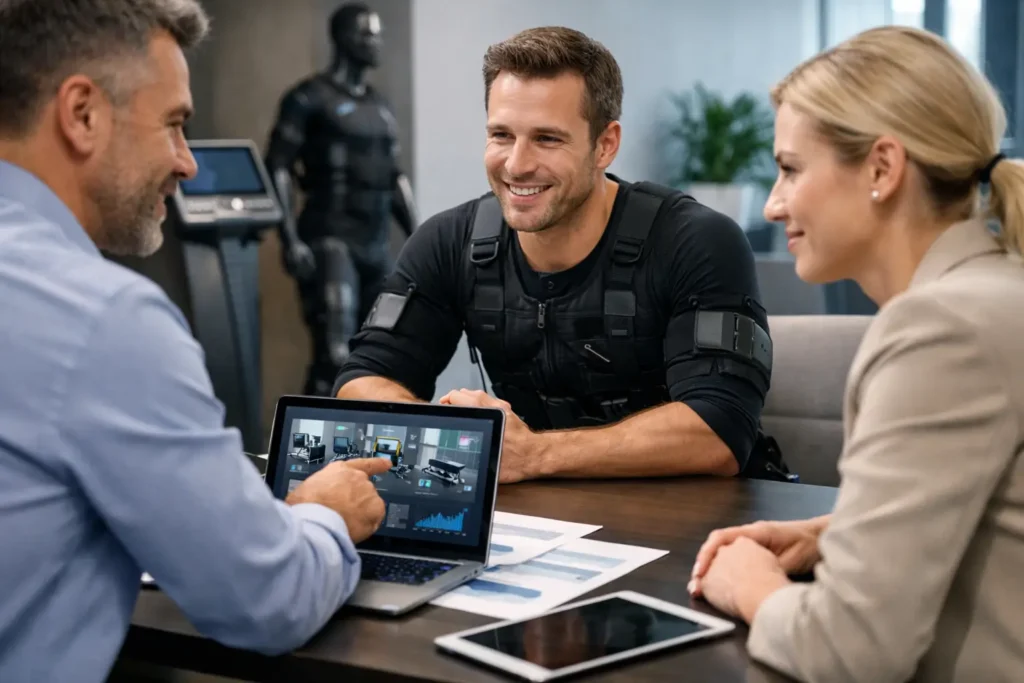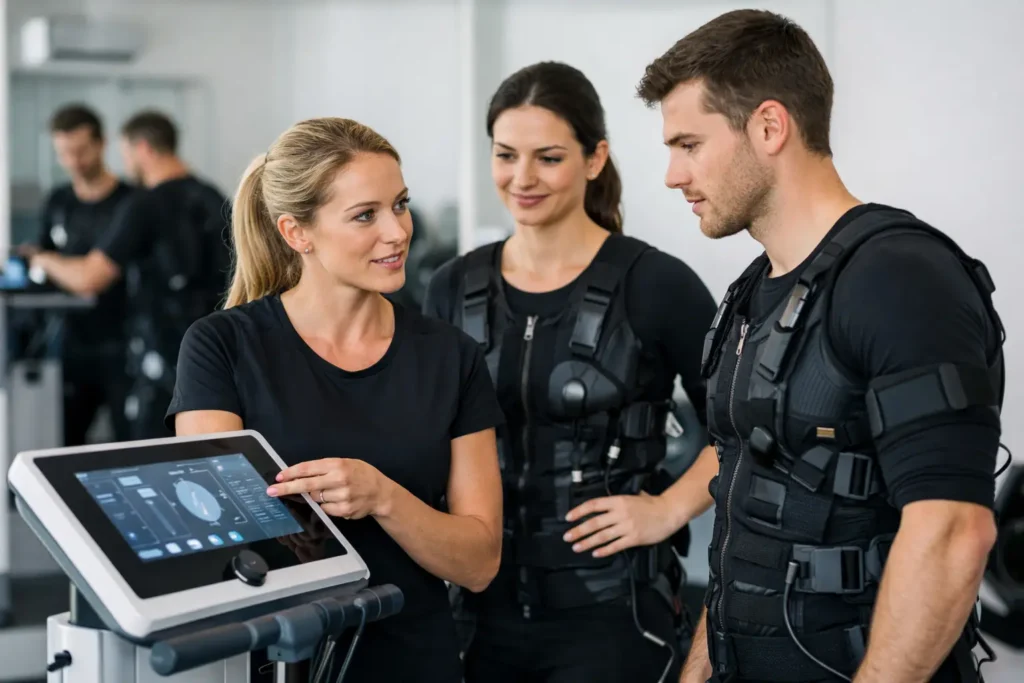


A new EMS business can look ready long before it is operationally ready. The suits are in place, the space is prepared, and the first client bookings are waiting. But EMS compliance is what determines whether that launch can be run with consistency, confidence, and clear accountability.
For a mobile operator, a boutique studio, or a multi-station fitness concept, compliance is not one certificate on a wall. It is a working system that connects equipment documentation, staff training, client screening, maintenance, hygiene, and local business requirements. Build it early and it becomes part of a professional client experience. Leave it until later and routine decisions become avoidable risks.
What EMS Compliance Means in Practice
EMS compliance sits at the intersection of equipment, operations, and local regulation. The exact requirements differ by country, region, and intended use of the equipment, so there is no single checklist that applies everywhere. An operator must verify the rules that apply in the market where services are delivered, including requirements for electrical equipment, consumer safety, data handling, insurance, premises, and staff qualifications.
The practical goal is simpler: be able to show what equipment you use, why it is appropriate for the intended setting, who is authorized to operate it, how clients are screened, and what happens when something is not right.
This matters commercially as well as operationally. High-value clients, landlords, insurers, clinic partners, and potential investors all look for signs that a business is organized. Clear records and repeatable procedures support trust. They also reduce dependence on one founder who keeps every process in their head.
Start With the Equipment File
Every EMS unit in your business should have a complete equipment file. This is the baseline record that makes maintenance, staff training, insurance discussions, and incident follow-up far easier.
Keep the manufacturer documentation, user instructions, conformity and safety documentation applicable to your market, warranty information, serial numbers, purchase or rental agreement, and service history together. If a studio has several devices, label them clearly and assign each unit its own record.
Do not assume that a device is suitable simply because it can be purchased or transported into a market. Suitability depends on its documentation, electrical specifications, intended use, and the local framework under which you operate. Ask suppliers direct questions before committing: What documentation is supplied? What servicing is required? Are spare parts available? What operator training is included? Who supports the unit if it develops a fault?
For entrepreneurs using rental or rent-to-own models, clarify where responsibility sits for routine checks, repairs, replacement parts, and reporting defects. Flexible financing can reduce the barrier to entry, but it should not create uncertainty around operational responsibility.
Daily checks are not optional
A short pre-session inspection is one of the most valuable habits in an EMS operation. It should cover the condition of cables, connectors, electrodes, garments, fasteners, charging components, and control interfaces. Check for visible damage, unusual behavior, moisture where it should not be, and incomplete charging.
If something appears damaged or performs inconsistently, remove it from service. Do not let a busy schedule turn a questionable device into a client-facing problem. Record the issue, identify the unit, and follow the supplier’s service process.
Train Operators for Decisions, Not Just Settings
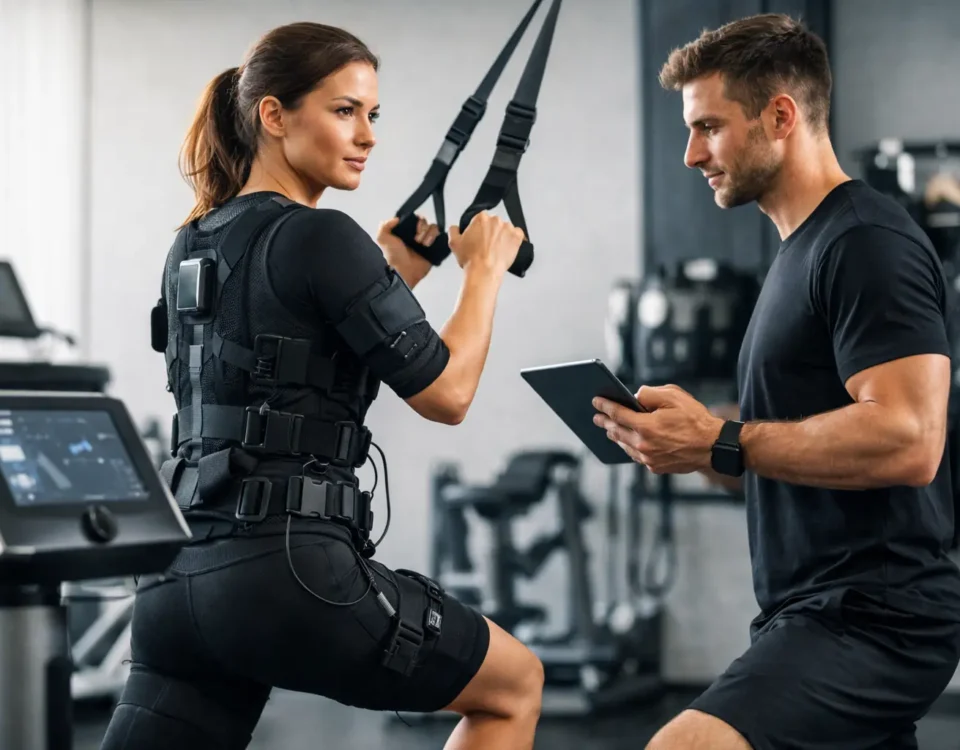
An EMS system can be easy to operate technically while still requiring sound judgment. A quality onboarding process teaches more than how to select intensity or start a program. It prepares staff to screen clients, explain the session, recognize when to stop, document concerns, clean equipment correctly, and work within the boundaries of their role.
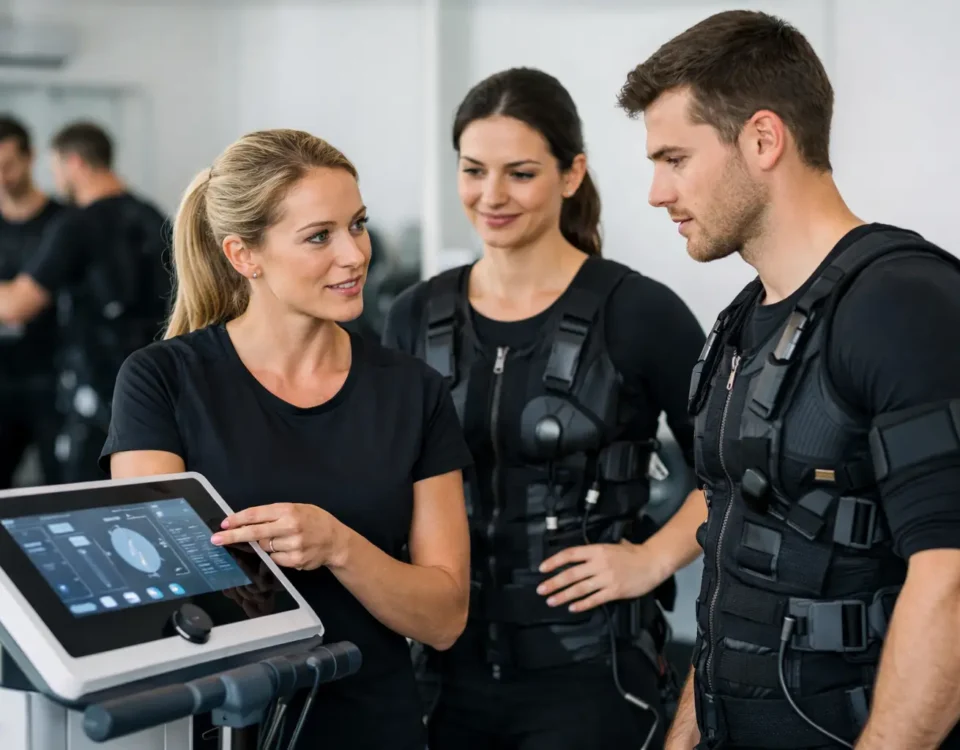
Training should be role-specific. A founder who manages one-to-one mobile sessions needs a different level of operational structure from a studio manager supervising several trainers and multiple stations. The core standard, however, remains the same: no team member should operate independently until they have completed training, demonstrated the required procedures, and been formally authorized.
Create a training record for every operator. Include the date, trainer, equipment model, subjects covered, observed competency, and refresher date. This is especially useful when you add staff, open a second location, or work with freelance trainers.
Avoid turning staff into diagnosticians. EMS professionals should use clear screening and escalation procedures, not make medical assessments or treatment claims. When a client reports a concern that falls outside your service scope, the correct response is to pause, document, and refer them to an appropriate healthcare professional.
Client Screening and Consent Protect Both Sides
The first session should never begin with a rushed waiver. Client onboarding needs time, privacy, and a process staff can follow consistently.
Your intake procedure should collect the information necessary to determine whether participation is appropriate under your operating policy and manufacturer guidance. It should also identify when a client needs to seek medical advice before participating. The specific questions and exclusions should be reviewed against local requirements and kept current.
Informed consent is separate from screening. A strong consent process explains what the session involves, what the client is expected to communicate during training, how intensity is adjusted, and the circumstances in which a session may be paused or ended. Use language clients can understand. A signature without a clear conversation is weak operational practice.
Privacy is part of compliance, too. Intake forms may contain sensitive personal information. Limit access to staff who need it, store records securely, define retention periods, and avoid collecting more information than your operation genuinely requires. Digital systems are convenient, but only when permissions, backups, and staff access are properly managed.
Build a Repeatable Studio Control System
The best EMS compliance system is not a thick binder nobody opens. It is a set of procedures that fit into the actual rhythm of your business: opening checks, client intake, session delivery, cleaning, maintenance, and closing tasks.
A practical control system should define these responsibilities:
- Equipment inspection, cleaning, charging, and fault reporting
- Client screening, consent collection, and session notes
- Staff authorization, refresher training, and incident escalation
- Garment laundering, hygiene standards, and consumable replacement
- Data access, record retention, and secure disposal of client information
For a mobile EMS business, portability adds another control point. Equipment can be exposed to more frequent movement, vehicle storage, changing power sources, and inconsistent training environments. Use protective transport cases, keep a loading and unpacking routine, and inspect equipment before and after travel.
For a studio model, the challenge is throughput. More sessions and more operators can create gaps between appointments. Set realistic turnaround times for garment handling, cleaning, charging, and documentation. A full schedule is valuable only when your team can deliver each session to the same operational standard.
Premium dry wireless concepts require their own discipline. The client experience may feel more refined, but records, operator competence, cleaning procedures, and equipment checks remain just as necessary. Premium positioning raises expectations for presentation and process.
Keep Maintenance and Incident Records Useful
Maintenance logs are often treated as paperwork for worst-case situations. In reality, they protect uptime. A clear record helps identify recurring issues, plan service before peak periods, and show whether a fault is linked to a specific device, cable, garment, or operating condition.
Log routine inspections, cleaning or replacement actions, software updates if applicable, service visits, repairs, and periods when a device was removed from use. Follow manufacturer instructions for servicing intervals and replacement components. Improvised repairs may create more risk than downtime.
You also need an incident process, even if you never expect to use it. Staff should know how to stop a session, support the client appropriately, record the facts without speculation, preserve relevant equipment information, and notify the responsible manager. Review incidents and near misses for process improvements rather than treating every report as a staff failure.
Do Not Let Marketing Create a Compliance Problem
Your marketing claims must match your service scope, training, and evidence. Avoid language that presents EMS sessions as medical treatment, promises specific body changes, or guarantees financial or fitness outcomes. The strongest commercial message is often more credible: explain the format of the session, the quality of coaching, the convenience of the model, and the professional standards behind the experience.
The same rule applies to sales conversations. If you are selling memberships, packages, or corporate services, set expectations clearly about scheduling, cancellation, suitability screening, and what clients can expect from an individual session. Clear communication reduces disputes and helps your team deliver a consistent experience.
Make Compliance Part of Your Launch Plan
Before opening, assign one person to own the compliance calendar. That person does not need to perform every task, but they should know when training refreshers, maintenance reviews, document updates, and policy checks are due. Review the system quarterly, and revisit it whenever you add equipment, change locations, introduce a new service format, or hire staff.
A consultative equipment partner can shorten this setup phase by providing onboarding, operator training, documentation guidance, service support, and a clear handover process. EMS Leader approaches equipment selection as a business decision because the right model must fit your client capacity, investment plan, operating environment, and ability to maintain standards over time.
Compliance is not the part of an EMS business that clients post about first. It is the reason they can walk into a session, see a professional operation, and feel that every detail has been handled.