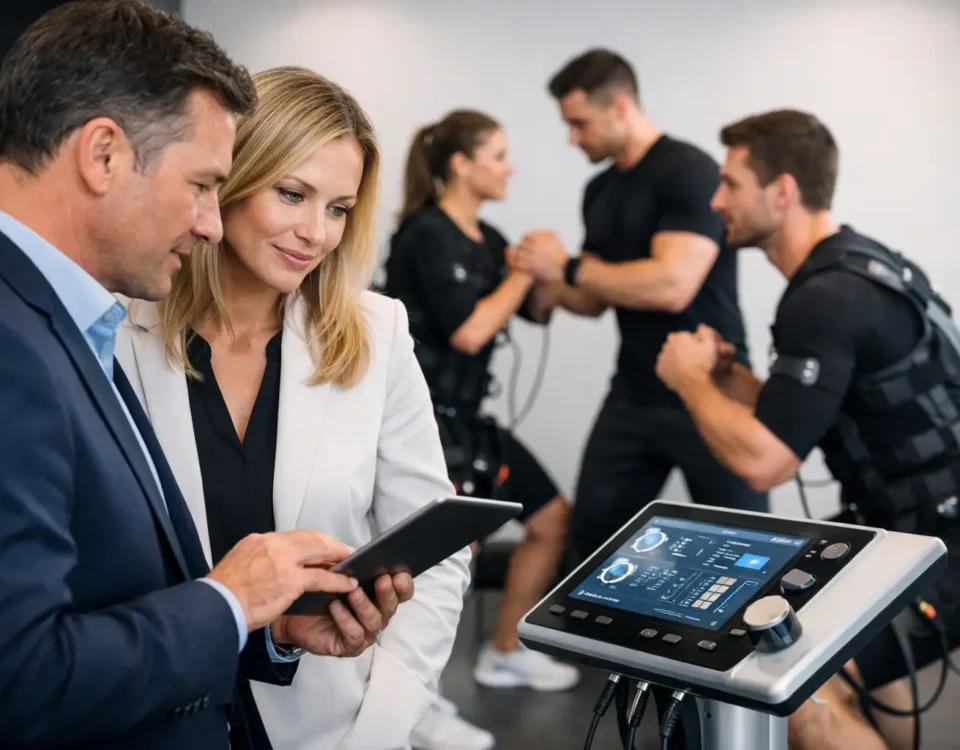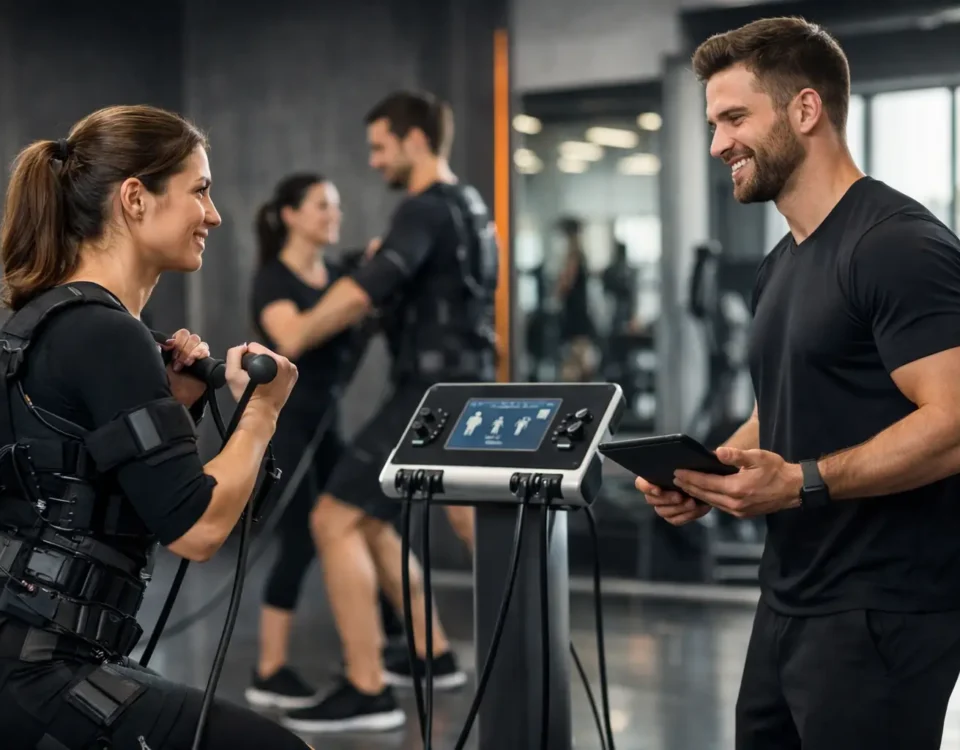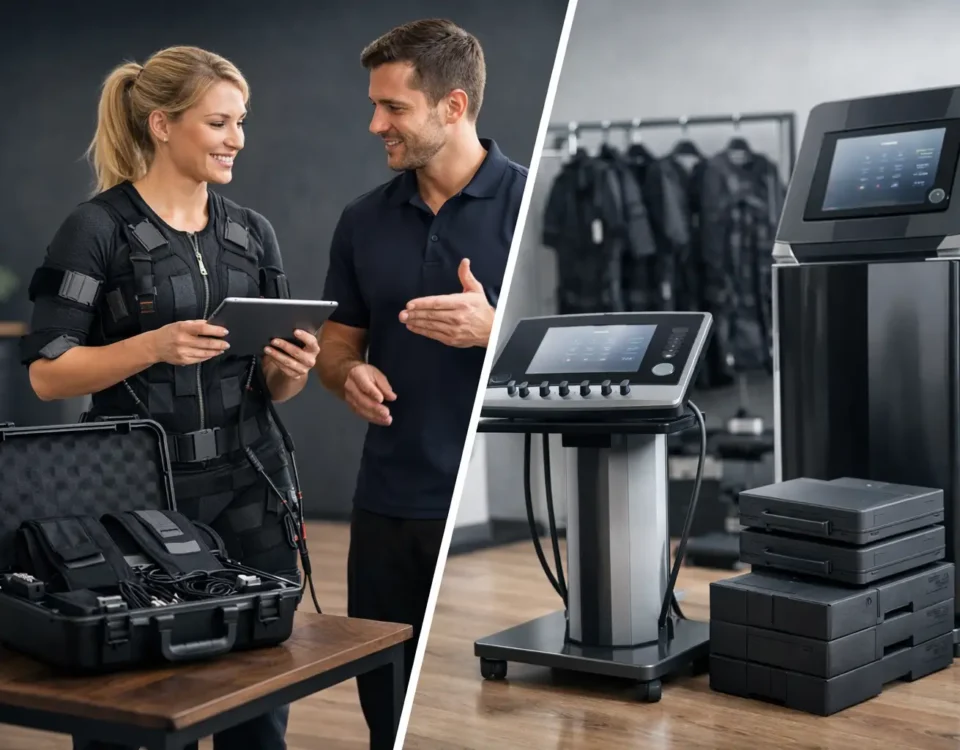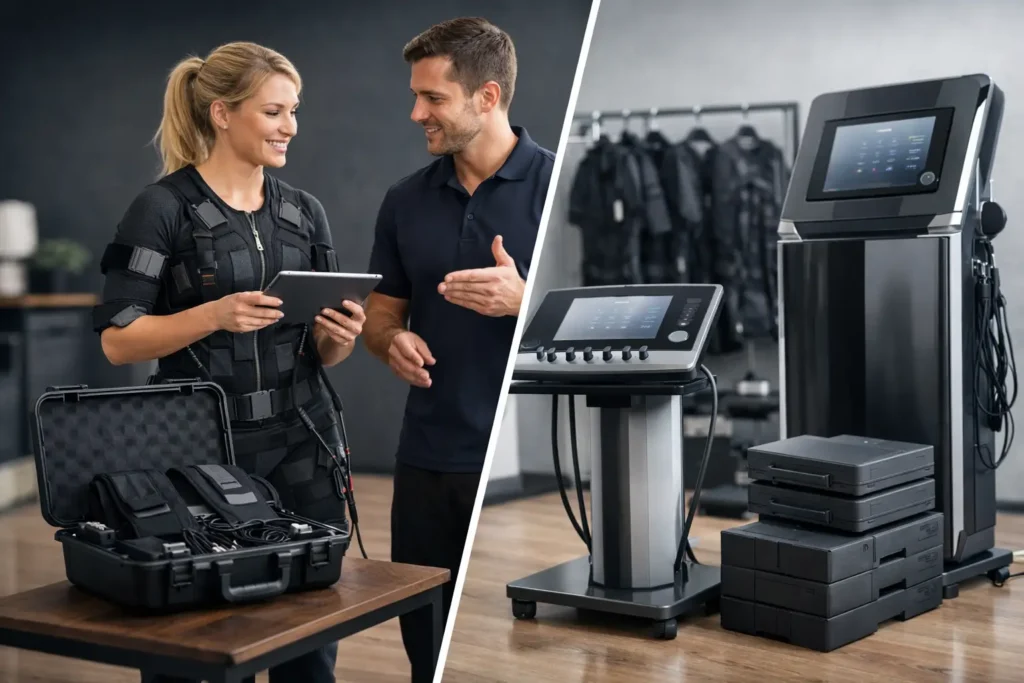

A delayed launch usually has nothing to do with ambition. It usually comes down to setup. The wrong device mix, unclear space planning, weak onboarding, or missing operational guidance can push an EMS business back by weeks or months. That is why EMS equipment setup support matters so much for operators who want to start strong and generate revenue quickly.
If you are evaluating EMS for a mobile service, a studio concept, or a premium wellness offer, setup support is not an extra. It is part of the commercial foundation. The equipment itself matters, but the way that equipment is configured, installed, introduced to staff, and aligned with your business model has a direct impact on launch speed, service quality, and payback.
What EMS equipment setup support should actually include
Many buyers think setup support means delivery and a quick technical handoff. For a commercial EMS business, that is too narrow. Real support should help you move from equipment acquisition to operational readiness.
That usually starts with model fit. A solo trainer running mobile sessions does not need the same setup as a multi-coach studio or a luxury wellness concept offering dry wireless EMS. Each model has different requirements for portability, session throughput, charging routines, garment handling, staff workflows, and client experience.
From there, setup support should cover equipment configuration, practical onboarding, and launch preparation. That means making sure the system is ready for your service format, your team understands how to use it, and your operation is built around realistic usage patterns rather than guesswork.
The strongest providers also connect setup to business decisions. If your pricing strategy depends on premium positioning, your setup has to reflect that. If your margin depends on high session volume, the layout and workflow need to support efficient turnover. Technical setup and commercial setup are closely linked.
Why setup support affects profitability
Operators often focus on hardware cost first. That is understandable, but it can be misleading. A lower upfront equipment price does not automatically mean a better business decision if poor setup slows launch, creates staff confusion, or causes underuse.
Good EMS equipment setup support reduces friction at the points where businesses typically lose time and money. It shortens the ramp-up period, helps avoid avoidable mistakes, and gives owners more confidence in daily operations. That has practical value. Every week you launch earlier and operate more smoothly improves your revenue trajectory.
There is also a retention angle. Clients experience the business through session quality, professionalism, consistency, and environment. If the setup creates awkward workflows, unreliable preparation, or visible operational gaps, it affects perceived value. That matters even more in premium and boutique concepts, where clients are paying for a polished service, not just electrical muscle stimulation.
Setup needs change by business model
Mobile EMS operators need lean, reliable deployment
For mobile EMS, the priority is portability and simplicity. You need a setup that is easy to transport, fast to prepare, and dependable across different client locations. Support should focus on what helps a solo operator stay efficient: device readiness, accessory organization, charging discipline, transport protection, and a session workflow that does not waste time.
This model usually has lower startup cost and faster market entry, but it also leaves less room for operational inefficiency. If setup is messy, the operator feels it immediately in travel time, prep time, and client scheduling.
Studio EMS requires throughput and team consistency
In a studio environment, setup support becomes more operationally complex. Now you are thinking about coach handoff, client flow, equipment rotation, garment management, cleaning routines, and station planning. A studio setup has to support repeatability.
This is where many growing businesses hit avoidable problems. They buy enough equipment to open, but not enough structure to scale. If one coach runs sessions differently than another, or if the layout creates bottlenecks between appointments, revenue capacity gets limited by process instead of demand.
Premium dry wireless concepts need presentation as well as performance
A premium EMS offer has different commercial pressure. Clients are often buying convenience, discretion, and experience as much as training outcomes. Setup support should reflect that.
That includes the way equipment is staged, stored, charged, and introduced in-session. The service has to feel controlled and high value. In this segment, visual clutter, slow preparation, or inconsistent delivery can weaken pricing power. Support should help align the technical system with the brand experience you want to sell.
What to evaluate before you commit
The quality of EMS equipment setup support is easier to judge when you ask commercial questions instead of just technical ones. Start with launch readiness. How quickly can you realistically begin operating once the equipment is delivered? If there is staff training involved, is it integrated into the setup process or left for later?
Then look at operational continuity. What happens if you need spare parts, replacement components, or troubleshooting support after launch? A setup that works on day one but leaves you exposed later is not a complete solution.
It also helps to ask how the provider supports decision-making. Are they helping you choose a system based on your business model, target pricing, and growth plan, or simply selling the equipment they have available? That difference matters. Commercial fit is often the line between a system that performs well on paper and one that performs well in the market.
Common setup mistakes that slow growth
One of the most common mistakes is buying around budget instead of buying around the business model. Budget matters, but if the setup is not designed for how you plan to operate, the cost savings can disappear quickly.
Another mistake is underestimating onboarding. Even strong operators need a structured handoff. Without it, small usage errors can become recurring service issues. The problem is not always dramatic. More often, it shows up as inconsistent delivery, slow team adoption, and missed revenue because the business never reaches full operating confidence.
A third mistake is treating setup as a one-time event. In practice, setup support should extend into the early operating phase. Once sessions begin, real workflow issues appear. That is when practical guidance becomes valuable, especially for first-time EMS entrants or operators expanding into a new service format.
The best setup support feels like business support
This is the real distinction. Strong EMS equipment setup support does more than get your system running. It supports commercialization.
That means helping you match equipment to investment level, session format, and market position. It means reducing uncertainty around launch. It means giving your team a clearer path from installation to revenue generation.
For some operators, rental or rent-to-own makes the most sense because it lowers entry risk and preserves cash flow. For others, direct purchase may fit better if they already have demand and want maximum long-term ownership value. Setup support should work across those financing paths, because the operational goal is the same: get the business active, credible, and profitable as efficiently as possible.
This is where a consultative partner has a clear advantage. A company like EMS Leader is not just placing equipment. It is helping operators build a business around the right EMS format, with onboarding, support, and commercial structure that reduce wasted motion.
How to choose the right EMS equipment setup support
The best choice is usually the provider that can explain not only what you need, but why it fits your business model now and what it will support later. If you are launching solo, you need speed, mobility, and manageable overhead. If you are building a studio, you need workflow discipline and capacity planning. If you are entering the premium segment, setup must protect the client experience as much as the technical performance.
There is no single ideal configuration for every operator. The right setup depends on your offer, your market, your staffing, and your capital strategy. That is exactly why support matters. It turns equipment from a product purchase into a practical operating system.
A smart EMS business does not start with hardware alone. It starts with a setup that makes selling, delivering, and scaling the service easier from day one. If your provider can help you do that, you are not just buying equipment. You are buying momentum.
The operators who grow fastest are usually not the ones with the most gear. They are the ones with the clearest setup, the fewest launch mistakes, and the strongest support behind the first 90 days.