
A client’s first two minutes in an EMS session often determine whether they see the service as premium, practical, or inconvenient. That makes equipment wearables a commercial decision, not simply an accessory choice. An EMS garment, electrode suit, EMS underwear, and EMS belt each create a different setup process, client experience, staffing requirement, and business opportunity.
For operators building an EMS service, the right choice depends on the model you plan to run. A mobile trainer needs speed and portability. A studio needs repeatable hygiene procedures and dependable session flow. A luxury wellness concept may prioritize a dry, wireless experience that supports higher-value positioning. The wearable should fit the business model before it fits the client.
What an EMS Garment Does for Your Operation
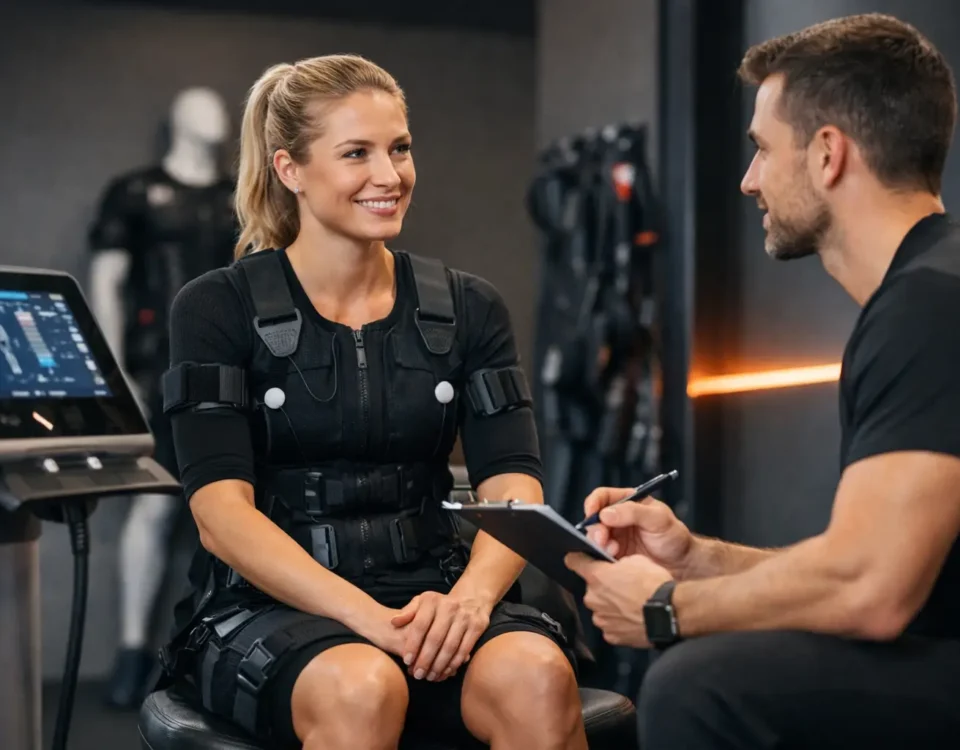
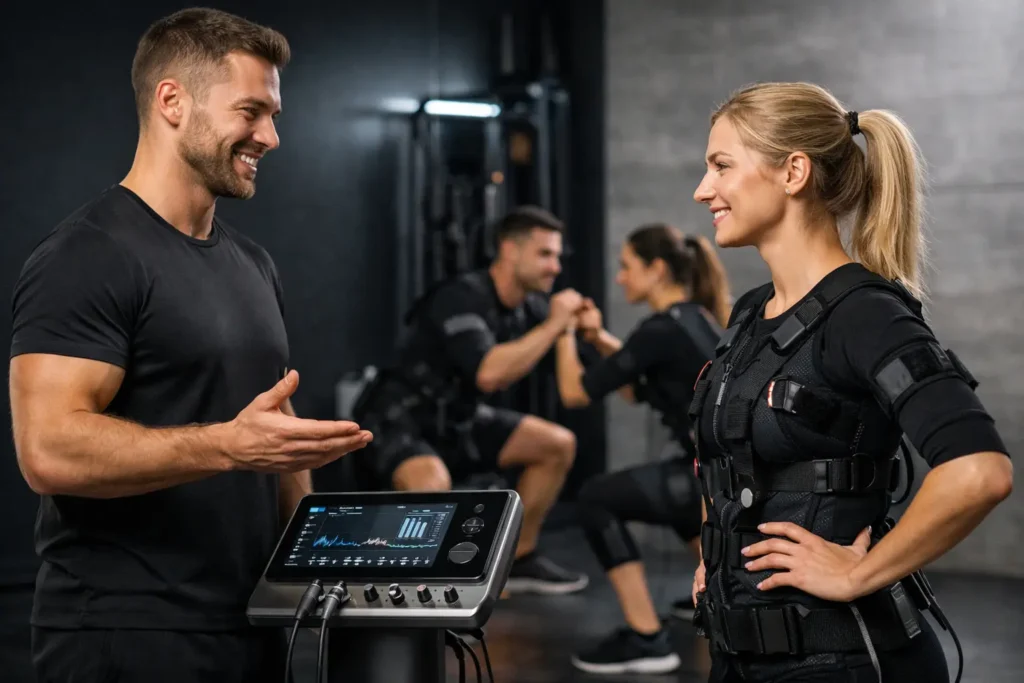
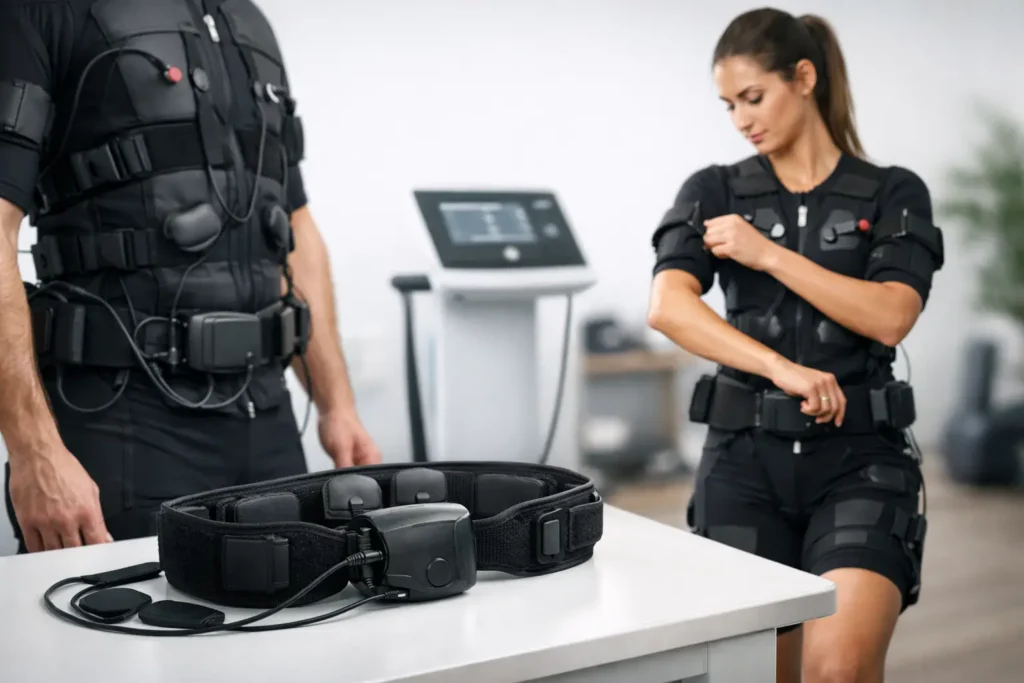
An EMS garment is the broad term for the wearable layer that positions electrodes on the body during whole-body electrical muscle stimulation training. Depending on the system, it may be a vest-and-shorts combination, a full electrode suit, or a dry wireless garment with integrated conductive areas.
From an operational perspective, the garment determines how quickly a coach can move a client from arrival to training. It also affects laundry volume, replacement planning, fitting options, and the level of assistance required before each session. These details can directly influence how many appointments a trainer can serve in a day.
A wet electrode setup typically requires moistened base layers or contact areas to support conductivity. This approach is widely used and can be highly effective when the team follows consistent preparation and maintenance procedures. The trade-off is more preparation, cleaning, and garment management between sessions.
Dry wireless garments reduce many of those steps. They are often better suited to premium environments where clients expect privacy, convenience, and a polished experience. However, operators should evaluate the initial investment, garment inventory, charging routines, and the intended client profile before selecting this route.
The central question is not which garment is universally best. It is whether the garment helps your team deliver the experience your market will pay for consistently.
Electrode Suit: Built for Whole-Body EMS Sessions
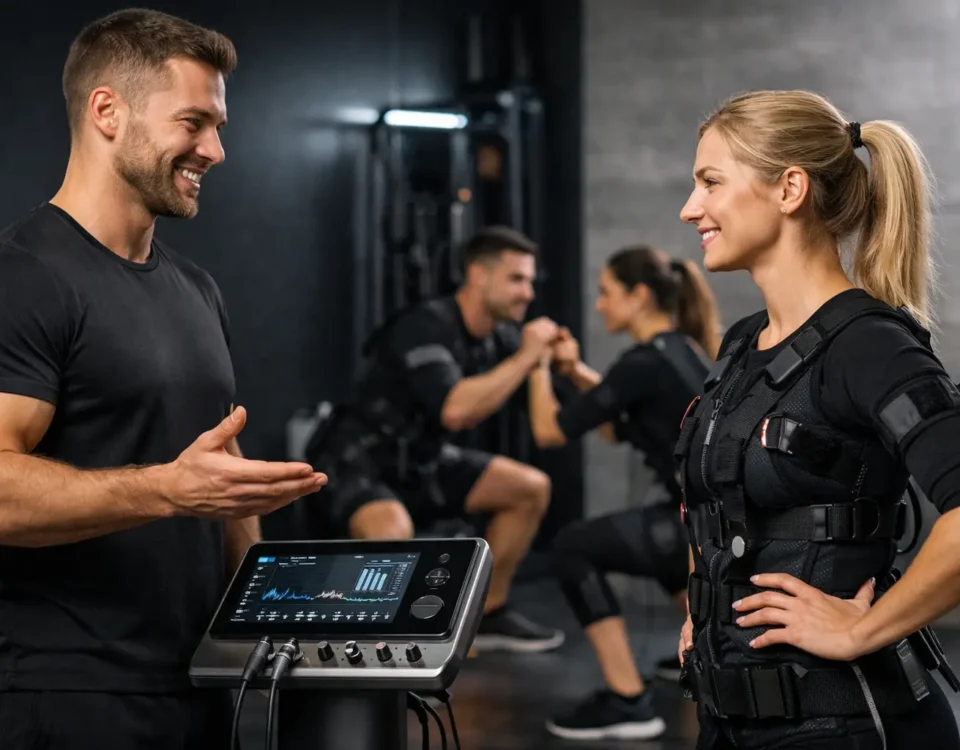
An electrode suit places stimulation points across major muscle groups, commonly including the chest, back, abdomen, glutes, arms, and thighs. For a commercial EMS business, this whole-body coverage is the foundation for a structured 1-to-1 or small-group training service.
The main business advantage of an electrode suit is service depth. Rather than selling isolated stimulation, an operator can offer guided full-body sessions supported by a coach, training protocol, client monitoring, and progressive programming. This makes the service easier to position as a specialized training format instead of a basic add-on.
Suit design matters because clients come in different body types and comfort preferences. A commercial setup should include an appropriate size range and a clear process for fitting, inspection, and cleaning. Buying only enough garments for the first few appointments can create avoidable bottlenecks when demand begins to grow.
Wet, Wired, or Dry Wireless?
The right technology is linked to your service format. Wet systems can fit practical studio and mobile operations when staff are trained to prepare garments efficiently. Wired systems may suit fixed locations where stations are planned around cable management and repeatable coaching positions.
Dry wireless electrode suits can support a more flexible floor layout and a more elevated client journey. They are particularly relevant for boutique wellness spaces, VIP training rooms, hotels, beauty and longevity concepts, and operators who want to minimize changing-room friction. That premium positioning only works when the rest of the service matches it, including coaching quality, consultation, cleanliness, and booking experience.
EMS Underwear and the Client Experience
EMS underwear generally refers to the base layer worn beneath an electrode garment. In wet EMS formats, this layer can help maintain skin contact, improve comfort, and create a more hygienic separation between the client and shared equipment. It is a small operational component with an outsized effect on perceived professionalism.
Operators have several ways to manage EMS underwear. Some include it as part of the service, some sell personal base layers to regular clients, and some ask clients to bring approved garments. Each option has implications for hygiene control, inventory, margins, and convenience.
Providing base layers can make the first visit easier, especially for trial sessions and new clients. Selling personal garments can reduce long-term laundry demands and give clients a sense of ownership over their training routine. Asking clients to bring their own may lower operating costs, but it can introduce inconsistency if fabric type, fit, or condition is unsuitable for the system.
The best policy is the one your staff can explain clearly and enforce every day. Include it in pre-visit communication, onboarding instructions, and the client consultation process. A surprise requirement at check-in slows down the session and weakens the premium impression you worked to create.
Where an EMS Belt Fits – and Where It Does Not
An EMS belt usually focuses stimulation around the abdominal area or lower back. It can have a role in a broader fitness, recovery, or wellness product offering, but it should not be confused with a full-body EMS training solution.
For a studio owner, an EMS belt may work as a supplementary product or as part of a targeted service concept. It can also be relevant for retail-oriented businesses that want an accessible entry product alongside professional coaching. Still, an EMS belt alone does not provide the same full-session format, coach-led programming potential, or premium appointment structure as an electrode suit.
This distinction matters when planning revenue. A belt-based offer may be simpler to introduce, but it generally provides less room to build a high-value, appointment-led EMS business. Full-body EMS systems are designed around recurring coached sessions, whereas belts are more limited in scope.
Avoid making claims that exceed the product’s intended use. Client trust is built through clear expectations, proper instruction, and a service model that prioritizes safe, professional operation.
Match the Wearable to the Business Model
The fastest way to make a sound equipment decision is to start with operations, not product features. Consider how your business will acquire clients, where sessions will happen, who will deliver them, and what level of experience you want clients to remember.
| Business model | Most relevant wearable priority | Operational focus | |—|—|—| | Mobile EMS training | Portable garment system and practical base-layer process | Fast setup, transport, single-coach delivery | | EMS studio | Durable electrode suits in multiple sizes | Turnover, hygiene routines, trainer capacity | | Premium wellness concept | Dry wireless EMS garment | Privacy, convenience, elevated client experience | | Add-on retail or targeted service | EMS belt | Clear scope, simple education, product support |
For a mobile operator, every extra item in the kit matters. Garments should be easy to carry, prepare, inspect, and rotate. The goal is to protect appointment time and avoid arriving at a client location without the right size or a ready-to-use replacement.
For a studio, capacity is the larger issue. Consider how many sessions will run during peak hours, how long garments need to be cleaned and dried, and whether enough sizes are available while other units are in rotation. A well-planned garment inventory supports consistent scheduling and prevents a successful sales push from creating an operational problem.
For premium concepts, the wearable becomes part of the brand story. Clients may be paying for discretion, exclusivity, convenience, and a highly guided experience as much as for the training session itself. In that setting, dry wireless equipment can be a strong fit, but only when the commercial model supports the investment.
Questions to Ask Before You Buy
Before selecting an EMS garment system, confirm the practical details with your equipment partner. Ask how many garment sizes are recommended for your expected client base, how cleaning and replacement cycles should be handled, and what spare parts are available. Also ask what training is provided for fitting, intensity control, session delivery, and daily equipment checks.
Financing structure should be part of the conversation as well. A lower initial commitment can help a new operator test demand and protect cash flow, while direct ownership may make more sense for an established studio with stable volume. The right path depends on your launch plan, not just the equipment specification.
EMS Leader approaches this decision as a business model choice. Equipment, onboarding, training, operational planning, and after-sales support should work together so that a wearable system can become a dependable service rather than a difficult-to-manage purchase.
The strongest EMS setup is rarely the one with the longest feature list. It is the one your team can prepare confidently, your clients can use comfortably, and your business can turn into a repeatable, well-positioned service from the first session onward.