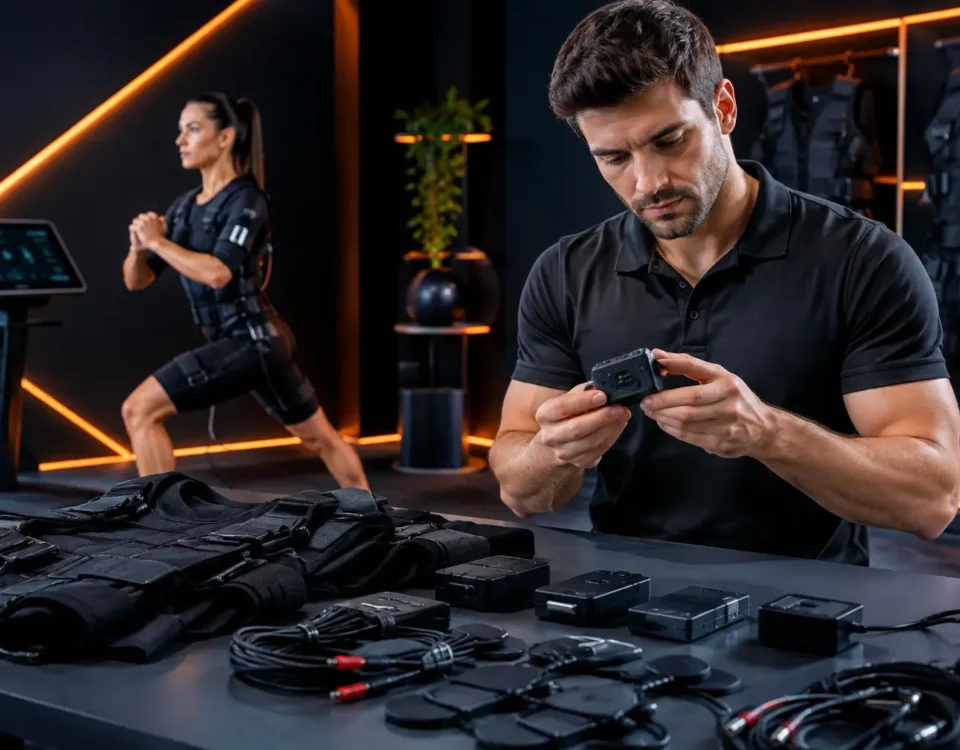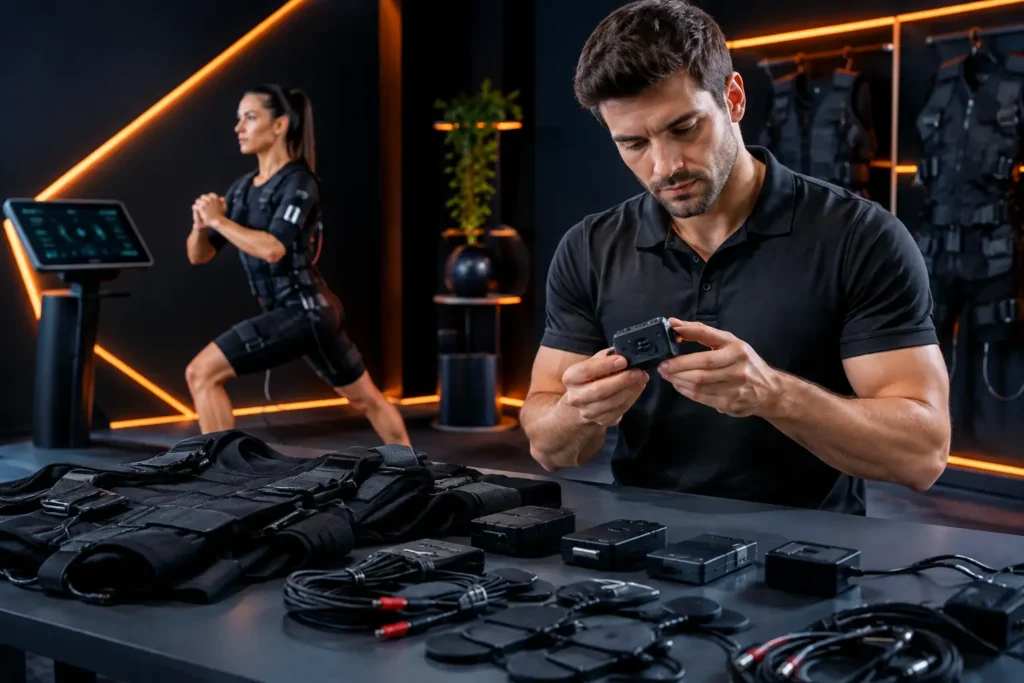

A successful EMS studio, EMS gym, EMS business, EMS franchise, EMS startup, or EMS investment starts with one decision: choosing a business model that fits your capital, market, operating capacity, and growth plans. The equipment matters, but the commercial structure around it determines whether you can launch confidently, sell consistently, and expand without creating unnecessary overhead.
For some operators, a mobile one-to-one service is the most practical entry point. For others, a dedicated studio with multiple training stations creates the capacity and brand presence they need. Premium wireless EMS can support an entirely different position – one built around privacy, convenience, and high-value wellness experiences.
The right choice is not the biggest setup. It is the model that gives you a realistic route to client acquisition, service delivery, and payback.
EMS Studio vs. EMS Gym: Start With the Operating Model
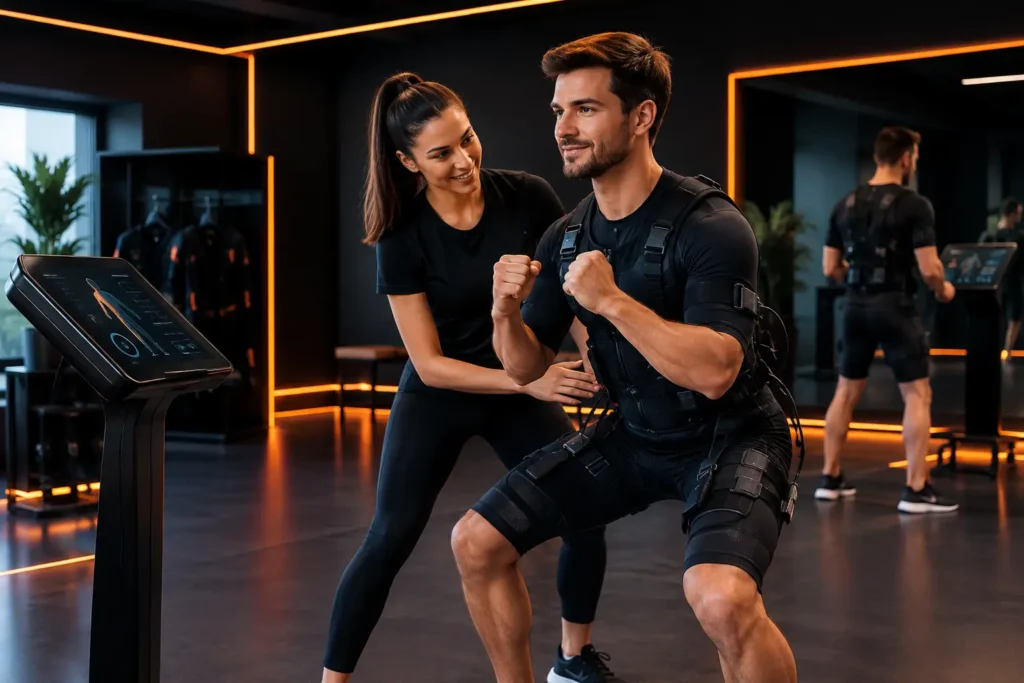
An EMS studio is typically a focused, appointment-led business. It is designed around personalized sessions, controlled scheduling, and a dedicated client experience. This format works well for personal trainers, boutique fitness operators, clinic-adjacent concepts, and wellness entrepreneurs who want a clear EMS identity rather than another service inside a large gym floor.
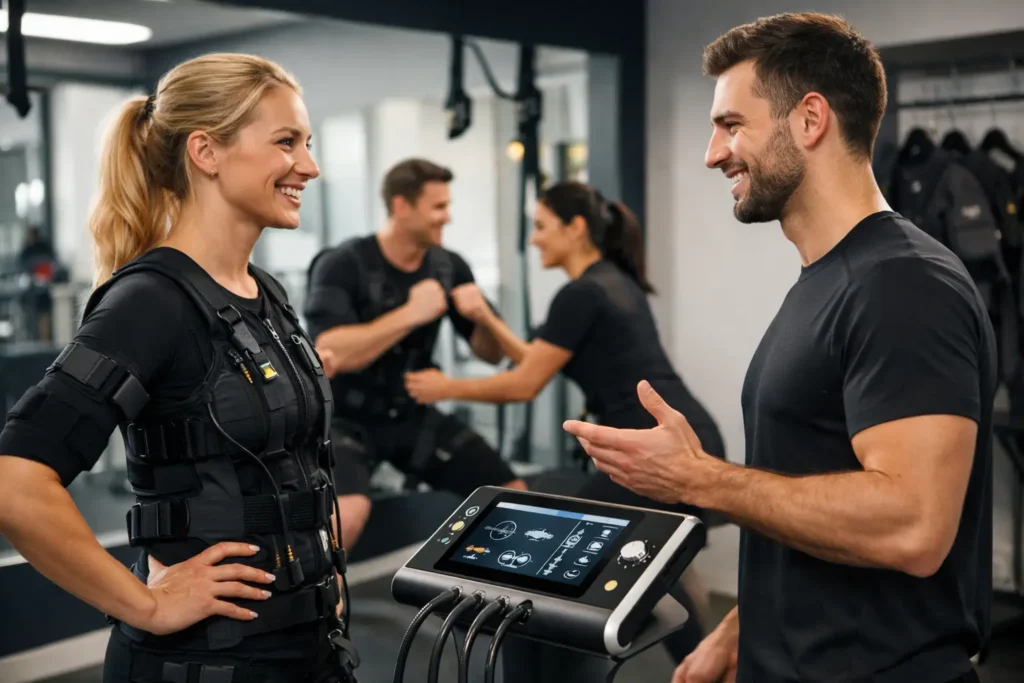
An EMS gym model usually places EMS within a broader fitness facility. The gym may already have memberships, personal training clients, changing rooms, staff, and a local reputation. Adding EMS can create a premium training tier, increase personal training value, and give existing members a reason to spend more without leaving the facility.
Neither model is automatically better. A studio can offer stronger positioning and more control over the client journey, but it requires its own lead flow and operational discipline. A gym can access an existing audience, but EMS must be actively sold and scheduled rather than treated as equipment that will market itself.
| Business format | Best suited for | Main commercial advantage | Key consideration | |—|—|—|—| | Mobile EMS | Trainers and first-time operators | Lower fixed overhead and flexible service area | Travel time limits daily capacity | | EMS studio | Boutique operators and dedicated EMS concepts | Clear positioning and repeatable appointment model | Requires local marketing and a suitable location | | EMS inside a gym | Gym owners and established fitness facilities | Existing members and cross-selling potential | Staff must be trained to sell and deliver sessions | | Premium dry wireless EMS | Luxury wellness, VIP, beauty, and longevity concepts | Strong privacy and premium-service positioning | Requires a client base willing to pay for experience |
Define the EMS Business Before Choosing Equipment
The most common planning mistake is selecting a system first and designing the business around it afterward. A stronger approach begins with the service you intend to sell.
Ask how many sessions you want to deliver per day, whether you will work alone or with a team, and whether your clients will visit you or expect you to visit them. Consider your target segment as well. A busy professional may value a short private appointment near their office. A gym member may respond to an EMS upgrade packaged with coaching. A premium wellness client may prioritize discretion, comfort, and a polished environment.
Your answers shape the right equipment configuration, staffing plan, room requirements, and financing structure. They also influence your pricing logic. A mobile operator may price around convenience and individual attention, while a studio may create packages that encourage recurring appointments. A gym may use EMS to increase personal training revenue or add a high-value membership option.
This is where commercial consultation has practical value. EMS Leader supports operators with model comparison, ROI planning, training, setup guidance, and equipment access through rental, rent-to-own, or direct purchase. The objective is not simply to place a system in a room. It is to build an operating plan that makes sense for the business behind it.
Is an EMS Franchise the Right Route?
An EMS franchise can appeal to entrepreneurs who want a recognized concept, defined operating standards, and an established marketing framework. In exchange, franchises commonly involve ongoing fees, brand rules, territory conditions, and less freedom over pricing, suppliers, and local positioning.
For some investors, that structure reduces uncertainty. It can be useful when the operator has capital but limited fitness-industry experience and prefers a prescribed route to market. However, a franchise is not the only way to create a professional EMS business.
An independent EMS startup gives you more control over your brand, target audience, services, and expansion strategy. You can integrate EMS into an existing gym, wellness center, clinic environment, or mobile personal training operation without adapting every decision to a franchise playbook. The trade-off is that you must build your own processes for sales, scheduling, retention, staff training, and promotion.
The practical question is not whether independence or franchising is superior. It is whether you need a rigid system, or whether you have the capability and support to operate a flexible one. Entrepreneurs who already understand their local market often value independence. First-time entrants may value structured onboarding and business guidance, even if they do not choose a franchise model.
Build an EMS Startup Around Capacity, Not Hype
An EMS startup should be planned around productive hours, not optimistic assumptions. Start with the number of appointments you can realistically deliver each week. Then account for setup time, client consultation, cleaning, travel where relevant, staff availability, and no-shows.
A solo mobile operator may have lower startup costs, but the day has a natural capacity limit. That can still be an attractive model when the operator has a strong personal brand, a concentrated service area, or access to corporate and residential clients. The goal is efficient scheduling, not chasing a large volume of scattered appointments.
A studio has higher fixed commitments, yet it can support more structured capacity. With the right staffing and booking system, multiple sessions can be delivered in a defined location throughout the day. This creates a clearer path to scale, provided demand is developed before overhead becomes a burden.
An EMS gym can be highly efficient if it has an active member base and trained staff. The opportunity is not limited to selling one-off EMS sessions. Operators can build introductory experiences, coaching packages, recovery-oriented wellness services where appropriate, and recurring training plans. Every offer should be positioned responsibly and aligned with the capabilities of the team.
Evaluate the EMS Investment Beyond the Purchase Price
A serious EMS investment is more than the cost of a device. You should evaluate the total launch requirement: equipment access, accessories, space preparation, training, insurance, staffing, marketing, booking tools, and working capital for the first operating months.
Financing method matters because it changes your risk profile. Direct purchase may suit established operators with available capital and a long-term expansion plan. Rental can reduce the initial commitment and allow a new operator to enter the market with more cash available for marketing and operations. Rent-to-own can provide a middle path for businesses that want to build toward ownership while protecting early-stage liquidity.
Do not evaluate financing only through the monthly payment. Compare it against the client capacity you can reasonably create, the time required to build recurring revenue, and the support included with the arrangement. Warranty coverage, spare parts availability, onboarding, and operator training can protect business continuity far more effectively than a lower initial equipment figure that leaves you unsupported.
Commercial Readiness Is What Creates Momentum
The strongest EMS businesses prepare their sales process before launch. They know who will answer leads, how consultations will be booked, what the first session includes, and how clients move into ongoing packages. Equipment can create the service. Operations create the business.
Your team also needs confidence. Staff should understand safe equipment use, session flow, client communication, and how to explain the value of EMS without making exaggerated promises. Clear onboarding and practical training reduce hesitation at the point where interest needs to become a booking.
Market conditions should guide your positioning. In a dense urban market, a mobile service may need to focus on a narrow neighborhood or corporate client segment. In a premium district, a private wireless experience may be more compelling than a high-volume studio. In an established gym, the fastest route may be converting current personal training clients before investing heavily in external advertising.
Choose the EMS model that gives you the clearest operational advantage in your market, then build the client journey around it. A well-supported first setup can become the foundation for a second location, additional trainers, or a broader wellness concept – but only after the first one is working with discipline.