

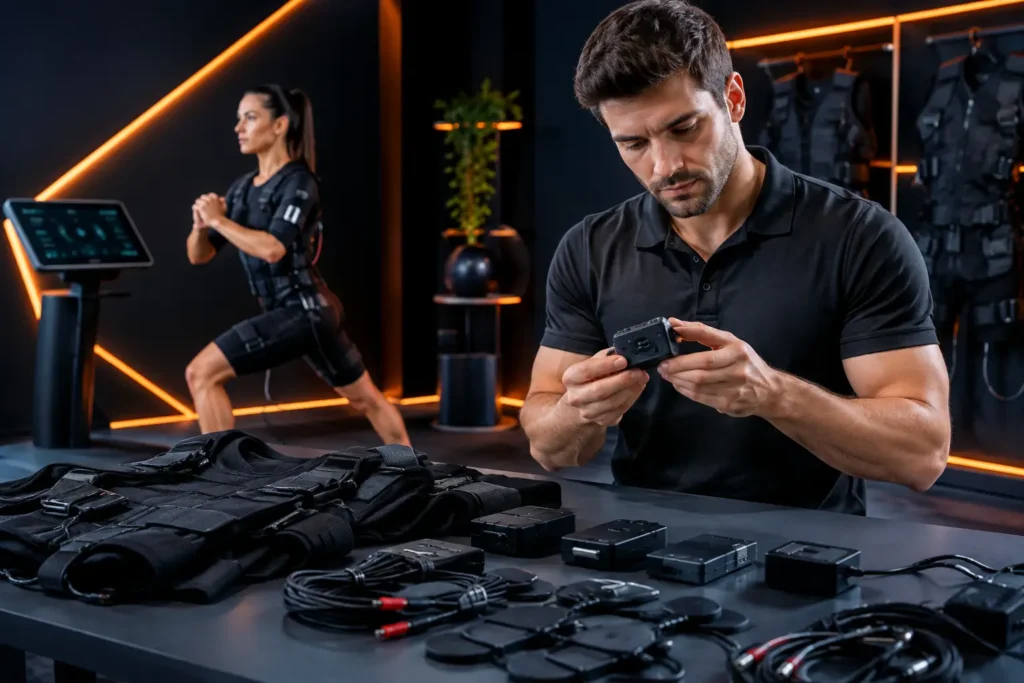
A failed cable, worn electrode, or unavailable power component can interrupt far more than one training session. It can disrupt a fully booked day, reduce client confidence, and force staff to spend time solving preventable operational problems. Choosing the right EMS spare parts supplier is therefore not a routine purchasing task. It is part of protecting the revenue, reputation, and reliability of your EMS business.
For a mobile trainer, a missing component may mean a cancelled appointment and travel wasted. For a studio, the same issue can reduce available training capacity at peak hours. The best supplier relationship gives you a practical path to replacement parts, clear technical guidance, and the confidence to keep your operation moving.
Why EMS Spare Parts Affect Business Performance
EMS equipment is used repeatedly, transported frequently in mobile models, and handled by different instructors in studio environments. Some parts naturally experience more wear than others. Cables, connectors, electrodes, garments, chargers, straps, and control accessories all require regular inspection and occasional replacement.
The commercial impact depends on your operating model. A solo mobile operator may need compact backup stock to avoid losing one-to-one sessions. A multi-station studio needs a more structured replacement plan because a single unavailable system can affect scheduling, staff utilization, and client flow. Premium concepts may also need to protect the appearance and condition of every client-facing component, not just basic functionality.
A supplier that treats spare parts as an afterthought creates unnecessary risk. A supplier that understands the business behind the equipment helps you plan availability before a small issue becomes downtime.
What to Look for in an EMS Spare Parts Supplier
The lowest advertised part cost is rarely the most useful comparison. The right decision comes down to compatibility, response time, support quality, and the supplier’s ability to support your specific EMS setup over time.
Verified Compatibility Comes First
EMS systems are designed as connected ecosystems. A cable, garment, battery, charger, or controller accessory must be compatible with the exact device and version you operate. Parts that appear similar may differ in connector type, output requirements, fit, or intended use.
Always confirm the equipment model, serial information where relevant, and the specific part reference before ordering. A qualified supplier should be able to identify the correct replacement part without guesswork. This protects your equipment and prevents the more expensive problem of ordering a component that cannot be used.
Compatibility matters especially when your business operates several systems purchased at different times. Before expanding inventory, establish a clear record of which parts belong to each unit. This makes future ordering faster and gives your team a simple reference when an issue arises.
Reliable Availability and Dispatch
No supplier can promise that every component will always be immediately available. Manufacturing cycles, shipment routes, and demand can affect lead times. What matters is whether the supplier communicates availability honestly and provides a clear next step when a part is not in stock.
Ask practical questions before you need an urgent replacement. Which high-wear items are generally available? What is the standard dispatch process? Can the supplier recommend a sensible backup inventory for your operation? Is technical support available if the cause of the issue is unclear?
For operators with multiple stations, keeping a small on-site stock of frequently used items is often more cost-effective than reacting after a failure. The correct stock level depends on client volume, number of systems, distance from your support hub, and the impact of losing one station for a day.
Technical Support That Diagnoses Before It Ships
Not every equipment interruption requires a new part. A connection may be loose, an accessory may be incorrectly installed, or a maintenance issue may be mistaken for a component failure. Sending the wrong replacement can add cost and delay while leaving the real problem unresolved.
A capable supplier should help you narrow down the cause through a structured process. That may involve checking connections, confirming device settings, reviewing component condition, or identifying normal wear. This is particularly valuable for new EMS operators who are still developing their in-house technical confidence.
Good support is not about making equipment seem complicated. It is about resolving issues quickly and helping your team understand what to check first next time.
Build Spare Parts Into Your Operating Plan
The most profitable EMS businesses do not wait for problems to create a process. They include equipment care and spare-part planning in their normal operations from launch.
Start with an equipment register. Record each system, its purchase or rental agreement details, core accessories, service history, and any replaced components. It does not need to be complex. A shared operational document can give managers and instructors immediate visibility into what is installed, what is wearing, and what should be reordered.
Then separate parts into two groups: items that can pause operations and items that can wait. A worn cosmetic accessory may be scheduled for replacement without affecting appointments. A damaged charging component, essential cable, or key garment in a busy rotation may need immediate attention. This distinction helps you set priorities without overbuying inventory.
For studios, assign responsibility clearly. Instructors should know how to complete a basic pre-session inspection and report concerns. A manager or designated team member should own supplier communication, stock review, and ordering approval. When everyone assumes someone else is managing equipment condition, small problems often remain unreported until they become urgent.
The Parts That Deserve the Closest Attention
Every system has its own maintenance requirements, but certain categories commonly deserve regular review. These include components exposed to repeated movement, moisture management routines, transport, and daily client turnover.
- Cables and connectors: Check for visible wear, loose connections, bends, or inconsistent performance.
- Electrodes and garment components: Review fit, cleanliness, surface condition, and whether the component continues to support consistent training delivery.
- Charging accessories and power components: Confirm that charging routines are followed and that backup options are available where operationally necessary.
- Straps, fasteners, and wearable accessories: Replace items that no longer fit securely or present the professional standard clients expect.
- Control accessories: Protect handheld or station-based components used across multiple sessions and train staff in proper handling.
Follow the manufacturer guidance for care, cleaning, storage, and replacement. Proper routine handling can extend usable life, but it should never be used as a reason to delay replacing a component that is no longer performing as intended.
Match Supplier Support to Your Business Model
The right level of parts support looks different for each EMS business model.
A mobile EMS operator needs portability and continuity. Backup essentials should be lightweight, easy to store, and available before a full client day is affected. The priority is avoiding cancellations when traveling between homes, offices, or partner locations.
A studio operation needs predictability at scale. More sessions, more instructors, and more client rotations create a stronger need for documented checks, planned replenishment, and a supplier that can support multiple units. Here, spare parts management becomes a capacity-management issue.
A premium dry wireless concept may place additional value on garment presentation, polished client experience, and fast replacement of visibly worn accessories. The part itself may be small, but its effect on perceived service quality can be significant.
This is why a one-size-fits-all approach does not work. Your spare parts plan should reflect your appointment volume, equipment count, service positioning, and tolerance for downtime.
Questions to Ask Before You Commit
Before selecting an EMS spare parts supplier, ask whether they can support the full life of your equipment rather than only the first transaction. Clarify how they verify compatibility, what information they need to identify parts, and how they handle technical troubleshooting.
Also ask how warranty coverage, maintenance guidance, and replacement-part access work together. These are separate areas, but they affect the same outcome: keeping your equipment commercially usable. A provider that offers equipment, onboarding, training, and after-sales support can give operators a more coordinated path when questions arise.
At EMS Leader, spare parts support is part of a broader operational approach built around launching and growing EMS businesses. The objective is straightforward: help operators protect equipment availability so they can focus on clients, team performance, and commercial growth.
The best time to evaluate a supplier is before you urgently need one. Build the relationship, understand your critical components, and keep a sensible backup plan in place. When equipment support is organized early, a replacement part stays what it should be: a routine operational detail, not a lost day of business.