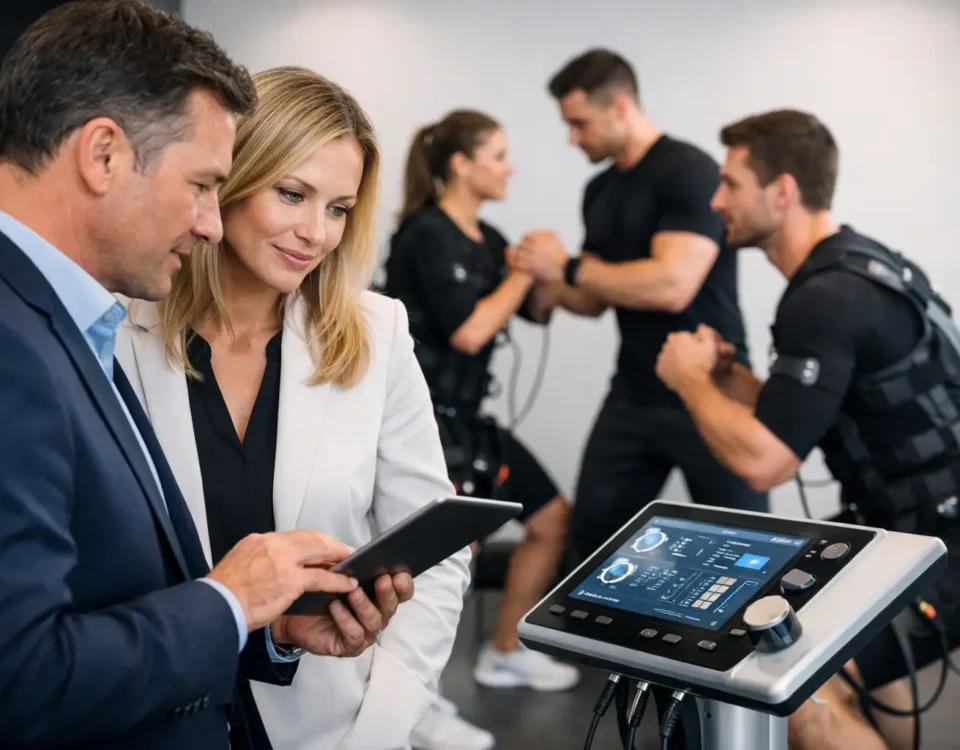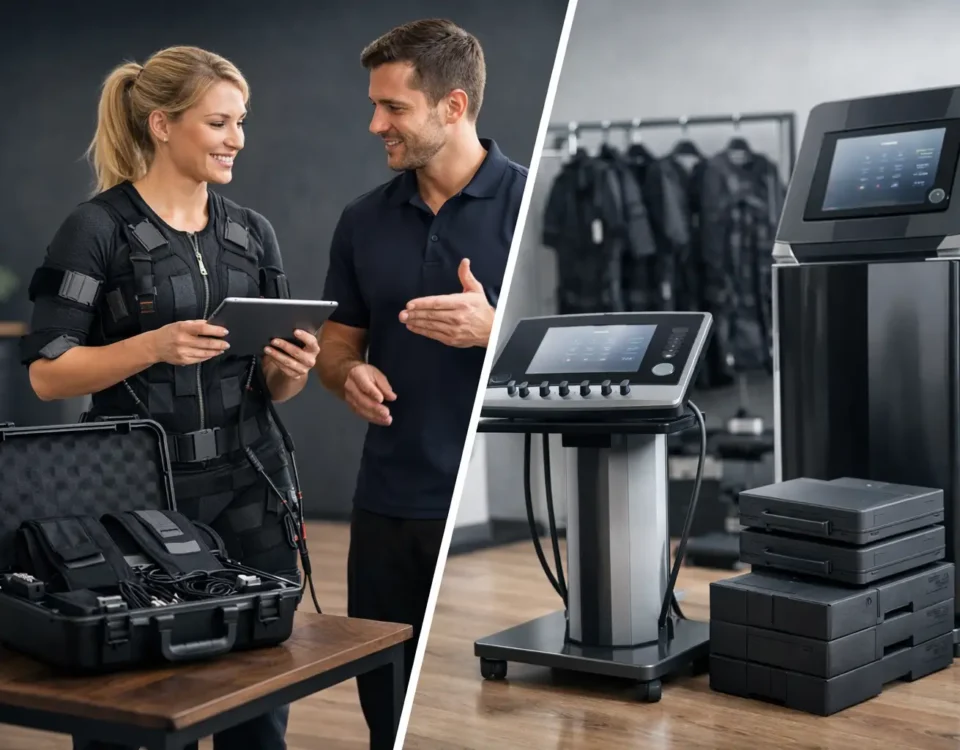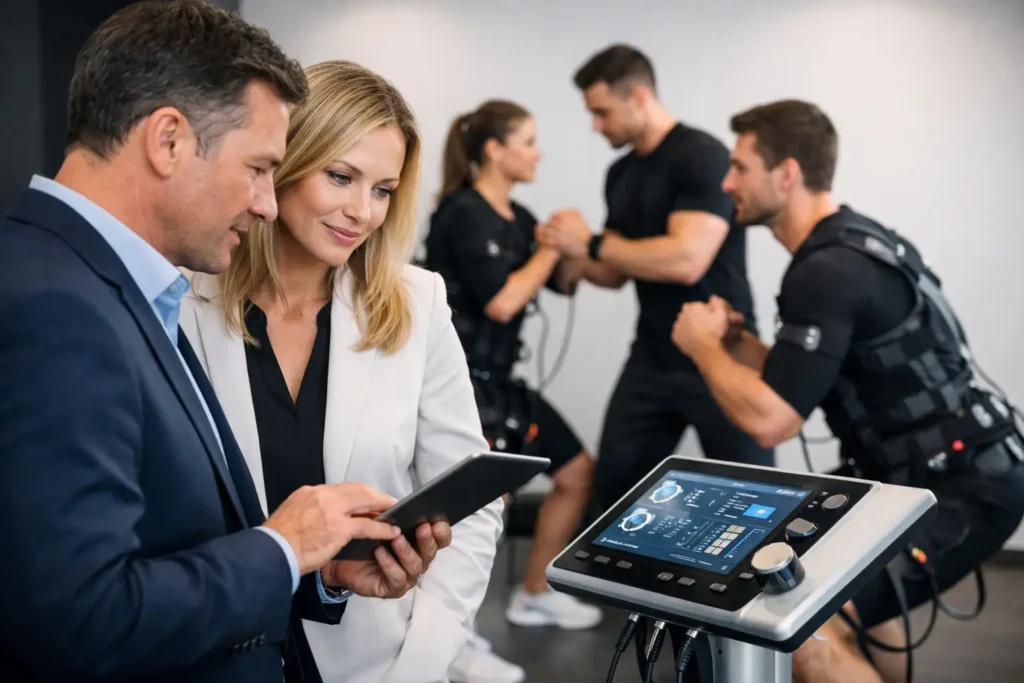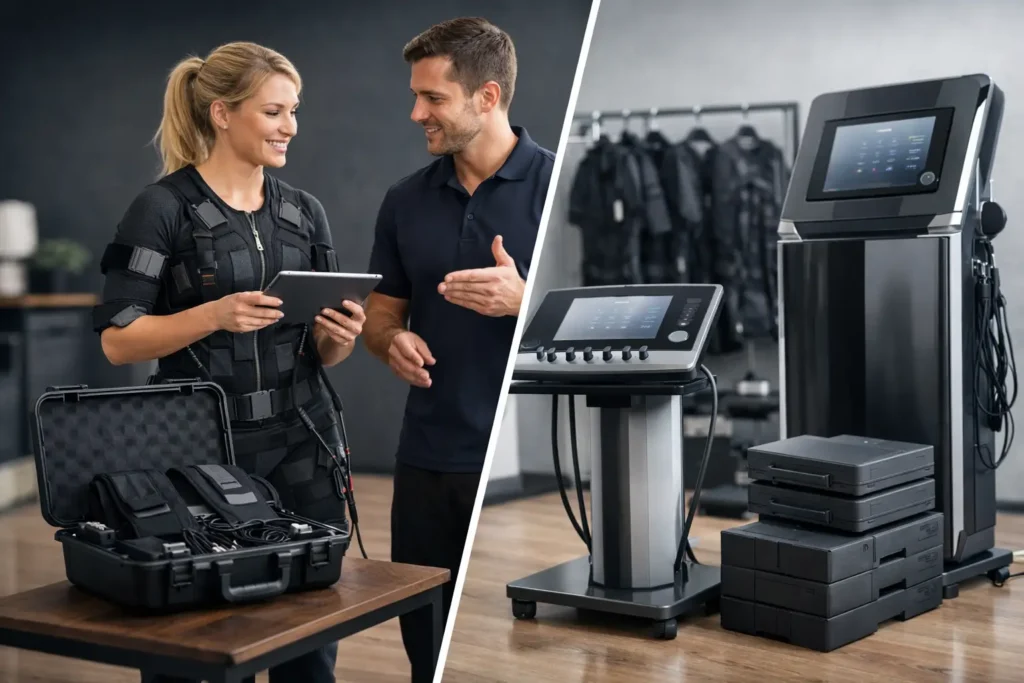


Most EMS businesses do not struggle because demand is weak. They struggle because the operator picks the wrong model, underprices the service, or buys equipment before building a launch plan. This guide to EMS business launch is built for professionals who want to enter the market with a clear commercial structure, realistic investment logic, and a faster path to revenue.
EMS can work as a low-overhead solo service, a scalable studio offer, or a premium wellness concept with strong pricing power. Those are very different businesses. If you treat them as the same, you create unnecessary risk from day one.
Start the launch with the business model, not the device
A lot of first-time operators begin by comparing suits, channels, or software features. That matters, but it is not the first decision. The first decision is how you will sell EMS in your market.
If you plan to work alone, keep fixed costs low, and acquire clients through personal training, referrals, and local partnerships, a mobile model often makes the most sense. It offers a lower barrier to entry and a shorter route from setup to first sessions. The trade-off is capacity. Your income is closely tied to your personal schedule unless you add staff later.
If you already run a gym, clinic, or training center, a studio model may offer better long-term economics. It gives you a dedicated environment, stronger brand presence, and more opportunities to increase throughput. It also requires more planning around rent, staffing, scheduling, and local positioning.
If your target client is premium, time-poor, and less price-sensitive, dry wireless EMS can support a boutique or VIP concept. This model is attractive in luxury wellness, longevity, private training, and beauty-adjacent environments. The upside is higher perceived value and stronger pricing. The challenge is that the client experience, setting, and brand presentation all need to match the price point.
That is why the smartest guide to EMS business launch starts with commercial fit. The right setup depends on your capital, your market, your existing client base, and how quickly you need the business to generate cash flow.
Compare investment level against revenue speed
A launch decision should not be based on purchase price alone. It should be based on how quickly the model can start producing billable sessions and how flexible your cost structure remains in the first months.
A mobile EMS business usually appeals to trainers and solo founders because it reduces upfront exposure. You can start lean, validate demand, and grow without committing to a full facility. That makes it practical for operators who want to test the market or build a second revenue stream beside coaching, rehab, or wellness services.
A studio setup generally requires more capital, but it can create stronger monthly turnover if client acquisition is already in place or the location has proven foot traffic. It can also support packages, memberships, semi-private formats, and team expansion more easily than a purely mobile structure.
A premium dry wireless model often sits in a different category. The investment can be justified by higher average ticket size and brand differentiation, but only when the operator has access to the right audience and knows how to sell an elevated service. Without that commercial positioning, premium equipment alone does not create a premium business.
For many operators, financing flexibility matters as much as total price. Rental or rent-to-own structures can reduce launch friction because they preserve capital for marketing, staffing, and client acquisition. That matters more than most founders expect. A business can survive with moderate equipment costs and strong sales. It rarely survives with perfect equipment and no budget for growth.
Build the numbers before you launch
An EMS business should be modeled backwards from monthly revenue targets, not forward from equipment enthusiasm.
Start with a simple question: how many paid sessions do you need each week to cover your fixed costs and produce a healthy margin? From there, look at your target price per session, package length, expected retention, and realistic utilization in months one through six.
For a solo mobile operator, breakeven may come with a relatively small number of weekly clients if fixed costs are controlled. For a studio, the breakeven point is usually higher, but so is growth capacity. For a premium concept, the math may work with fewer clients, but only if your pricing and conversion rate support the positioning.
This is where many launches go wrong. Operators copy prices from another city, another market segment, or another business type. That approach is risky. A premium one-to-one EMS offer, a gym-based EMS package, and a clinic-integrated EMS service should not automatically be priced the same.
Your pricing should reflect three things: client outcome, service format, and market context. If you are delivering convenience, personalization, and premium experience, price accordingly. If you are focused on volume and recurring memberships, build for retention and predictable monthly revenue.
Operations decide whether the model scales
The equipment may start the business, but operations decide whether it becomes stable and profitable.
You need a clear process for onboarding clients, delivering safe sessions, managing schedules, handling maintenance, and replacing consumables or spare parts. You also need training standards if more than one coach will deliver the service. EMS is not a business where inconsistent execution is easy to hide. Clients notice quickly if session quality varies.
That is why launch support matters. A professional setup should include onboarding, training, warranty coverage, and access to replacement parts. Without those basics, even a promising launch can slow down because of preventable downtime or inconsistent service delivery.
If you are entering the market for the first time, choose a partner that can help you evaluate the model, not just sell you a machine. A consultative supplier is often more valuable than a low-price vendor because the wrong commercial setup costs more than the difference in hardware price.
EMS Leader is built around that partnership model, which is why many operators use flexible access options instead of forcing a one-time purchase decision before the business is proven.
How to choose the right EMS launch path
If you are a personal trainer, rehab professional, or wellness operator with an existing client book, mobile EMS often provides the fastest route to market. You can launch with lower overhead, learn your local demand patterns, and expand once retention is stable.
If you already manage a physical location and want to add a high-margin service, studio EMS may be the better move. It allows stronger scheduling control, more visible branding, and better long-term scalability. It also suits operators who plan to build teams rather than remain solo.
If your concept targets luxury wellness, executive clients, private concierge service, or boutique recovery, a premium dry wireless format can create a sharper market position. Just be honest about whether your brand, sales process, and environment support that level of offer.
There is no universally best model. There is only the model that fits your market and your operating reality. A lower-investment launch with fast cash generation may outperform a bigger setup with slower sales. On the other hand, if your location and audience are already strong, starting too small can limit growth and weaken your brand from the beginning.
What a serious launch plan should include
Before you commit, your plan should cover your target client, your offer structure, your pricing, your acquisition channels, your expected utilization, and your support requirements after launch. If any of those pieces are unclear, the launch is not ready yet.
You should also decide how quickly you want to expand. Some founders want a lean solo business with strong monthly income and low complexity. Others want a scalable operation with multiple coaches, higher throughput, and stronger enterprise value. Those goals require different choices at the start.
The best operators treat launch as a commercial system, not an equipment order. They think about speed to revenue, payback period, client retention, and service consistency before they think about aesthetics or optional features.
That mindset creates a major advantage. It reduces wasted spend, shortens decision cycles, and gives you a clearer path from setup to sales.
If you are preparing to enter the EMS market, focus on fit before features, cash flow before vanity, and support before promises. The right launch is not the biggest one. It is the one you can operate confidently, sell profitably, and grow without friction.