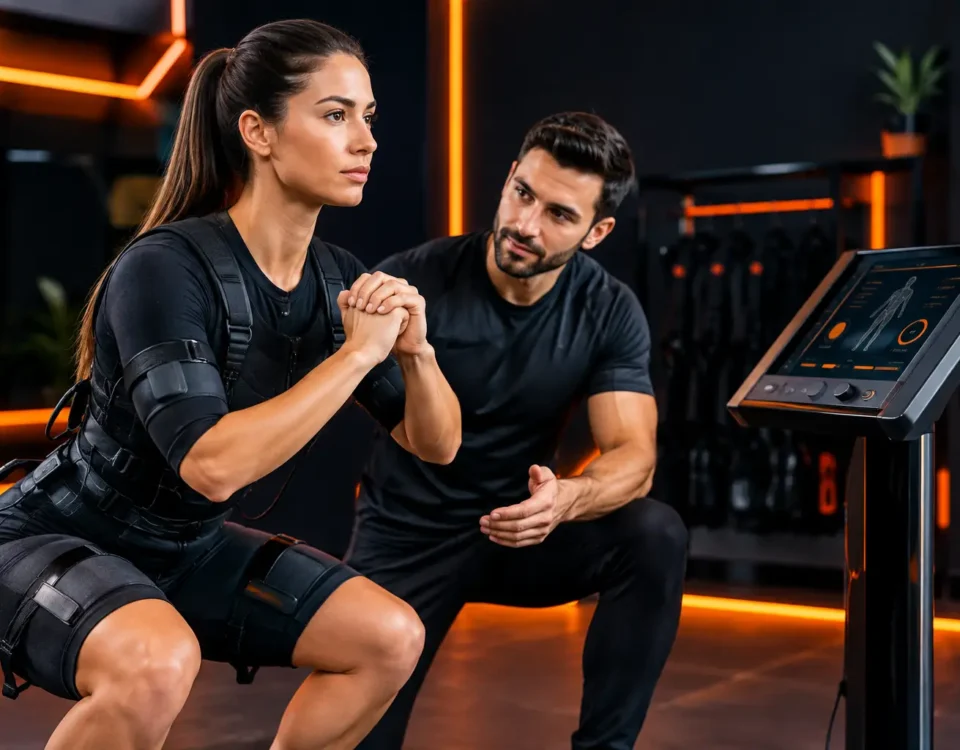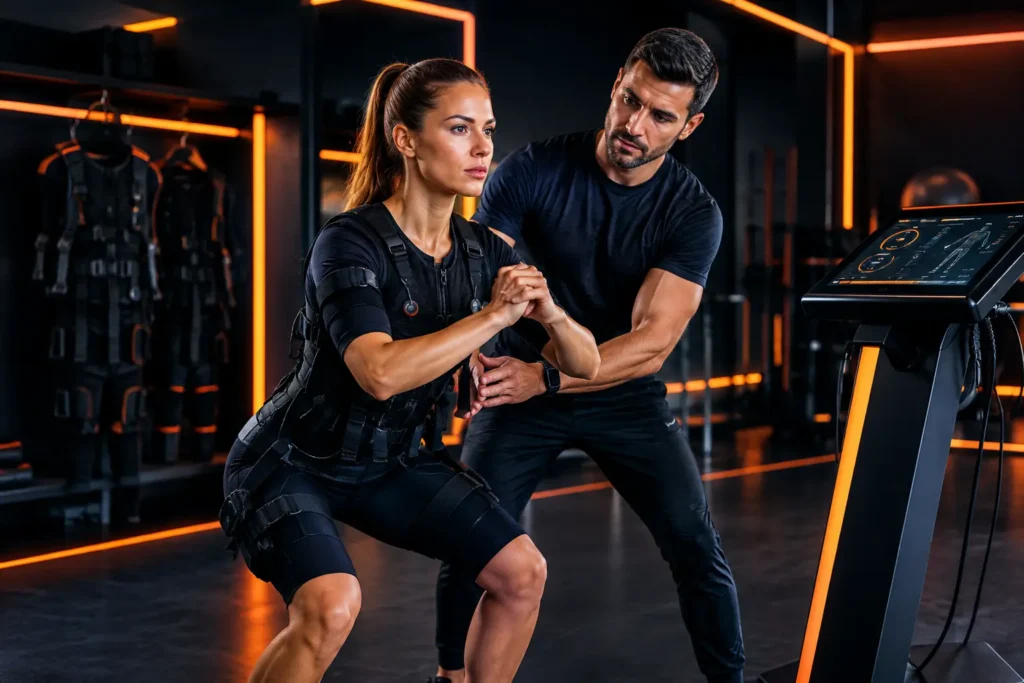


A new EMS system can be installed in a day. Building a team that delivers consistent, confident sessions takes a deliberate plan. If you are learning how to train EMS staff, start with a simple commercial reality: clients do not return because they saw advanced equipment. They return because every session feels safe, personal, professional, and worth the premium price.
For a mobile operator, one underprepared coach can damage referrals quickly. For a studio or clinic environment, inconsistent coaching creates an even bigger problem: different staff members deliver different experiences under the same brand. Staff training is therefore not only a technical requirement. It is the operating system behind client retention, capacity, and revenue.
Start With the EMS Business Model
Training should match the way you intend to sell and deliver EMS. A solo mobile coach needs strong setup discipline, one-to-one communication, and the ability to operate professionally in different locations. A multi-coach studio needs repeatable session standards, clean handovers, and a clear path for onboarding new team members. A premium dry wireless concept requires polished hospitality, privacy awareness, and a high-touch client experience in addition to technical skill.
Before the first training day, define the answers to four operational questions: Who is your ideal client? How many clients should one coach manage at a time? What is the standard session length from arrival to departure? Which services are included before and after the EMS session?
These decisions determine what your staff must learn. A coach working with busy professionals in 20-minute appointments needs excellent pacing and concise explanations. A coach working in a fitness studio may need more skill in movement coaching and progression. The equipment may be similar, but the service model is not.
How to Train EMS Staff: Build Skills in the Right Order
The fastest route to poor delivery is teaching staff to use the controller before they understand the client journey. Train in layers. Each layer should be demonstrated, practiced, observed, and signed off before the coach works independently.
1. Product knowledge and operating discipline
Staff should know every part of the system they touch: garments or electrodes, control unit, charging requirements where applicable, hygiene procedures, fitting adjustments, connection checks, and basic troubleshooting. They do not need a technical lecture on every component. They need to know what affects session quality, what can be solved on site, and when to stop and escalate an equipment issue.
Create a non-negotiable opening and closing checklist. It should cover equipment inspection, garment preparation, cleaning, storage, charging, and fault reporting. This protects equipment life, reduces avoidable session delays, and gives every coach the same standard to follow.
2. Safety screening and session boundaries
A professional EMS business does not treat screening as paperwork. Staff must understand your intake process, the situations in which a client should not proceed, and when questions need to be referred to an appropriate qualified healthcare professional. They should never improvise around a concern just to avoid losing a booking.
Train coaches to explain the process plainly rather than using intimidating language. The goal is not to make clients anxious. It is to establish trust, gather accurate information, and make responsible decisions within the approved operating protocol and manufacturer guidance.
Document this process. A signed intake form, session notes, and clear escalation steps protect both the client experience and your operation. Review local rules and insurance requirements as part of your launch plan, since requirements can vary by market and business setting.
3. Client communication before intensity
New staff often focus too early on output settings. The first priority is communication. Clients need to know what the sensation may feel like, how to give feedback, and that the coach will adjust the session based on their response and the approved protocol.
Teach staff to use simple prompts: “Tell me if this feels uncomfortable rather than challenging,” “Can you control the movement with good form?” and “Rate the effort so I can adjust appropriately.” These questions help coaches make informed adjustments without sounding overly technical.
The strongest coaches do not make every session feel identical. They follow a consistent process while responding to the individual in front of them. That balance is central to client confidence.
4. Movement coaching and session flow
EMS does not replace coaching. Staff still need to cue posture, range of motion, breathing, tempo, and movement quality. They should be able to select exercises that fit the client’s experience level, goals, mobility, and session format while staying within the established training protocol.
Give every coach a base session structure. For example, the flow can include check-in, fitting and setup, a brief readiness review, coached movement blocks, a controlled finish, equipment removal, and a short post-session discussion. The exact exercises can vary, but the sequence should remain predictable.
This standardization improves throughput without making the service feel scripted. It also makes it easier for another coach to take over a client without losing context.
Use Shadowing, Role Play, and Supervised Delivery
Classroom instruction alone does not create capable EMS coaches. Staff need repeated exposure to real operating moments: a late arrival, an unclear intake answer, a client who is nervous, a garment fitting issue, a session that needs adjustment, or a device alert during a busy shift.
A practical onboarding path has three stages. First, the new coach observes experienced delivery and takes notes against a session checklist. Next, they perform parts of the session while a senior coach leads. Finally, they run sessions under direct observation until they meet your sign-off standard.
Role play is especially useful for sales-adjacent communication. Ask staff to practice explaining EMS to a skeptical first-time client, handling questions about commitment, or discussing the next booking without pressure. A confident coach can make a clear recommendation. An untrained coach either overpromises or avoids the conversation entirely.
Measure Competence, Not Attendance
A certificate of attendance is not proof that a staff member is ready to represent your business alone. Use an assessment that combines knowledge, delivery, and judgment.
Your assessment should test whether the coach can complete the setup process correctly, follow screening procedures, communicate clearly, operate the equipment according to approved guidance, coach movement effectively, maintain hygiene standards, and document the session. Include scenario-based questions. A staff member who can recite a procedure but cannot respond calmly to a real client situation needs more supervised practice.
Keep training records and set a re-evaluation schedule. Quarterly observation is practical for many businesses, while more frequent checks may be appropriate during launch or when a new system is introduced. Review client feedback, missed steps, rebook rates, late starts, and equipment incidents together. These indicators reveal where additional coaching is needed.
Create a Repeatable Playbook for Every Coach
Your operational playbook should make the right action easy, especially during busy periods. It does not need to be a 100-page manual. A concise, usable system is more likely to be followed.
Include standard operating procedures for opening and closing, client intake, cleaning, maintenance logs, session notes, equipment faults, cancellations, and incident escalation. Add sample session frameworks, approved language for introducing EMS, and expectations for follow-up communication.
For studio owners, this playbook is what allows growth beyond the founder. Without it, your best coach becomes the only person clients trust, and expansion stalls. With it, you can recruit, train, assess, and retain staff around a consistent service standard.
Train for Retention as Well as Delivery
The client’s decision to continue often happens in the final two minutes of the appointment. Staff should know how to close a session professionally: ask how the experience felt, record useful observations, explain the next step in the planned schedule, and confirm the next booking where appropriate.
This is not a hard sell. It is good service. Clients value clarity, especially when they are trying a new training format. Coaches should focus on consistency, realistic expectations, and the value of a structured program rather than making claims they cannot support.
Track retention by coach, but use the numbers carefully. A lower rebooking rate may signal a coaching issue, unclear onboarding, poor scheduling, or a mismatch between the client and the offer. Review the full client journey before drawing conclusions.
Make Training an Ongoing Operating Advantage
Initial education gets staff ready for launch. Ongoing training keeps standards high as your client base, team, and service menu grow. Hold short monthly skill sessions to review common questions, practice coaching cues, inspect equipment routines, and discuss client feedback. These meetings should solve real operating problems, not become administrative theater.
When you add coaches, locations, or a new EMS format, revisit the fundamentals first. Growth magnifies every weak process. It also magnifies every strong one.
EMS Leader supports operators with equipment onboarding, academy training, setup guidance, and ongoing operational support because a profitable EMS service depends on more than the unit itself. Build a team that can deliver a consistent client experience from the first session, and your equipment becomes the foundation of a business clients are prepared to return to and recommend.