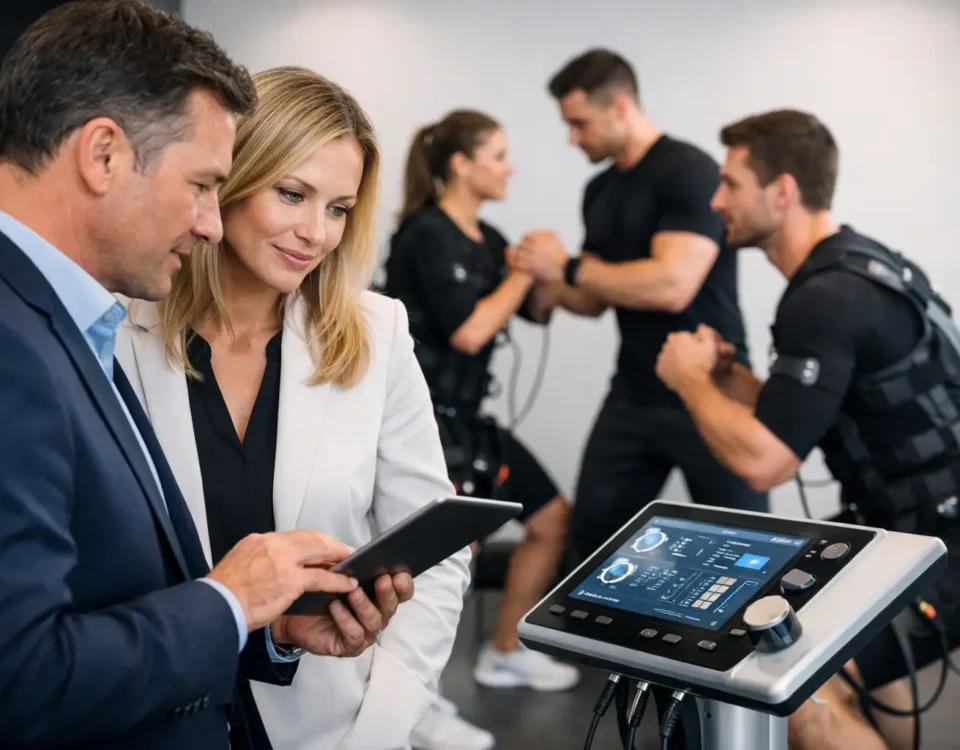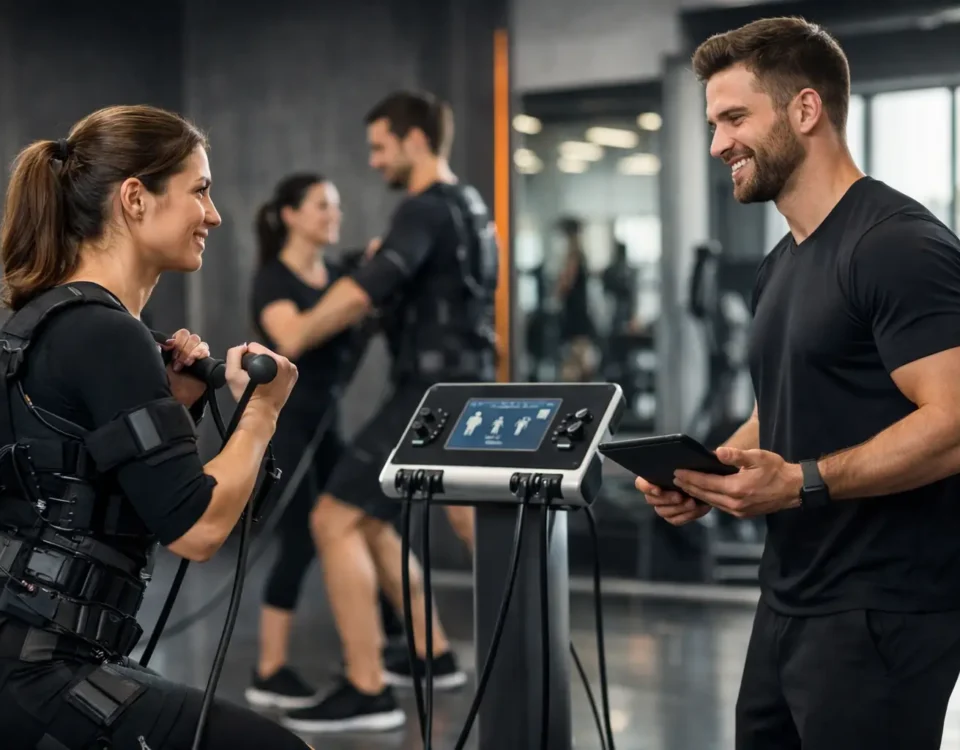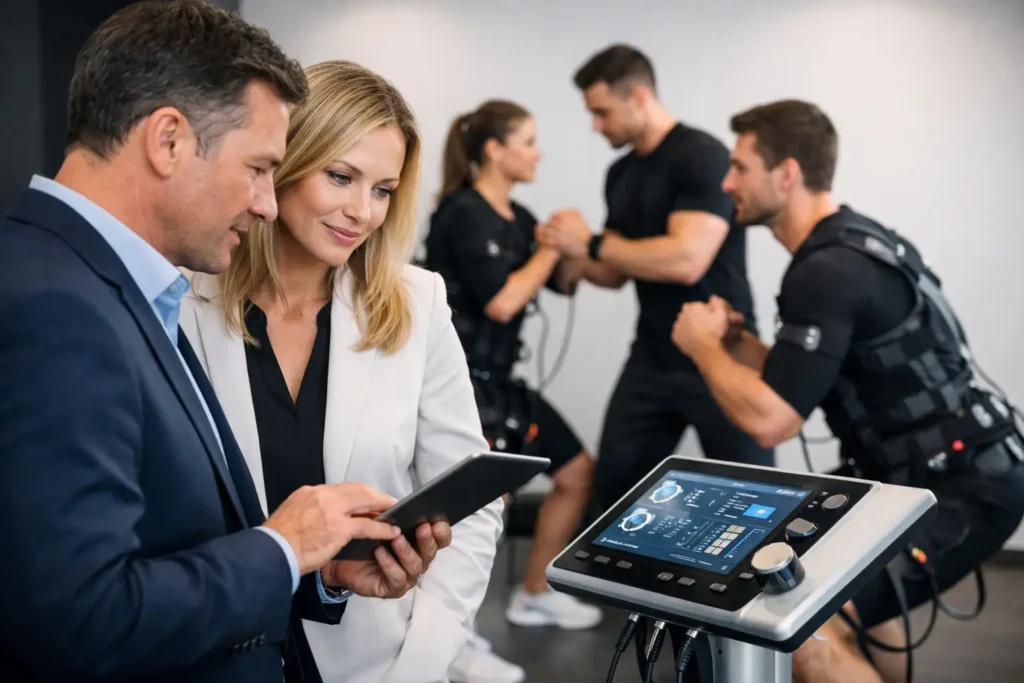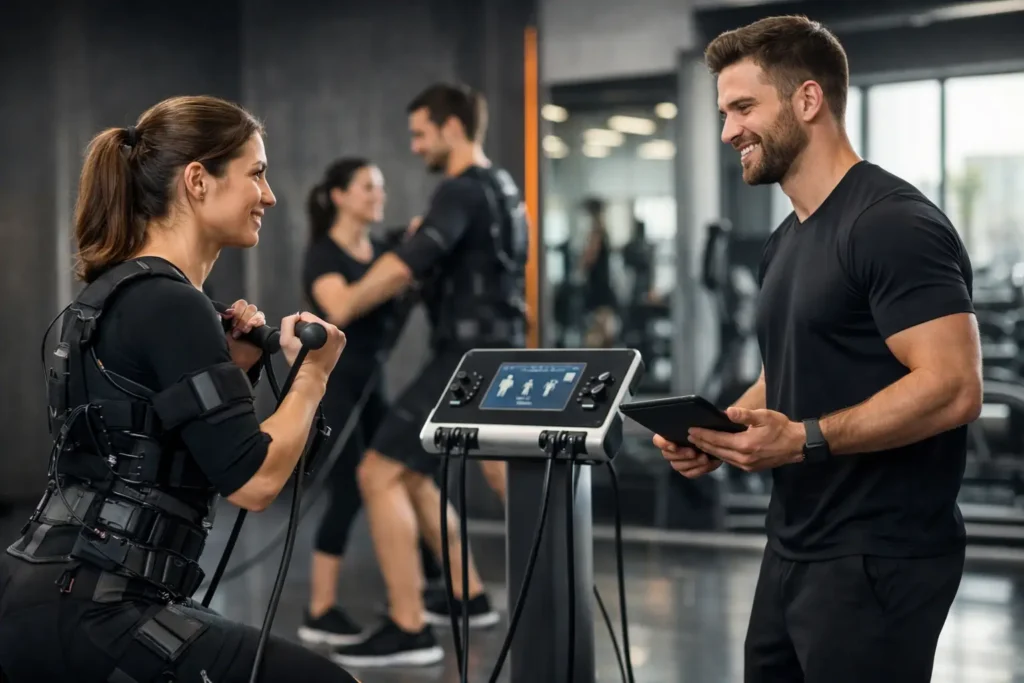

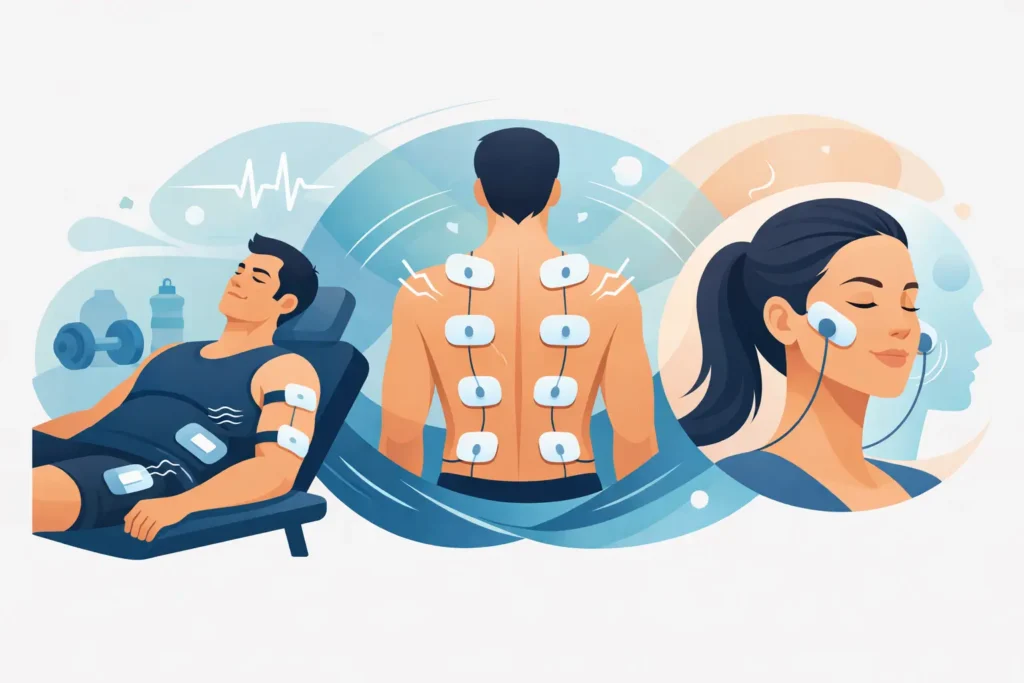
A lot of EMS businesses stall because they sell one use case when the market is already asking for five. Clients do not only want training. They ask about pain relief, post-workout recovery, back stimulation, face EMS, beauty EMS, and EMS massage. For operators, that shift matters because the winning offer is no longer just a session. It is a service mix that improves utilization, widens audience fit, and increases average revenue per client.
That creates a commercial question, not just a technical one. Which applications belong in your model, which require specialized positioning, and where does each service actually make money? If you are building an EMS business, the opportunity is not in offering everything at once. It is in selecting the right EMS stack for your market and pricing it in a way that supports fast launch and sustainable margins.
Why muscle recovery and beauty EMS are commercial categories
Most operators first enter EMS through fitness, because the value proposition is easy to explain and pricing is already familiar. But demand often expands quickly beyond training. Athletes ask for muscle recovery. Desk-based clients ask for back stimulation. Beauty-focused clients ask for face EMS and body contouring concepts. That is where many businesses either grow intelligently or become scattered.
The key is to treat each application as a business category with its own buyer, session logic, and revenue model. Muscle recovery usually performs well as an add-on or retention tool. It extends the relationship after hard sessions, supports perceived results, and gives personal trainers or studios another billable service without requiring a completely different client profile.
Back stimulation can be even more commercially attractive because it appeals to a wider audience. You are not limited to high-performance clients. Office workers, general wellness clients, and people returning to exercise often respond well to targeted services positioned around comfort, activation, and recovery support. In practical terms, that gives operators more lead sources and more repeat demand.
Face EMS and beauty EMS sit in a different lane. They are not usually sold the same way as fitness sessions. They tend to work better in premium environments, aesthetic wellness concepts, or hybrid businesses where clients already expect specialized, high-margin treatments. The value is less about intensity and more about experience, consistency, and visible positioning in a beauty or longevity offer.
The strongest use cases by business model
Not every EMS application fits every operating setup. That is why business model selection matters as much as equipment selection.
Mobile operators
Mobile EMS businesses need simplicity, speed, and low setup friction. In that format, muscle recovery and back stimulation are often the smartest starting points alongside core personal EMS training. They are easy to explain, can be delivered in-home or on-site, and create upsell opportunities without adding major operational complexity.
Face EMS can also work in mobile settings, but only if the brand positioning is already premium and the operator has a strong presentation standard. Beauty clients usually buy trust, specialization, and experience. If the mobile setup feels too improvised, conversion suffers even if the technology is strong.
Studio operators
Studios have more flexibility. They can bundle training, recovery, and targeted stimulation into structured memberships or package systems. This is where back stimulation becomes especially strong because it can serve both acquisition and retention. A client may enter through pain-related interest or general back wellness, then stay for broader EMS training or recovery work.
Studios can also test beauty EMS more effectively than mobile operators because environment matters. A dedicated treatment space, clear service menu, and polished consultation process increase client confidence. If your studio serves a mixed audience, separating athletic recovery from beauty offers helps avoid confusing the brand.
Premium dry wireless and boutique concepts
This is where face EMS and beauty EMS often make the most sense commercially. Premium clients are willing to pay for comfort, convenience, and exclusivity. In that environment, EMS massage, beauty protocols, and facial stimulation services can sit inside a broader luxury wellness offer.
The upside is pricing power. The trade-off is that expectations are higher. Operators need a strong consultation flow, excellent staff training, and equipment that supports a clean, high-end client experience. Premium margins are real, but only when execution matches the positioning.
Muscle recovery and back stimulation as retention tools
The easiest revenue to win is usually from the clients you already have. That is why muscle recovery deserves more attention than it often gets. It is not only a service benefit. It is a retention mechanism.
When clients associate your business with feeling better between sessions, recovering faster, or reducing muscular fatigue, they are less likely to see EMS as a one-dimensional purchase. That broadens the value of the membership or package. Instead of buying isolated sessions, they start buying continuity.
Back stimulation has a similar effect. It gives operators a practical service for clients who are not ready for intense training or who need a more approachable first step. That lowers entry resistance. It also creates a bridge between wellness and performance, which is commercially useful because many clients start with a comfort-based goal and later upgrade into a fuller program.
For clinics, wellness centers, and gym operators, this can improve schedule fill during off-peak hours. Recovery and targeted stimulation sessions often fit well into quieter parts of the day, helping increase utilization without depending entirely on prime-time training slots.
Face EMS, beauty EMS, and the premium margin question
Face EMS and beauty EMS attract attention because they look like high-margin services, and in the right concept they are. But they are not automatic wins.
The first question is market fit. Does your client base already spend on aesthetic or appearance-related services? If yes, beauty EMS can become a logical extension. If no, the sales cycle may be longer and the education burden higher. Operators sometimes assume the beauty category will be easier to sell because it appears more lifestyle-driven. In reality, it often requires stronger brand trust and a more refined client journey.
The second question is operational focus. A beauty EMS menu needs trained staff, clear treatment expectations, and a consultation process that manages results honestly. Overpromising damages retention quickly in this category. The businesses that perform best are the ones that position face EMS as part of a structured premium offer, not a trend item.
The upside is strong differentiation. In crowded fitness markets, beauty and facial EMS can open a different conversation, one less tied to gym pricing and more tied to premium self-care, recovery, and visible maintenance routines.
Where EMS massage fits
EMS massage works best when operators understand what they are really selling. In most cases, clients are not comparing it with a standard massage alone. They are buying a recovery experience, muscular relief, or a technology-supported wellness session.
That distinction matters for pricing. If you position EMS massage too close to commodity bodywork, margin pressure increases. If you position it as a specialized part of a recovery or wellness system, it becomes easier to protect price and build packages around it.
For studios and boutique concepts, EMS massage can also improve cross-selling. It gives athletic clients a reason to add recovery. It gives beauty-focused clients a body-focused service that feels complementary rather than unrelated. That kind of service architecture is what makes an EMS business more resilient.
How to decide what to launch first
The practical choice comes down to three factors: your client profile, your setup, and your cash-flow priorities.
If you are entering the market with limited investment and need fast commercialization, start with the applications that are easiest to explain and book repeatedly. Muscle recovery and back stimulation are often the most efficient choices because they fit broad audiences and support repeat usage.
If you already run a premium wellness or aesthetic concept, face EMS and beauty EMS may deserve earlier priority because they align with your audience and pricing structure. If you operate a training-focused studio, add them only if you can present them as a coherent extension rather than a side offer.
If your goal is faster payback, choose services that improve utilization of existing staff and equipment before adding highly specialized offers. Commercial discipline matters more than category excitement. The best EMS businesses do not start by chasing every trend. They build a clear path from first booking to repeat revenue, then expand into adjacent services once the base model is stable.
That is where a consultative partner adds real value. Operators do better when they compare service fit, launch model, investment level, and revenue potential before buying equipment. For many businesses, the smartest move is not asking which device does everything. It is asking which setup helps you start selling faster and scale with less friction.
A profitable EMS concept is rarely built on one service alone. It is built on choosing the right mix for your market, then delivering it with enough clarity that clients understand the value before they ask about the price.